Understanding base ten Normal Math Worksheets for Ages 6-9
3 filtered results
-
From - To
Discover our "Understanding Base Ten Normal Math Worksheets" designed specifically for children aged 6-9. These worksheets support foundational math skills through engaging activities that simplify the concept of base ten. Young learners will explore place value, counting, addition, and subtraction using vibrant illustrations and practical exercises. Our resources help teachers and parents track progress while making math fun and accessible. Whether at home or in the classroom, these worksheets are perfect for enhancing numerical understanding and boosting confidence in young students. Foster a love for learning mathematics in your child with our carefully crafted materials today!
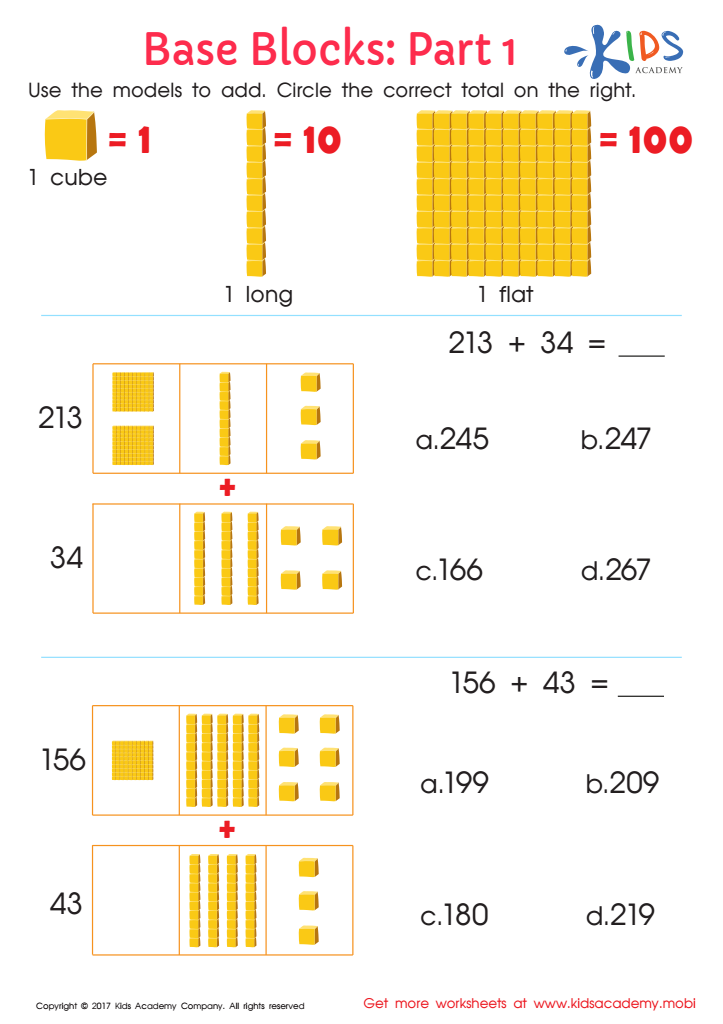
Base Ten Blocks Worksheet: Part 1
 Assign to My Students
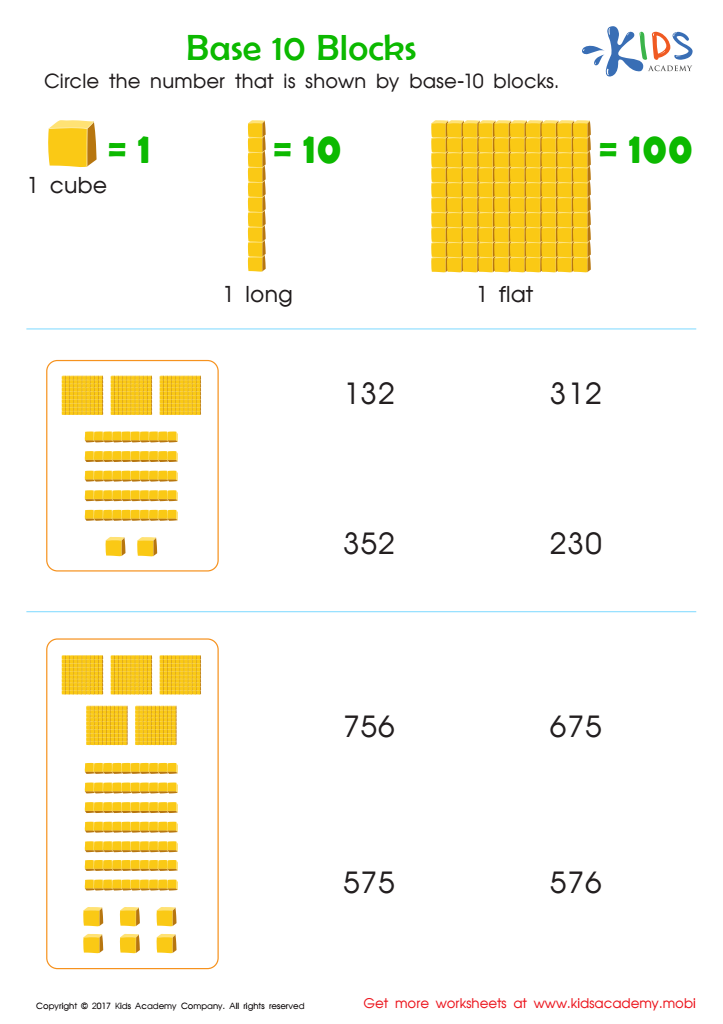
Base Ten Blocks Worksheet
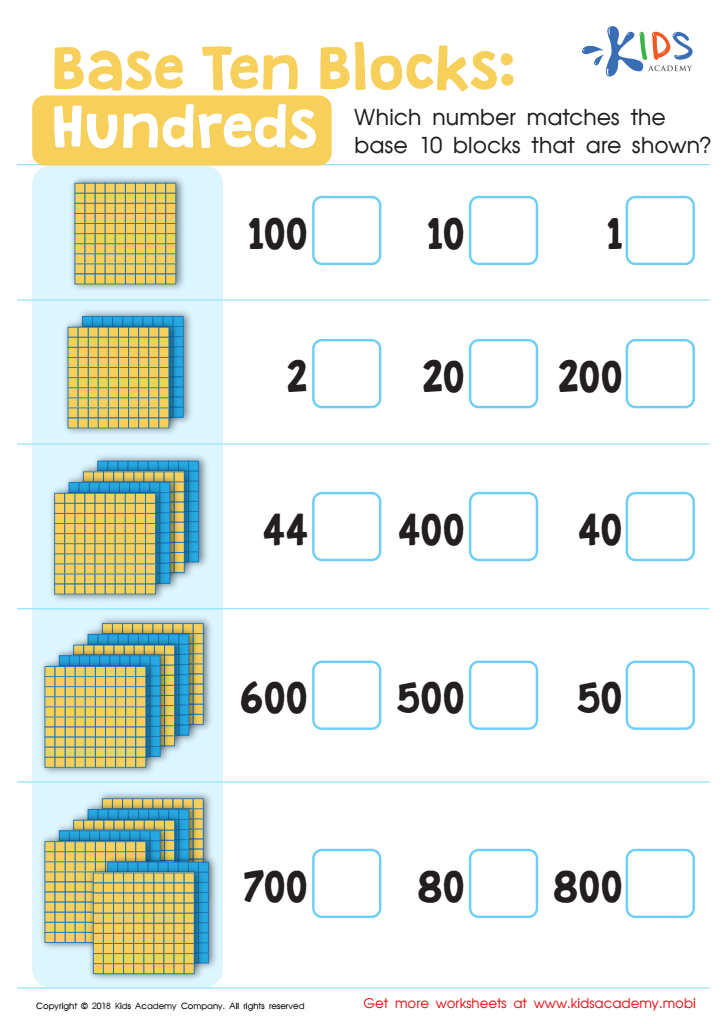
Base Ten Blocks: Hundreds Worksheet






Understanding base ten is crucial for children aged 6-9 because it forms the foundation of their mathematical development. In this stage, students learn to grasp the concepts of place value, addition, subtraction, and number sense—all rooted in the base ten system. This foundational structure supports not only their immediate numeracy skills but also their ability to tackle more complex math concepts later on.
When parents and teachers emphasize base ten, children are better equipped to understand how numbers are organized in groups of ten, which simplifies the process of carrying and borrowing during calculations. Seeing numbers in terms of “tens” and “ones” helps children visualize mathematical operations, fostering problem-solving skills.
Moreover, a solid grasp of base ten enhances confidence, making children more willing to engage with challenging mathematical problems. As they build these skills, they are laying the groundwork for future learning in topics such as multiplication, division, and even algebra.
By ensuring that children develop a robust understanding of base ten principles, adults can cultivate a lifelong appreciation for math and combat the anxiety often associated with it. This foundational skill set will not only support academic success but also promote critical thinking and analytical skills essential for everyday life.








