Visual discrimination Normal Math Worksheets for Ages 6-9
6 filtered results
-
From - To
Discover engaging Visual Discrimination Normal Math Worksheets designed for children ages 6-9 at Kids Academy. These worksheets are crafted to enhance visual processing, focus, and attention to details while fostering vital math skills. Students will explore various mathematical concepts through fun, visually appealing activities tailored to their developmental stage. With our expertly designed worksheets, your child will improve their ability to distinguish shapes, patterns, and numbers. Each worksheet is intended to challenge and motivate young learners, making math practice both enjoyable and effective. Unlock your child's potential with our comprehensive collection of visual discrimination math worksheets.
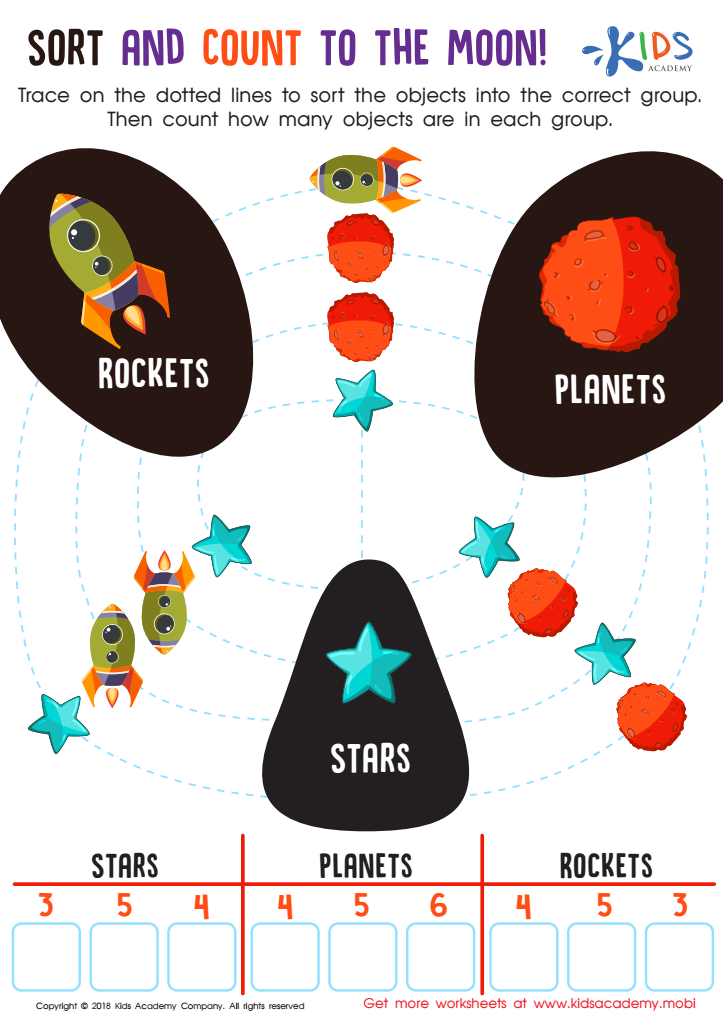
Sort and Count to the Moon Worksheet
 Assign to My Students
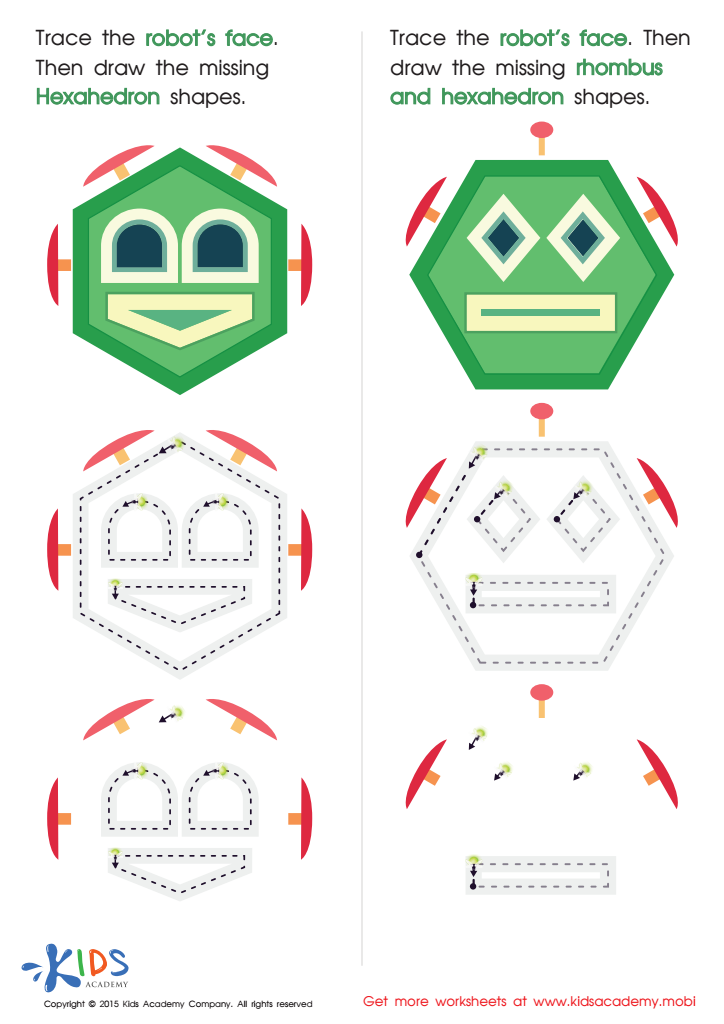
Practice Drawing Hexahedrons And a Rhombus Worksheet
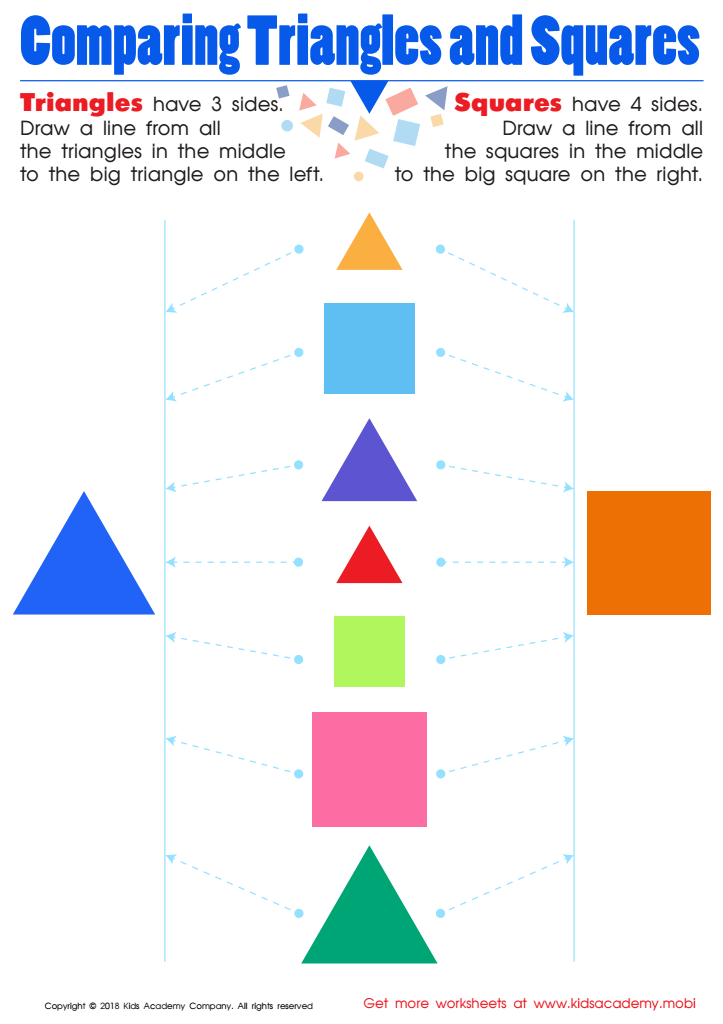
Comparing Triangles Squares Worksheet
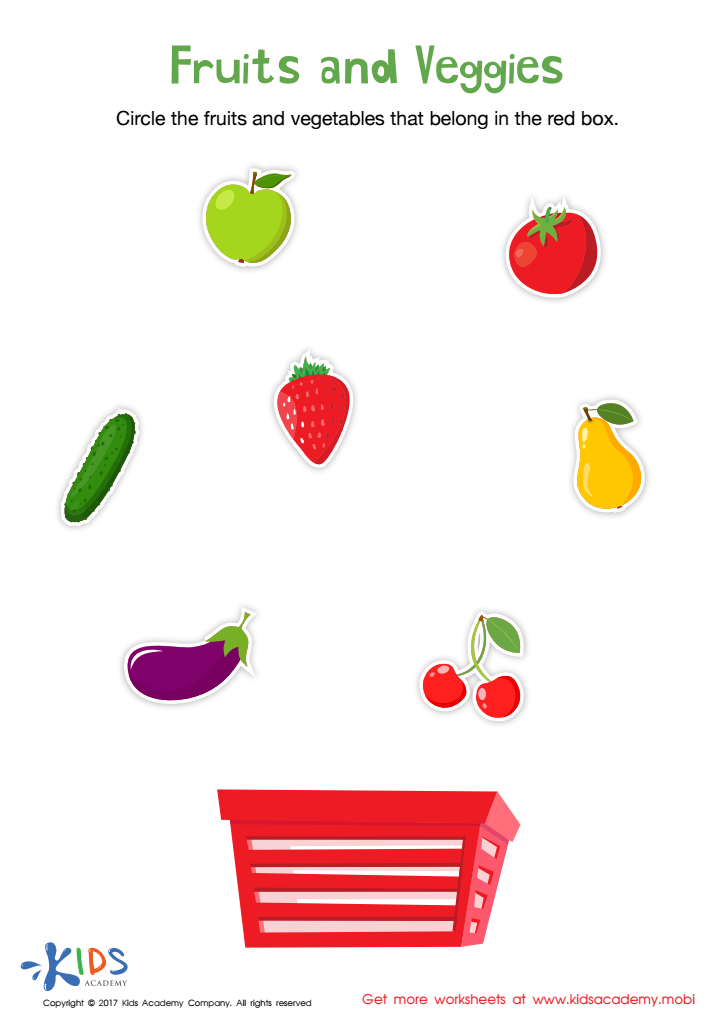
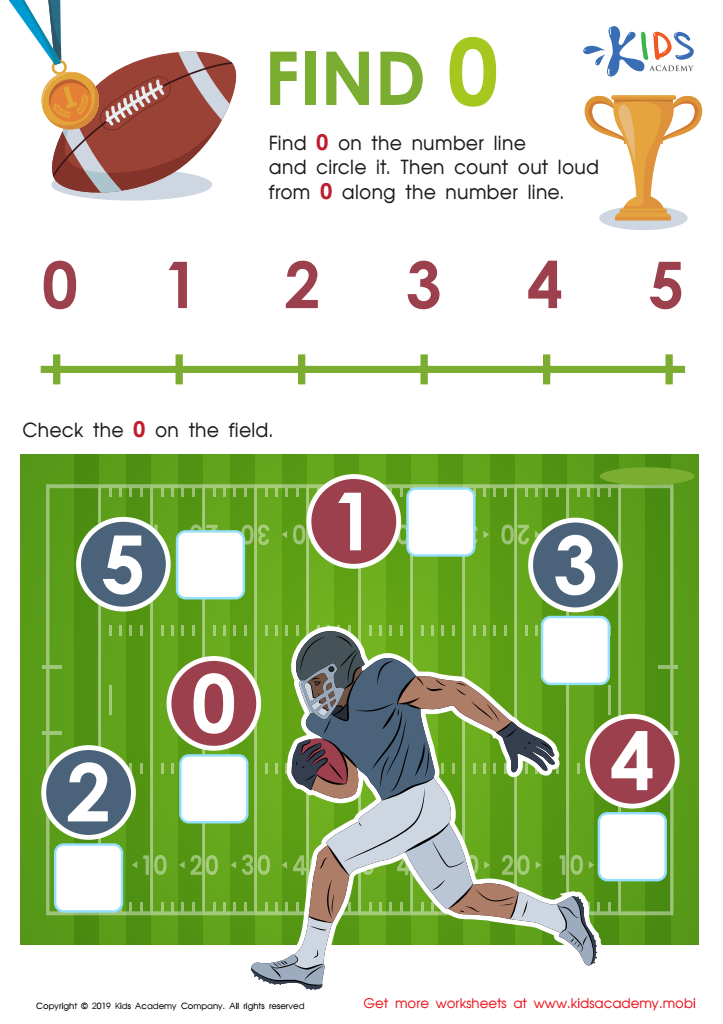
Find 0 Worksheet
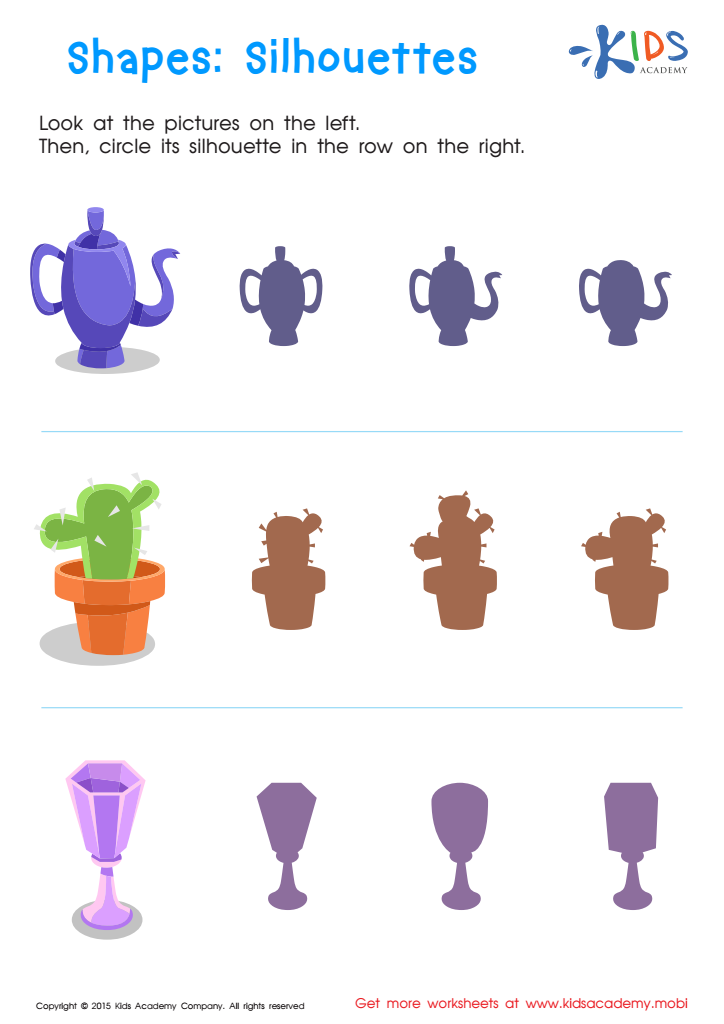
Silhouettes – Shapes Worksheet








Visual discrimination is crucial in math for children ages 6-9 as it involves the ability to recognize differences in visual stimuli - a fundamental skill for learning and academic success. At this age, children are developing their cognitive abilities and foundational math concepts. Visual discrimination plays a key role in understanding and differentiating numbers, shapes, patterns, and symbols, which are essential components of early math education.
When children can accurately distinguish between different numerals, they are better able to avoid common errors such as confusing 6 for 9, or 1 for 7. This skill also helps in recognizing and reproducing geometric shapes, which lays the groundwork for more complex spatial reasoning and geometry skills later on. Patterns are a core part of early math education, and visual discrimination helps children observe, replicate, and extend patterns, which is critical for problem-solving and logical thinking.
Moreover, this skill supports the development of reading and writing, as recognizing and distinguishing letters and numbers are based on visual discrimination. Both parents and teachers should recognize the importance of fostering visual discrimination skills through engaging activities and exercises. This support not only enhances a child’s mathematical ability but also contributes positively to their overall cognitive development and academic confidence.








