Counting skills Normal Matching Worksheets for Ages 6-9
6 filtered results
-
From - To
Boost your child’s math foundation with our specialized "Counting Skills Normal Matching Worksheets for Ages 6-9." Crafted to foster essential numerical abilities, these engaging worksheets blend fun activities with educational content, enabling young learners to practice matching and counting. Perfect for classroom use or homeschooling, each sheet challenges kids aged 6-9 to enhance their counting proficiency while developing critical thinking and problem-solving skills. With vibrant designs and age-appropriate tasks, our counting worksheets make learning enjoyable, ensuring your child builds a solid groundwork for future math success. Explore and download today to elevate your child's counting confidence!
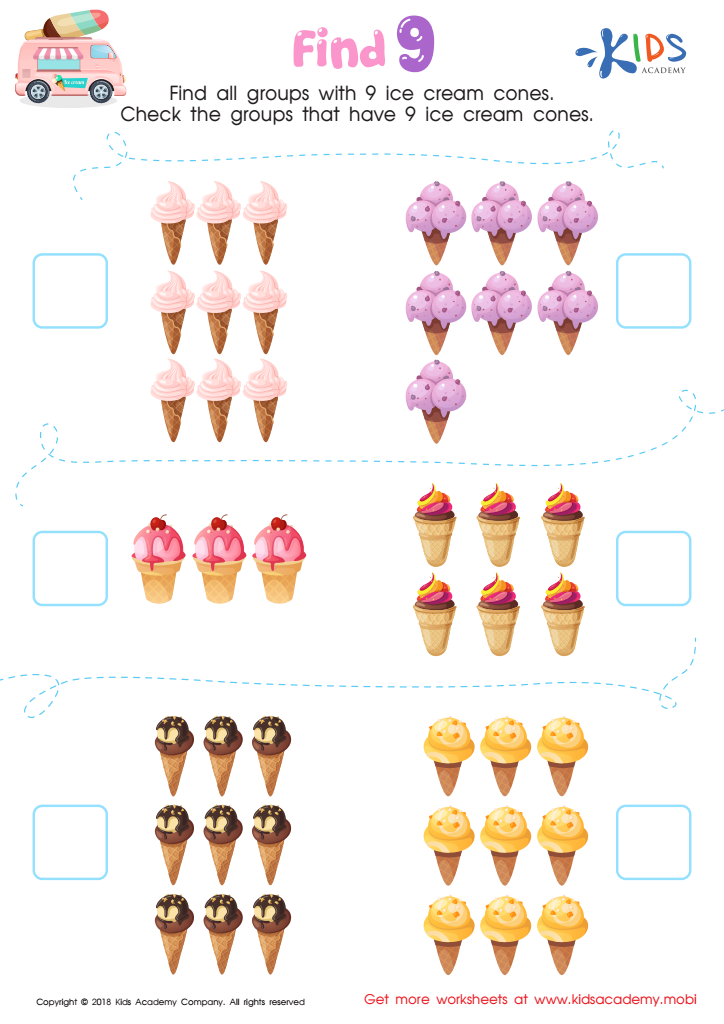
Find 9 Worksheet
 Assign to My Students
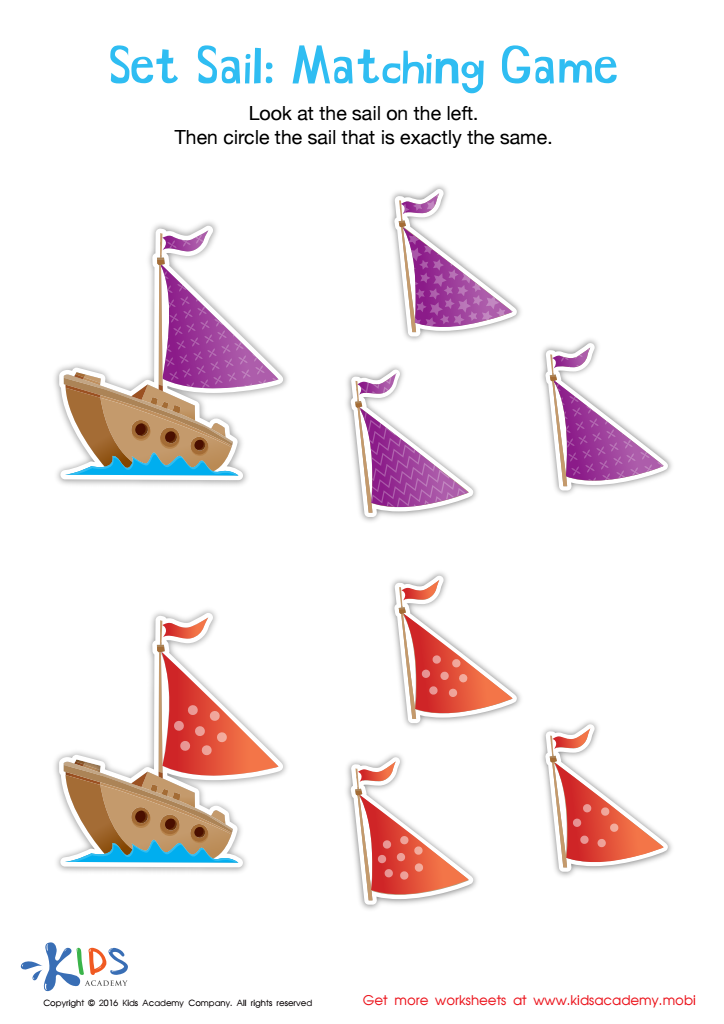
Set Sail Worksheet
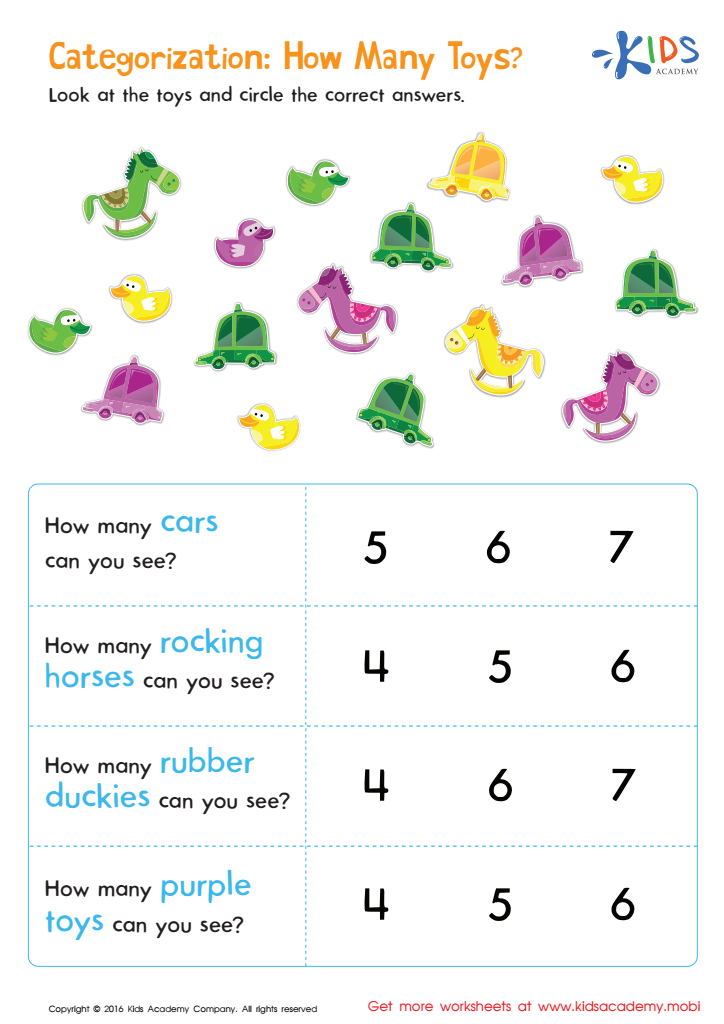
Classifying Toys by Type and Color Sorting Worksheet
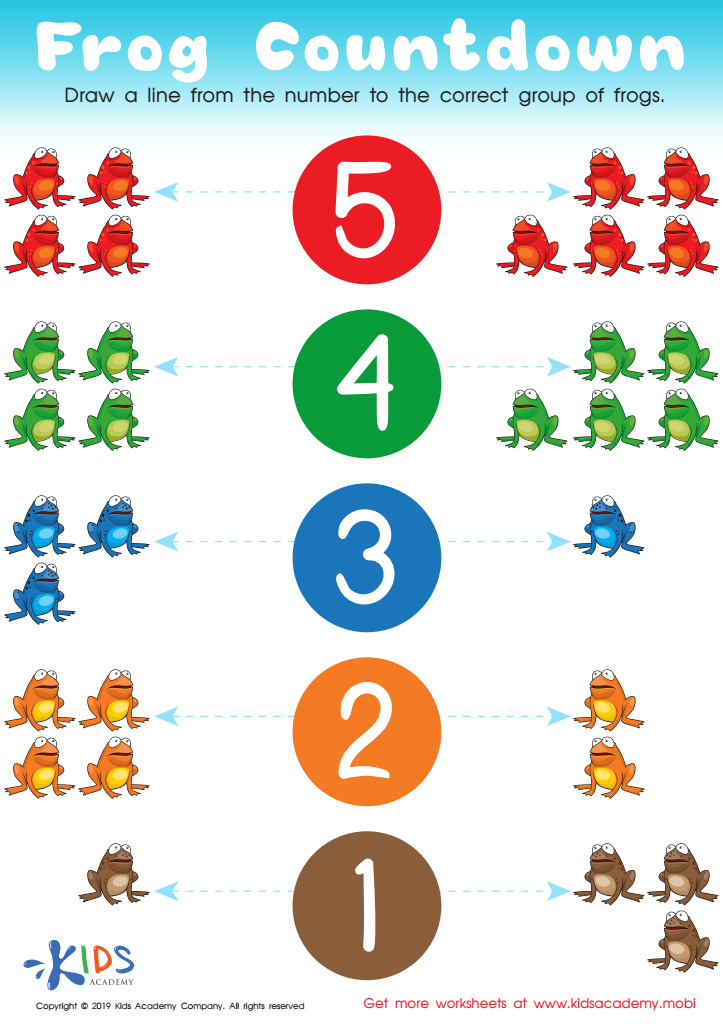
Frog Countdown Worksheet
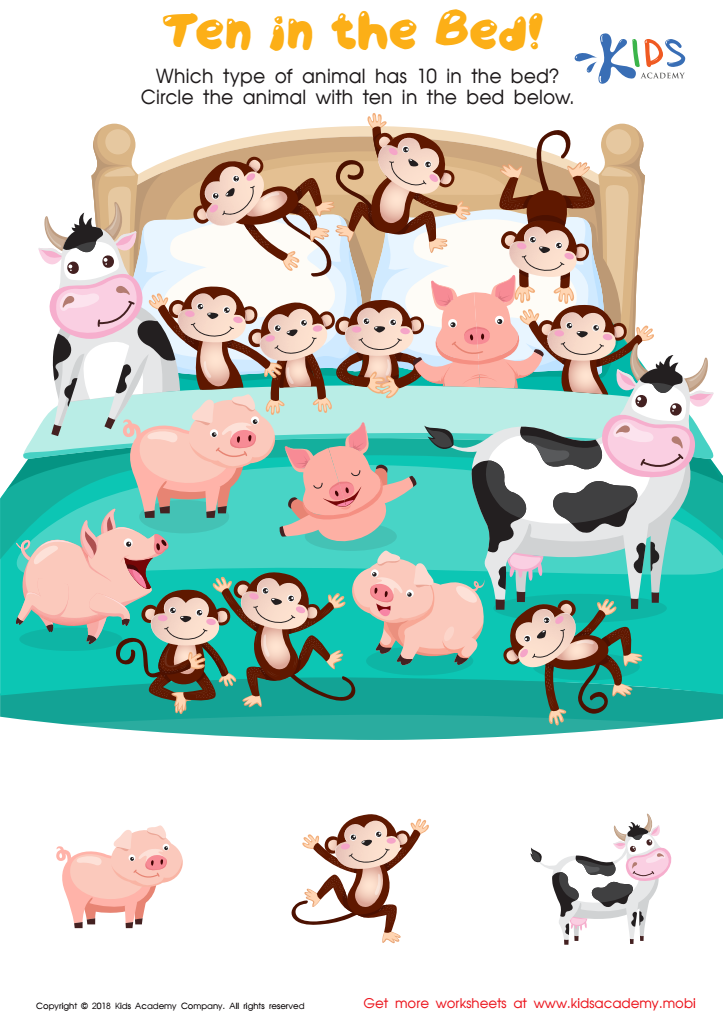
Ten in the Bed Worksheet
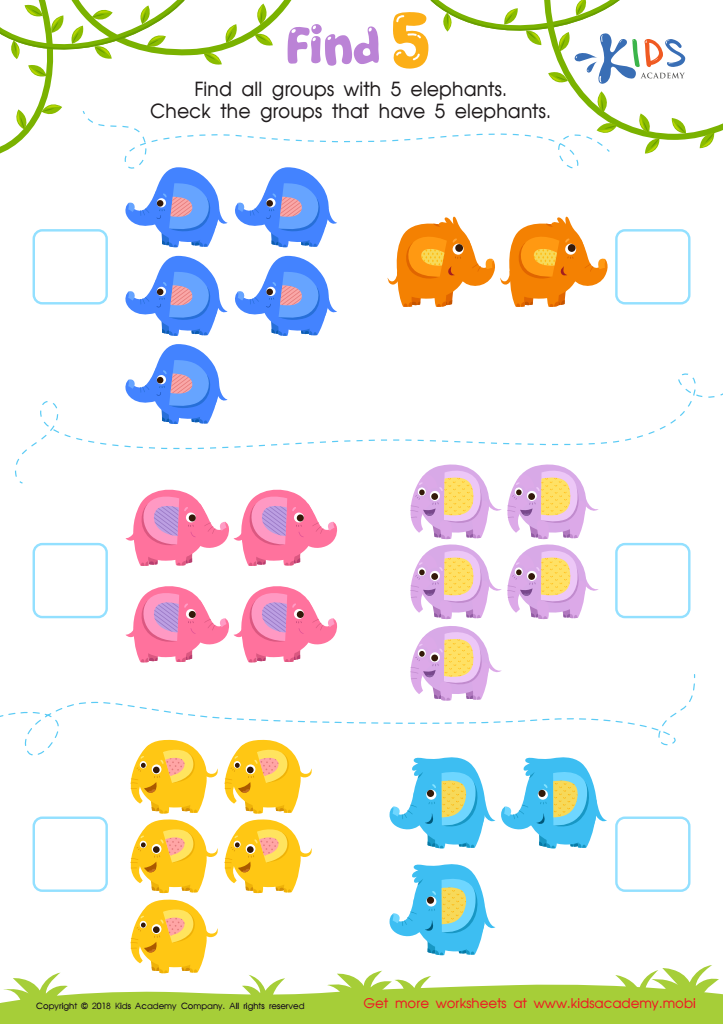
Find 5 Worksheet








Counting skills and normal matching are foundational elements of early mathematics, and their development is crucial for children aged 6-9. Teachers and parents should care about these skills because they form the bedrock upon which more complex mathematical concepts are built. When children engage in counting, they do more than just rote recitation of numbers; they develop an understanding of quantity, number order, and the relationship between numerals and their respective quantities.
Counting also aids in the development of important cognitive abilities, such as memory and attention to detail. It helps children learn to identify patterns and sequences, which are critical skills not just in mathematics, but in problem-solving and logical thinking in general.
Normal matching—pairing objects with corresponding numbers or similar items—complements counting skills by promoting one-to-one correspondence. This means that children learn that each object in a set corresponds to one, and only one, number or item. This understanding is vital for initial exercises in addition, subtraction, and comparing quantities, which are core components of arithmetic.
Moreover, proficiency in these foundational skills increases children’s confidence and enjoyment of math, setting a positive precedent for future learning. Early competency in counting and matching can foster a love for mathematics that may encourage the child’s academic and professional aspirations in STEM fields. Therefore, parents and teachers should prioritize and nurture these skills during the critical early learning years.








