Number Sequencing Normal Numbers up to 100 Worksheets for Ages 6-9
3 filtered results
-
From - To
Discover our engaging "Number Sequencing Normal Numbers up to 100 Worksheets," designed specifically for children aged 6-9. These interactive worksheets help young learners master the essential skill of sequencing numbers through fun and challenging activities. By reinforcing number relationships and patterns, kids will build their confidence in mathematics while enhancing their cognitive abilities. Our worksheets cater to various learning styles, ensuring each child can grasp the concept at their own pace. Perfect for classroom use or at-home practice, these resources create an enjoyable learning experience that paves the way for future math success. Start your child's math journey today!
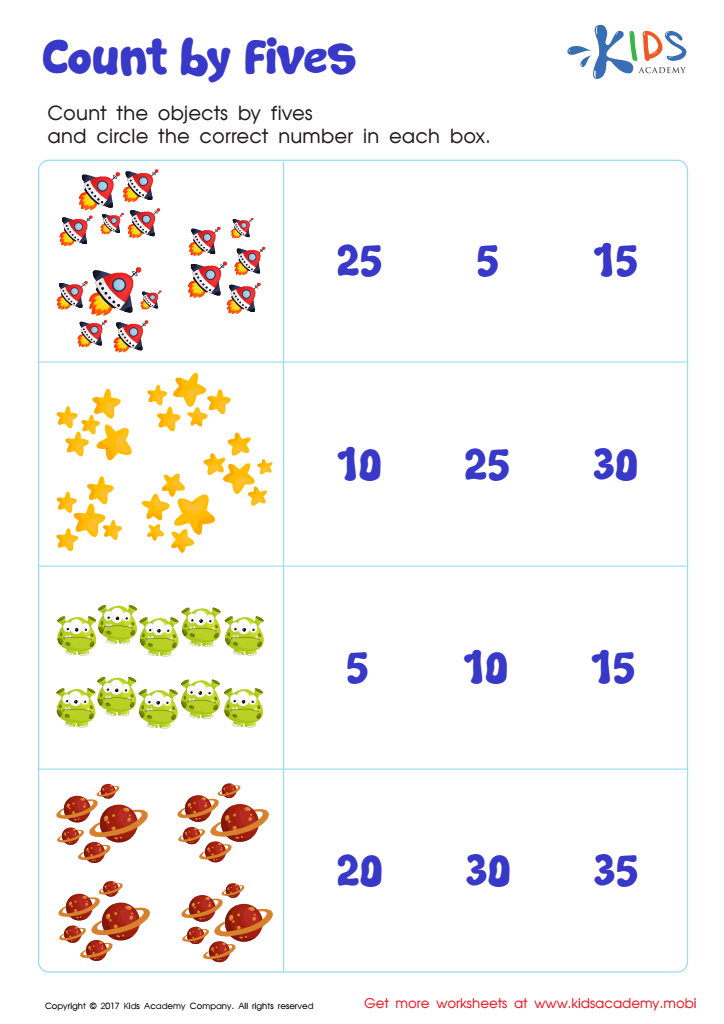
Skip Counting by 5s: Space Math Printable
 Assign to My Students
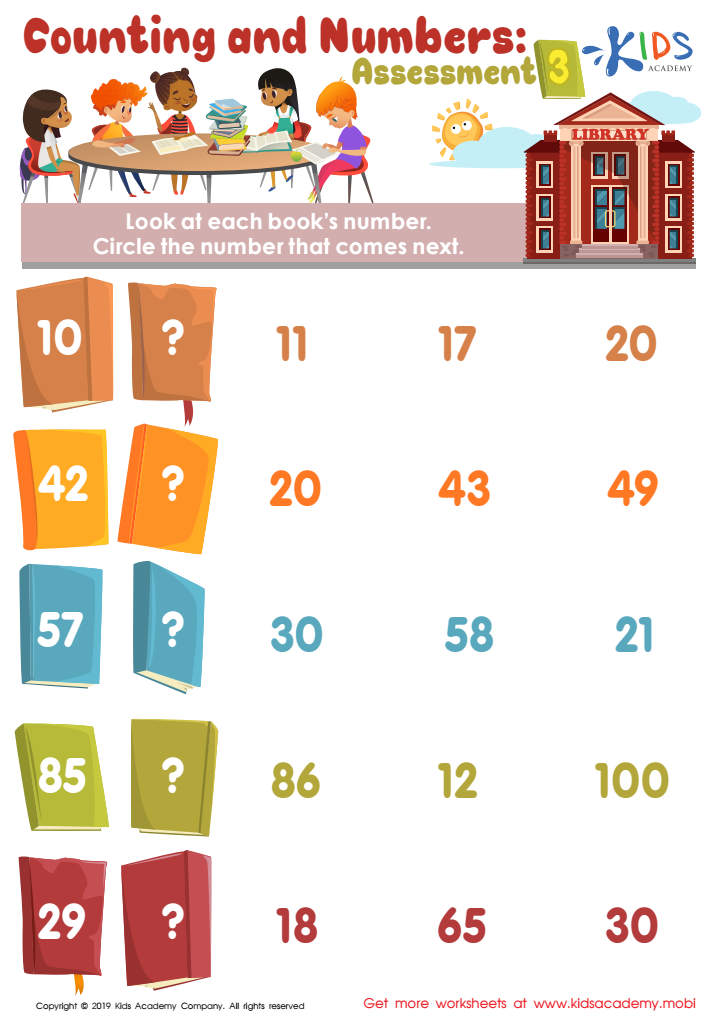
Counting and Numbers: Assessment Worksheet
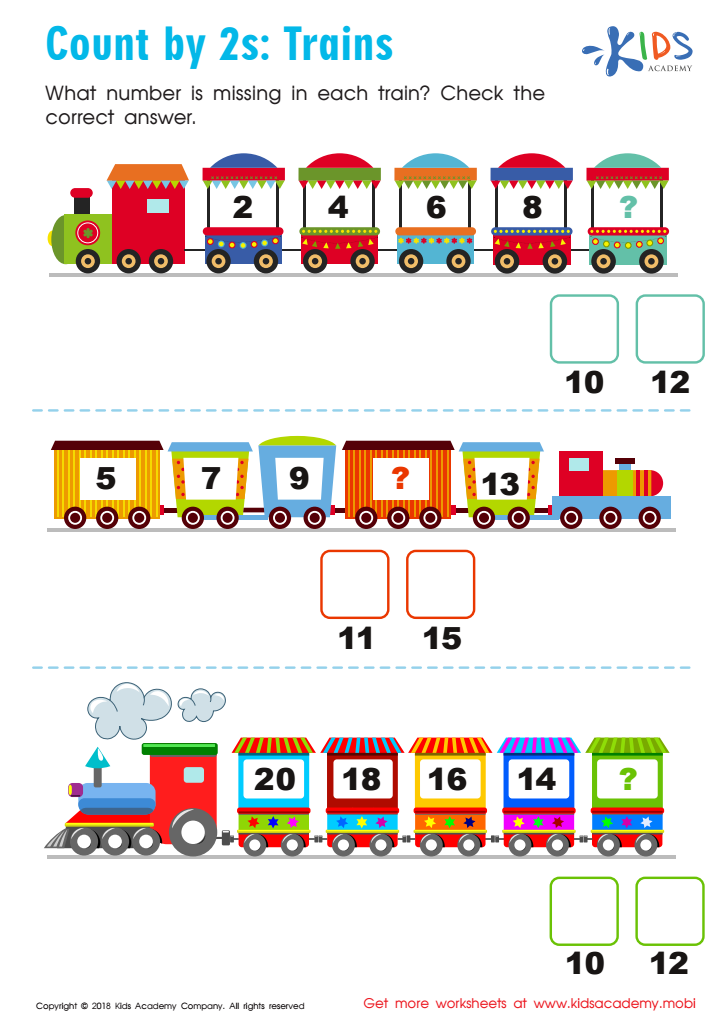
Count by 2's: Trains Worksheet






%20(1).jpg)

Parents and teachers should prioritize number sequencing of whole numbers up to 100 for children aged 6-9 due to its foundational role in mathematical understanding and cognitive development. Mastering number sequences enhances a child's ability to recognize patterns and relationships among numbers, crucial skills for more complex mathematics, such as addition, subtraction, and later, multiplication and division.
At this stage, children develop their number sense, and sequencing helps instill a rational understanding of quantity and order. Familiarity with number sequences allows children to easily navigate activities involving counting, telling time, and understanding measurement—activities they will encounter in daily life and future academic scenarios.
Additionally, this skill fosters critical thinking and problem-solving abilities. When children understand that numbers follow a specific order, they can predict and deduce outcomes, which is vital for higher-order thinking. Moreover, engaging young learners through fun activities and games surrounding number sequencing makes math enjoyable, cultivating a positive attitude toward learning. Hence, focusing on number sequencing prepares children for academic success while building a strong mathematical foundation, enabling them to approach future challenges with confidence. Parents and educators thus play a crucial role in nurturing these fundamental skills during this pivotal developmental stage.