Sorting skills Normal Sorting Worksheets for Ages 6-9
3 filtered results
-
From - To
Enhance your child's sorting skills with our engaging Normal Sorting Worksheets designed specifically for ages 6-9. These worksheets provide a fun and interactive way for kids to practice organizing objects based on various attributes such as shape, size, and color. By working through a range of exercises, children will develop critical early math skills, boost their cognitive abilities, and improve their focus. Our user-friendly worksheets are perfect for classroom settings or flexible home learning. Foster a love for learning while helping your child master essential sorting skills that form the foundation for future mathematical concepts. Explore our resources today!
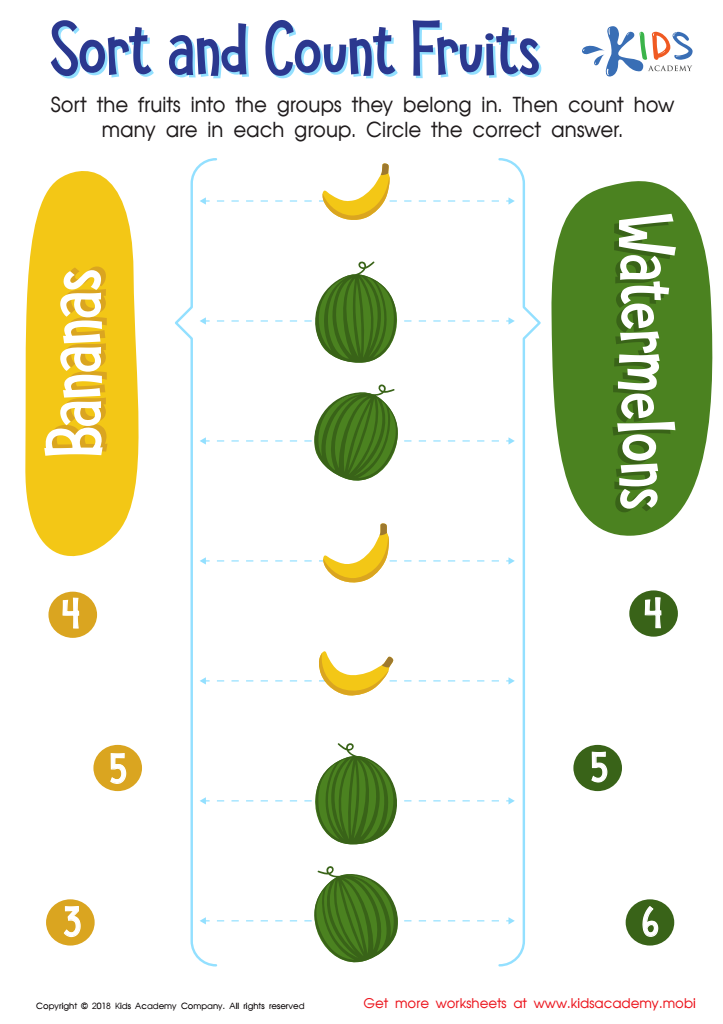
Sort and Count Fruits Worksheet
 Assign to My Students
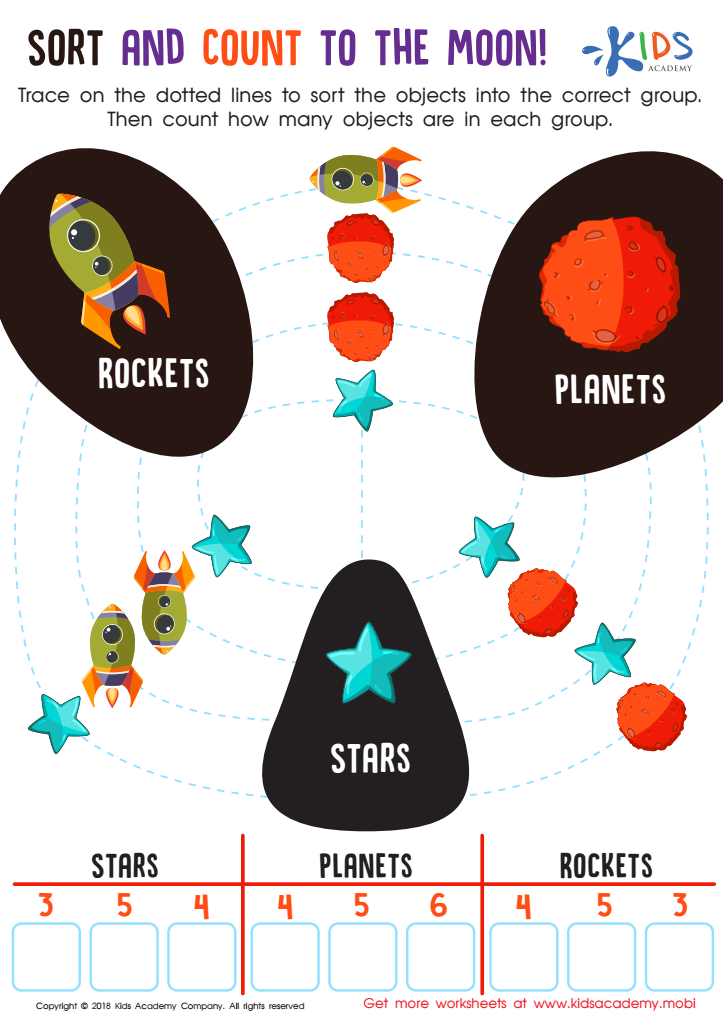
Sort and Count to the Moon Worksheet
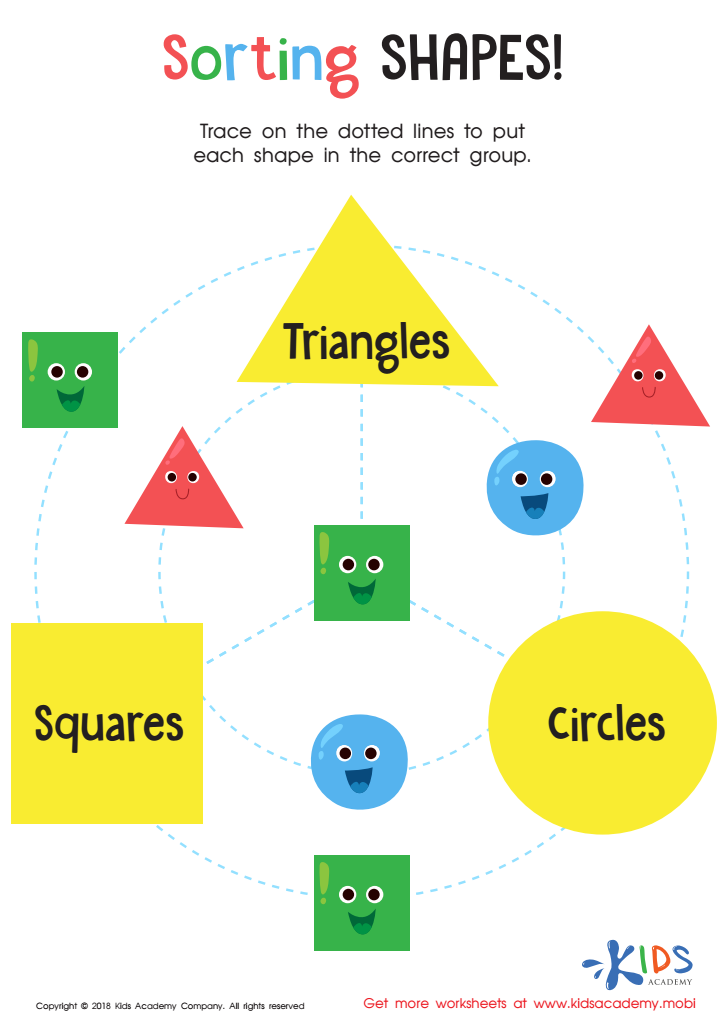
Sorting Shapes - Part 3 Worksheet


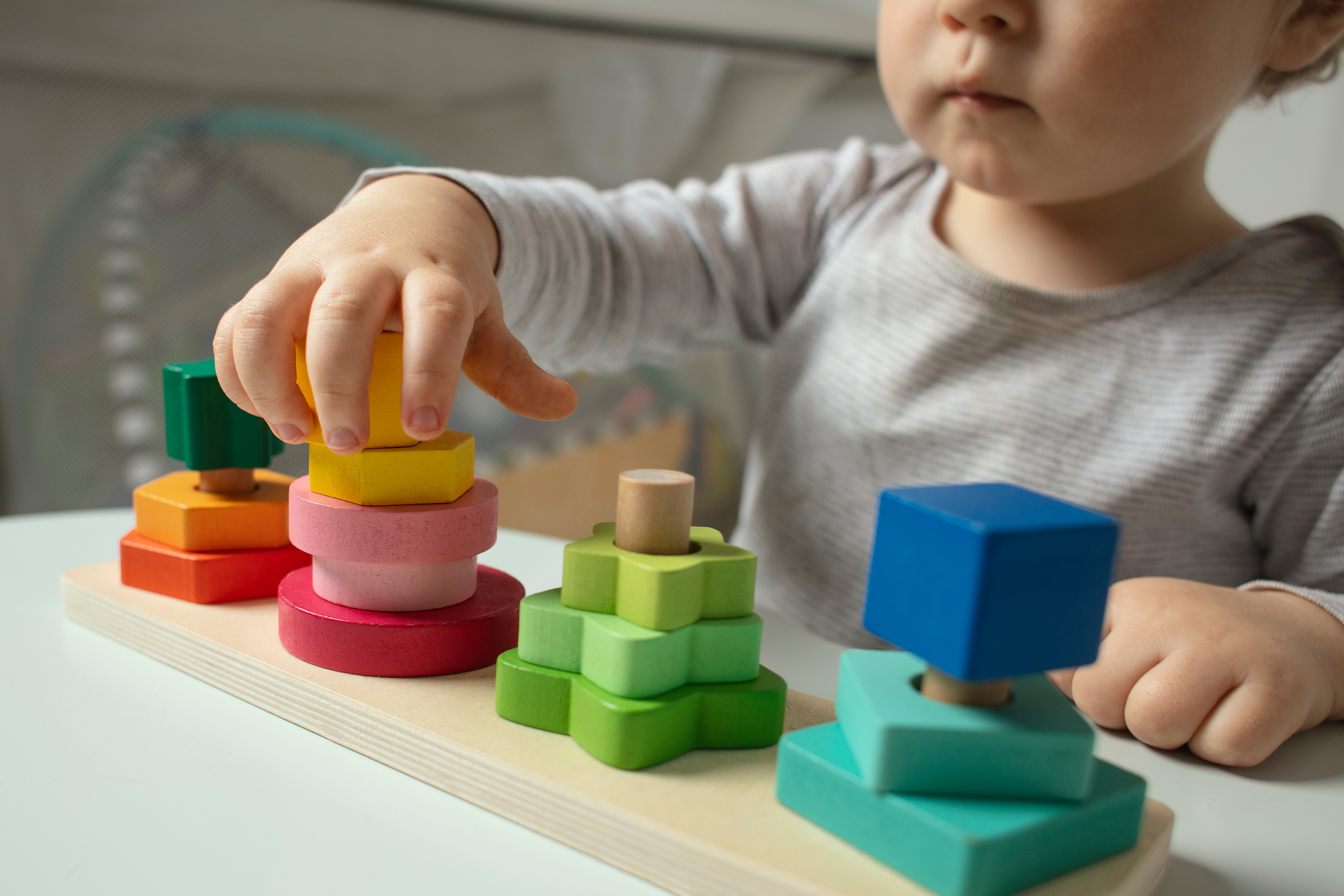





Sorting skills are essential for children aged 6-9 as they form foundational cognitive abilities that are crucial for both academic and life success. During this developmental stage, sorting activities help children categorize objects based on shared attributes like color, shape, size, or function. This process promotes critical thinking and problem-solving skills, fostering the ability to make classifications, identify patterns, and understand relationships.
Parents and teachers should be concerned about cultivating normal sorting skills, as these abilities contribute significantly to early mathematical understanding. Recognizing patterns and organizing information prepares children for more complex concepts such as addition, subtraction, and ultimately, data analysis in higher grades. Furthermore, sorting enhances fine motor skills through hands-on activities that involve manipulating objects.
Additionally, sorting aids language development; as children categorize and describe items, they expand their vocabulary and improve communication skills. Beyond academics, sorting fosters social skills, as children learn to cooperate during group activities. Consequently, nurturing sorting skills lays a groundwork for holistic development. Engaging children in sorting activities—through games, arts, or everyday tasks—can make the learning process enjoyable while equipping them with vital skills for future learning and everyday decision-making.








