Rhyming skills development Normal Reading Worksheets for Ages 6-9
3 filtered results
-
From - To
Boost your child's reading confidence and phonetic awareness with our "Rhyming Skills Development Normal Reading Worksheets for Ages 6-9." Designed to engage and educate, these worksheets help young learners master the art of rhyming, a crucial skill for reading fluency. Each activity is crafted to make learning fun and interactive, encouraging children to recognize and produce rhyming words. Perfect for use at home, school, or tutoring sessions, our expert-designed materials foster a love for reading and enhance language skills. Set your child on the path to reading success today with our dynamic and educational worksheets!
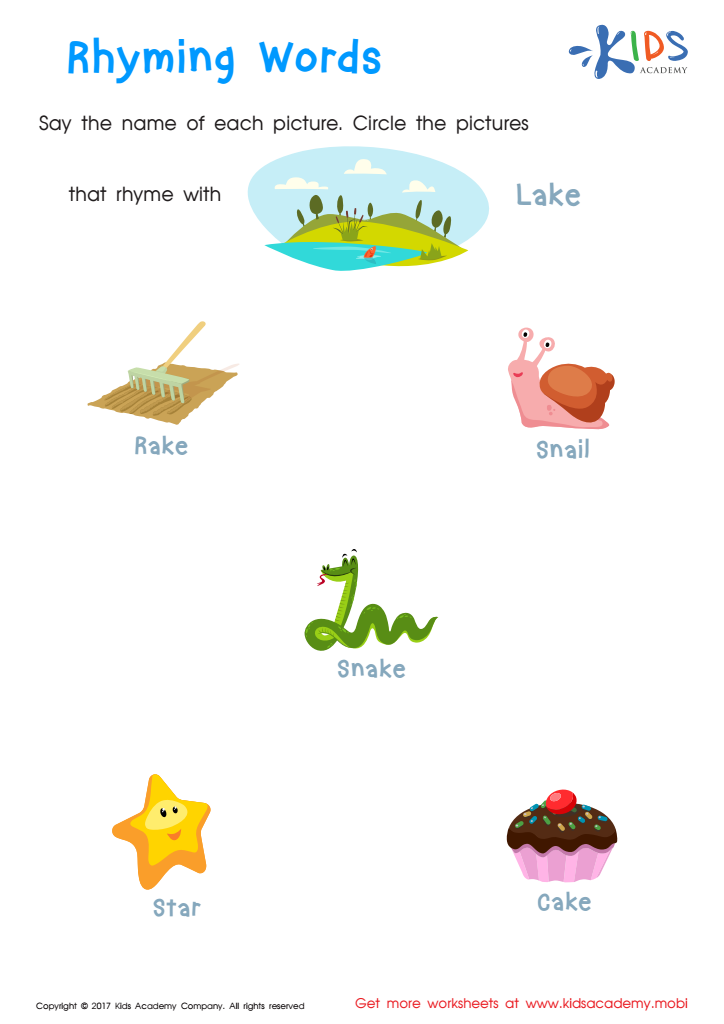
Rhyming Words Rhyming Worksheet
 Assign to My Students
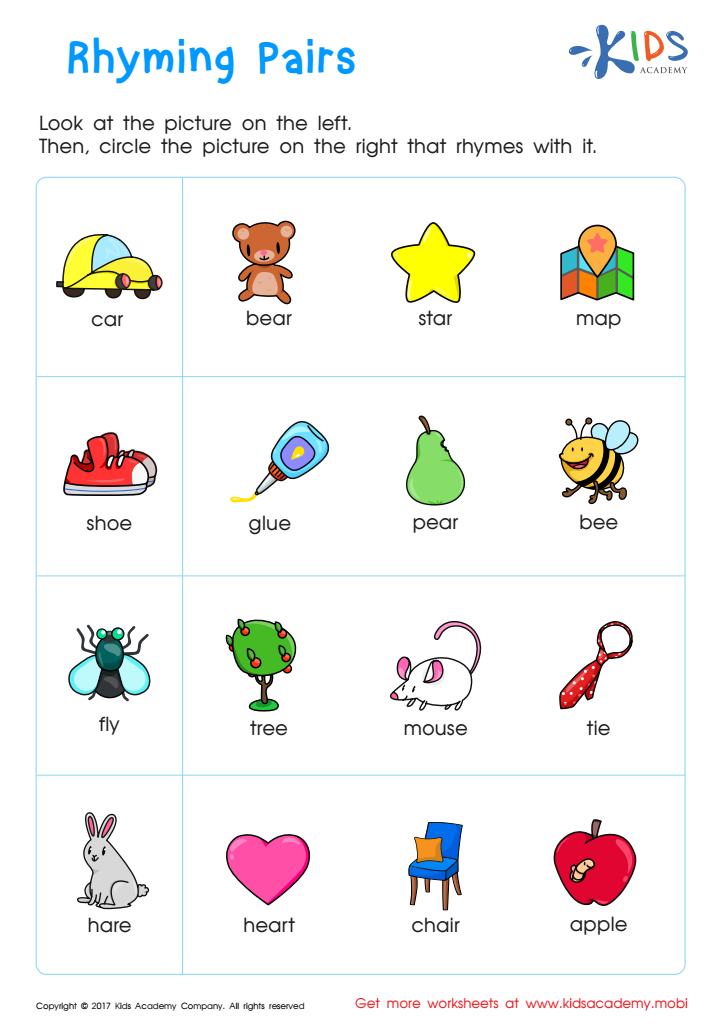
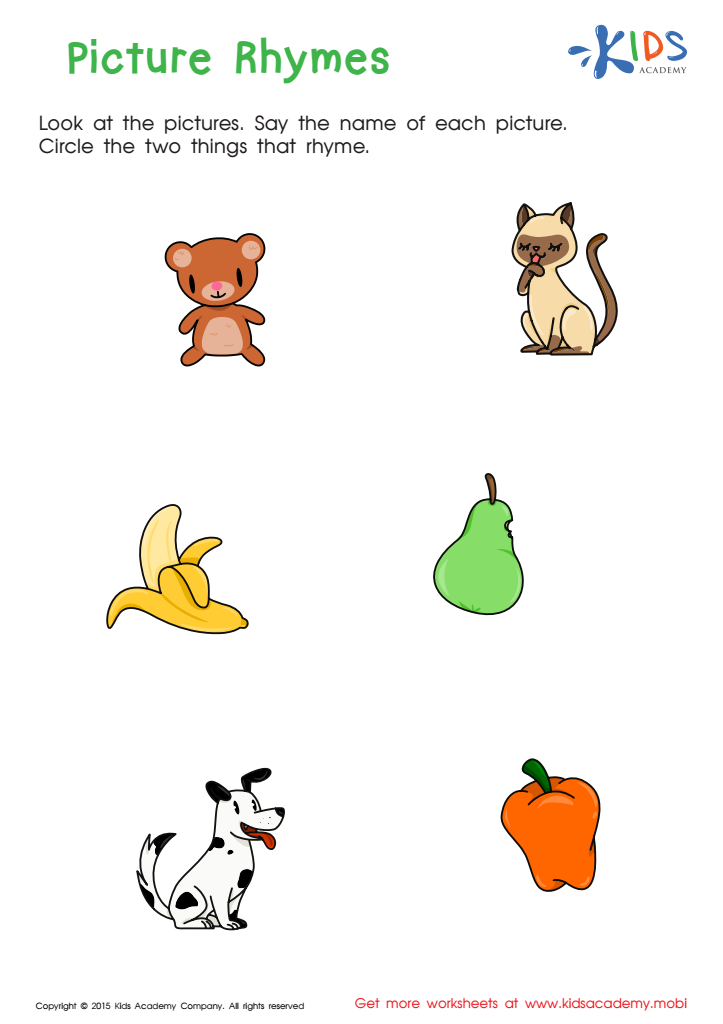
First Words: Picture Rhymes Worksheet






.jpg)

Rhyming skills are fundamental for young children, particularly in the critical age range of 6-9 years, as they form a cornerstone of phonological awareness—a child's ability to identify and work with sounds in spoken language. This skill is a strong predictor of future reading success and literacy development.
First, recognizing and producing rhymes help kids understand sound patterns and the concept of word families, making it easier for them to decode and read new words. When children understand that "cat," "bat," and "hat" share similar endings, they can more efficiently apply this knowledge when encountering new rhyming words.
Second, rhyming supports memory retention. Rhyming words stick in children's minds more effectively, helping them learn new vocabulary faster. Additionally, engaging with rhyming texts can enhance a child's listening and comprehension skills, which are essential for reading fluency.
Moreover, songs and poems are often composed of rhyming words, making them enjoyable tools for learning. This enjoyment and engagement promote a positive attitude towards reading, nurturing lifelong readers. Parents and teachers should prioritize rhyming activities, like reading rhyming books, singing rhyming songs, and playing rhyming games, to enrich children's phonemic awareness, thereby laying a strong foundation for their overall reading and language development.








