
Problem-Solving Skills Normal Reading Fiction Worksheets for Ages 6-9
7 filtered results
Difficulty Level
Grade
Age
-
From - To
Subject
Activity
Standards
Enhance your child's reading comprehension and critical thinking with our Problem-Solving Skills Normal Reading Fiction Worksheets, designed specifically for children aged 6-9. These engaging worksheets combine captivating fictional stories with thought-provoking questions, encouraging young readers to analyze scenarios, identify challenges, and propose solutions. Each activity is tailored to develop essential problem-solving abilities while fostering a love for reading. Perfect for teachers and parents, these worksheets promote collaboration, creativity, and cognitive growth through fun and interactive learning. Boost your child's reading skills and equip them for future challenges with our enriching resources. Download the worksheets today and watch your young learner thrive!
Favorites
With answer key
Interactive
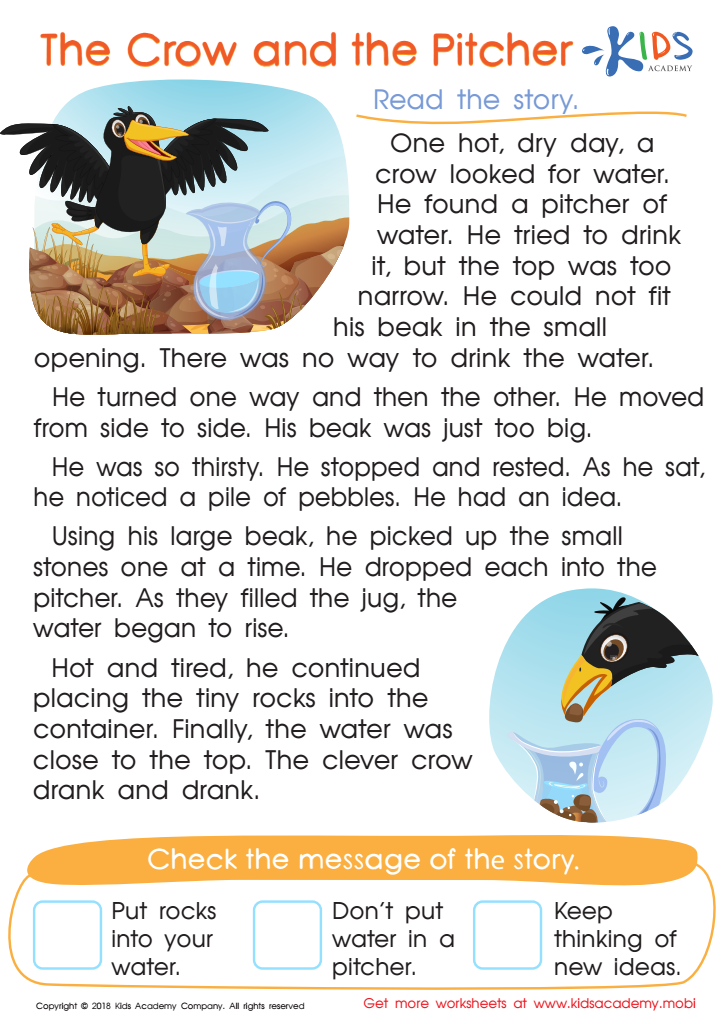
The Crow and the Pitcher Worksheet
Introduce your child to reading comprehension with this fascinating worksheet from Kids Academy! Featuring Aesop's fable of a thirsty crow, your child will enjoy reading and determining the central theme of the passage. This worksheet is a great way to give your child a purpose for reading while helping to build their comprehension skills.
 Assign to My Students
The Crow and the Pitcher Worksheet
Worksheet
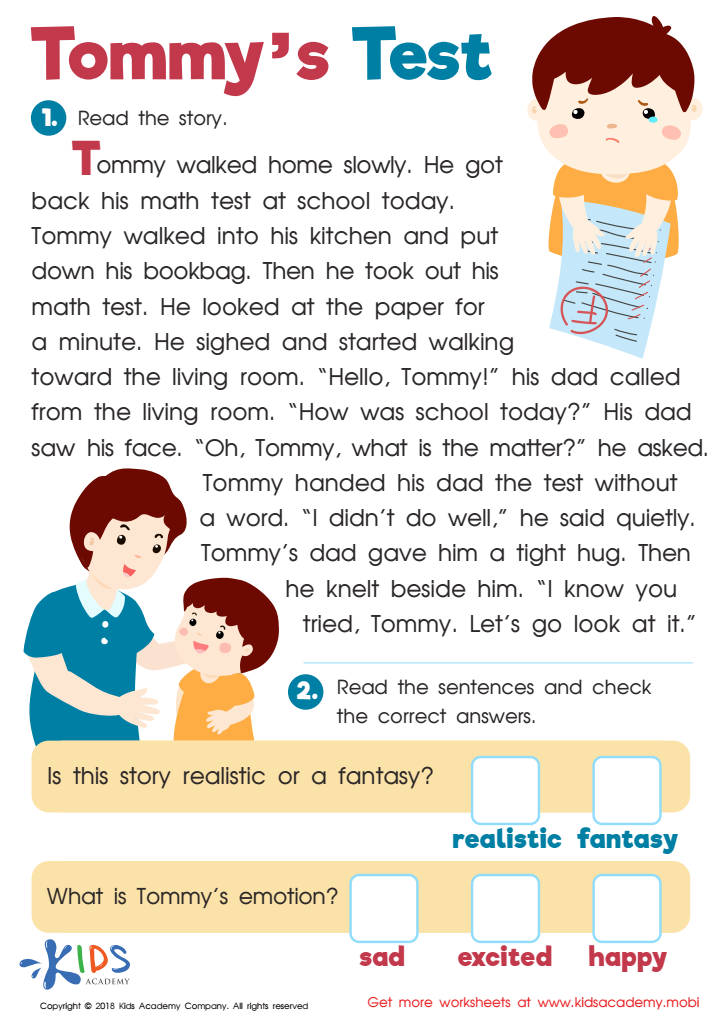
Tommys Test Worksheet
Reading short stories to your students builds a bond, teaches new words and lessons. Read the story aloud and then have them listen for details. Ask them the questions at the bottom and help them check the answers.
Tommys Test Worksheet
Worksheet
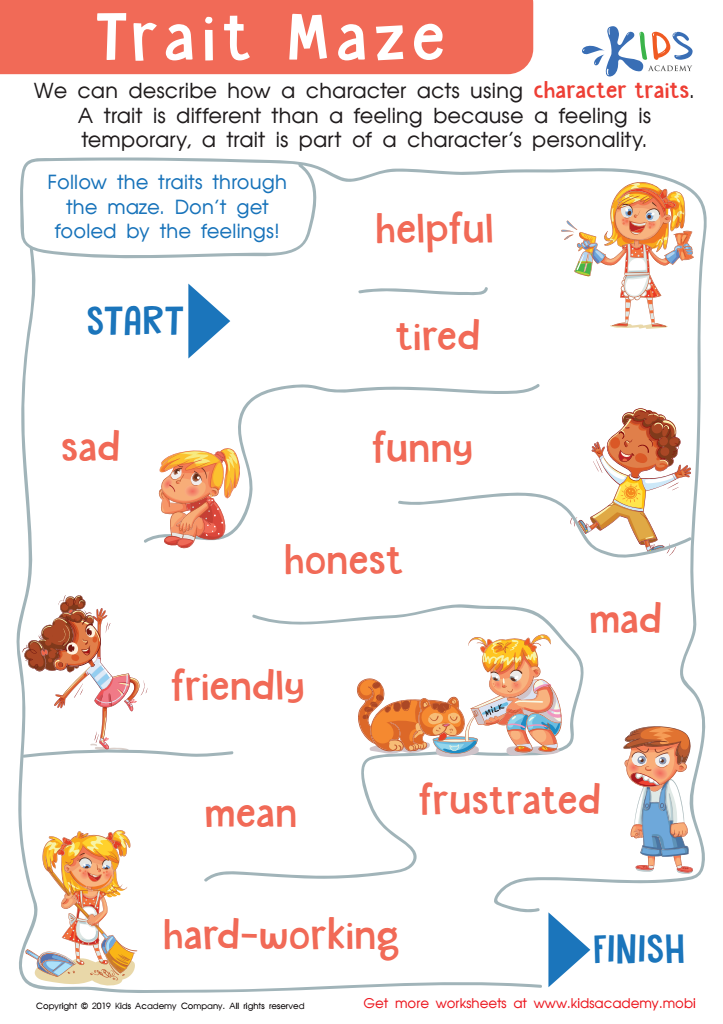
Trait Maze Worksheet
A trait is a character's personality and should not be confused with a feeling, which is temporary. In this worksheet, kids learn about traits by following them through a maze and ignoring the feelings on the path.
Trait Maze Worksheet
Worksheet
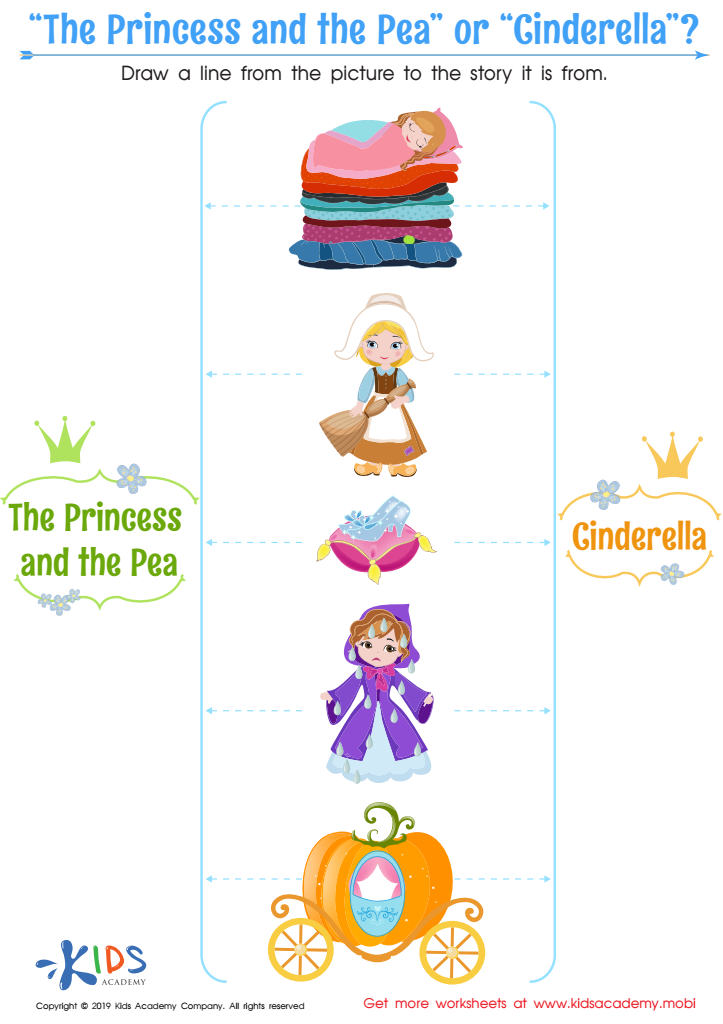
“The Princess and the Pea” or “Cinderella” Worksheet
Help your child identify the characters and objects from both the Princess and the Pea and Cinderella. Ask them to draw a line from the pictures to the story it's from on the tracing sheet. Encourage them to tell you the similarities between the two stories. Enjoy the tale with your daughter and watch her be fascinated by these two classic children's stories.
“The Princess and the Pea” or “Cinderella” Worksheet
Worksheet
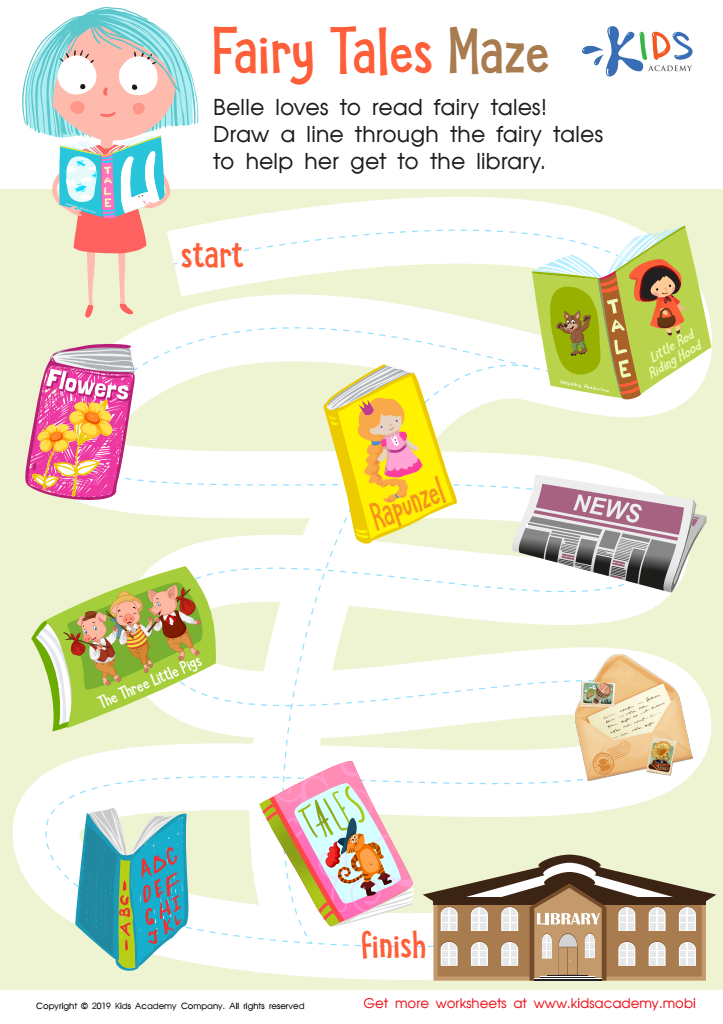
Fairy Tales Maze Worksheet
Kids love mazes and fairy tales, so this free worksheet is a great way to help teach young readers about familiar topics. They'll join Bella and use the traceable lines to travel through different reading genres, and find their way to the library for a nice reward!
Fairy Tales Maze Worksheet
Worksheet
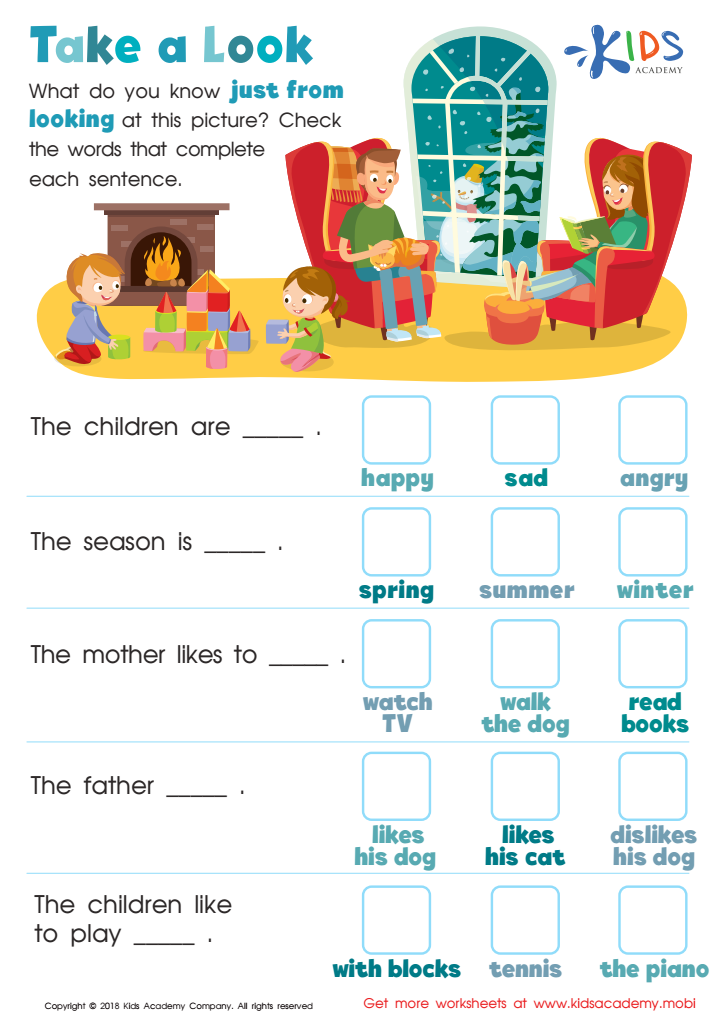
Take a Look - Part 1 Worksheet
Young learners gain understanding when using picture clues when reading. Looking at illustrations can help students learn the meaning of key vocabulary when reading fiction or informational text. Ask your students to look at the worksheet and observe what they can learn from the picture. It's a great comprehension strategy for early readers.
Take a Look - Part 1 Worksheet
Worksheet
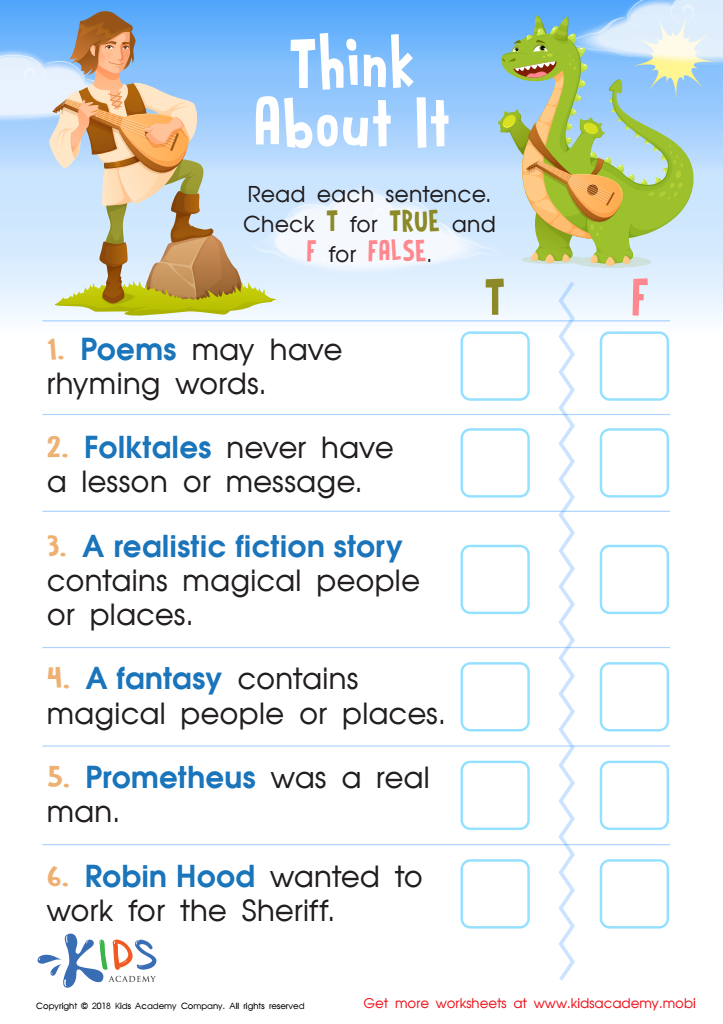
Think About It: Assessment Worksheet
Reading is a fun and important way to learn. Help your students become better readers with this simple yet colorful worksheet. Read each sentence aloud, then have them read it by themselves. Ask them to check T for True and F for False. It's a great way to practice their reading skills!
Think About It: Assessment Worksheet
Worksheet
Join Kids Academy for Free
Who is primarily going to use this learning content?







Problem-solving skills are essential for young children as they provide the foundation for critical thinking, creativity, and resilience. Teaching these skills through normal reading fiction for ages 6-9 encourages children to engage with diverse narratives and characters, enhancing their ability to understand and navigate challenges. When parents or teachers prioritize this approach, they foster an environment where children learn to identify problems, explore options, and devise solutions—skills crucial not only in academic contexts but throughout life.
Fiction allows children to connect emotionally with characters facing obstacles, helping them to empathize and reflect on their own experiences. Identifying with characters and analyzing their decisions can lead to discussions about resilience, consequences, and alternative problem-solving strategies. Additionally, reading stories often involves navigating plot twists and conflicts, which naturally cultivates analytical thinking and adaptability.
Furthermore, developing problem-solving skills at a young age contributes to improved social interactions and emotional intelligence. Children learn to communicate their thoughts and negotiate solutions in collaborative settings, laying the groundwork for healthy relationships and constructive teamwork. Overall, immersing children in problem-solving through engaging fiction not only entertains but empowers them with tools essential for their academic journey and future challenges.







