Developing observation skills Normal Science Worksheets for Ages 6-9
3 filtered results
-
From - To
Enhance your child's observation skills with our engaging Normal Science Worksheets, tailored for ages 6-9. These worksheets are designed to cultivate curiosity and promote critical thinking through hands-on activities and interactive exercises. Children will explore the world around them by observing, describing, and analyzing various scientific phenomena. The age-appropriate tasks encourage children to ask questions, make predictions, and visually represent their findings, fostering a deeper understanding of scientific concepts. Ideal for classroom settings or homeschooling environments, our worksheets provide an excellent way to combine fun and education while developing essential observation skills. Ignite your child's love for learning today!
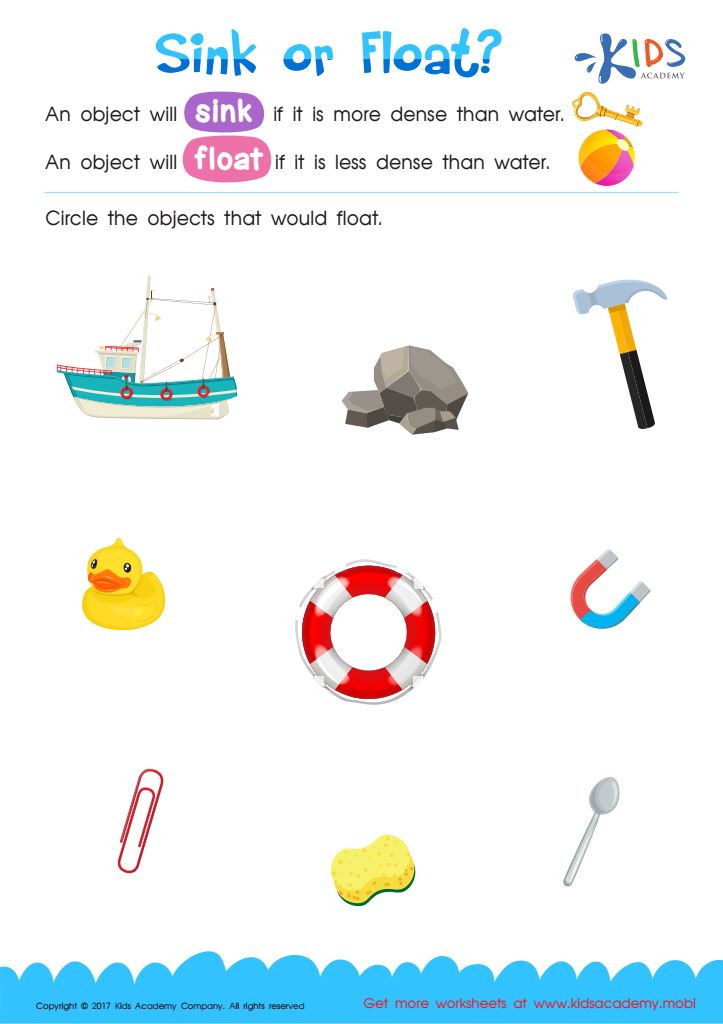
Sink or Float Printable
 Assign to My Students
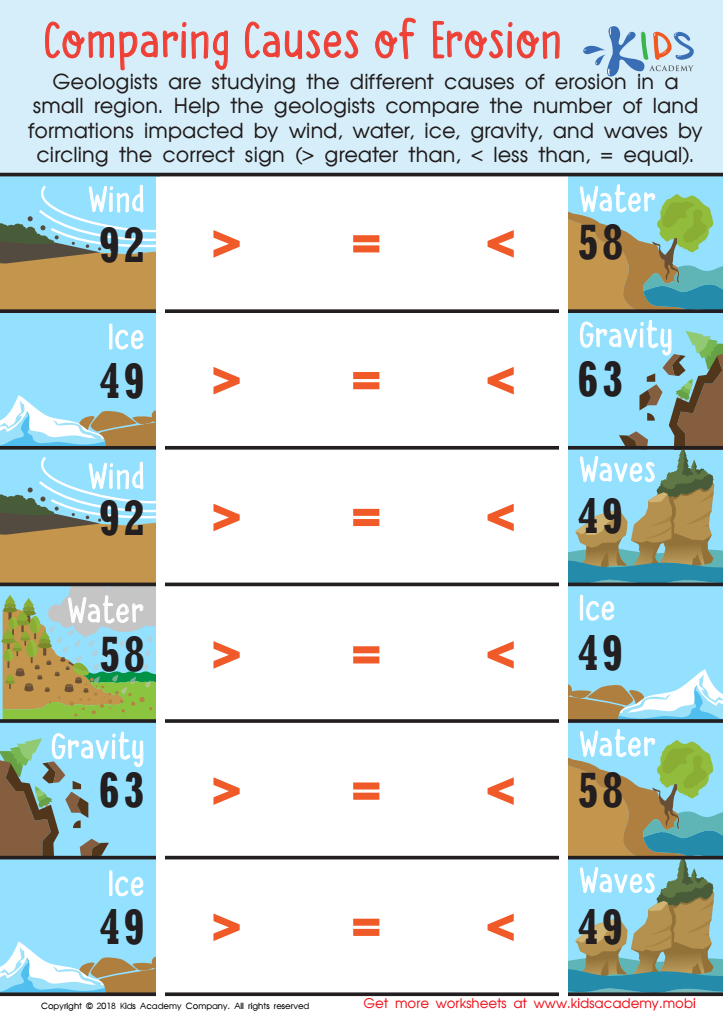
Comparing Causes of Erosion Worksheet
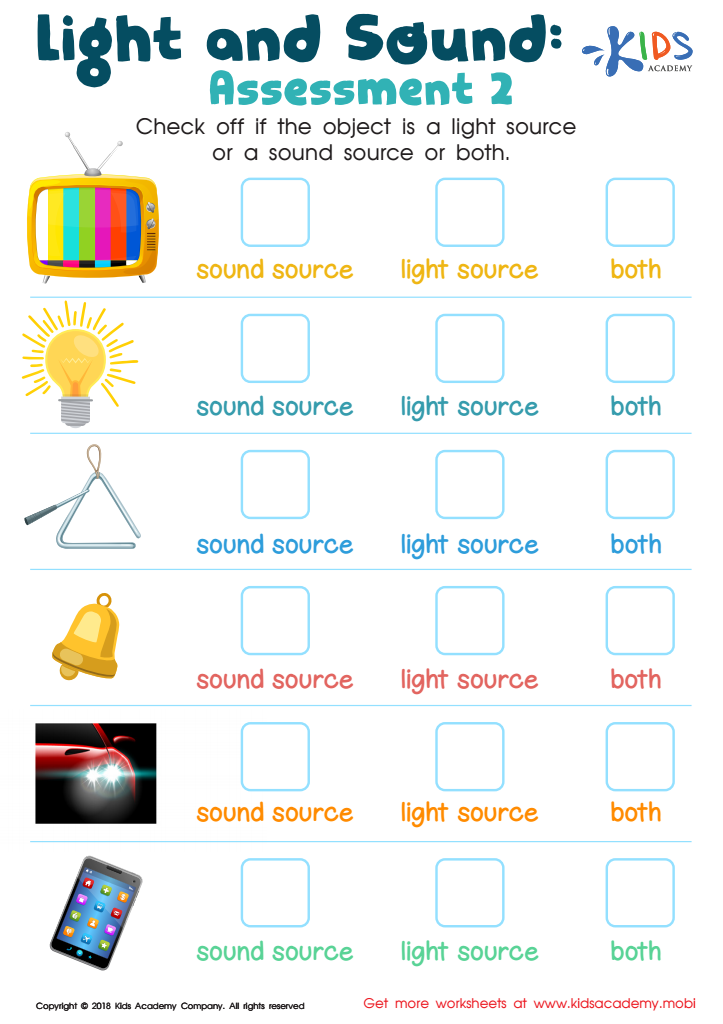
Light and Sound: Assessment 2 Worksheet







Developing observation skills in young children, particularly in the context of Normal Science, is crucial for parents and teachers for several reasons. First, observation is foundational to scientific inquiry, allowing children to gather information about their environment, form questions, and explore the world around them. At ages 6-9, children are naturally curious, and honing their observation skills can enhance this curiosity, laying the groundwork for critical thinking and problem-solving capabilities.
Moreover, observational skills help children differentiate between essential and non-essential information, fostering a sense of focus and cognitive organization. Engaging in observational activities encourages active learning, leading to better retention of information and concepts in science and other subjects. This practice can be integrated into everyday activities, creating a more interactive and dynamic learning environment.
Additionally, developing observation skills nurtures social-emotional learning, as children learn to communicate their findings, listen to others, and collaborate effectively. This contributes to their overall development and prepares them for future academic and social settings. In sum, fostering observation skills not only enhances scientific understanding but also supports holistic child development, making it imperative for parents and teachers to prioritize these skills.







