Historical Knowledge Normal Science Worksheets for Ages 6-9
5 filtered results
-
From - To
Explore our engaging "Historical Knowledge Normal Science Worksheets" designed for children ages 6-9. These worksheets provide an exciting opportunity for young learners to discover key events, important figures, and significant cultural developments throughout history. With a variety of activities such as matching, fill-in-the-blanks, and creative writing prompts, your child will develop critical thinking skills and enhance their understanding of the past. Perfect for homeschoolers or classroom use, these age-appropriate resources encourage curiosity and promote a love of learning. Download our colorful, interactive worksheets and set your child on a fun journey through historical exploration today!
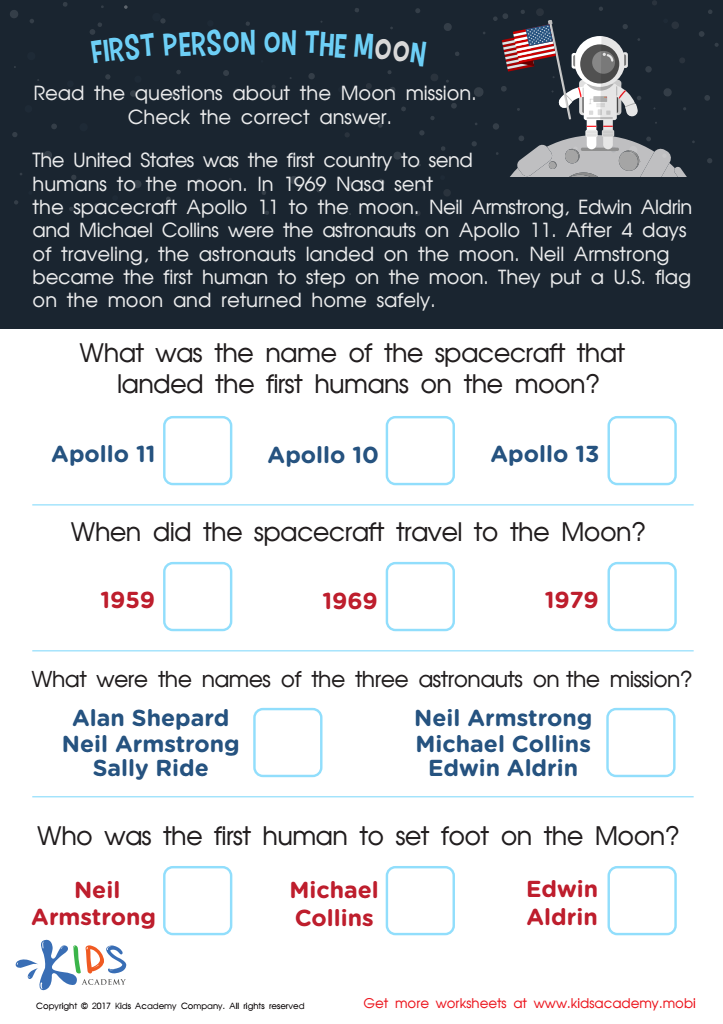
First Person on the Moon Worksheet
 Assign to My Students
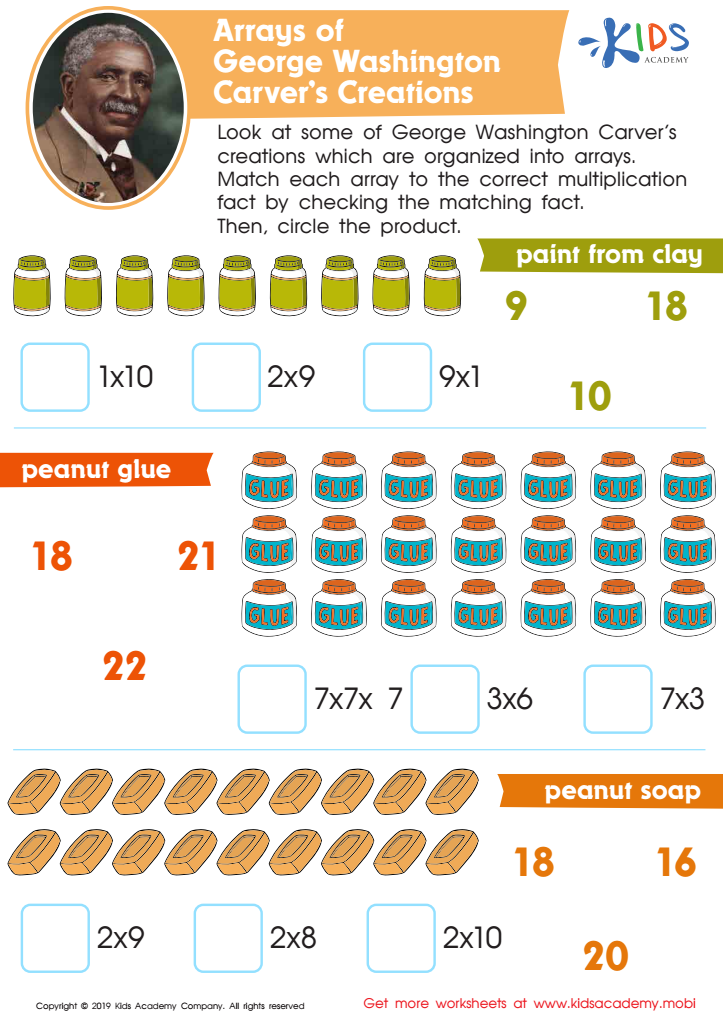
Arrays of George Washington Carver’s Creations Worksheet
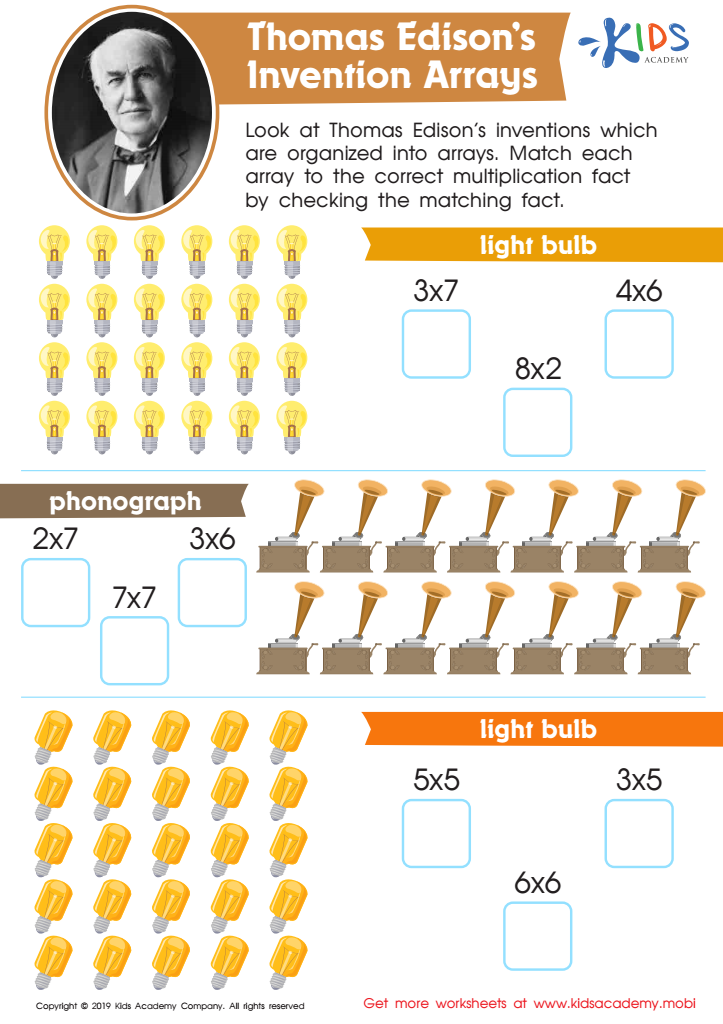
Thomas Edison’s Invention Arrays Worksheet
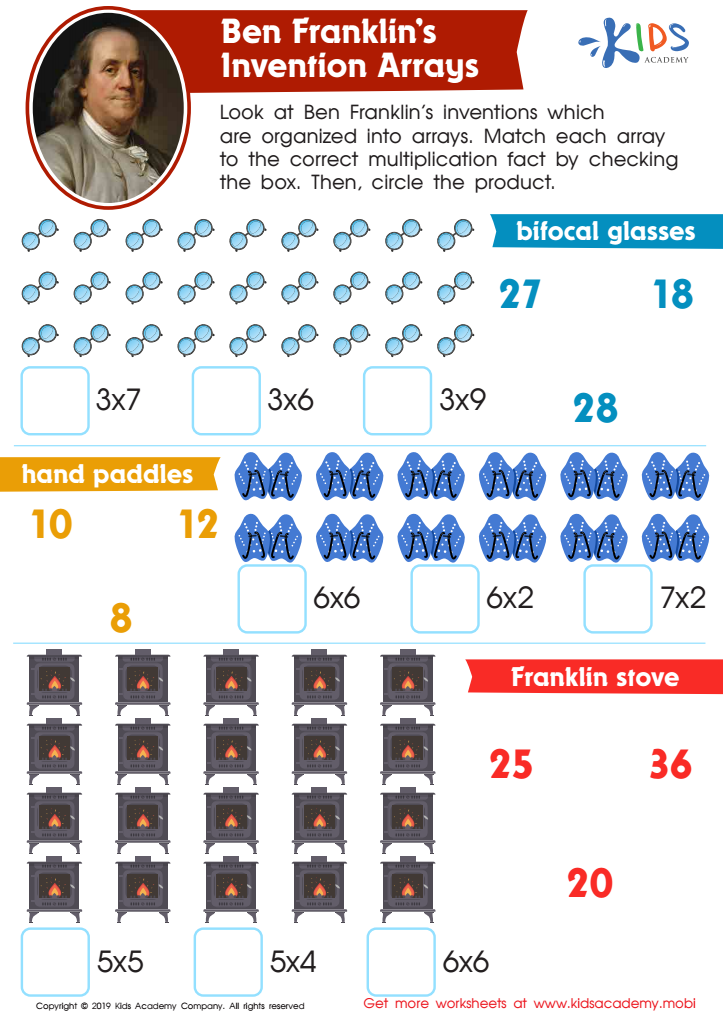
Ben Franklin’s Invention Arrays Worksheet
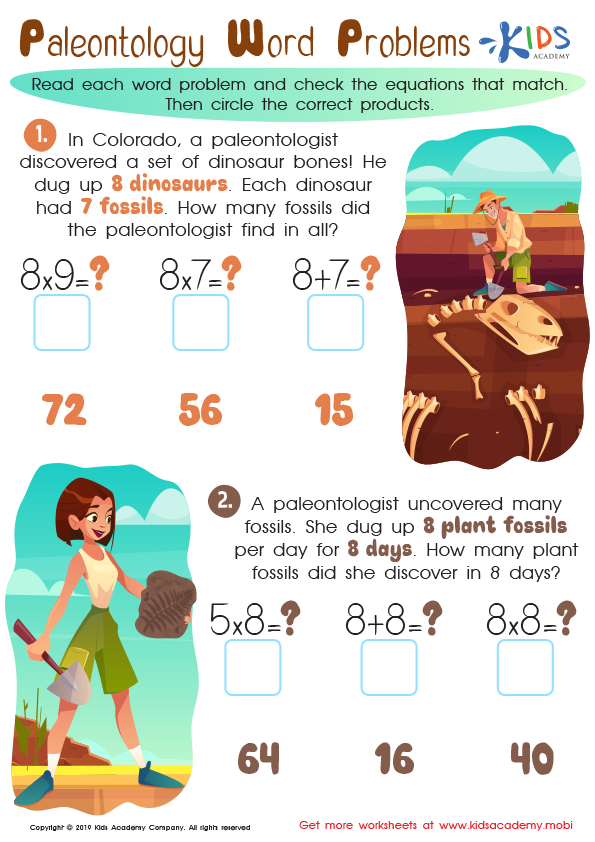
Archeology Word Problems Worksheet







Parents and teachers should care about Historical Knowledge Normal Science for children aged 6-9 because it lays the foundation for critical thinking, creativity, and cultural awareness. At this developmental stage, children are naturally curious and often driven to understand the world around them. Introducing them to historical knowledge encourages exploration of past events, diverse cultures, and scientific discoveries, allowing young learners to connect broader narratives with their own lives.
Understanding historical context promotes empathy and social awareness, helping children appreciate different perspectives and develop a sense of belonging within a larger community. Knowledge of historical events and figures encourages them to question, investigate, and draw conclusions, fostering essential skills for lifelong learning. Additionally, studying the evolution of scientific ideas lays the groundwork for their future understanding of scientific processes and principles.
By integrating Historical Knowledge Normal Science into the curriculum, educators and parents can inspire a love for learning and discovery. Encouraging critical engagement with history and science at this formative age helps shape informed, conscientious individuals prepared to navigate the complexities of an ever-evolving world. Ultimately, this well-rounded approach nurtures skilled thinkers who value knowledge and creativity, empowering them to contribute positively to society.







