Science knowledge Normal Science Worksheets for Ages 6-9
3 filtered results
-
From - To
Discover our engaging "Science Knowledge Normal Worksheets" designed specifically for children aged 6-9! These vibrant and interactive worksheets are perfect for nurturing a love for science in young learners. Covering essential concepts like the scientific method, ecosystems, and the properties of matter, these resources spark curiosity and encourage critical thinking. Each worksheet features fun illustrations and straightforward instructions, making it easy for students to grasp complex topics. Ideal for classroom use or at-home learning, our worksheets support skill development while making science enjoyable. Explore our collection today and inspire your child's scientific journey!
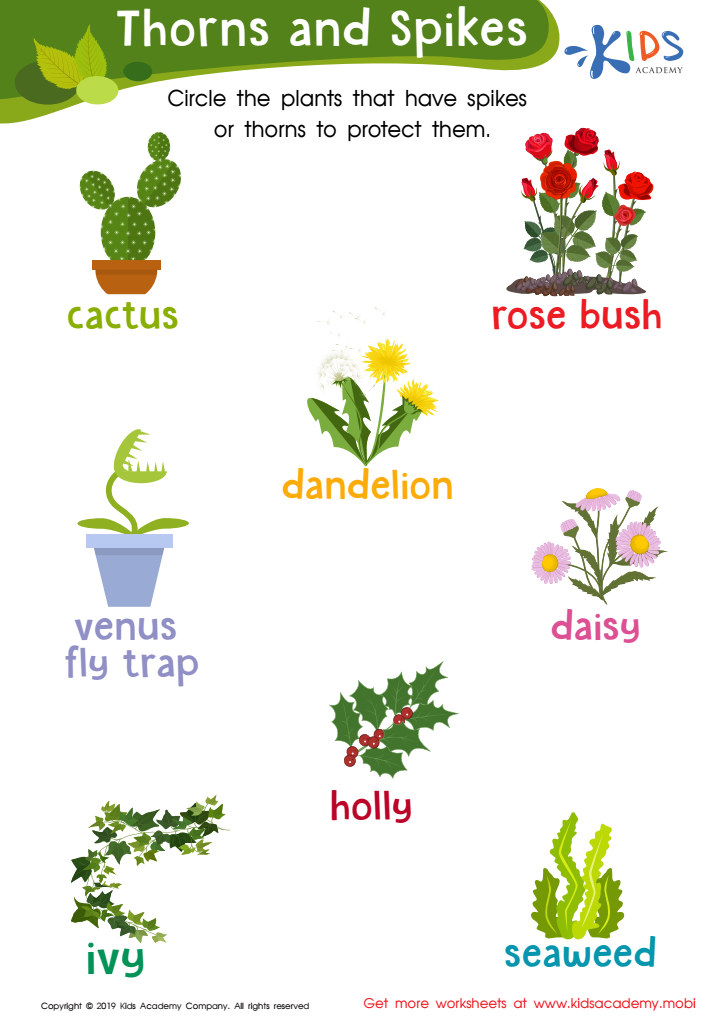
Thorns and Spikes Worksheet
 Assign to My Students
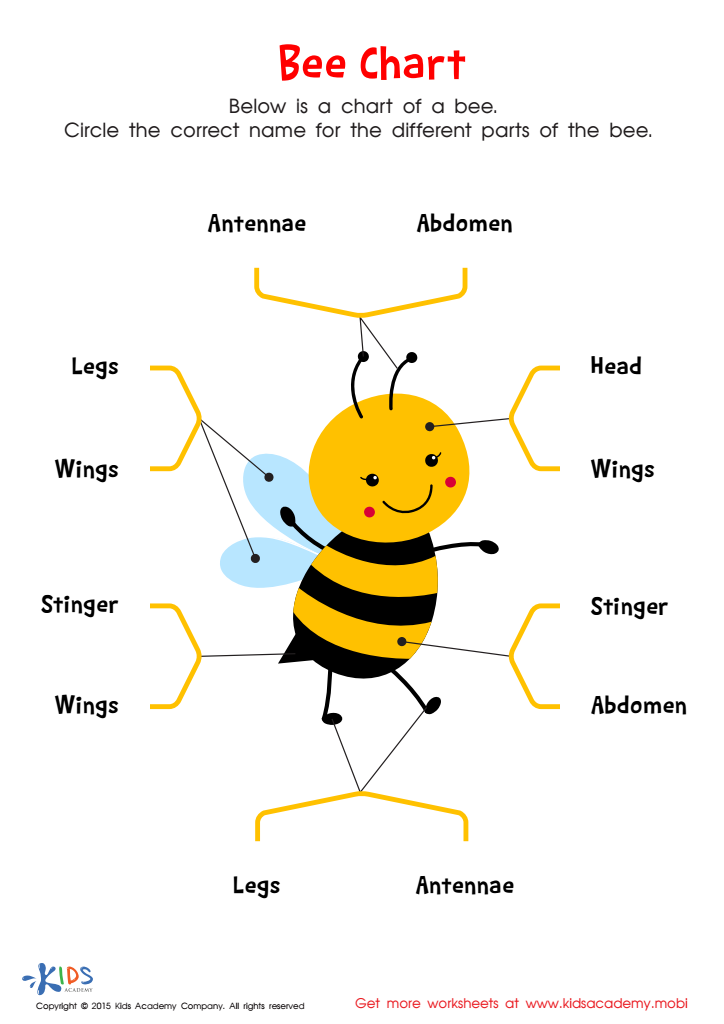
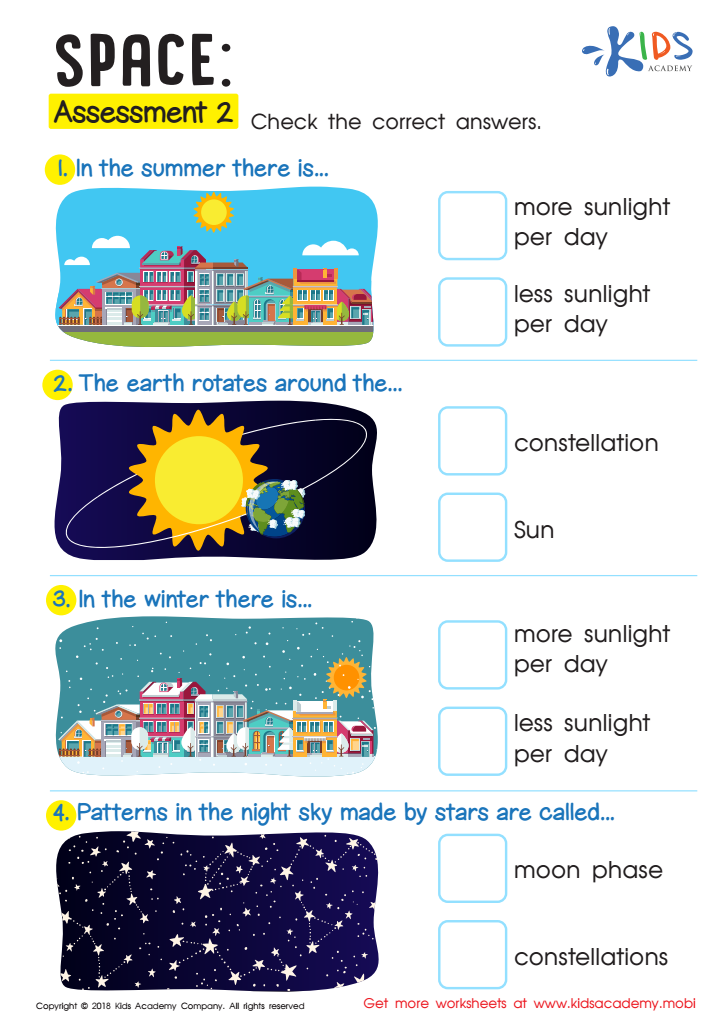
Space: Assessment 2 Worksheet








Understanding and appreciating science plays a crucial role in the education of children aged 6-9, and parents and teachers should prioritize this knowledge for several reasons. At this age, children inherently possess a natural curiosity about the world around them. Introducing them to normal science concepts helps nurture this curiosity, leading to a spirit of inquiry and exploration.
Science education helps children develop critical thinking and problem-solving skills. Engaging with scientific concepts encourages them to ask questions, formulate hypotheses, and test their ideas—skills essential for lifelong learning. Additionally, early science education is foundational for STEM (Science, Technology, Engineering, and Mathematics) literacy, which is increasingly important in our technology-driven society.
Furthermore, science knowledge cultivates a sense of wonder and appreciation for nature, making children more aware of their environment. This awareness can foster responsible citizenship, as they learn about ecosystems, conservation, and sustainability.
Lastly, integrating science with other subjects enhances interdisciplinary learning, strengthening cognitive abilities and making education more holistic and engaging. When parents and teachers invest in and prioritize science education, they equip children with essential tools that contribute to their overall development and future success.







