Understanding pollination Normal Plants and Animals Worksheets for Ages 6-9
3 filtered results
-
From - To
Explore the fascinating world of pollination with our "Understanding Pollination: Normal Plants and Animals Worksheets" designed for children ages 6-9. These engaging worksheets introduce young learners to the vital process of pollination, how plants reproduce, and the essential roles animals play in this cycle. Featuring colorful illustrations and age-appropriate activities, students will enjoy hands-on learning while developing critical thinking and observational skills. Perfect for classroom use or at-home learning, these worksheets help foster a love for nature and instill scientific knowledge in young minds. Unlock the mysteries of how plants and animals interact in our diverse ecosystem with this enriching resource!
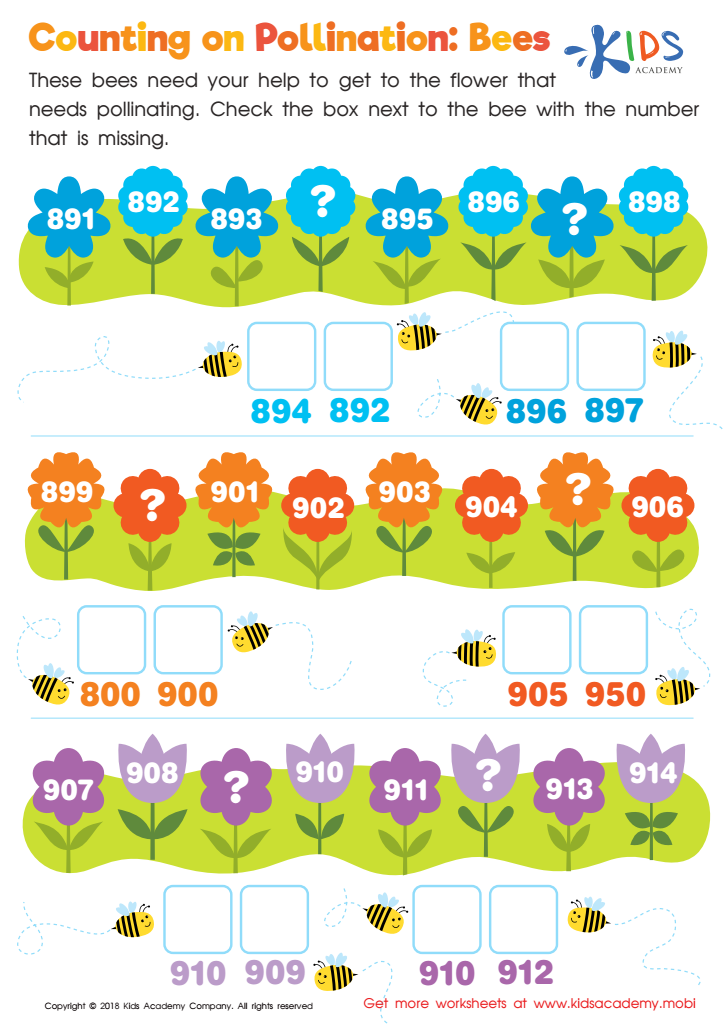
Counting on Pollination: Bees Worksheet
 Assign to My Students











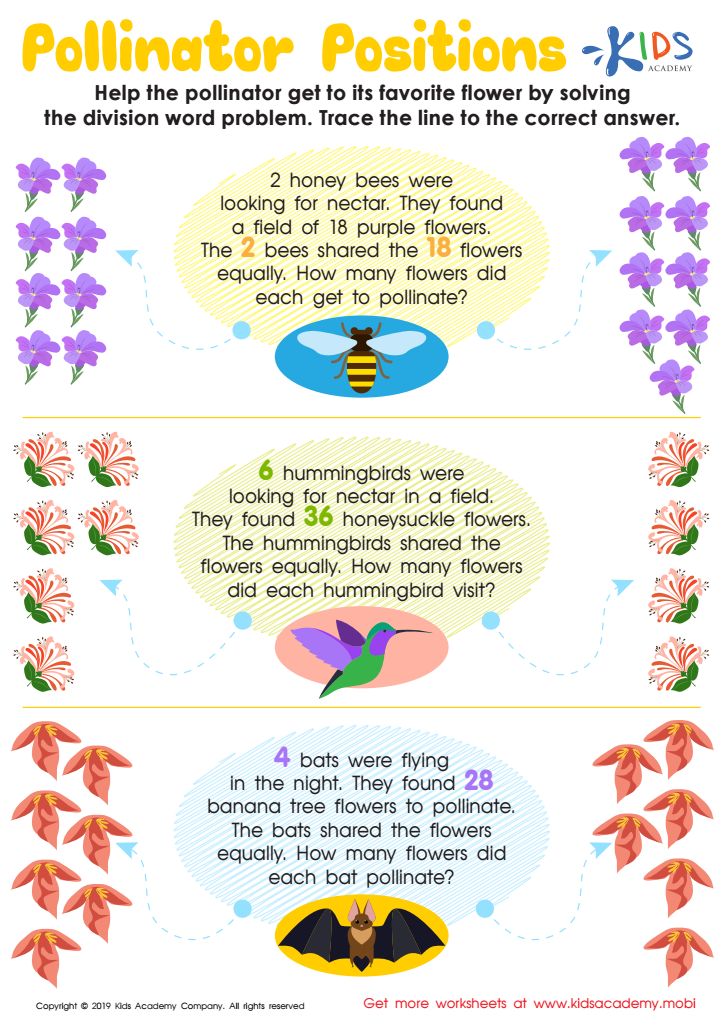
Pollinator Positions Worksheet
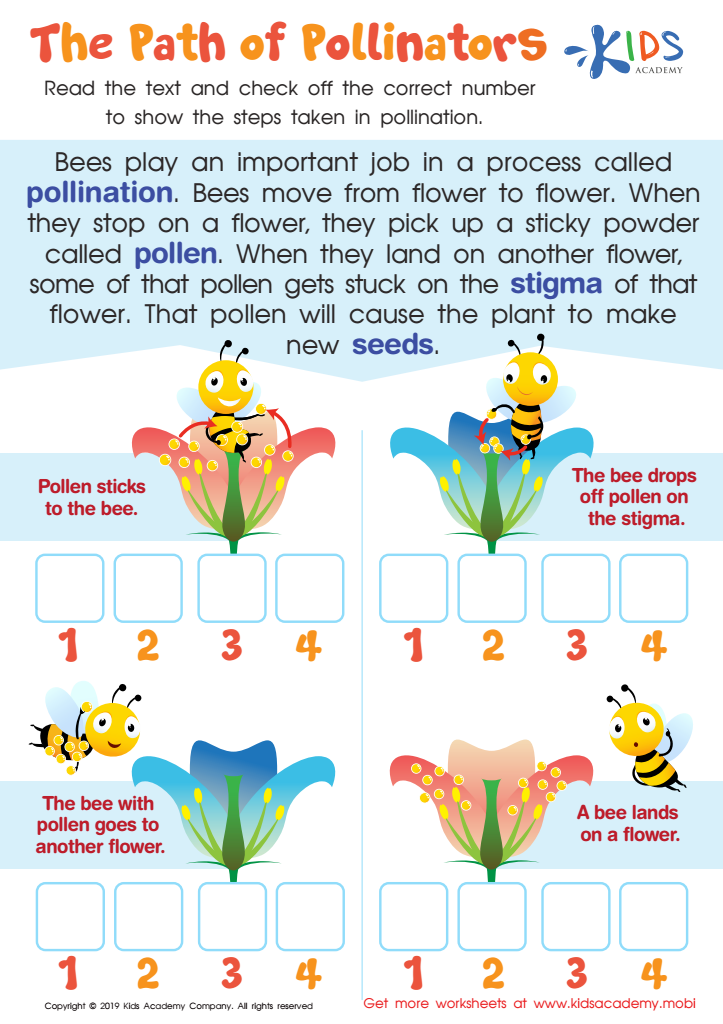
The Path of Pollinators Worksheet








Understanding pollination and the role of normal plants and animals is crucial for children ages 6-9, as it forms the foundation of their environmental education and promotes a sense of stewardship for the planet. Pollination is an essential process that supports food production and biodiversity. By learning about it, children gain insights into how various life forms interact in ecosystems, fostering respect for nature and its inhabitants.
Parents and teachers play a vital role in instilling this knowledge, as it enhances children’s curiosity and passion for science. By engaging with topics like pollination, children explore the relationships between plants and animals, understanding how bees, butterflies, and other pollinators contribute to the growth of fruits and vegetables. This foundational understanding encourages mindfulness about food sources and promotes discussions around conservation and protecting these necessary species.
Moreover, introducing concepts of ecology at a young age can spark interest in science, technology, engineering, and mathematics (STEM) careers. Early educators and caregivers can integrate hands-on activities, outdoor exploration, and storytelling to captivate children's interest. In a world facing ecological challenges, educating children on the importance of pollination will help cultivate environmentally conscious future generations.







