Enhancing observation skills Normal Social Studies Worksheets for Ages 6-9
3 filtered results
Difficulty Level
Grade
Age
-
From - To
Subject
Activity
Standards
Discover our "Enhancing Observation Skills" Social Studies worksheets designed specifically for children aged 6 to 9. These engaging printable resources encourage young learners to sharpen their observation abilities through interactive activities and real-world scenarios. Each worksheet incorporates fun exercises that promote critical thinking, attention to detail, and sensory exploration. By using these materials, children gain confidence in identifying patterns, differences, and important details in their surroundings. Perfect for home or classroom use, these worksheets make learning enjoyable while helping students build essential skills for academic success and effective communication. Spark curiosity and watch your students thrive with our thoughtfully crafted resources!
Favorites
With answer key
Interactive
Community Signs Worksheet
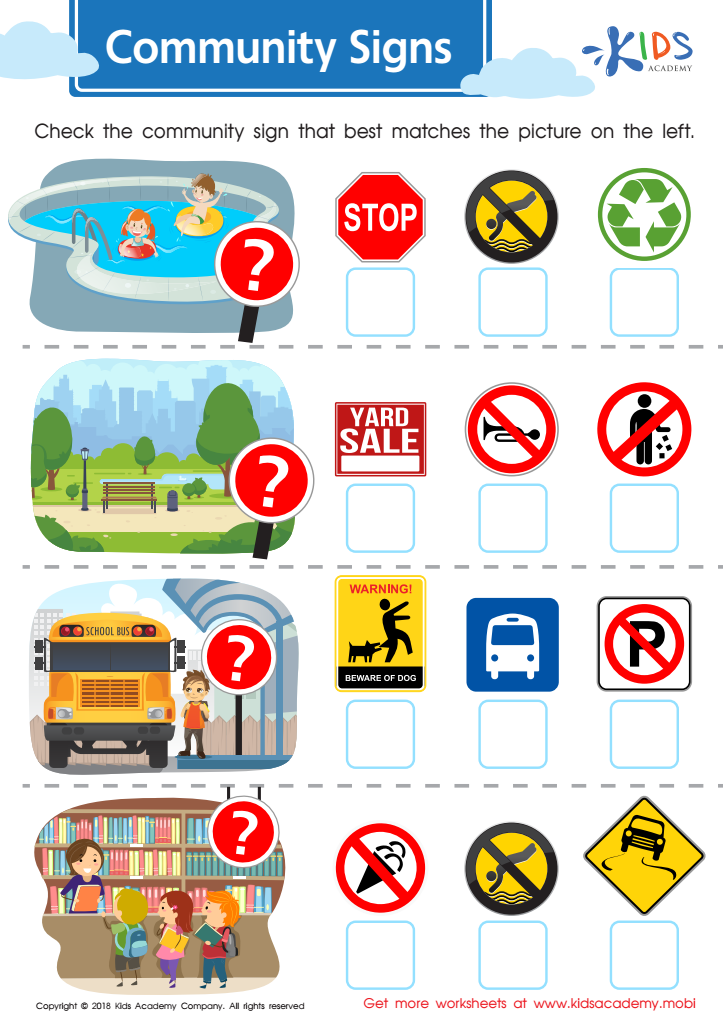
To stay safe, our kids need to know community signs. Ask them to name signs at the pool, park, etc. Then, have them check the worksheet for the picture that matches the community signs.
 Assign to My Students
Community Signs Worksheet
Worksheet
Map or Globe? Worksheet
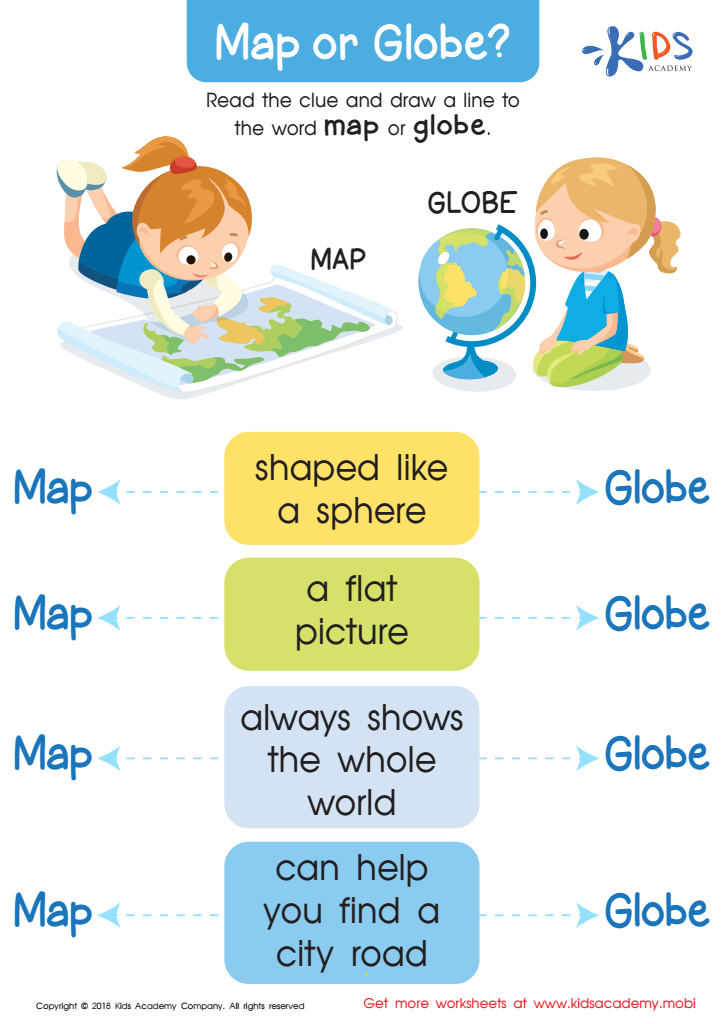
Learning the difference between maps and globes can be difficult for young children. Get this free worksheet to help them! It offers word and picture clues for them to practice matching. They'll also get to use their fine motor skills as they trace the lines to find the answers.
Map or Globe? Worksheet
Worksheet
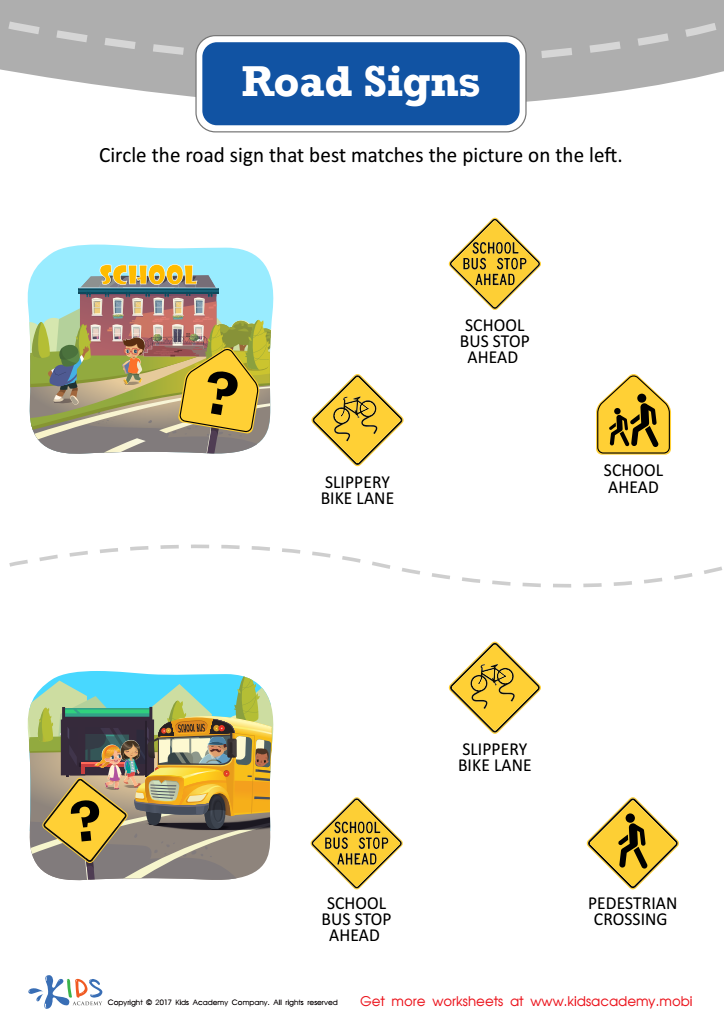
Road Signs (Part 1) Worksheet
Kids are exposed to danger near roads, so help them recognize traffic signs with this printable. It'll foster their reading comprehension and symbol recognition, while keeping them safe.
Road Signs (Part 1) Worksheet
Worksheet
Join Kids Academy for Free
Who is primarily going to use this learning content?







Enhancing observation skills in young learners, particularly in Social Studies for ages 6-9, is crucial for several reasons. First, observation skills form the foundation of understanding and interpreting the world around us. By developing these skills, children learn to notice details, patterns, and relationships, leading to deeper comprehension of social concepts such as community, culture, and history.
Additionally, when parents and teachers emphasize observation, they foster critical thinking and analytical abilities. Children learn to ask questions, make connections, and draw conclusions based on their observations, which are essential skills for active citizenship and informed decision-making.
Inculcating strong observation skills also instills a sense of curiosity and engagement in young learners. When children learn to observe their surroundings thoughtfully, they become more interested in exploring diverse perspectives and experiences. This engagement not only aligns learning with personal interests but also nurtures empathy and understanding of different cultures and communities.
Moreover, enhancing observation in Social Studies contributes to academic success, as it promotes a lifelong love for learning and inquiry. Overall, by fostering observation skills, parents and teachers equip children with the tools necessary for meaningful participation in society, both now and in the future.