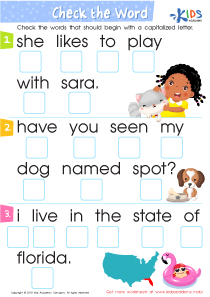
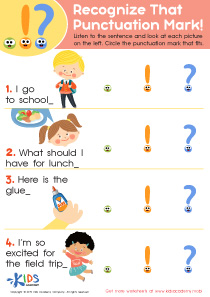
Phonics recognition Normal Grammar Worksheets for Ages 6-9
3 filtered results
-
From - To
Elevate your child's reading and writing skills with our Phonics Recognition Normal Grammar Worksheets, designed specifically for ages 6-9. These engaging and interactive worksheets provide a fun way for young learners to develop essential phonics skills while mastering grammar basics. Aligned with educational standards, each worksheet focuses on helping children recognize sounds, blend letters, and apply their knowledge in sentence construction. Perfect for classroom use or at-home learning, our resources ensure kids build confidence in their literacy abilities. Discover a range of activities that encourage creativity, critical thinking, and a love for language as your child embarks on their phonics journey!
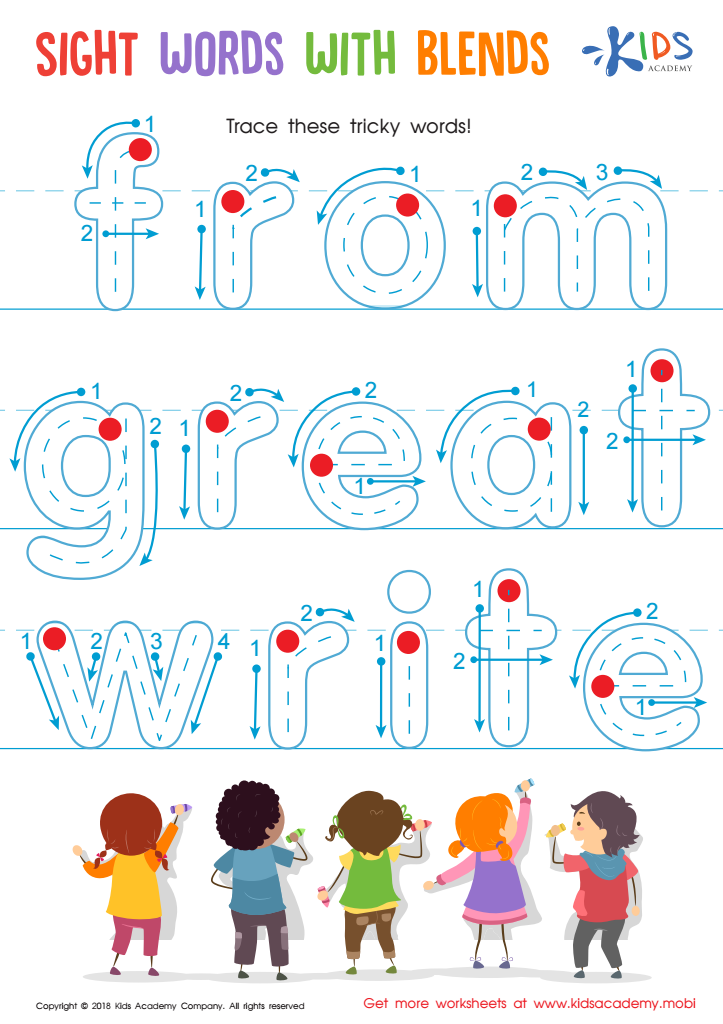
Sight Words with Blends Worksheet
 Assign to My Students
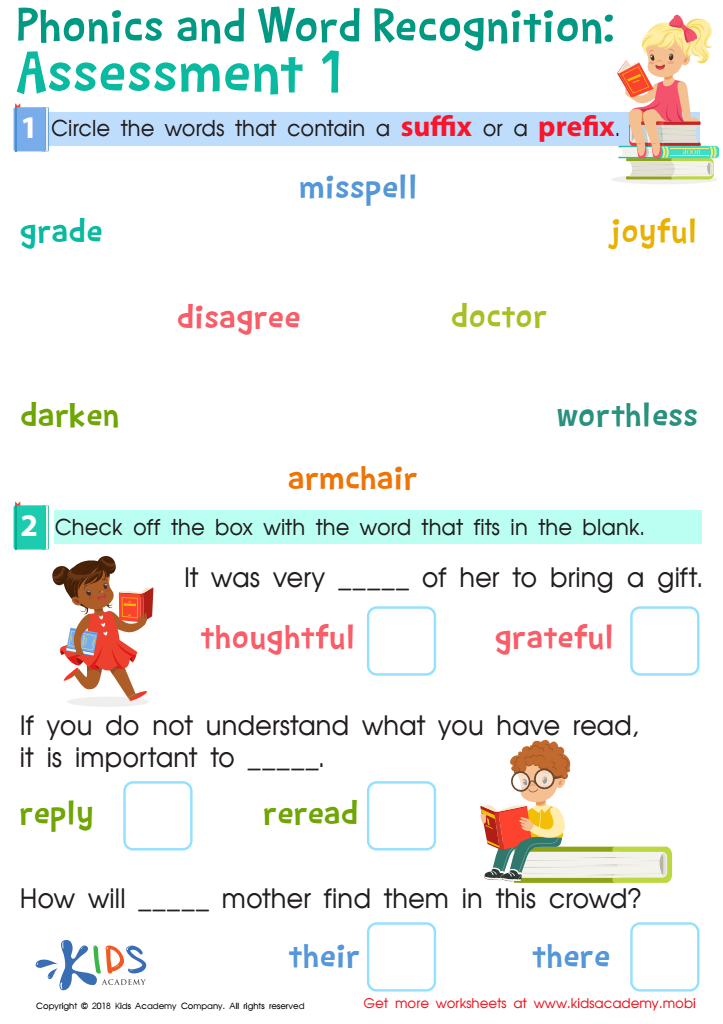
Phonics and Word Recognition: Assessment 1 Worksheet
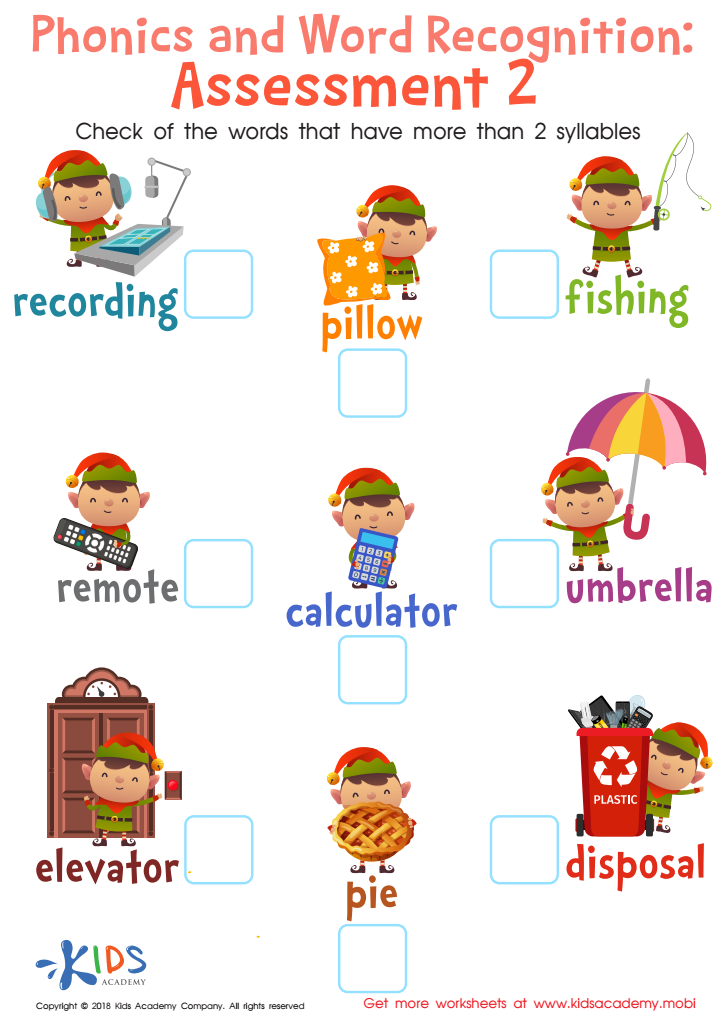
Phonics and Word Recognition: Assessment 2 Worksheet





Phonics recognition is crucial for children aged 6-9 as it forms the foundation for their reading and writing skills. For parents and teachers, understanding this concept is vital for several reasons. First, phonics teaches children how to decode words, linking sounds to letters and helping them make sense of printed language. This skill boosts their confidence, enabling them to tackle more complex texts as they progress.
Moreover, early mastery of phonics leads to improved reading fluency and comprehension. When children can sound out words, they spend less time guessing and more time understanding what they read. This comprehension not only fosters a love for reading but also enhances their vocabulary and overall language skills.
Additionally, phonics instruction supports broader literacy development. A strong grasp of this foundational skill helps children in spelling and writing, allowing them to express their thoughts more clearly. Furthermore, teachers and parents equipped with phonics knowledge can better assess and support students’ learning needs. Lastly, in a world where literacy is essential for success, investing in phonics recognition early on empowers children for academic achievement and lifelong learning. Therefore, a shared emphasis on phonics by parents and educators can significantly impact children's educational journey.