Understanding suffixes Normal Grammar Worksheets for Ages 6-9
6 filtered results
-
From - To
"Understanding Suffixes Normal Grammar Worksheets for Ages 6-9" helps young learners master the concept of suffixes, enhancing their vocabulary and comprehension skills. Specially designed for kids aged 6-9, these engaging worksheets simplify complex grammar rules with fun, interactive activities. Whether adding "-s," "-ed," or "-ing" to words, children gain confidence in their writing and reading abilities. These worksheets are perfect for both classroom and home use, providing parents and teachers with an effective tool to support their early reader's journey. Make learning suffixes a joyful and rewarding experience with our expertly crafted resources.
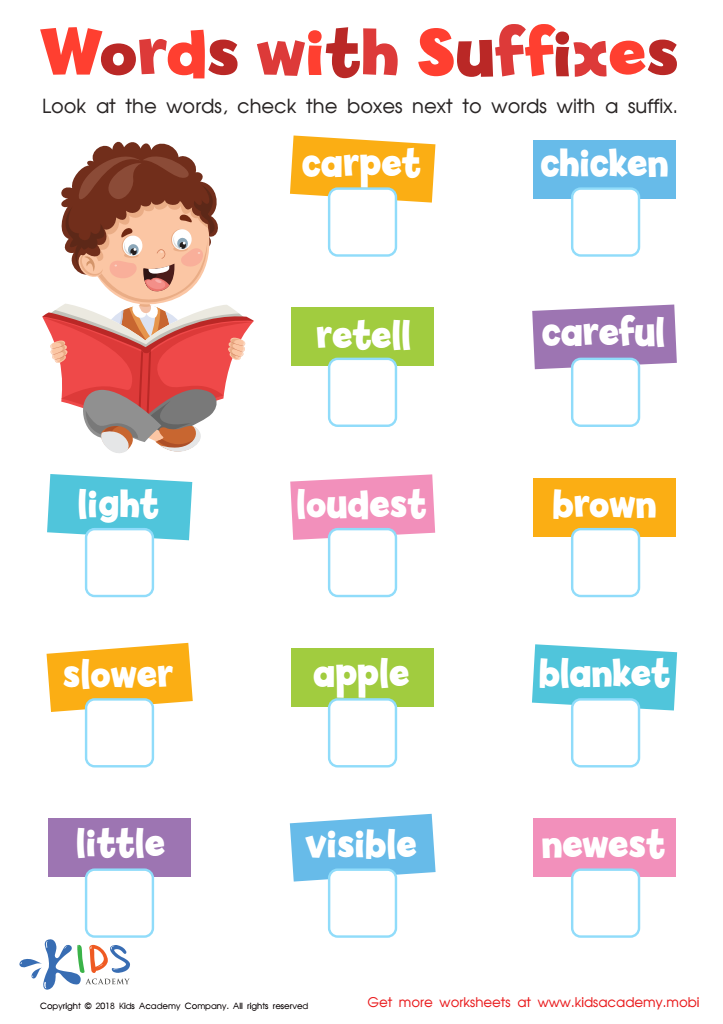
Reading: Words With Suffixes Worksheet
 Assign to My Students
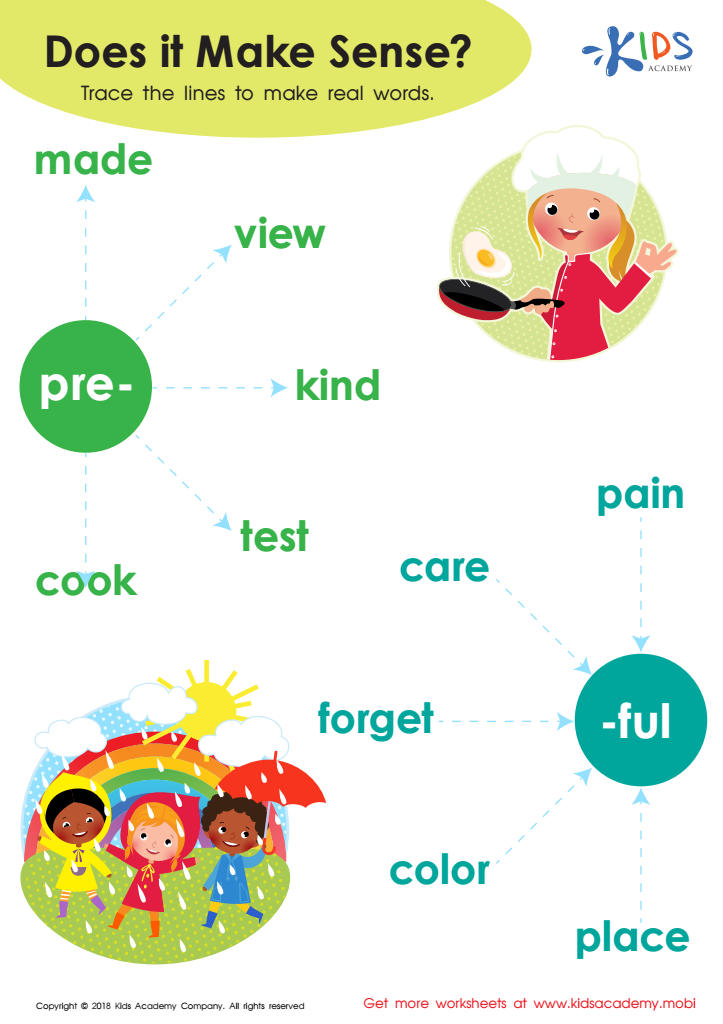
Prefix pre– and Suffix ful– Worksheet
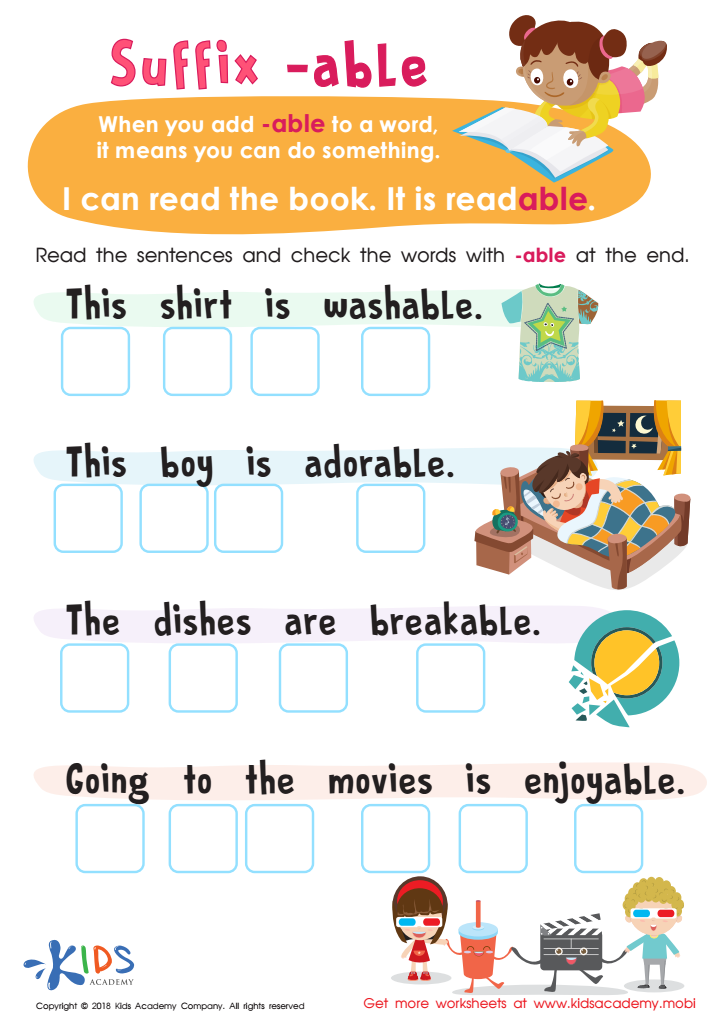
Suffix -Able Worksheet
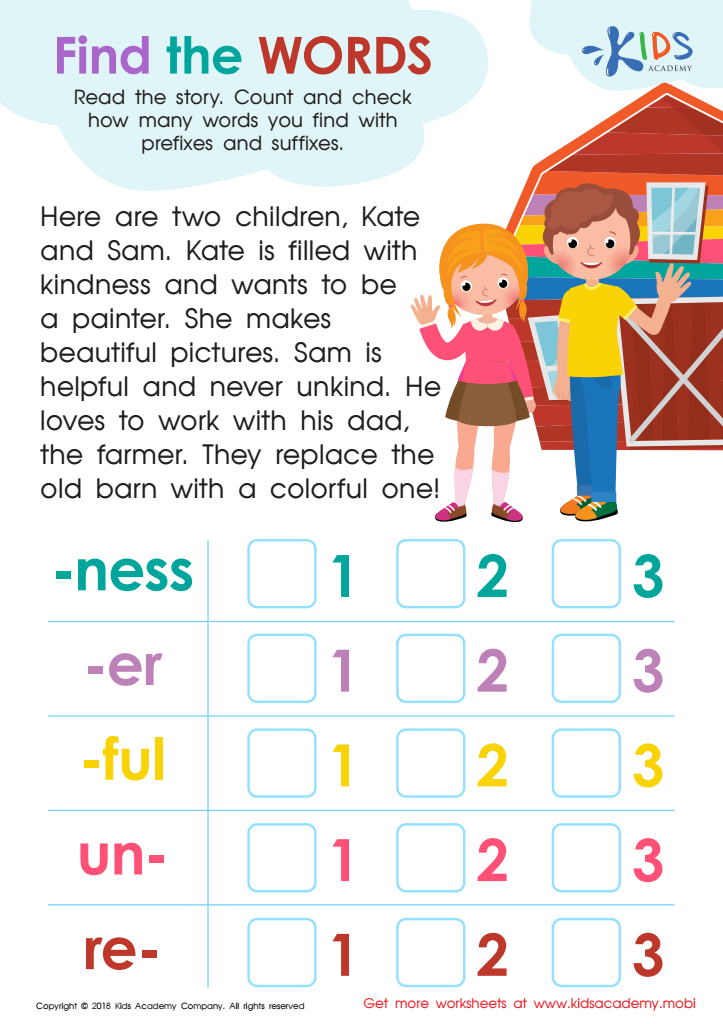
Prefix and Suffix Worksheet For Grade 3
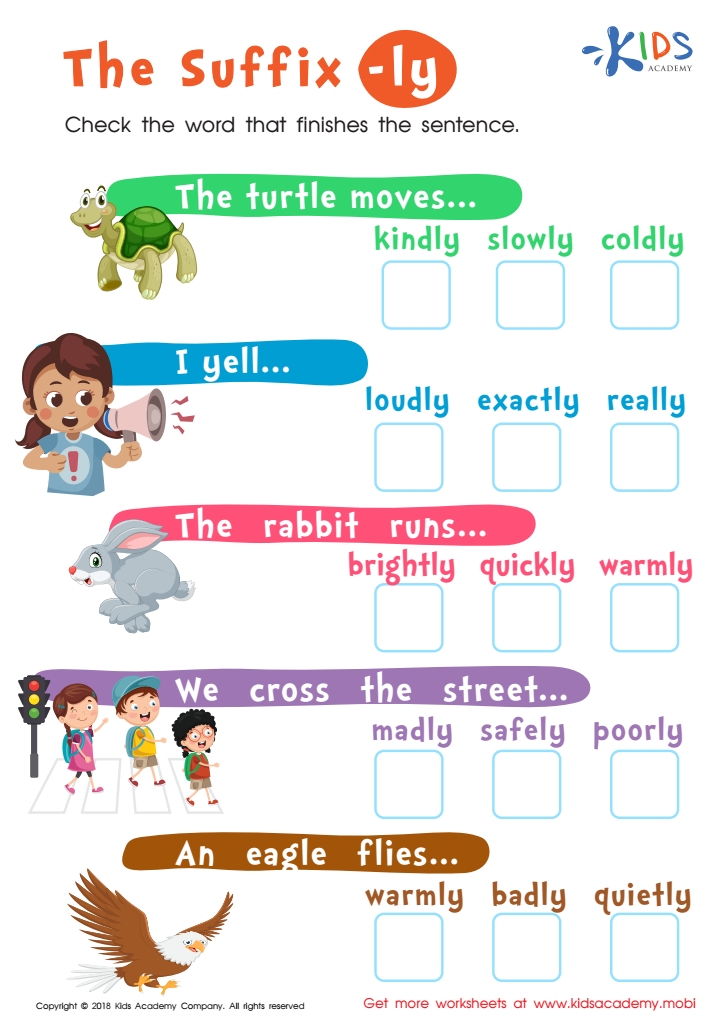
The Suffix -Ly Worksheet
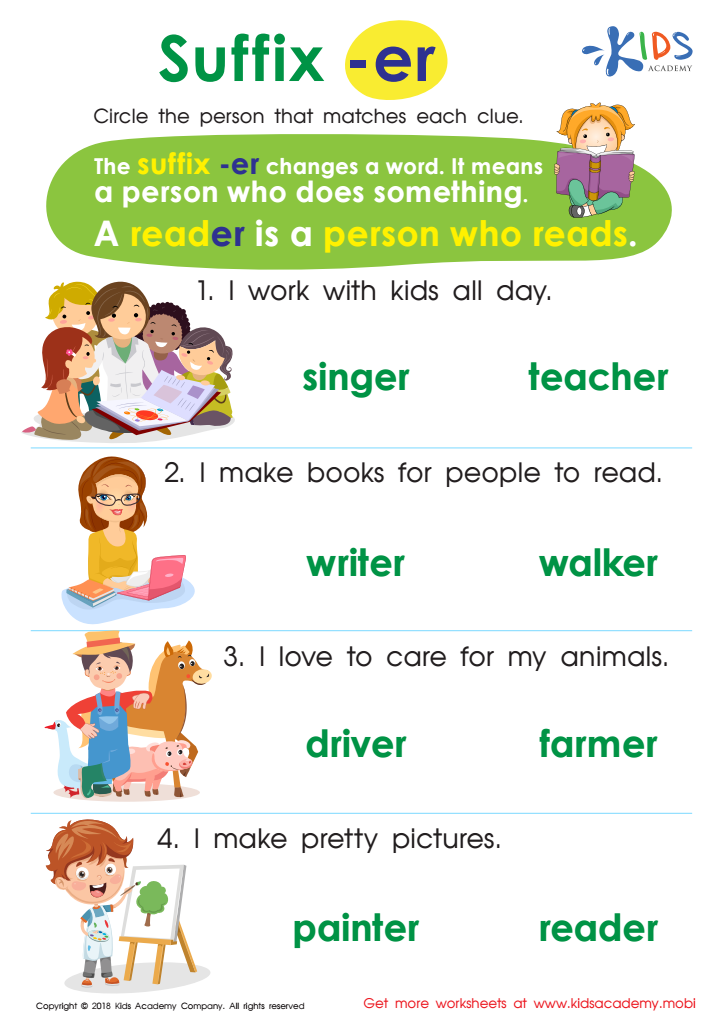
Suffix –er Printable Worksheet





Understanding suffixes is essential for young learners, and parents and teachers should emphasize this skill for several reasons. First, suffixes, added to the end of root words, significantly alter meaning and function. For children ages 6–9, grasping suffixes aids vocabulary expansion. For instance, the suffix "-ful" turns "care" into "careful," teaching how a word's role can change. As children recognize patterns like "-s" for plurals or "-ed" for past tense, their decoding abilities improve.
Second, suffixes enhance reading fluency and comprehension. When children understand suffixes like "-ly," which often turns an adjective into an adverb (e.g., "quick" to "quickly"), they read more confidently and accurately. Recognizing suffixes helps make sense of unfamiliar words within a text, thereby strengthening comprehension skills.
Third, spelling proficiency benefits from suffix awareness. Knowing consistent patterns like adding “-es” for words ending in “s,” “x,” or “z” enhances spelling accuracy and writing clarity.
Lastly, suffix knowledge prepares children for more complex grammar and language rules later in education, laying a solid foundation for future learning. By focusing on suffixes early, parents and teachers empower students with crucial tools for linguistic confidence and capability.