Capitalization rules Normal Writing Worksheets for Ages 6-9
3 filtered results
-
From - To
Enhance your child’s writing with our Capitalization Rules Normal Writing Worksheets designed for ages 6-9. Our engaging and easy-to-follow worksheets teach children the essential rules of capitalization, ensuring they become confident and capable writers. Each worksheet features fun activities, including sentence correction and playful exercises, to reinforce proper capital usage in sentences, names, places, and the start of dialogue. Ideal for both classroom and homeschool settings, these worksheets are tailored to boost learning skills and comprehension. Give your child the tools to master the basics of writing with our expertly crafted capitalization resources.
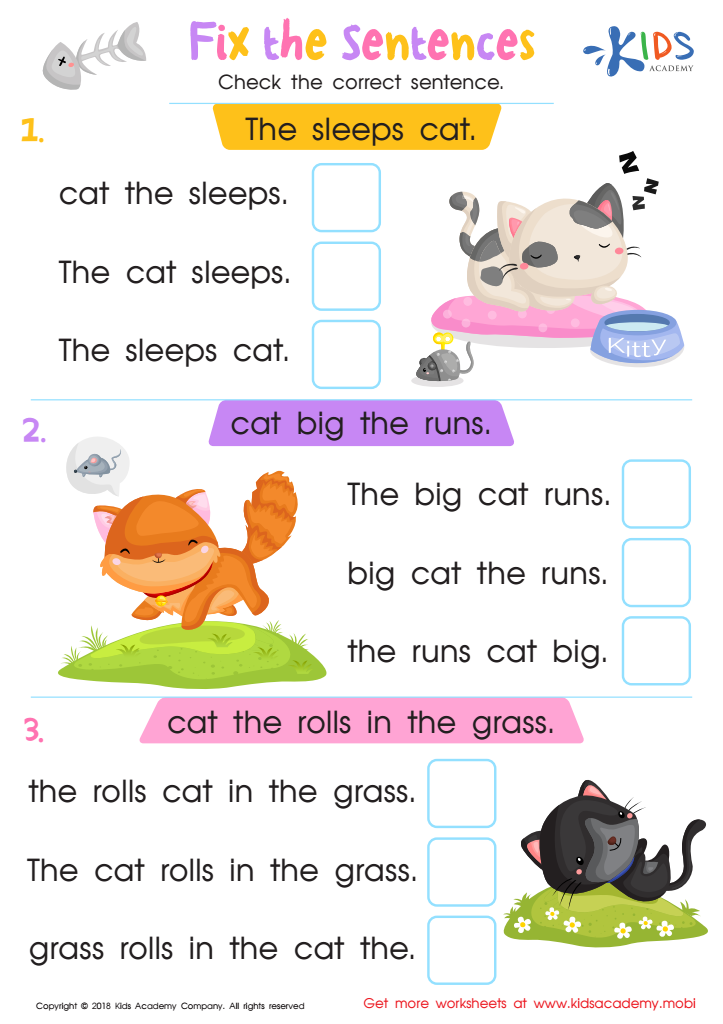
Fix the Sentences Worksheet
 Assign to My Students
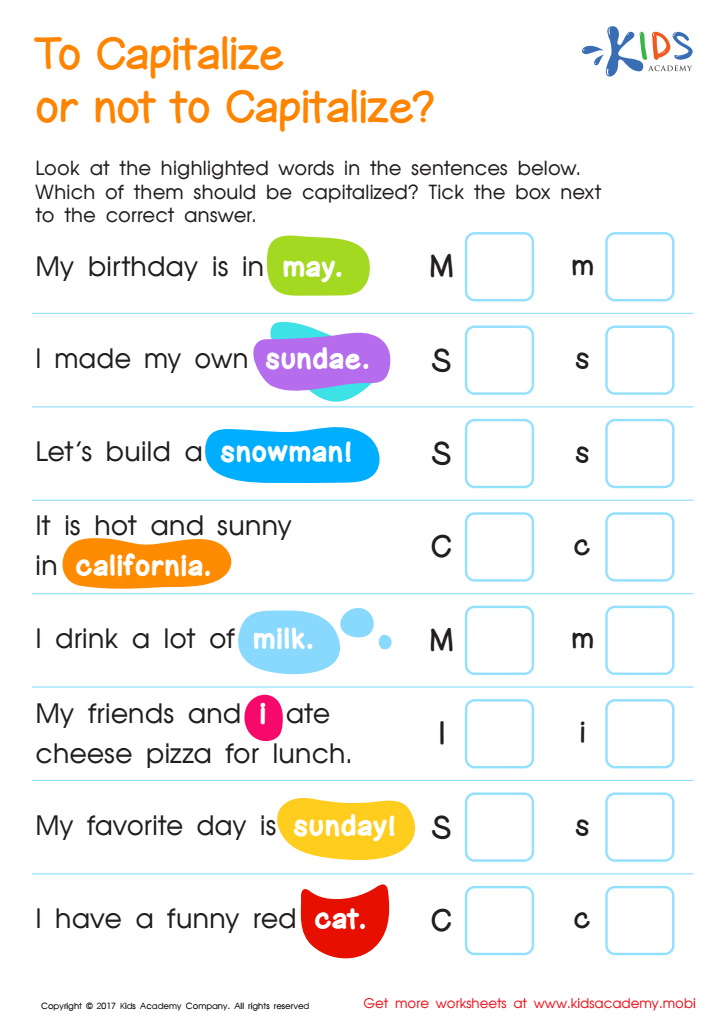
Capitalization: To Capitalize or Not? Printable
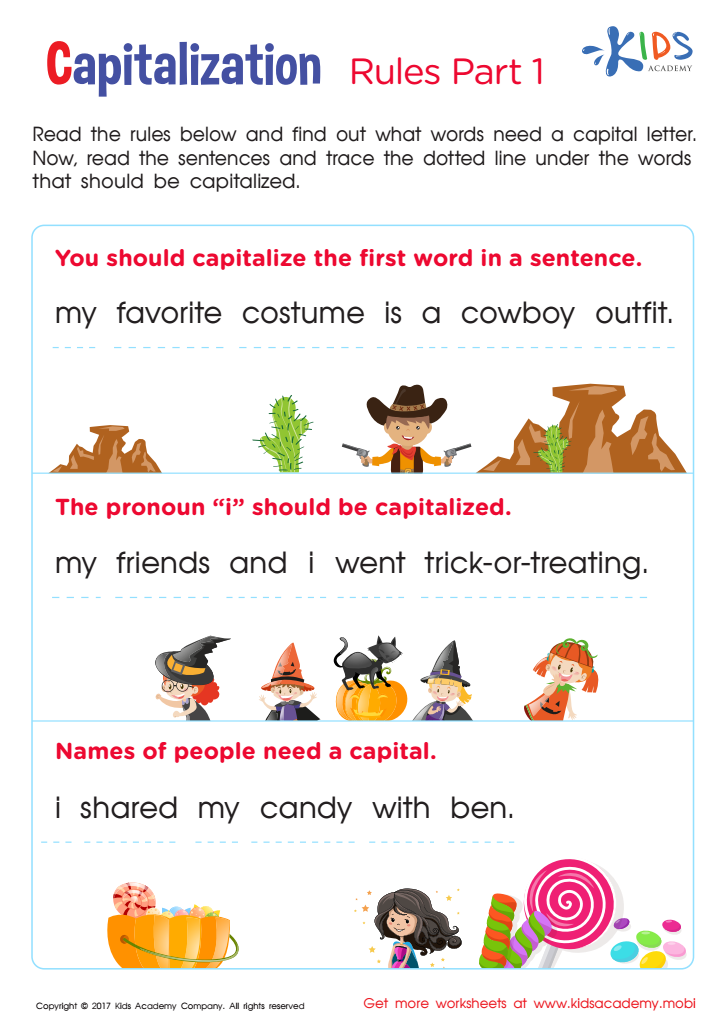
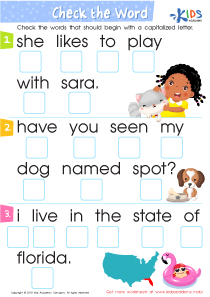
Capitalization Rules: Part 1 Worksheet






Ensuring that children ages 6-9 understand capitalization rules is crucial for both parents and teachers because it lays a solid foundation for their language and communication skills. First, learning these rules fosters proper writing habits early on, making it easier for children to adapt to more complex writing tasks in the future. Proper capitalization helps emphasize the beginnings of sentences, improves readability, and clarifies meaning. Without it, sentences can seem confusing or jumbled, making it harder for children to express themselves clearly.
Secondly, mastering these rules boosts children's confidence in their writing abilities. When children know when to capitalize words, such as the first word in a sentence, proper nouns, and the pronoun "I," they feel more competent and proud of their work. This confidence can translate into a lifelong love of learning and writing.
Finally, understanding capitalization rules in early grades is often tied to meeting educational standards. Proper grammar is a component of many standardized tests and assessments. Helping children grasp these basics ensures that they are well-prepared for academic success.
In summary, teaching capitalization rules to children between the ages of 6-9 sets them on a path to becoming effective communicators, enhances their confidence, and ensures they meet educational benchmarks.