Critical Thinking Normal Writing Worksheets for Ages 6-9
3 filtered results
-
From - To
Ignite your child's analytical abilities with our "Critical Thinking Writing Worksheets for Ages 6-9". Tailored to challenge young minds, these printable resources combine writing practice with critical thinking tasks. Each worksheet encourages children to explore their creativity, understand different perspectives, and make reasoned decisions. Perfect for building essential learning skills, they cover various topics to keep kids engaged and motivated. Ideal for classroom use or at-home practice, our worksheets are designed to foster intellectual growth and instill a love for learning. Equip your child with the tools they need for academic success and beyond.
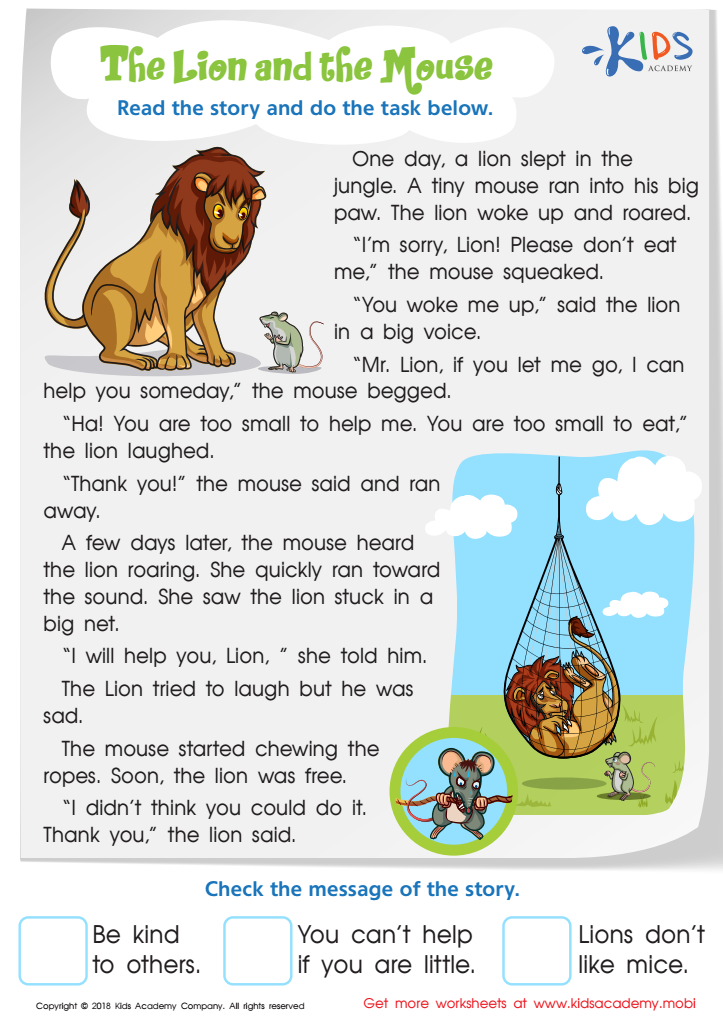
The Lion and the Mouse Worksheet
 Assign to My Students
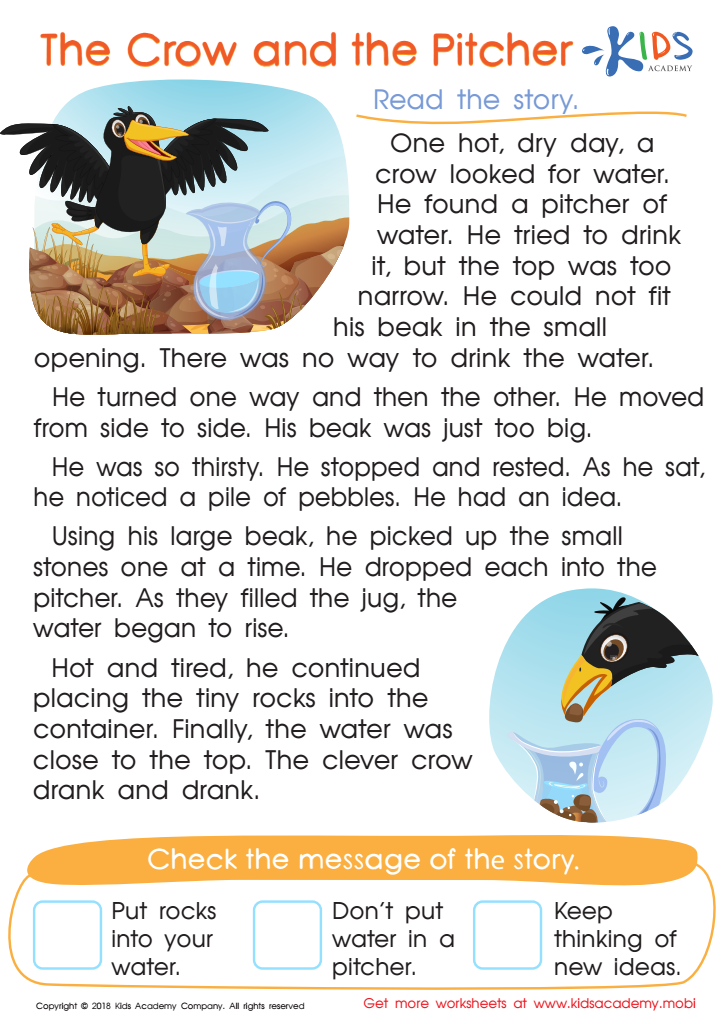
The Crow and the Pitcher Worksheet
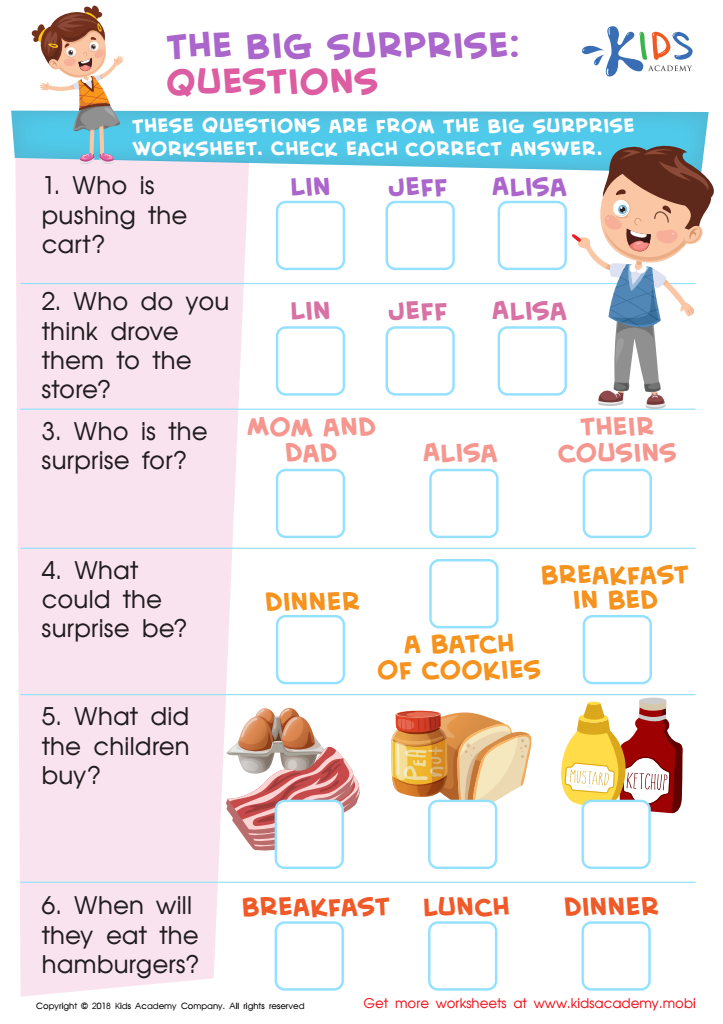
The Big Surprise: Questions Worksheet







Critical thinking skills are crucial for children aged 6-9 as they lay the foundation for lifelong learning and problem-solving abilities. During these formative years, children are particularly receptive to developing cognitive skills that allow them to analyze information, understand different perspectives, and make well-informed decisions. By teaching critical thinking, parents and teachers equip children to face real-world challenges with confidence and intelligence.
One of the key reasons for emphasizing critical thinking is that it promotes intellectual curiosity and a love for learning. Children who are encouraged to question, explore, and reason become more engaged and enthusiastic learners. This proactive approach to education helps them comprehend subjects more deeply rather than merely memorizing facts.
Furthermore, critical thinking nurtures independent thinking and self-confidence. Young children learn to trust their judgment and become less reliant on others to make decisions. This preparatory skill bridges various aspects of their lives, including social interactions and academic achievement.
Lastly, in an era saturated with information and digital media, critical thinking helps children distinguish between credible and misleading information. It empowers them to be discerning individuals who can navigate the complexities of modern life responsibly and ethically. Therefore, investing in critical thinking for children ensures they grow up to be thoughtful, inquisitive, and capable adults.