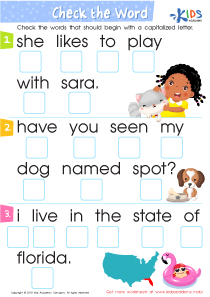
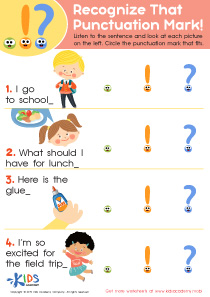
Grammar skills improvement Normal Writing Worksheets for Ages 6-9
5 filtered results
-
From - To
Enhance your child’s grammar skills with our engaging Normal Writing Worksheets designed specifically for ages 6-9. These worksheets offer a fun and interactive approach to mastering essential grammar concepts, including punctuation, sentence structure, and parts of speech. Each activity encourages children to express their creativity while reinforcing their understanding of grammar in a supportive environment. Our thoughtfully crafted exercises are suitable for both classroom and home use, helping young learners build confidence in their writing abilities. Navigate the path to grammatical excellence with our comprehensive and entertaining resources – perfect for fostering a love of writing in young minds!
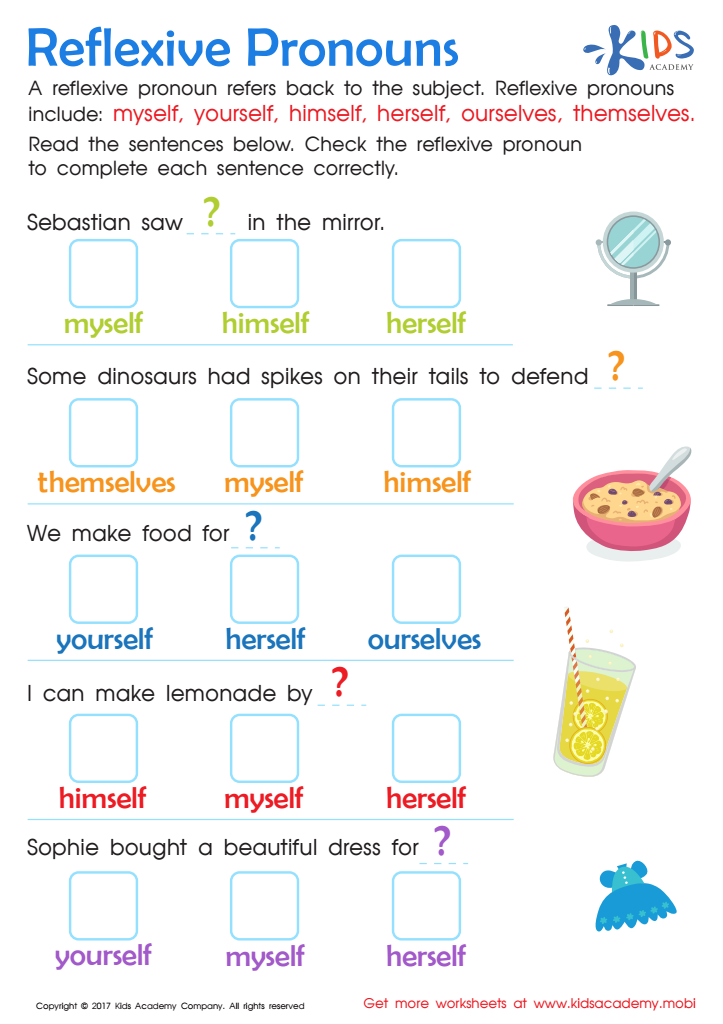
Reflexive Pronouns Worksheet
 Assign to My Students
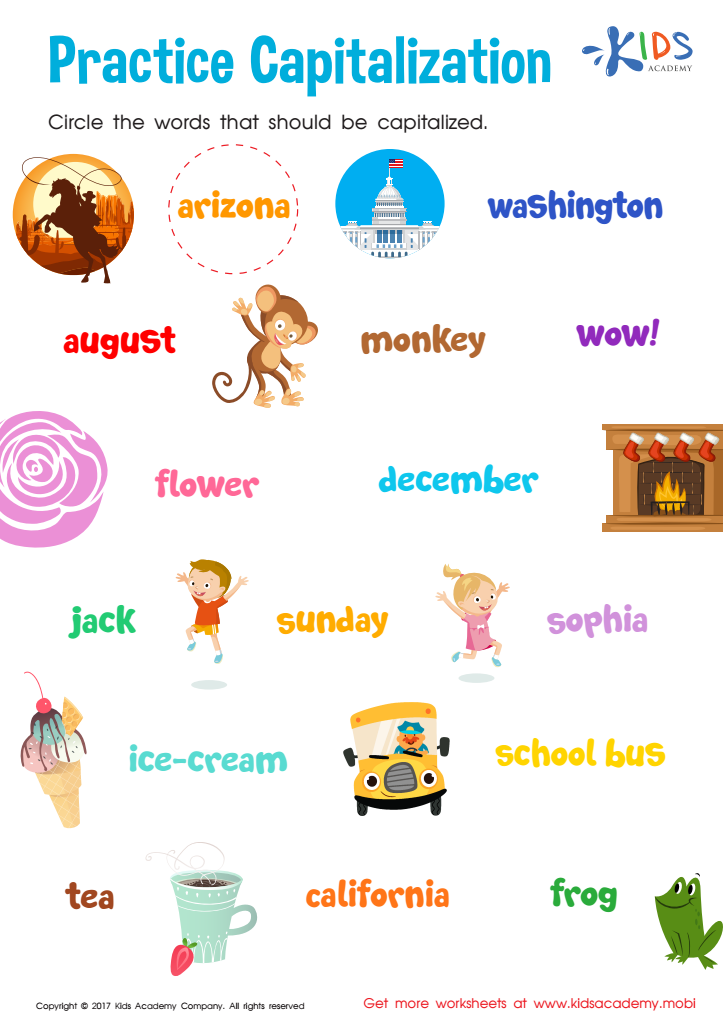
Practice Capitalization Printable
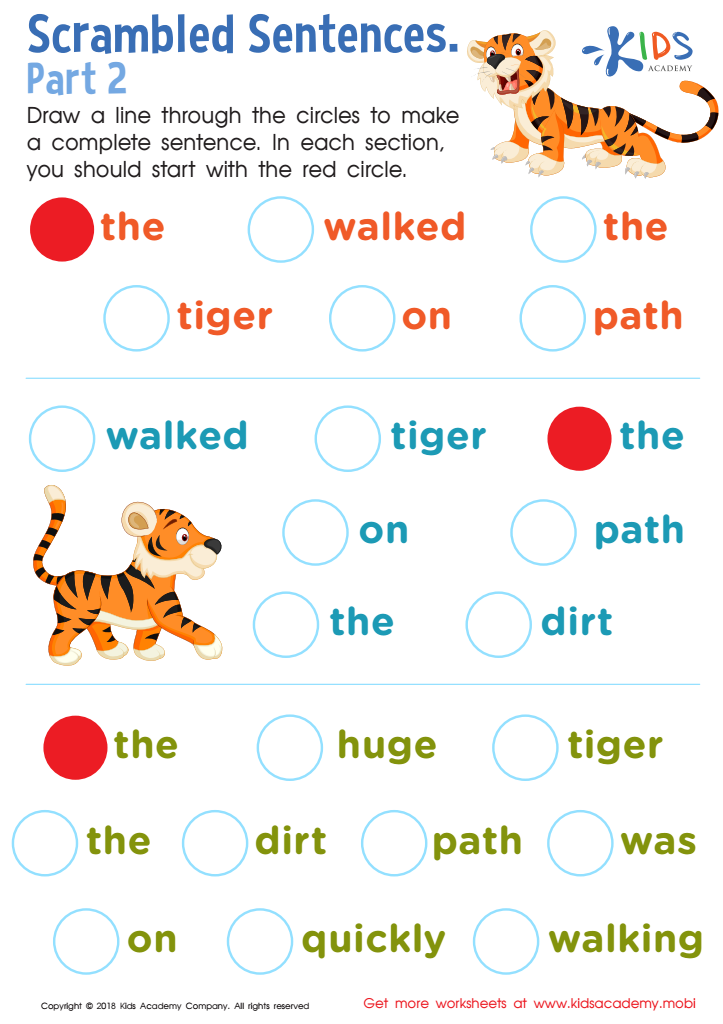
Scrambled Sentences Part 2 Worksheet
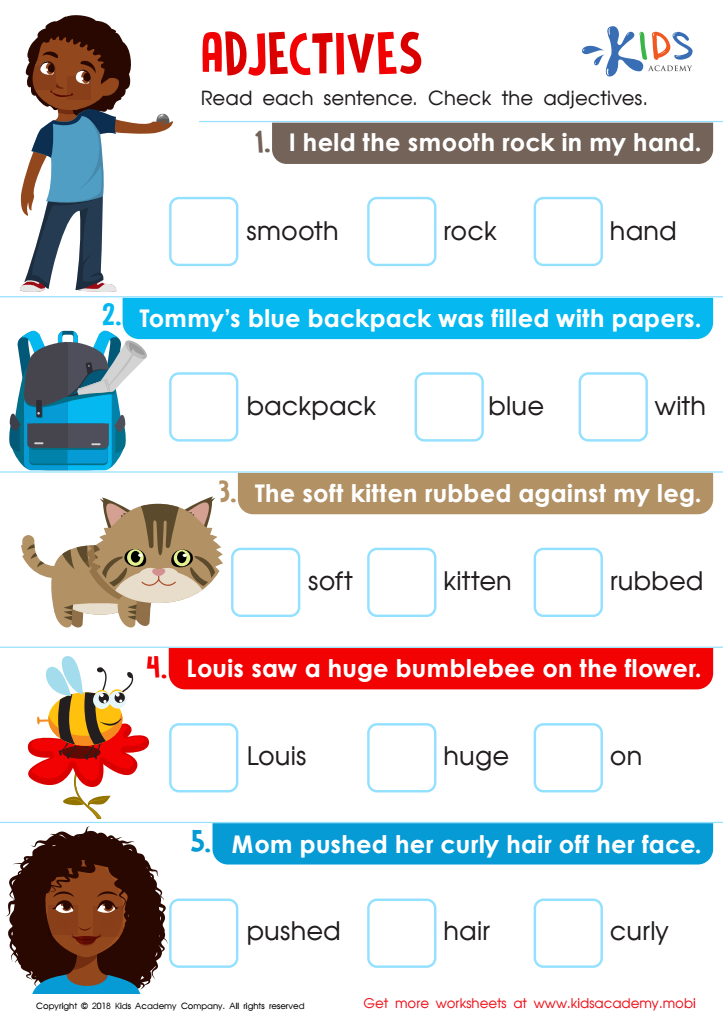
Adjectives Worksheet
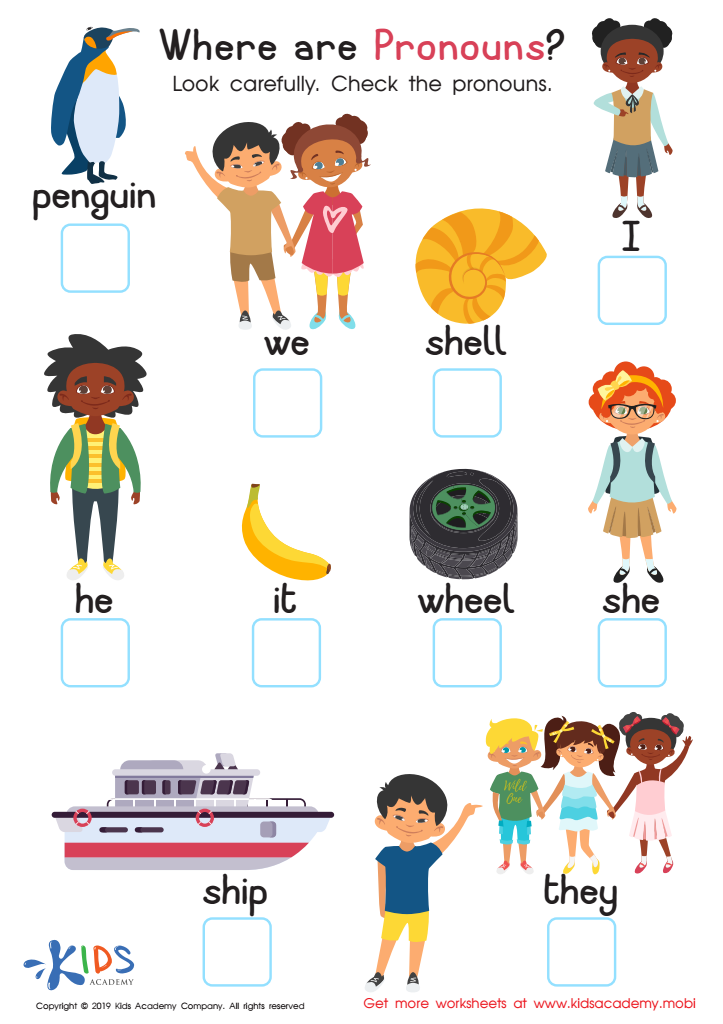
Where Are Pronouns? Worksheet








Improving grammar skills in children aged 6-9 is essential for several reasons. First, strong grammar lays the foundation for effective communication. At this age, children are beginning to express their thoughts and ideas in writing. By mastering basic grammar rules, they can convey their messages clearly, leading to better understanding in both academic and social settings.
Secondly, grammar is crucial in building a child's confidence as a writer. When students grasp the fundamental rules of sentence structure and punctuation, they feel empowered to share their thoughts creatively. This confidence can spur a lifelong love for writing and learning.
Additionally, good grammar is important for academic success. As children progress in their education, more sophisticated writing assignments will require them to apply their grammar knowledge. Being proficient in grammar contributes to better grades and a deeper understanding of language concepts.
Finally, helping children develop their grammar skills fosters critical thinking. It encourages them to analyze language, structure their ideas logically, and articulate their opinions effectively. Overall, fostering grammar proficiency not only enhances communication skills but also prepares children for future academic challenges and life experiences. Parents and teachers play a pivotal role in nurturing and supporting this essential skill.