Pronoun identification Normal Writing Worksheets for Ages 6-9
3 filtered results
-
From - To
Discover our engaging Pronoun Identification Normal Writing Worksheets designed specifically for children ages 6-9. These educational resources by Kids Academy help young learners master the use of pronouns in everyday writing. Through a variety of fun exercises, kids will identify and practice using personal, possessive, and demonstrative pronouns, enhancing their grammar and reading comprehension skills. Perfect for classrooms and homeschooling, these worksheets make learning enjoyable and effective. Equip your child with the tools to succeed in writing and communication by exploring our expertly crafted activities today!
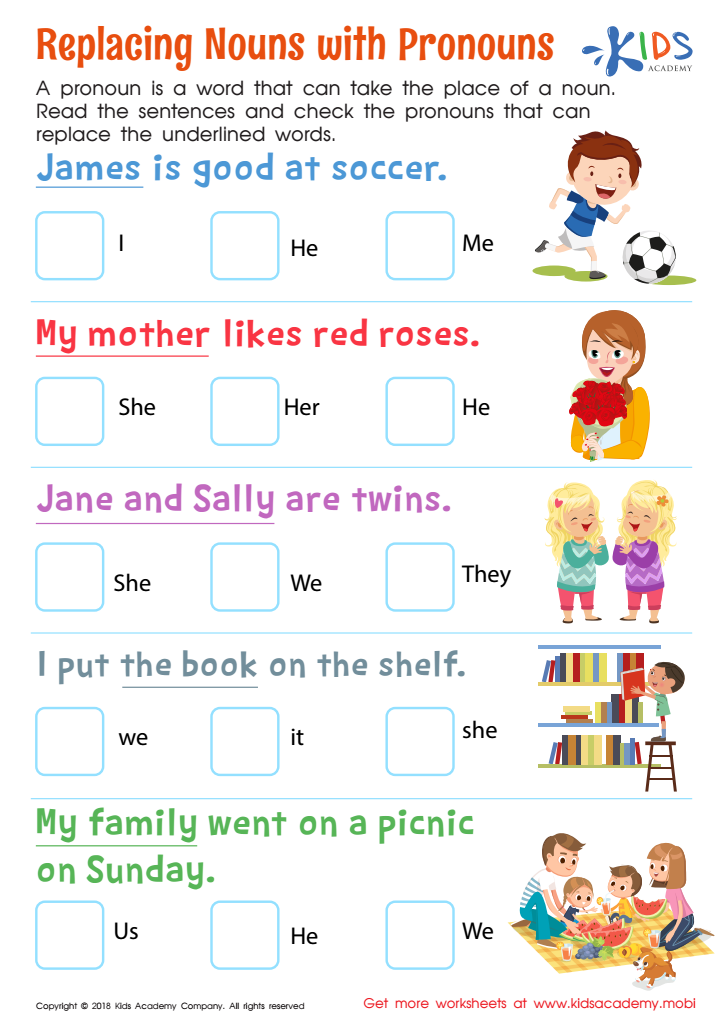
Replacing Nouns with Pronouns Worksheet
 Assign to My Students
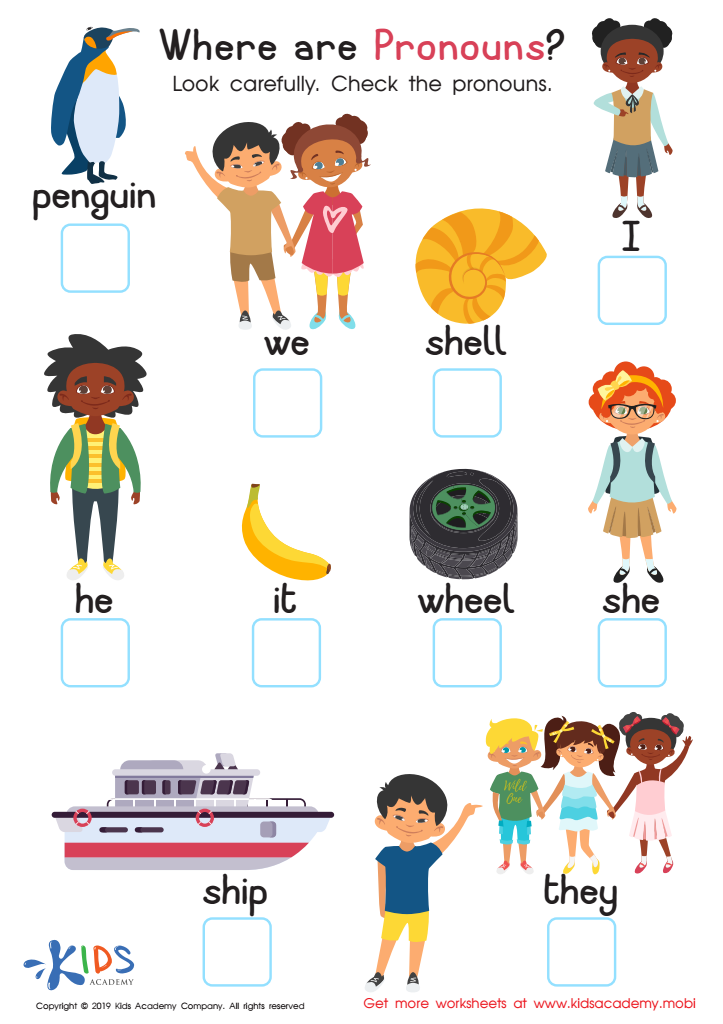
Where Are Pronouns? Worksheet
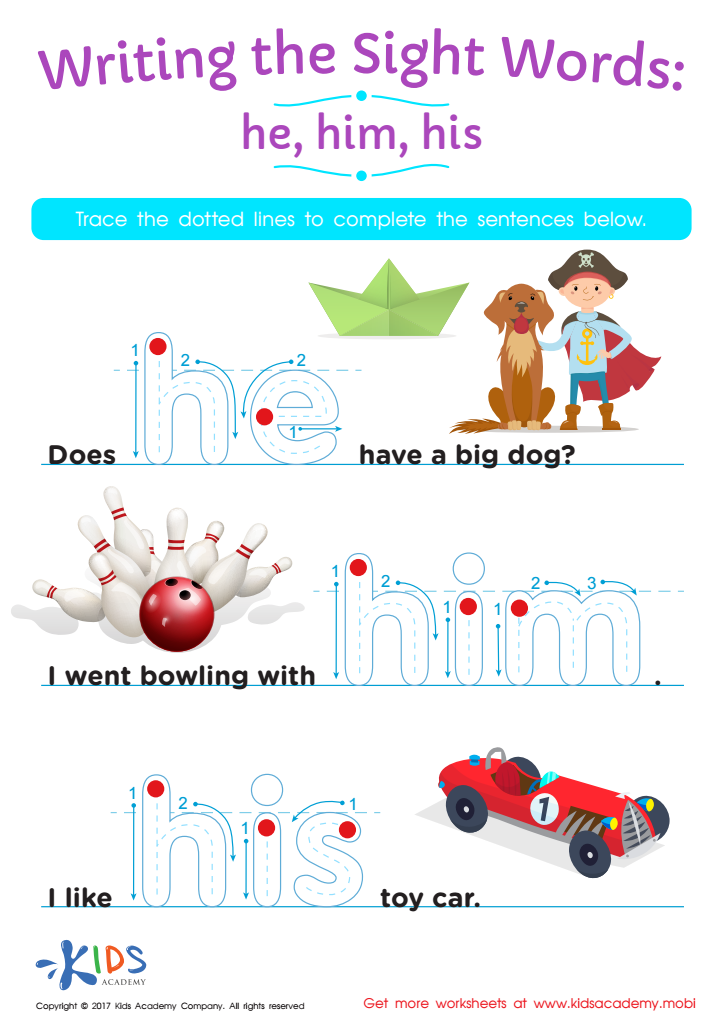
He, Him, His Printable Sight Words Worksheet








Pronoun identification is a crucial aspect of early literacy and language development for children ages 6-9. Recognizing pronouns and understanding their correct use helps improve reading comprehension skills, which are essential for academic success. When children can accurately identify pronouns such as "he," "she," "they," and "it," they can more easily follow who or what is being talked about in a sentence, thereby grasping the overall meaning of texts.
Additionally, mastering pronoun usage enhances writing clarity and coherence. Children who can correctly use pronouns avoid repetitive language, making their writing more fluid and engaging. This skill is vital as they progress to more complex writing tasks in upper grades.
Moreover, understanding pronouns fosters better social communication. Pronouns are common in everyday dialogue, and using them accurately promotes clearer and more effective conversations. This social aspect is crucial for building relationships and interacting appropriately with others.
For teachers and parents, emphasizing pronoun identification is part of fostering a comprehensive language learning environment. Activities such as reading aloud, interactive storytelling, and writing exercises can integrate pronoun practice seamlessly, reinforcing language skills in an engaging way. Consequently, focusing on pronouns contributes significantly to a child’s overall literacy competence and confidence.