Reading skills improvement Normal Writing Worksheets for Ages 6-9
3 filtered results
-
From - To
Enhance your child's reading abilities with our "Reading Skills Improvement Normal Writing Worksheets" designed for ages 6-9. These engaging worksheets provide a variety of exercises that help young learners improve their reading comprehension, vocabulary, and sentence construction. With colorful illustrations and age-appropriate content, our worksheets make learning enjoyable and effective. Perfect for use at home or in the classroom, they support your child's literacy development and build a strong foundation for future academic success. Discover a treasure trove of resources to boost your child's confidence and competence in reading today!
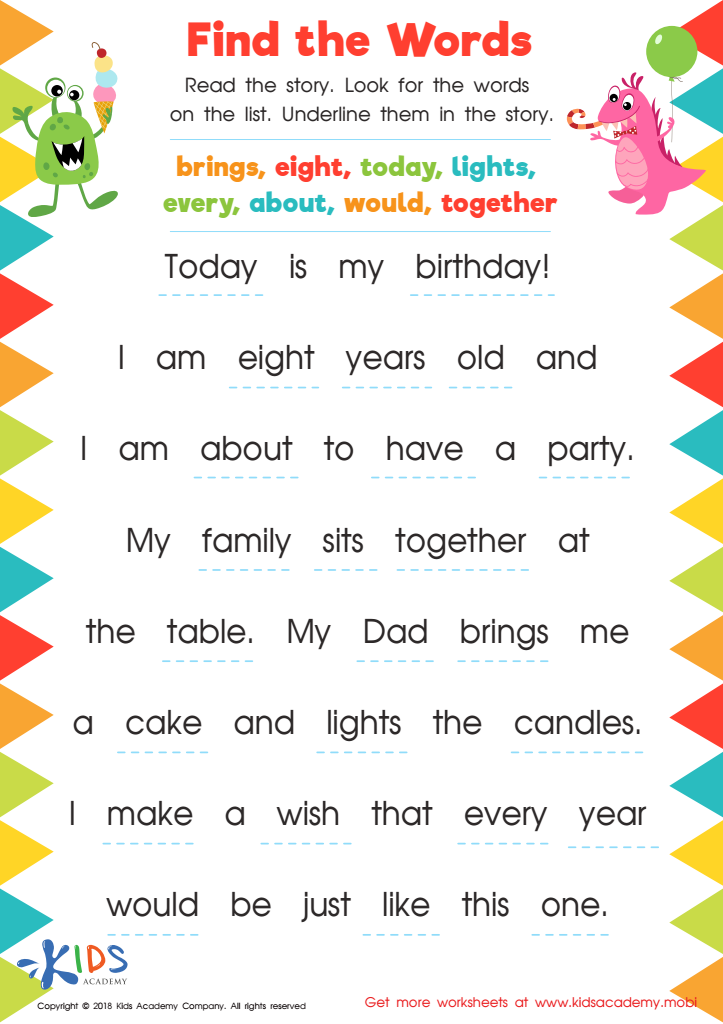
Find The Words Printable Worksheet
 Assign to My Students
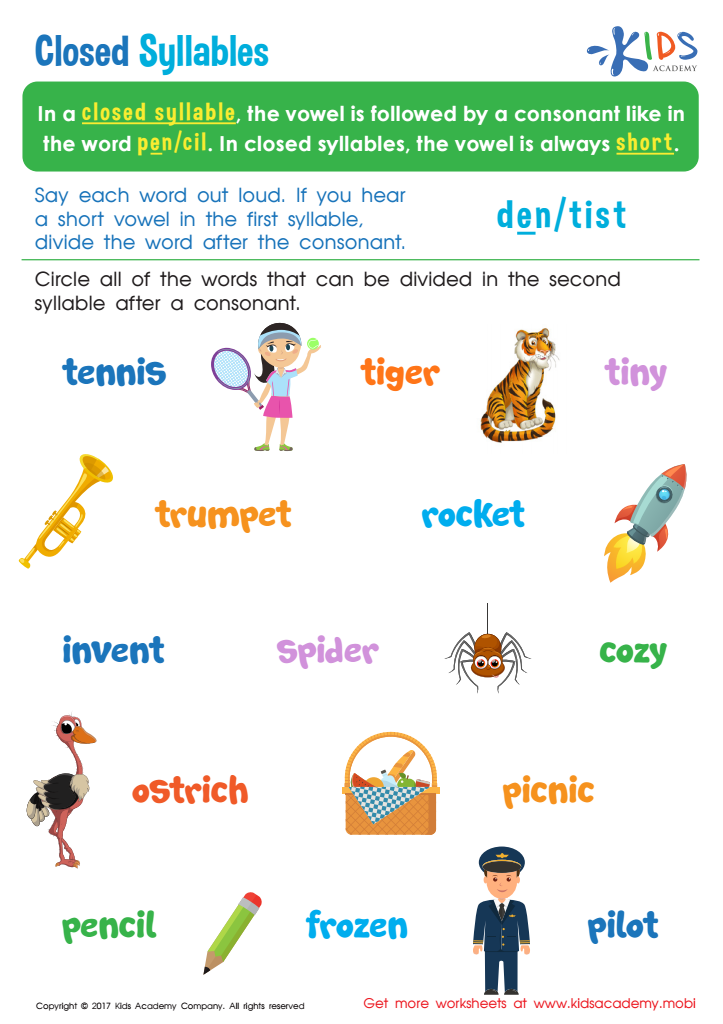
Closed Syllable Spelling Worksheet
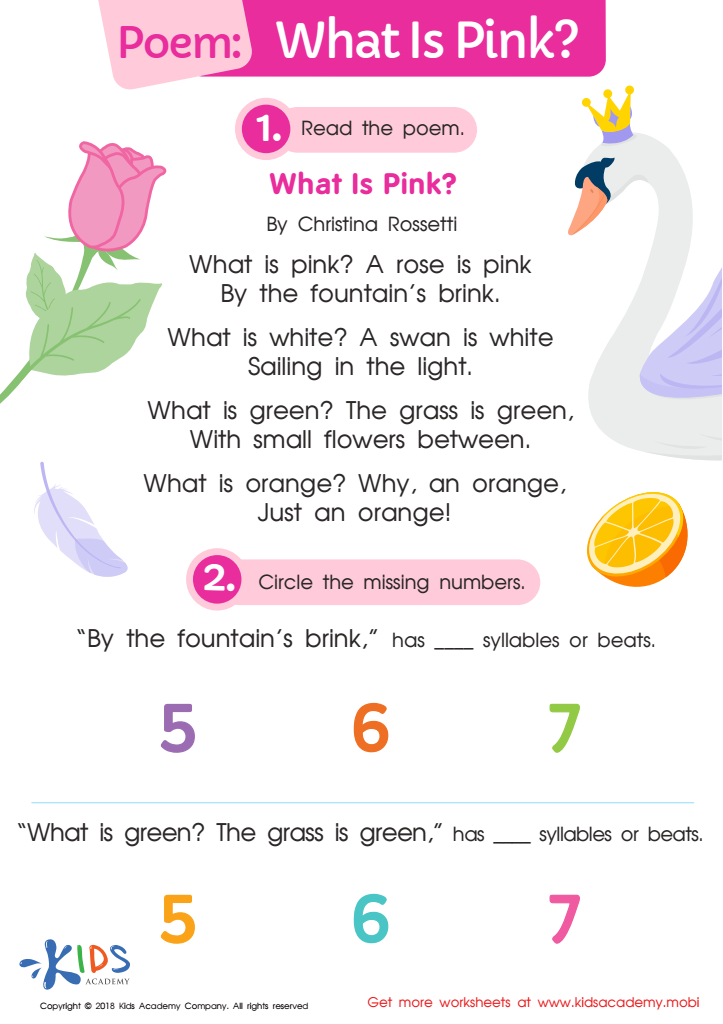
Poem: What Is Pink? Worksheet








Reading skills are fundamental to a child's overall educational development, especially between the ages of 6 to 9. At this stage, children transition from learning to read to reading to learn. Parents and teachers must actively support and encourage reading improvements for several key reasons.
First, strong reading skills provide a foundation for success in all academic areas. When children can read fluently, they understand instructions and tackle problems in subjects like math, science, and social studies. This boosts their confidence and keeps them engaged in learning.
Second, reading enhances cognitive development. It expands vocabulary, improves comprehension, and fosters critical thinking skills. Children who read regularly are more likely to develop a better understanding of the world and improve their ability to focus and concentrate.
Third, reading encourages empathy and emotional growth. By exploring diverse characters and stories, children learn to understand different perspectives and develop valuable social skills. This emotional intelligence is crucial for forming healthy relationships and succeeding in a collaborative world.
Lastly, early reading habits foster a lifelong love for learning. When children find joy in books, they are more likely to seek knowledge independently, promoting continuous intellectual growth beyond the classroom years.
In essence, supporting reading skills in early childhood sets the stage for academic achievement, cognitive development, emotional health, and a lifelong passion for learning.