Understanding prefixes Normal Writing Worksheets for Ages 6-9
6 filtered results
-
From - To
Understanding Prefixes: Normal Writing Worksheets for Ages 6-9 is designed to enhance your child’s language skills by introducing them to common prefixes. These engaging worksheets cater to kids aged 6-9, helping them recognize and apply prefixes to enhance their vocabulary. With a variety of exercises, children will learn to form new words, understand meanings, and improve their reading and writing abilities. Perfect for at-home learning or classroom use, these worksheets provide a fun, interactive way to develop foundational language skills. Help your child become a confident reader and writer with these expertly crafted prefix activities.
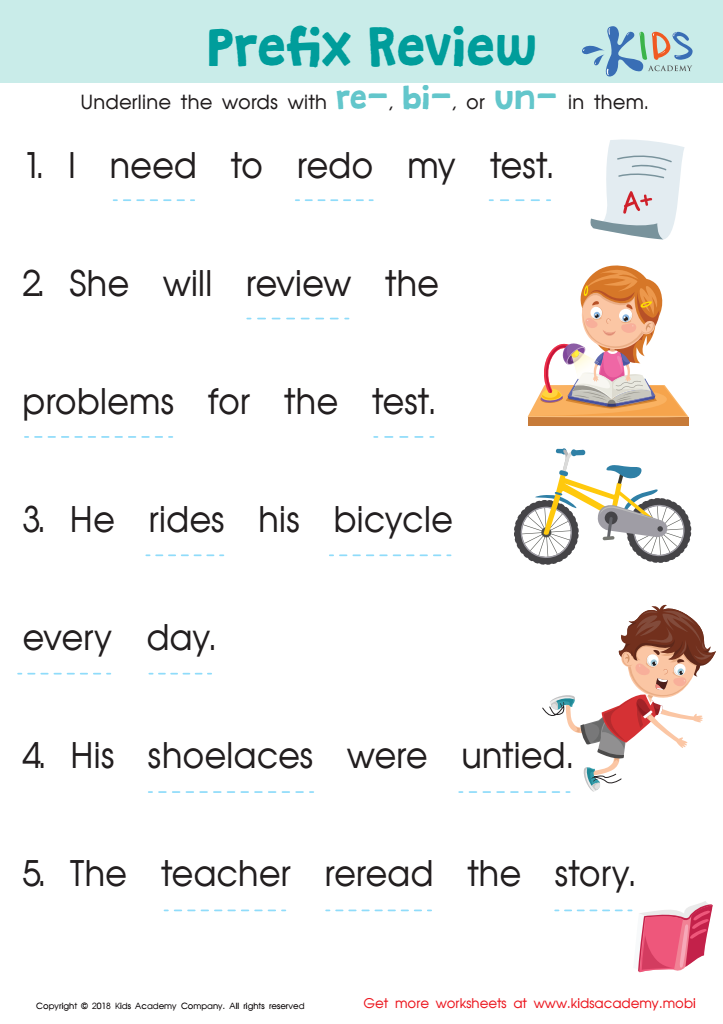
Prefix Review Worksheet
 Assign to My Students
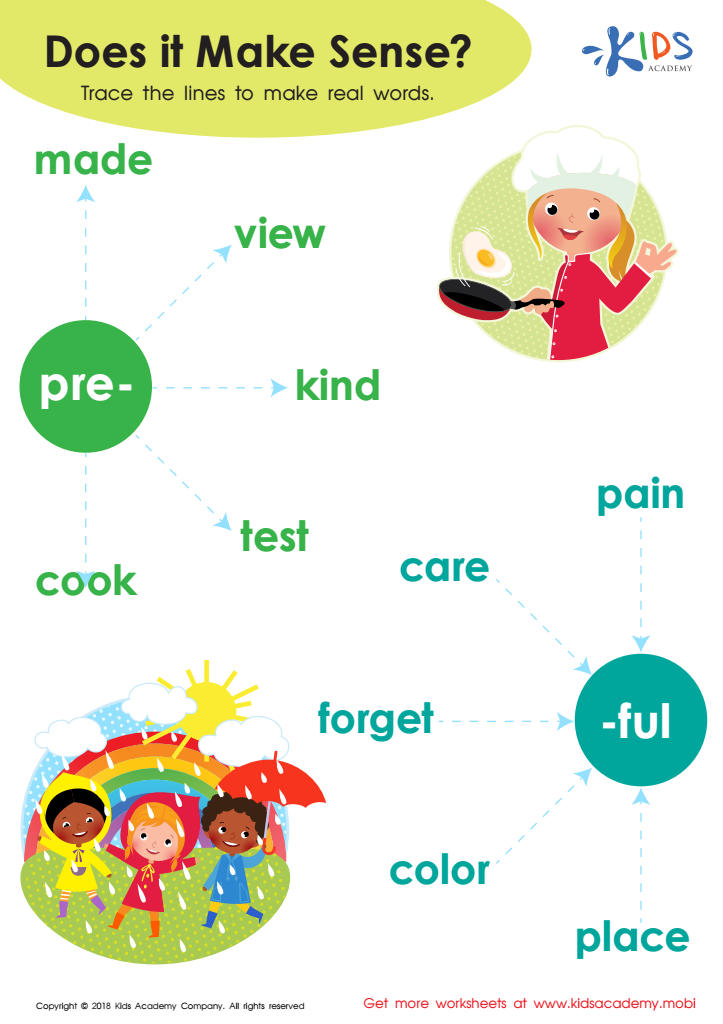
Prefix pre– and Suffix ful– Worksheet
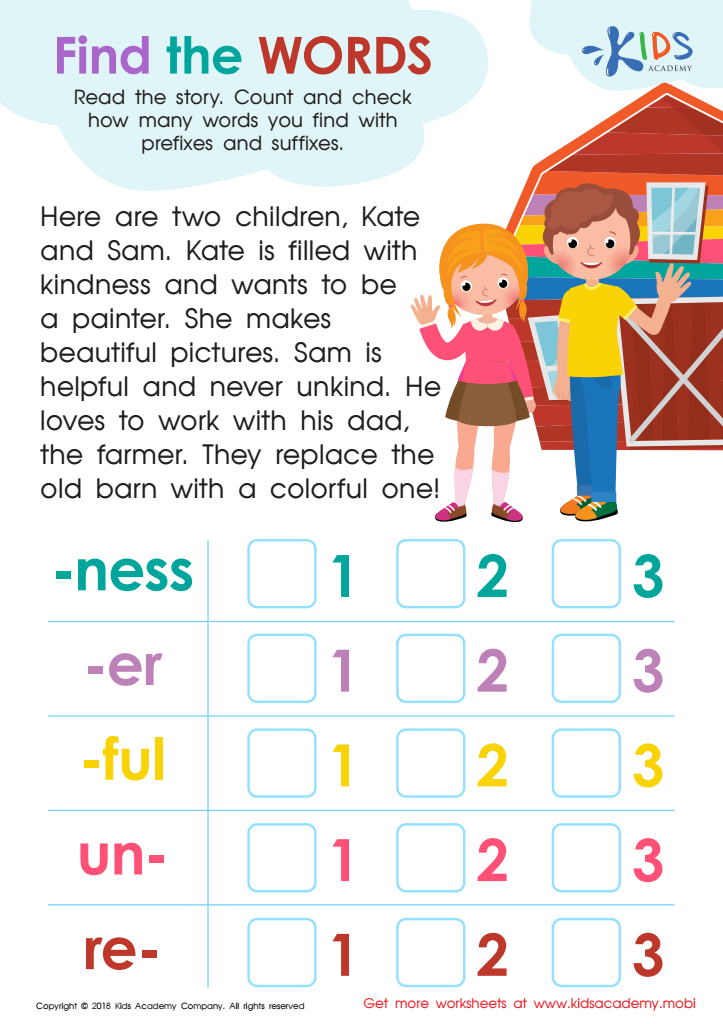
Prefix and Suffix Worksheet For Grade 3
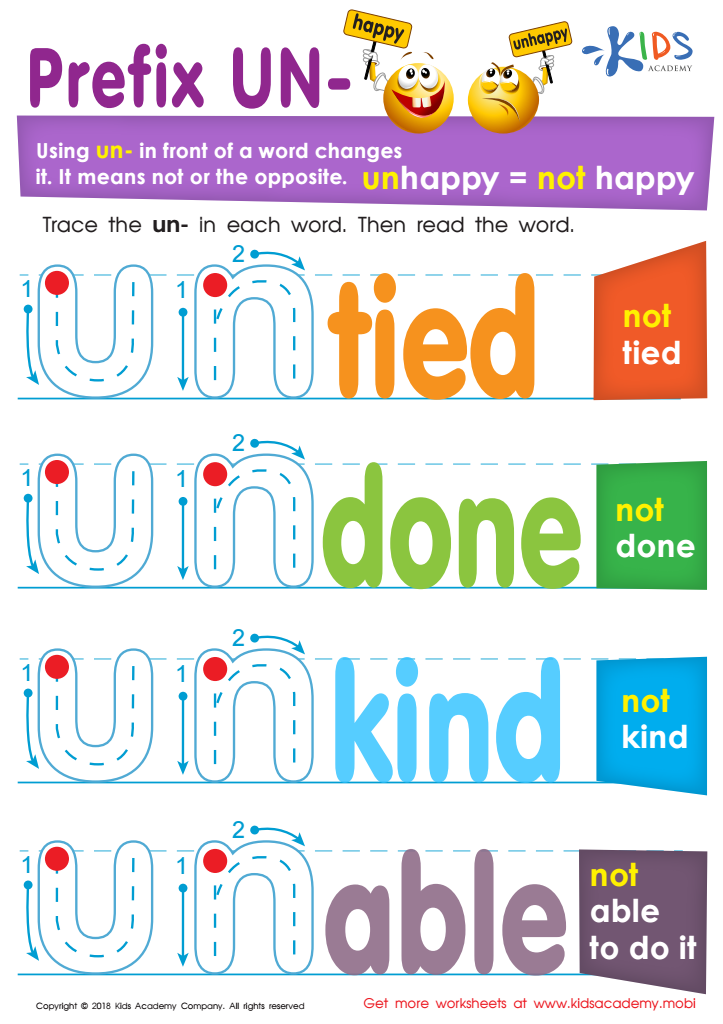
Prefix Un- Worksheet
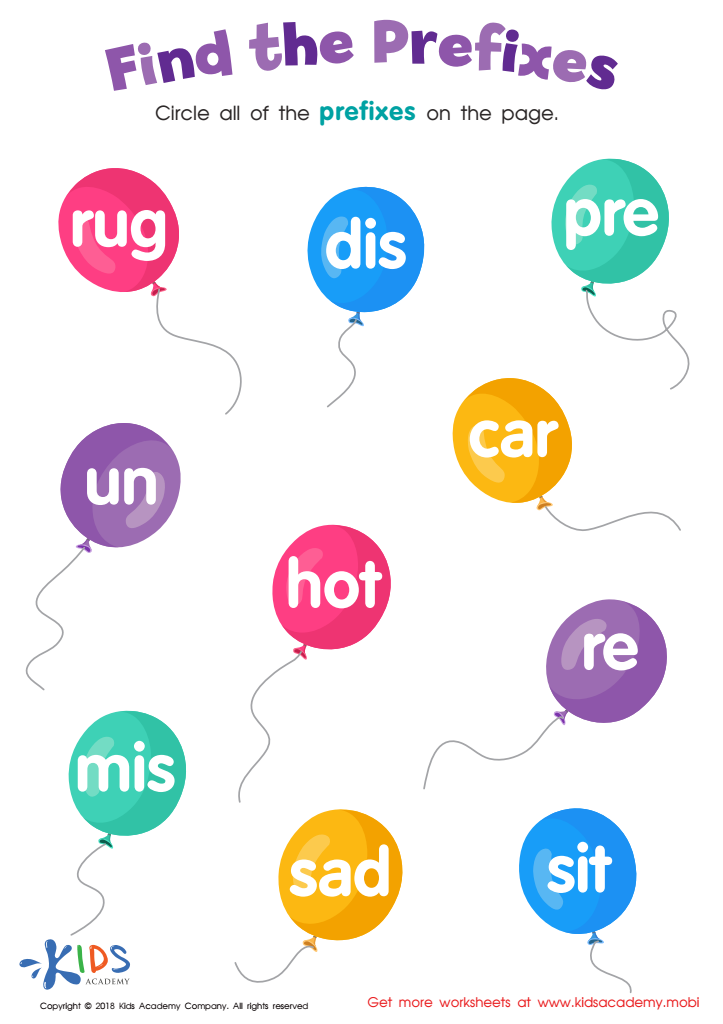
Reading: Find the Prefixes Worksheet
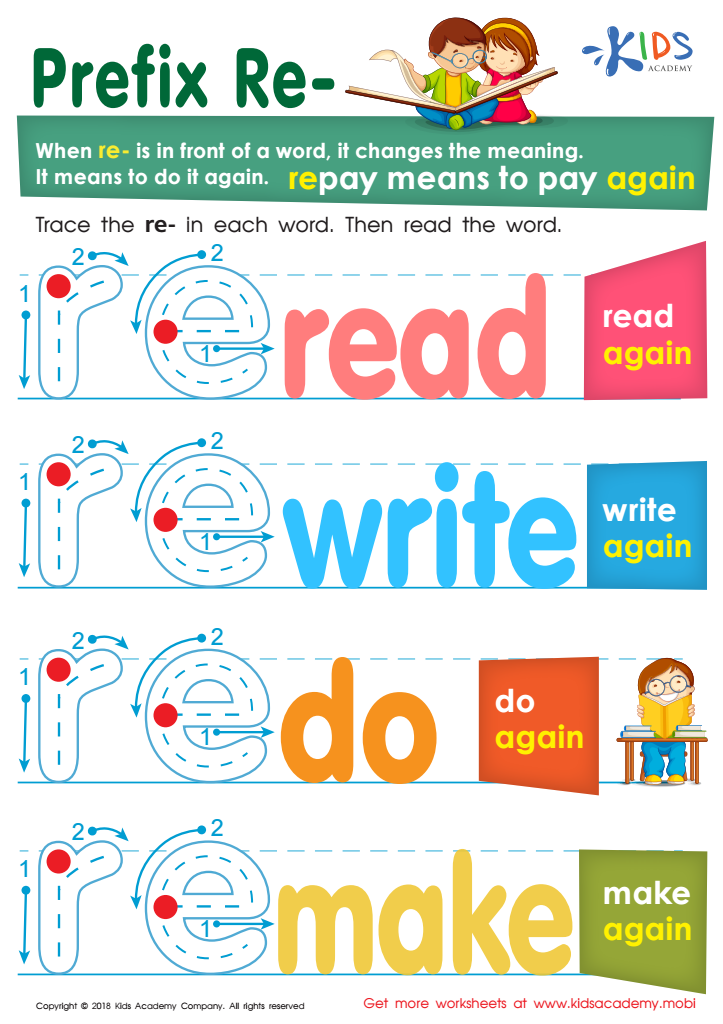
Prefix Re- Worksheet







Understanding prefixes is essential for young children, both at home and in the classroom, as it significantly boosts their language and reading development. Prefixes are word parts added to the beginning of root words to change their meaning, such as "un-" in "unhappy" or "re-" in "redo." For children aged 6-9, mastering prefixes can greatly expand their vocabulary, as they can use this knowledge to decode unfamiliar words and comprehend their meanings more easily.
When parents and teachers emphasize learning prefixes, they give children tools to unlock the meanings of many new words, fostering greater reading comprehension and confidence. This foundational skill can make reading more enjoyable and less frustrating for young learners, promoting a positive attitude towards literacy. Additionally, understanding prefixes enhances their spelling skills, as children start recognizing and applying patterns in their writing.
Moreover, as students progress in school, subjects like science and math often use complex terminology that includes prefixes. Early familiarity with prefixes equips children to tackle these subjects more effectively, laying the groundwork for academic success across various disciplines. Overall, incorporating prefix education within early learning sets the stage for a lifelong effective language and reading proficiency.