Understanding suffixes Normal Writing Worksheets for Ages 6-9
6 filtered results
-
From - To
Enhance your child's writing skills with our "Understanding Suffixes" worksheets, designed for ages 6-9. These engaging worksheets provide a fun and interactive way for young learners to familiarize themselves with common suffixes, transforming their vocabulary and improving their sentence construction. By exploring various suffixes, children will learn how to modify base words to change their meanings, aiding both their comprehension and writing fluency. Each activity encourages creativity while reinforcing essential language concepts. Perfect for homeschoolers or classroom use, our printable resources offer an enjoyable learning experience that supports language development, making writing exciting and accessible for every child!
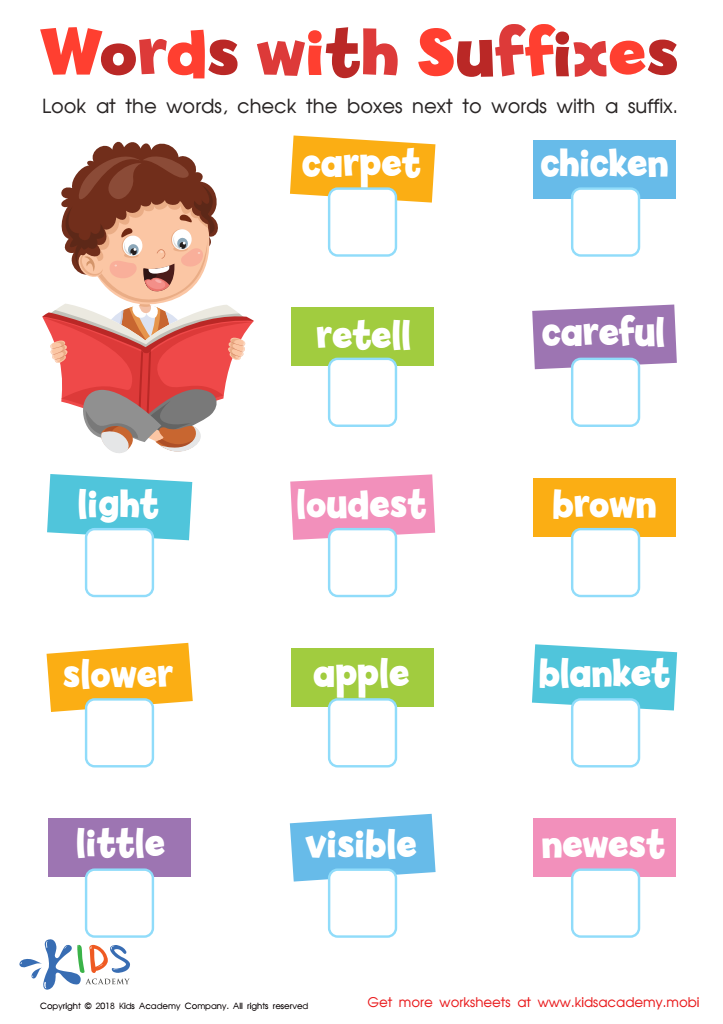
Reading: Words With Suffixes Worksheet
 Assign to My Students
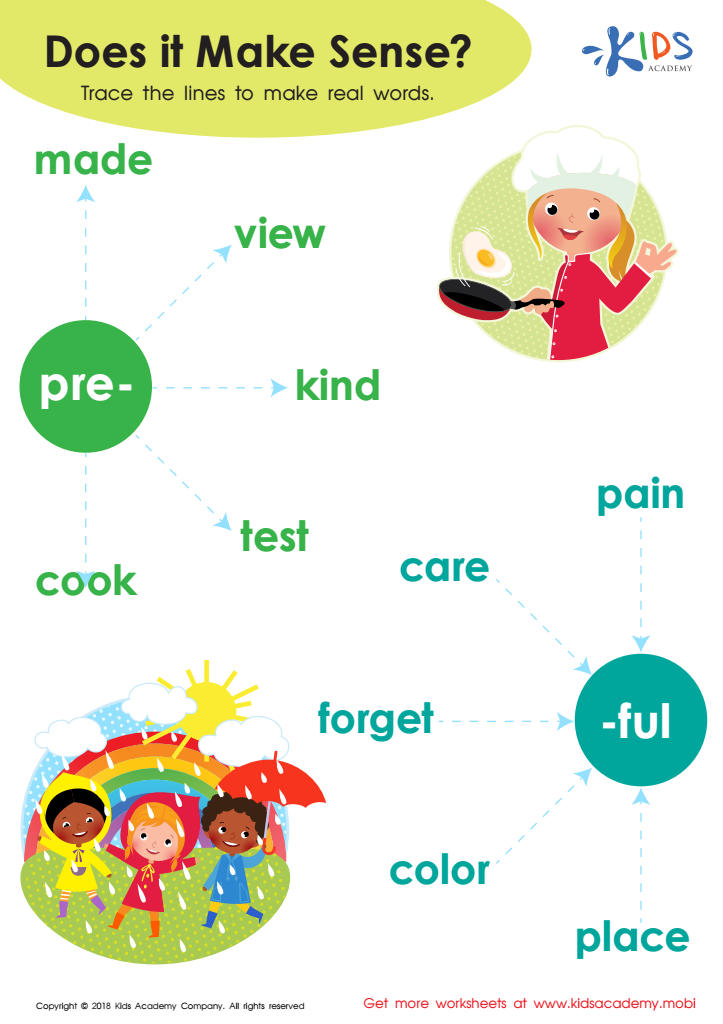
Prefix pre– and Suffix ful– Worksheet
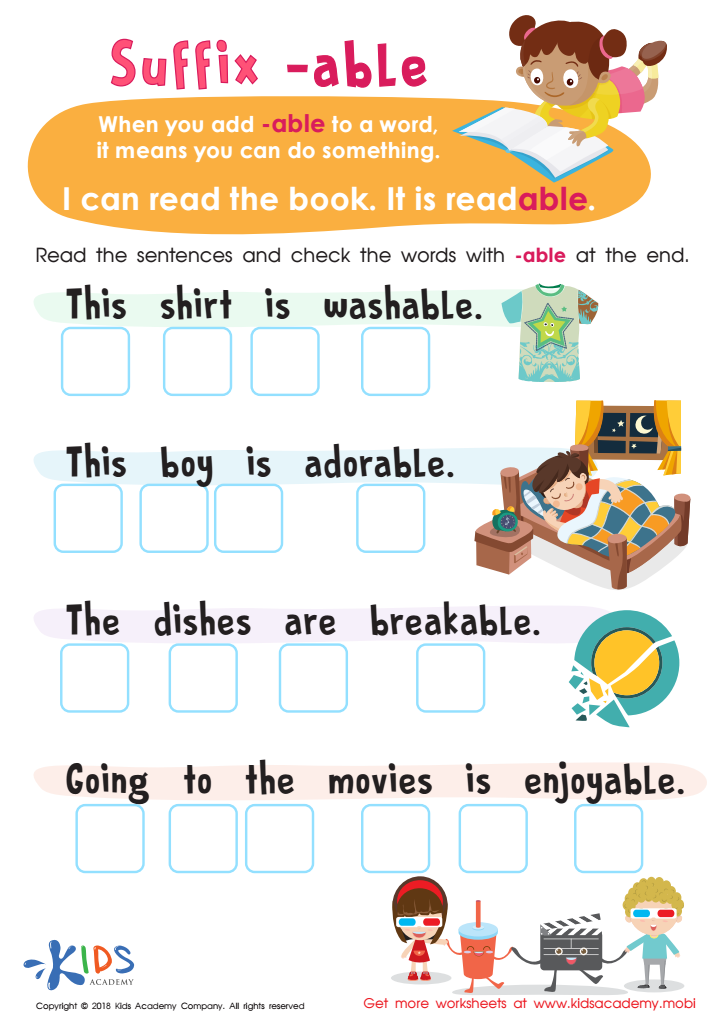
Suffix -Able Worksheet
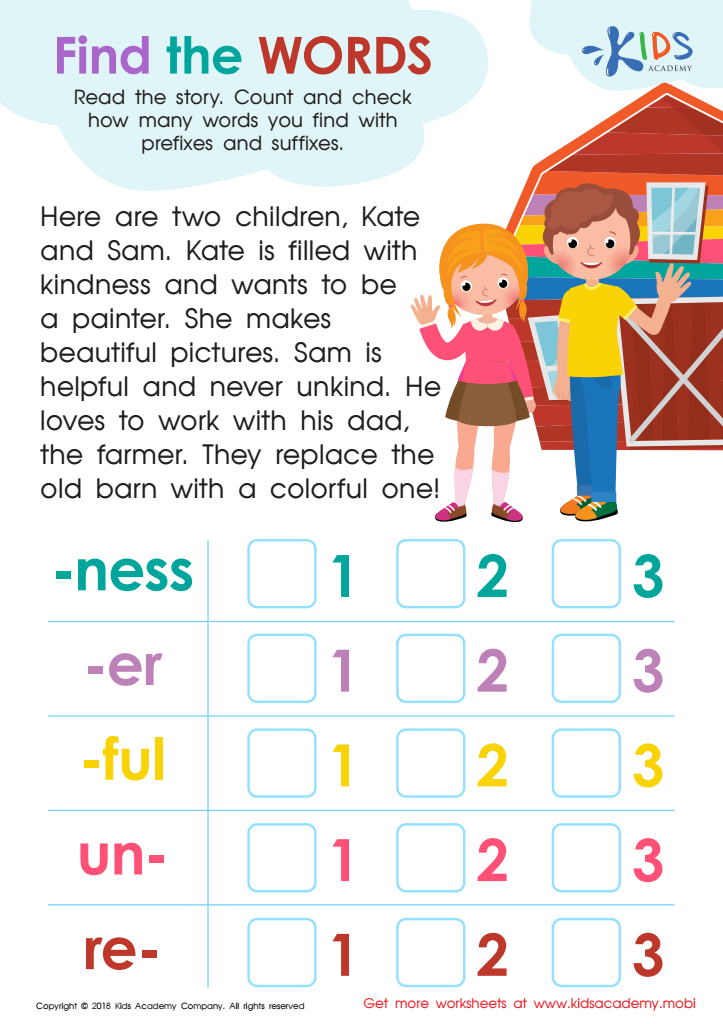
Prefix and Suffix Worksheet For Grade 3
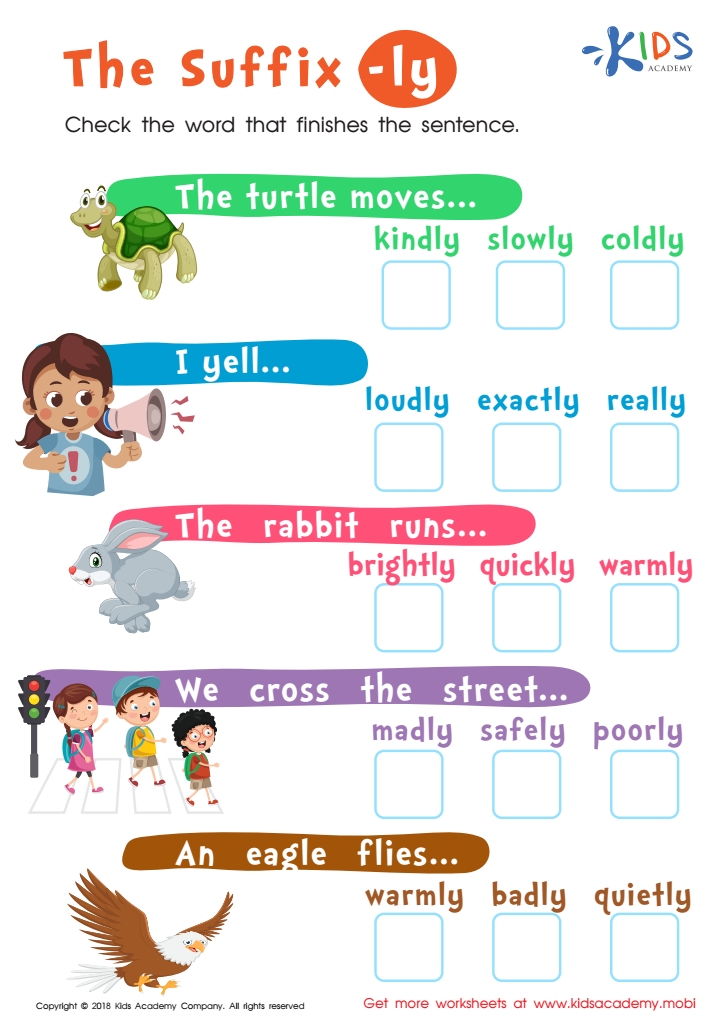
The Suffix -Ly Worksheet
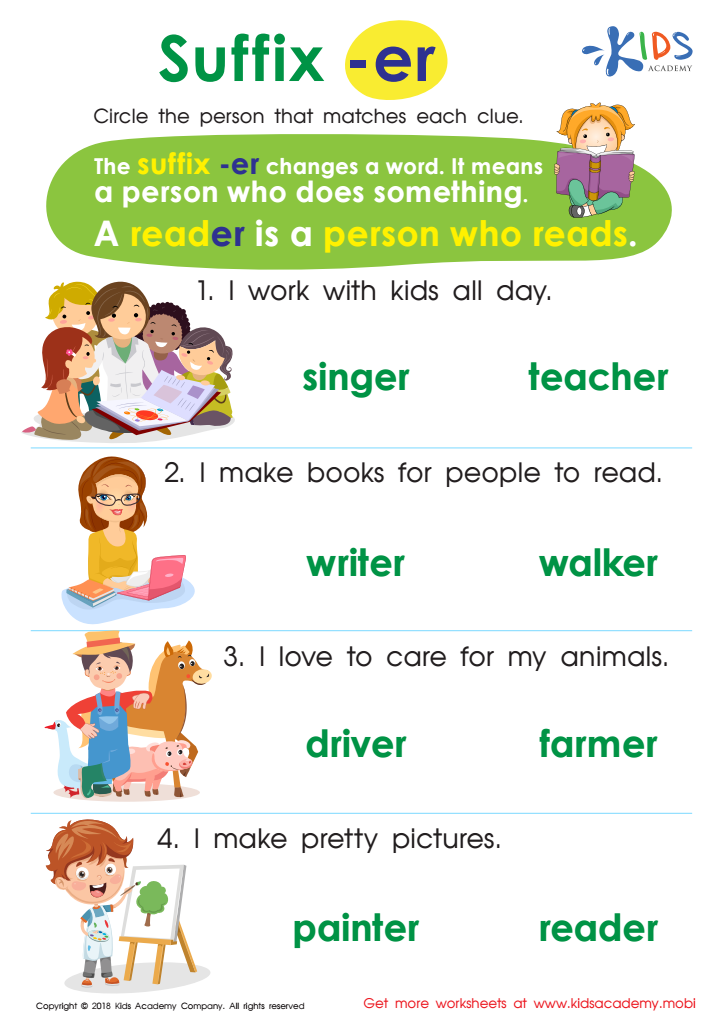
Suffix –er Printable Worksheet







Understanding suffixes is essential for children aged 6-9, as it greatly enhances their reading and writing skills. Suffixes are word endings that modify the meanings of root words, providing clues about how to use or pronounce them. For instance, adding “-ing” to a verb can indicate ongoing action (run to running), while “-ed” denotes past tense (play to played). When children grasp suffixes, they can decode unfamiliar words more easily, improving their reading fluency and comprehension.
Teachers and parents should care about teaching suffixes because they are fundamental for vocabulary expansion. By understanding how suffixes change word meanings, children can learn to create new words and express ideas more creatively. This knowledge also supports their spelling skills, as recognizing common suffixes helps make educated guesses on spelling.
Additionally, a strong command of suffixes contributes to better writing. Children will be able to construct more complex sentences, using a wider range of vocabulary. Overall, teaching suffixes not only builds essential language skills but also fosters confidence in children’s ability to communicate effectively. Supporting their understanding of suffixes equips them for future academic success and lifelong learning.