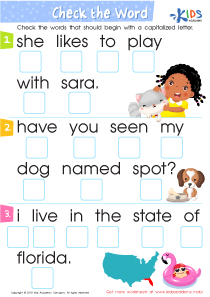
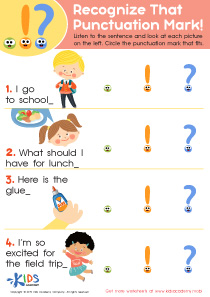
Word identification Normal Writing Worksheets for Ages 6-9
5 filtered results
-
From - To
Our Word Identification Normal Writing Worksheets for ages 6-9 are expertly crafted to enhance emergent readers’ vocabulary and reading confidence. These engaging worksheets blend fun illustrations with interactive exercises to help children recognize and decode words effectively. From simple sight words to more complex vocabulary, our collection covers a broad spectrum, ensuring a robust foundation in literacy skills. Ideal for classroom use or at-home practice, these worksheets support continuous learning and skill development. Equip your young learners with essential word identification skills, setting the stage for academic success and a lifelong love of reading!
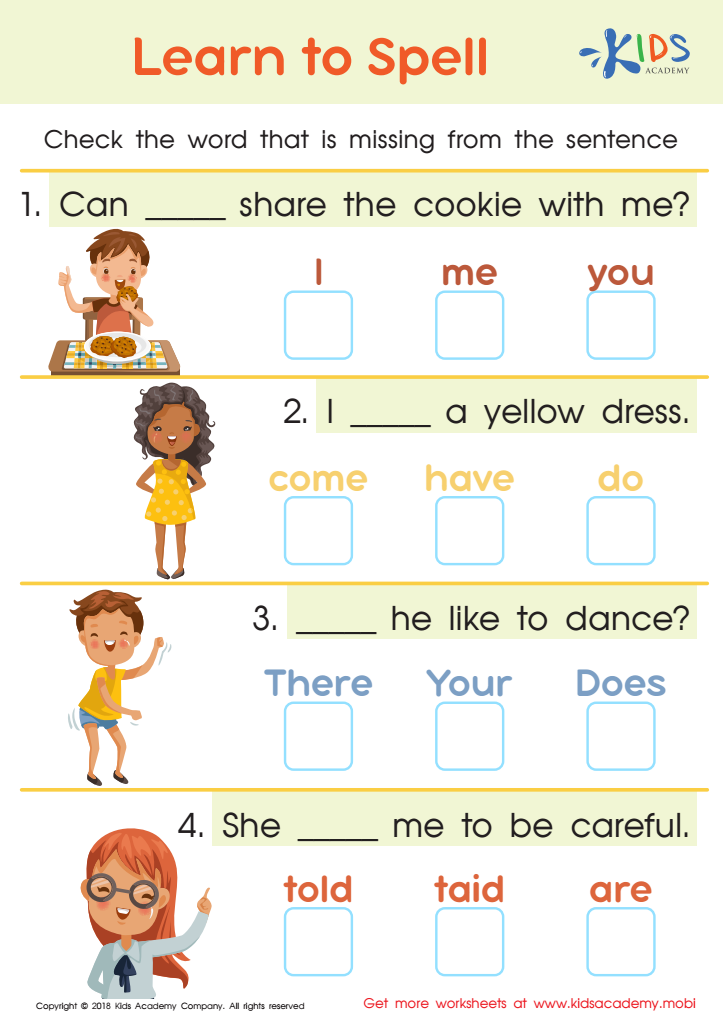
Learn to Spell Worksheet
 Assign to My Students
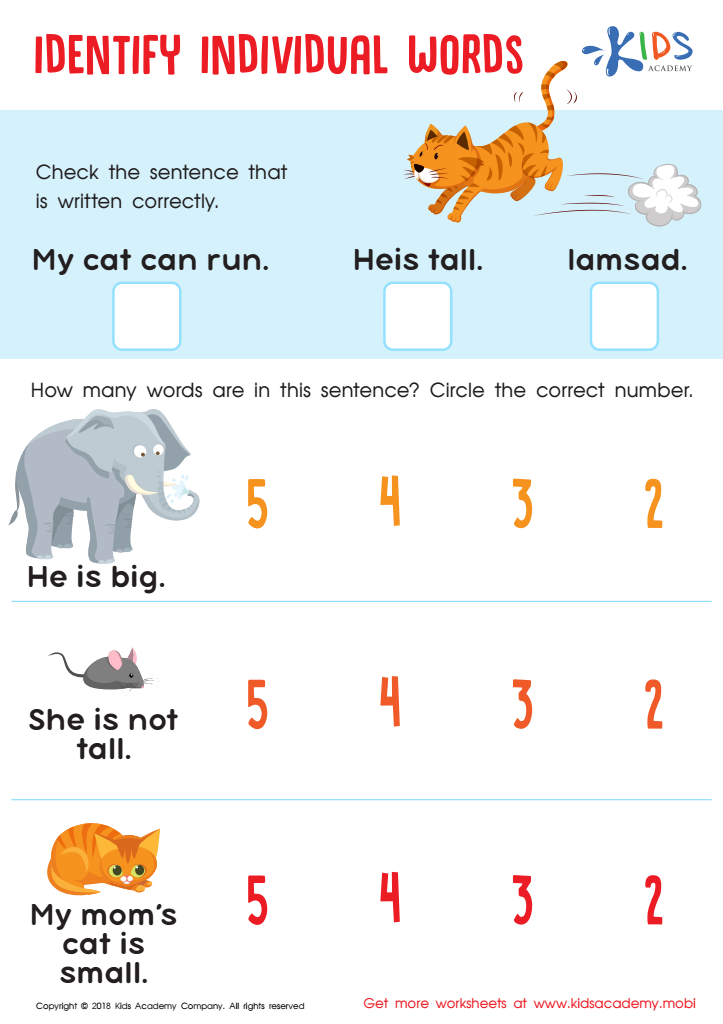
Identify Individual Words Worksheet
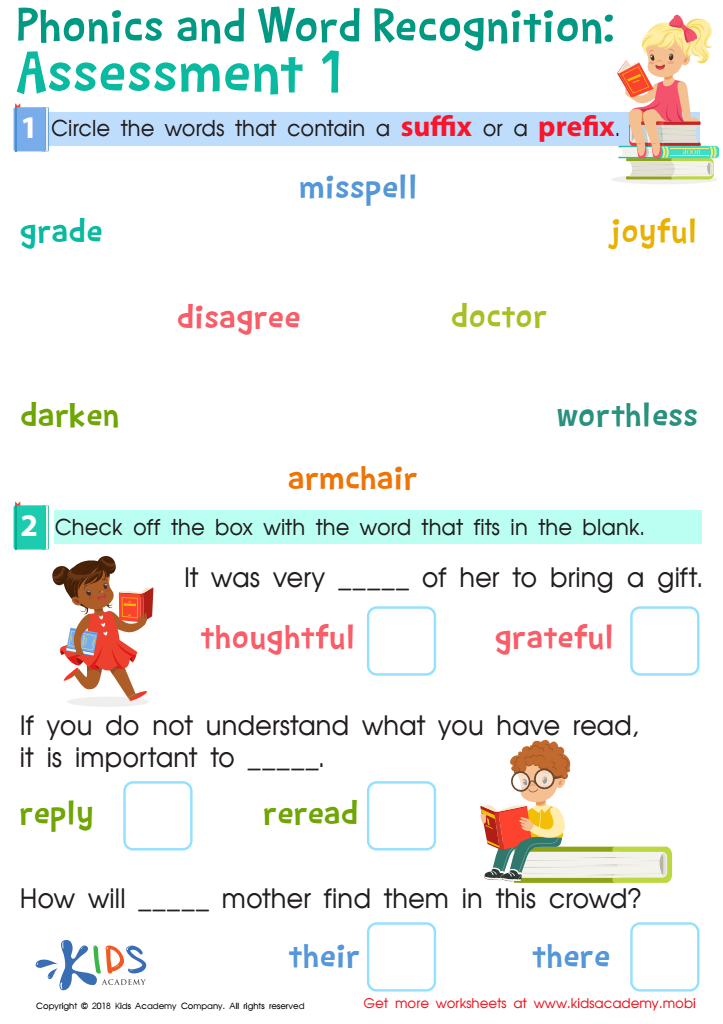
Phonics and Word Recognition: Assessment 1 Worksheet
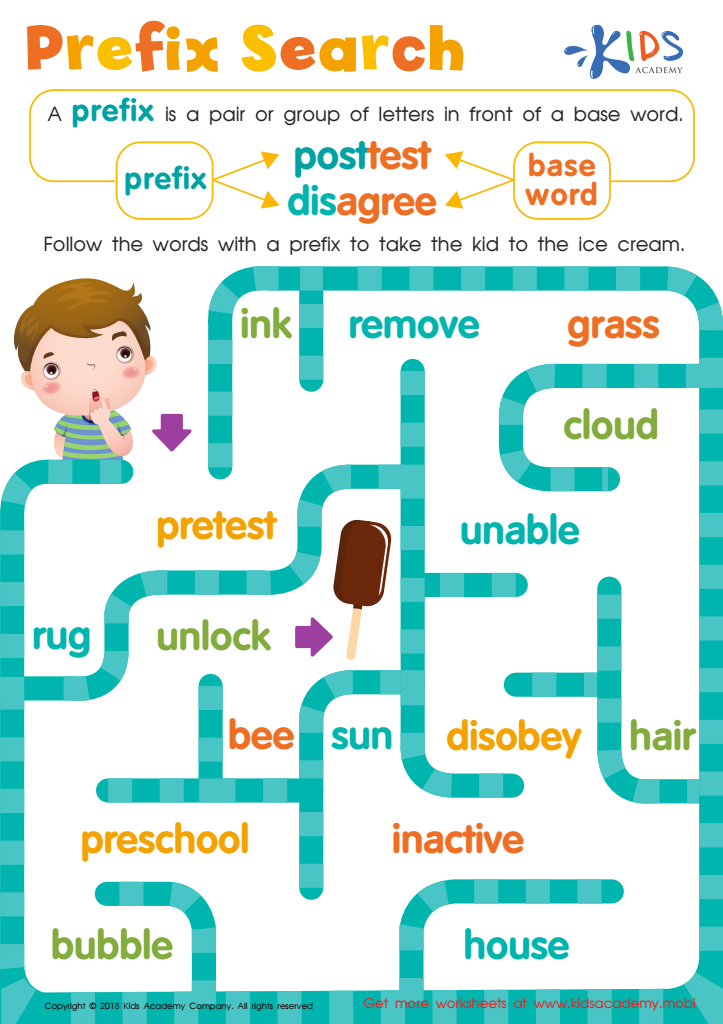
Reading: Prefix Search Worksheet
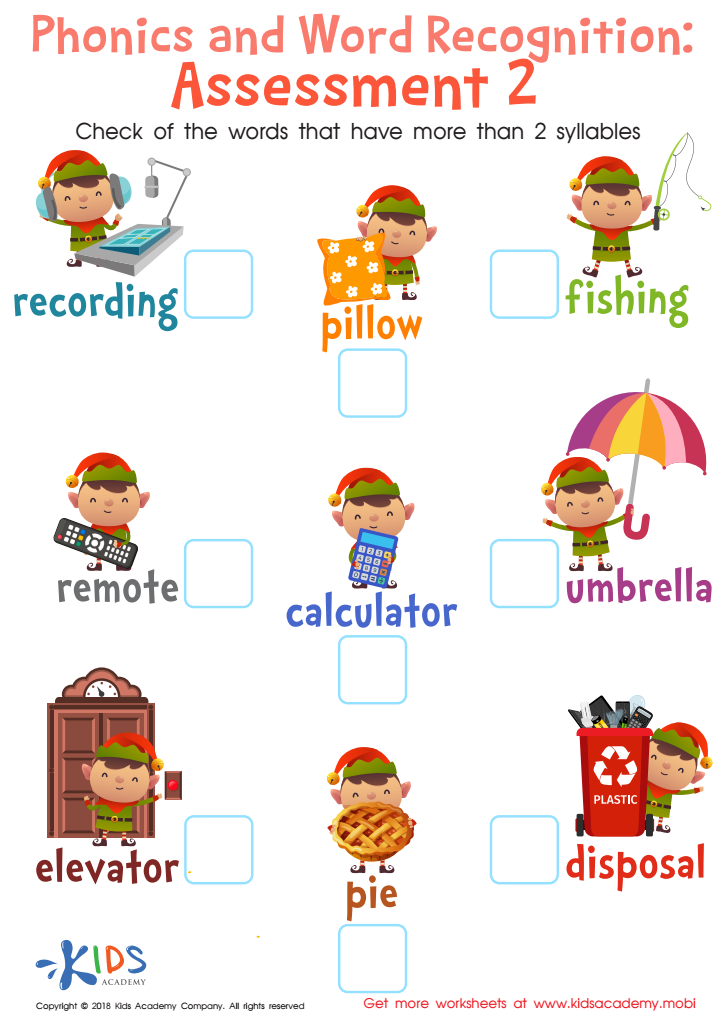
Phonics and Word Recognition: Assessment 2 Worksheet







Word identification and normal writing skills are foundational components of literacy development for children ages 6-9. During this critical period, children transition from recognizing letters and sounds to fluent reading and writing. Proficiency in word identification allows children to decode unfamiliar words, understand text, and build vocabulary. This skill is crucial not just for reading tasks, but for all areas of learning, as it contributes to comprehension and academic confidence.
Normal writing, meanwhile, involves the ability to produce readable, properly formed letters and words. Good writing skills support cognitive development and improve communication abilities. When children express their ideas clearly in writing, they are more likely to succeed in school.
For parents and teachers, fostering these skills early can prevent future academic difficulties. Children who struggle with word identification or writing may fall behind, leading to frustration and a lack of interest in reading and learning. Early intervention and consistent practice can make a significant difference.
Ultimately, nurturing these skills opens doors to lifelong learning and empowers children with the confidence needed to tackle more complex concepts. Investing attention and resources in developing word identification and writing skills during these formative years sets a solid foundation for future academic and personal success.