Filters

8 filtered results

Clear all filters
Favorites
With answer key
Interactive

8 filtered results

Difficulty Level

Grade


Help your 6-year-old master letter recognition with our engaging ABC Order Worksheets! Specifically designed for early learners, these worksheets provide fun and interactive exercises that reinforce the alphabet in its normal order. Children will enjoy identifying, tracing, and categorizing letters, promoting both writing skills and letter familiarity. Our activities encourage critical thinking, memory retention, and boost confidence as young learners progress at their own pace. Each worksheet is crafted to bring joy to the learning experience while adhering to grade-level expectations. It’s the perfect resource for parents and educators looking to enhance literacy skills in an enjoyable way. Download and explore today!

Check out this FREE Trial Lesson on ABC Order for age 6!

P

Favorites
With answer key
Interactive
  • 6
  • Letter recognition
  • ABC Order
  • Normal
Letter P worksheets
Letter P worksheets

Letter P Tracing Page

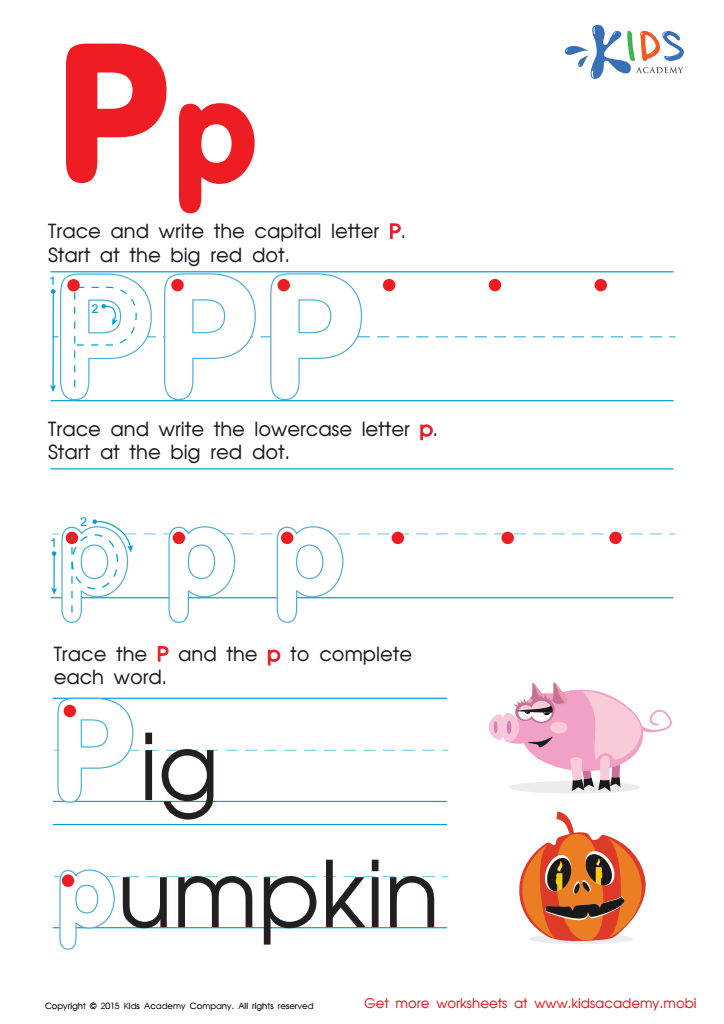
Trace the lines from the red dot to learn to write "P"! Then practice this letter with the fun activities: complete the word "Pig" and "Pumpkin". Check out Kids Academy to get more free ABC worksheets.
Letter P Tracing Page
Worksheet
Letter Q worksheets
Letter Q worksheets

Letter Q Tracing Page

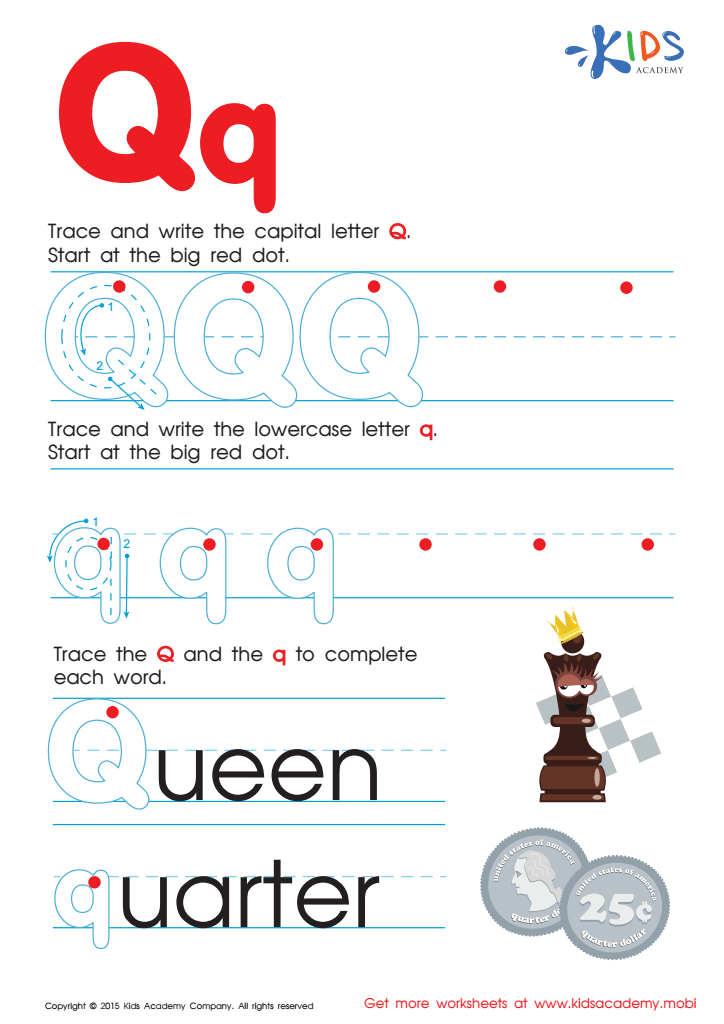
Learn the letter "Q"! Trace and write it a few times in upper and lowercase. Then help the Queen by writing her initial letter. Finally, write "quarters" and practice with more alphabet worksheets.
Letter Q Tracing Page
Worksheet
Letter H worksheets
Letter H worksheets

Letter H Tracing Page

Trace the letter "H", then practice writing its lowercase form. Finally, choose your favorite form of transport and ride away! Get our worksheets to make learning fun and easy.
Letter H Tracing Page
Worksheet
letter G worksheets
letter G worksheets

Letter G Tracing Page

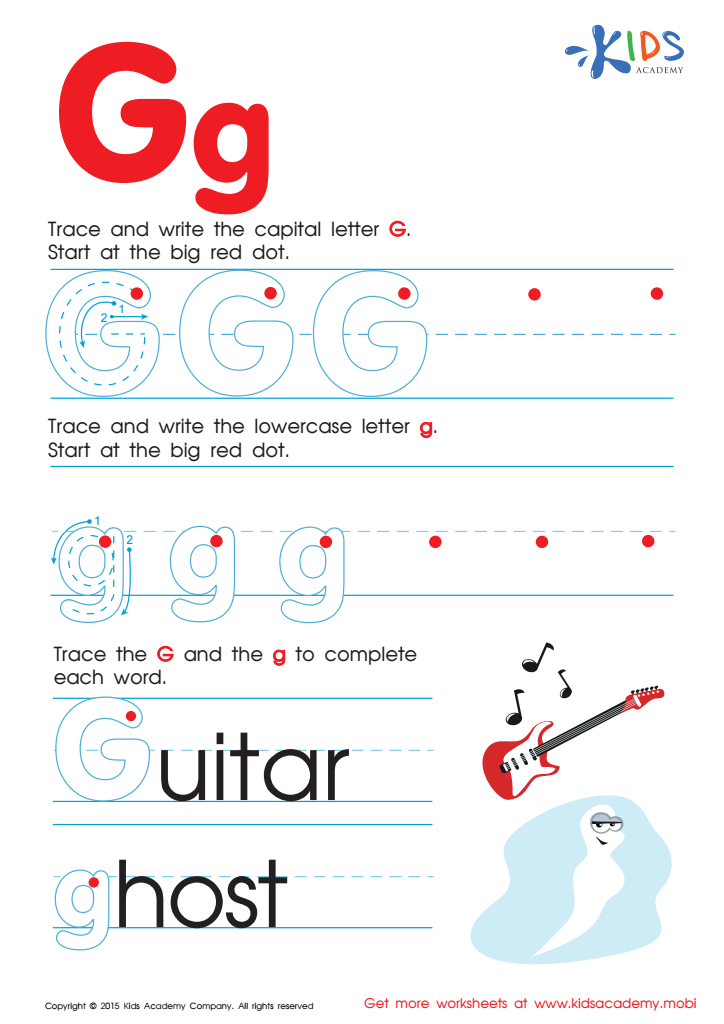
Get ready to trace the letter "G" – with a big red spot as the starting point, trace the lines and watch the letter appear. Uppercase and lowercase letters are both easy and fun to write. Give it a go and finish the word "go". Play the guitar and say "hello" to a funny ghost!
Letter G Tracing Page
Worksheet
Letter L worksheets
Letter L worksheets

Letter L Tracing Page

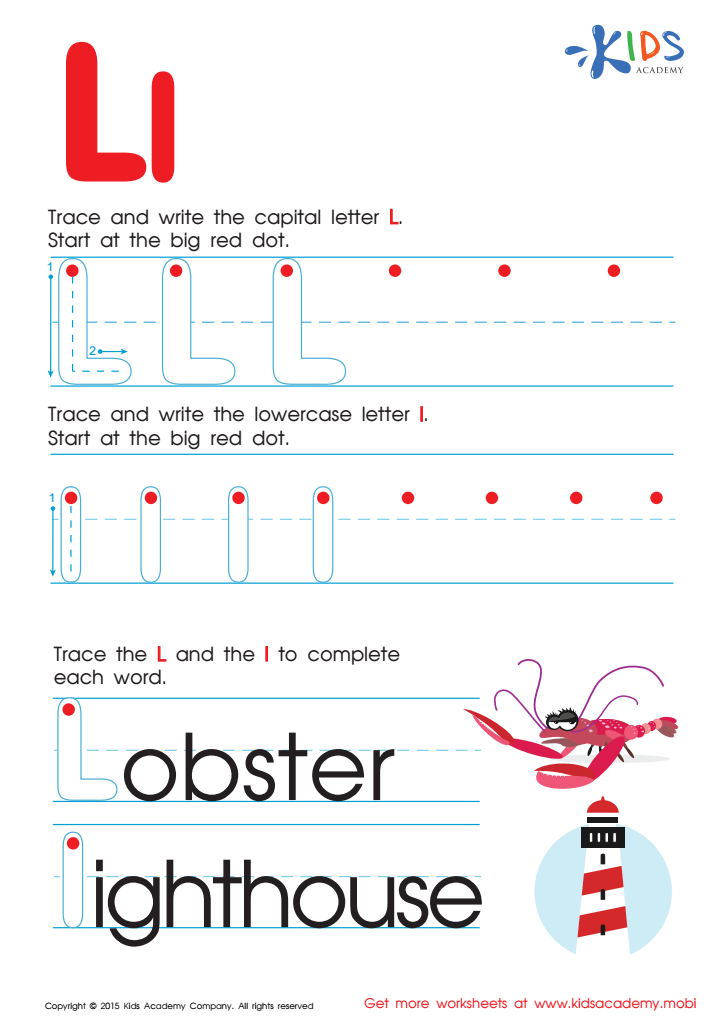
Trace uppercase and lowercase letters to practice writing. Pay attention to the lowercase letters, like the "L", that are not as tall as an uppercase "I" or as short as a lowercase "i". Words like "lobster" and "lighthouse" are waiting to be completed. Enjoy!
Letter L Tracing Page
Worksheet
Letter K worksheets
Letter K worksheets

Letter K Tracing Page

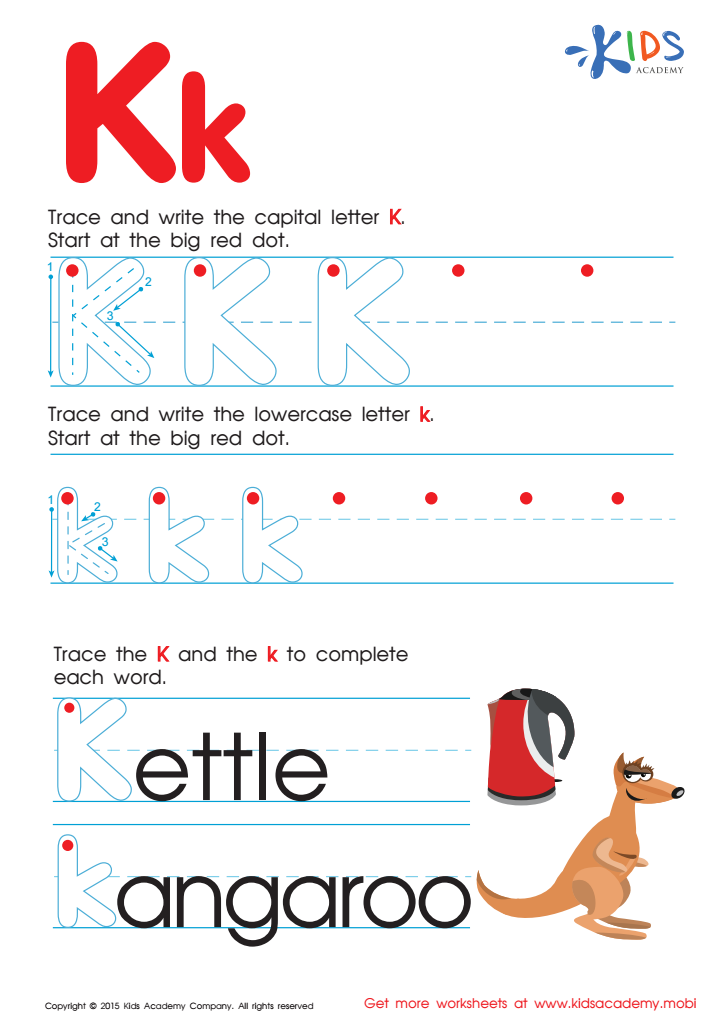
Trace and write the letter K; start at the big red dot. Use it to complete words like "Kettle" and "Kangaroo". Visit Kids Academy for more free alphabet worksheets for kindergarten.
Letter K Tracing Page
Worksheet
letter F worksheets
letter F worksheets

Letter F Tracing Page

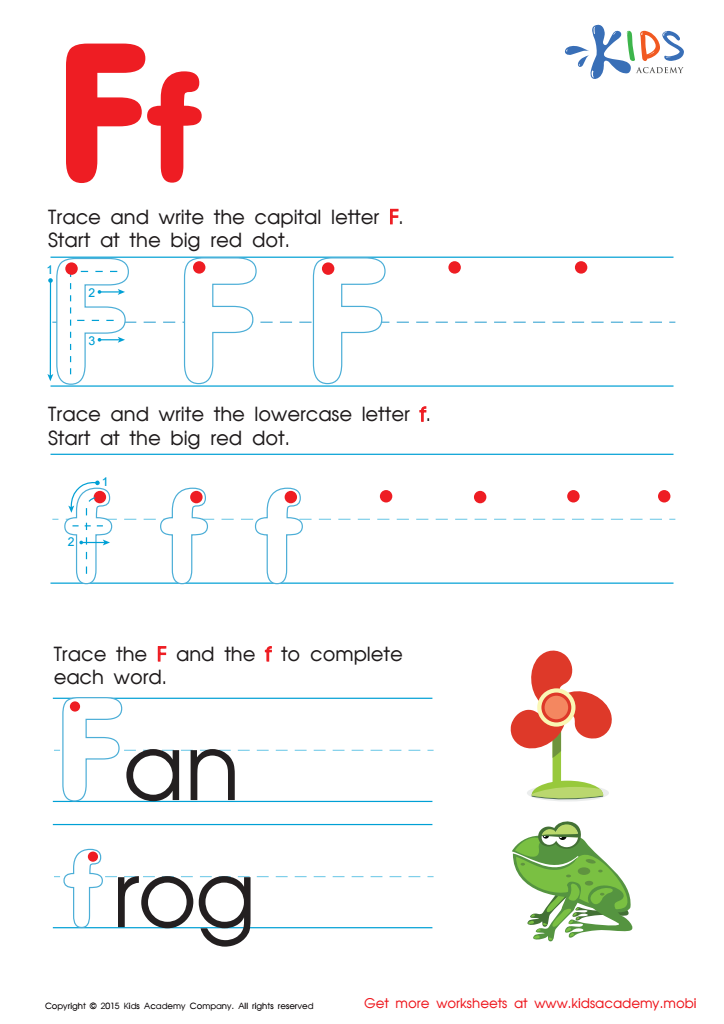
Trace "F" with your pencil! Start at the red dot and draw lines — it's fun! Check it out — it looks great! Keep practicing to make it even better. Then, try completing words. Help out the broken fan and funny frog! Get free alphabet worksheets and activities for your kids. Come see our new tracing pages!
Letter F Tracing Page
Worksheet
letter d worksheets
letter d worksheets

Letter D Tracing Page

Trace and write capital and lowercase letter "D" with our free printable alphabet worksheet! Be careful not to mix up "b" and "d" - just look at the ducks and write their first letter. The dolphin wants to join the fun too - do you like dolphins? Get more fun worksheets and activities at Kids Academy!
Letter D Tracing Page
Worksheet


Letter recognition in normal ABC order is crucial for 6-year-olds as it lays the foundation for reading and literacy skills. At this developmental stage, children are beginning to understand that letters represent sounds, and learning the alphabet in order helps them connect these sounds more easily. Knowing the sequence of letters aids in alphabetizing words, which is fundamental for dictionary skills and using reference materials later on.

Furthermore, recognizing letters in ABC order supports cognitive development; it encourages problem-solving and critical thinking as children navigate through letters and words. Engaging with the alphabet song and related games reinforces memory and improves phonemic awareness, which are essential components for reading fluency.

For teachers and parents, emphasizing letter recognition provides an avenue for fostering a love of reading. Encouragement and support can enhance children's confidence as they master this skill, bolstering their motivation to engage with books and written text. Ultimately, by prioritizing letter recognition in normal ABC order, parents and teachers invest in their child's educational journey, setting them up for academic success and lifelong literacy. This foundational skill forms the building blocks for future language and communication abilities.