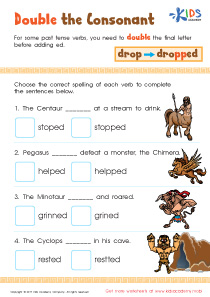
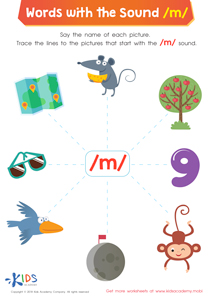
Word Recognition Normal Consonant Digraphs Worksheets for 6-Year-Olds
5 filtered results
-
From - To
Help your 6-year-old master word recognition with our tailored Consonant Digraphs Worksheets! Perfectly crafted for young learners, these engaging activities focus on common consonant digraphs like 'sh', 'ch', 'th', and 'wh'. Each worksheet is designed to enhance phonemic awareness and improve reading skills by combining visual and auditory learning techniques. Alongside recognizing sounds, kids will enjoy fun exercises, such as matching games and fill-in-the-blank sentences, ensuring they stay motivated and excited about learning. Prepare your child for reading success and foster a love of language with our comprehensive, easy-to-use digraphs worksheets!
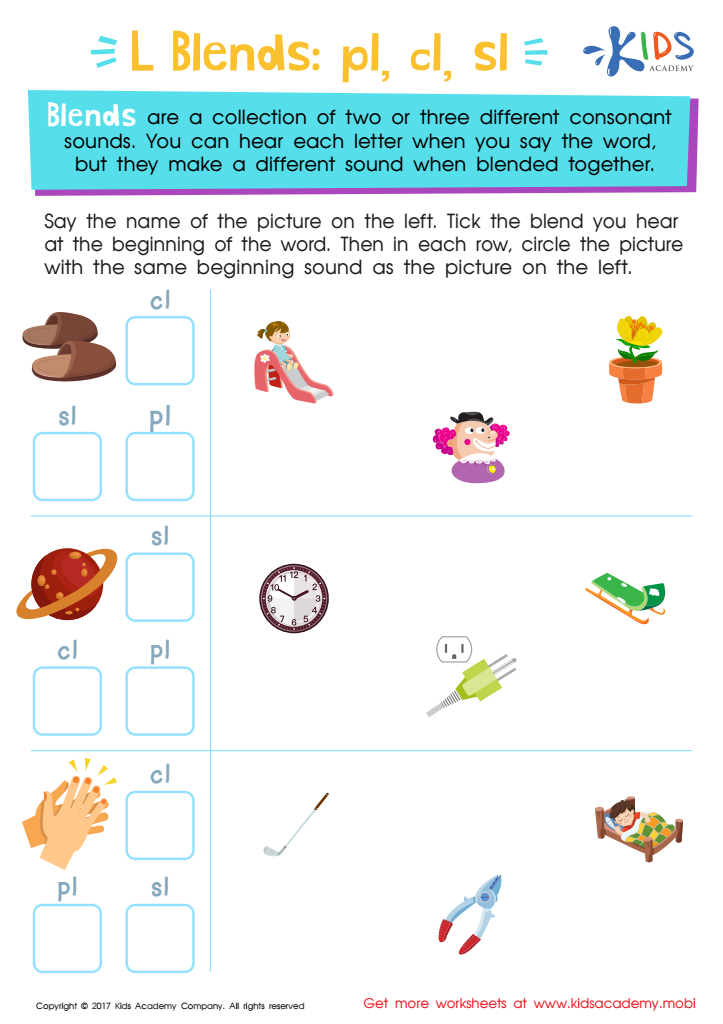
L Blends: "Pl", "Cl" and "Sl" Printable
 Assign to My Students
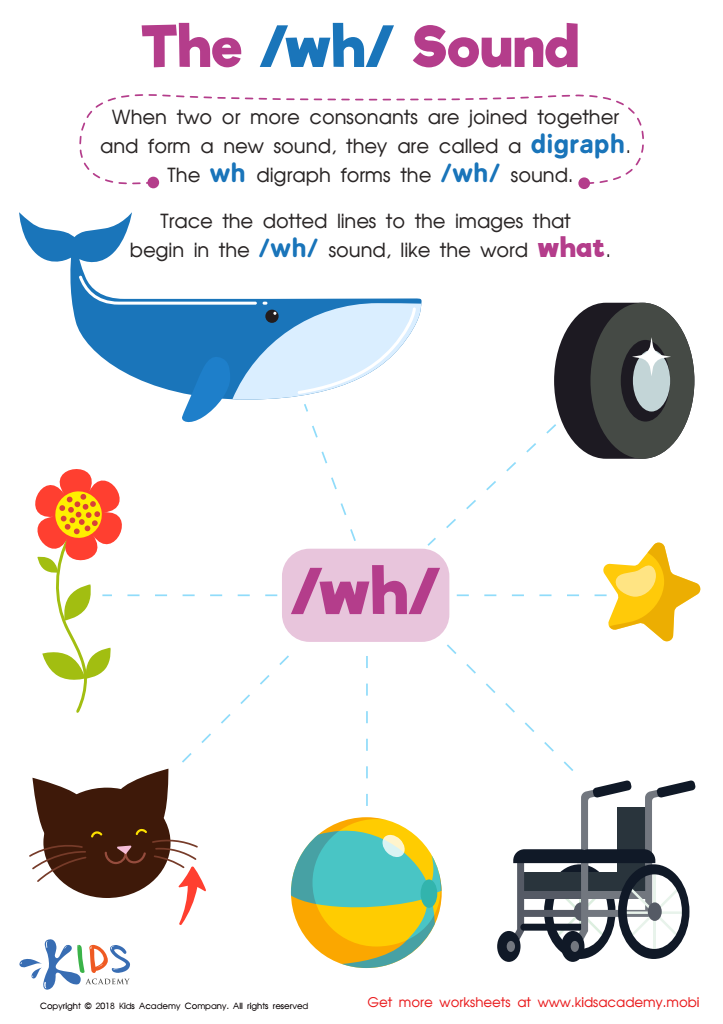
The /wh/ Sound Worksheet
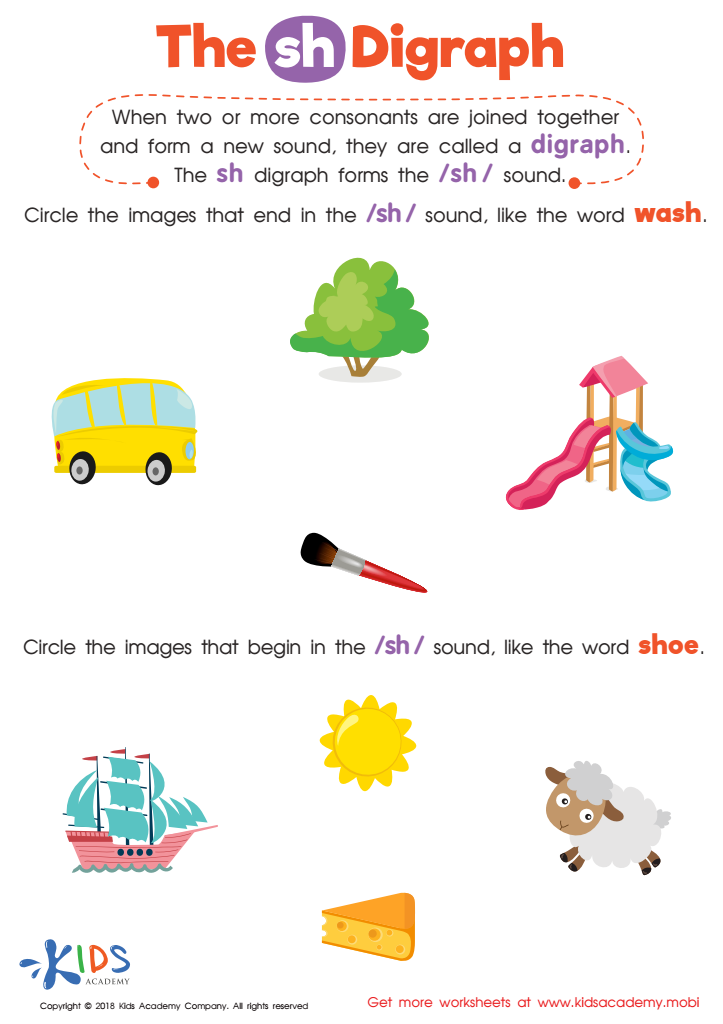
The SH Digraph Worksheet
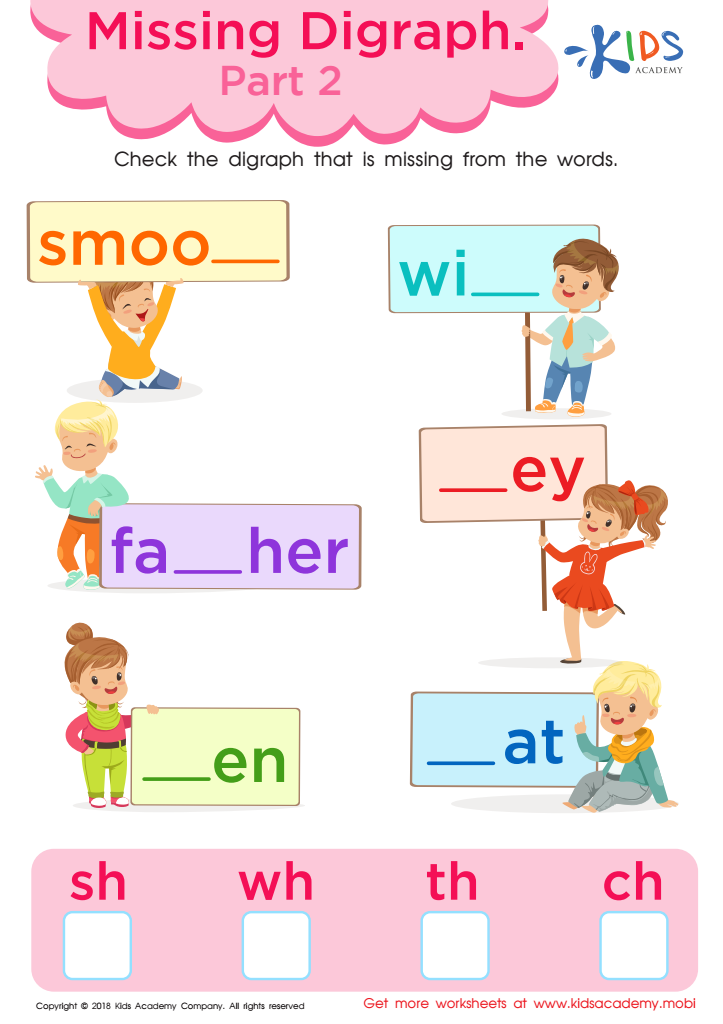
Missing Digraph: Part 2 Worksheet
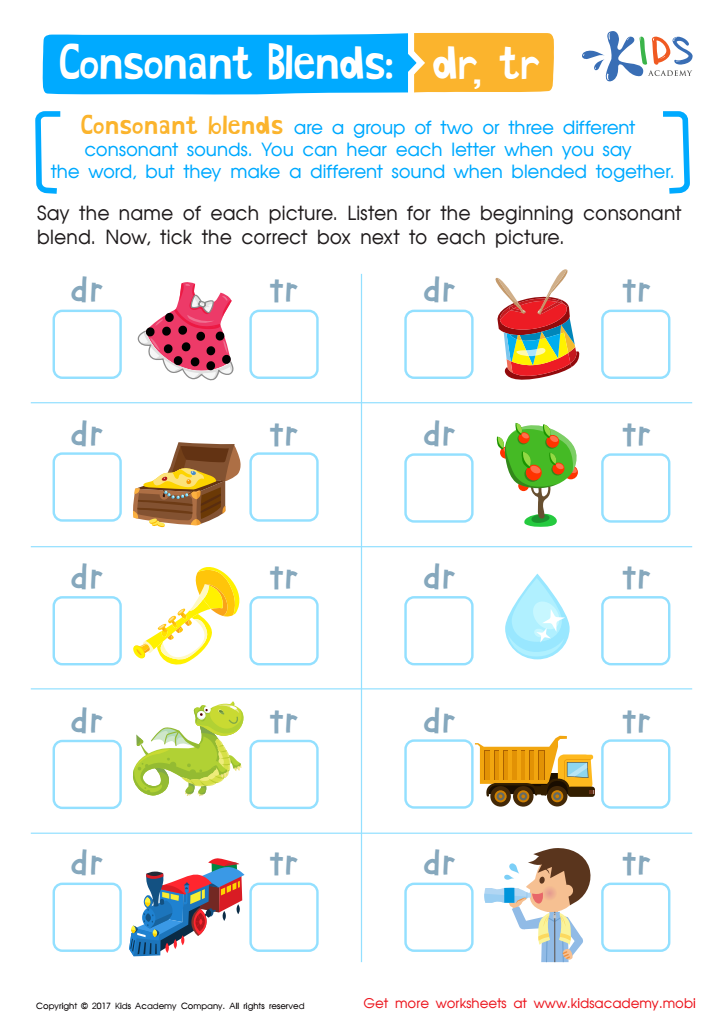
Consonant Blends: "Dr" and "Tr" Printable


Parents and teachers should prioritize the understanding of word recognition and normal consonant digraphs for 6-year-olds because it lays the foundation for proficient reading skills, crucial in early education. Consonant digraphs are pairs of consonants that together create a single sound, such as “sh,” “th,” and “ch.” Mastery of these concepts is vital because it enhances phonemic awareness, a critical skill at this developmental stage.
Phonemic awareness helps children decode words, enhancing both reading fluency and comprehension. When children recognize common consonant digraphs, they decode words more quickly and accurately, reducing frustration and increasing reading confidence. This foundational skill facilitates the smoother transition to more complex reading tasks, promoting a positive and engaging learning experience.
For parents and teachers, focusing on these essential skills can prevent future literacy difficulties. Early intervention and consistent practice with digraphs help avoid the need for more intensive remedial instruction later on. Additionally, proficient readers are more likely to develop a lifelong love of reading, which is associated with academic success across subjects. By concentrating on word recognition and consonant digraphs, educators and parents empower children with tools essential for literacy, setting the stage for ongoing educational achievement and a brighter academic future.