
Reading proficiency Normal Alphabet Worksheets for 6-Year-Olds
6 filtered results
Difficulty Level
Grade
Age
-
From - To
Subject
Activity
Standards
Enhance your child's reading skills with our Reading Proficiency Normal Alphabet Worksheets designed specifically for 6-year-olds! These printable worksheets focus on developing crucial literacy skills through engaging activities that help children recognize letters, sounds, and vocabulary. Each worksheet is carefully crafted to make learning fun and interactive, perfect for young learners. By practicing with these worksheets, your child will gain confidence in their reading abilities and improve their comprehension skills. Ideal for home or classroom use, these resources are perfect for supporting early literacy development. Start your child's reading journey today with our easy-to-use alphabet worksheets!
Favorites
With answer key
Interactive
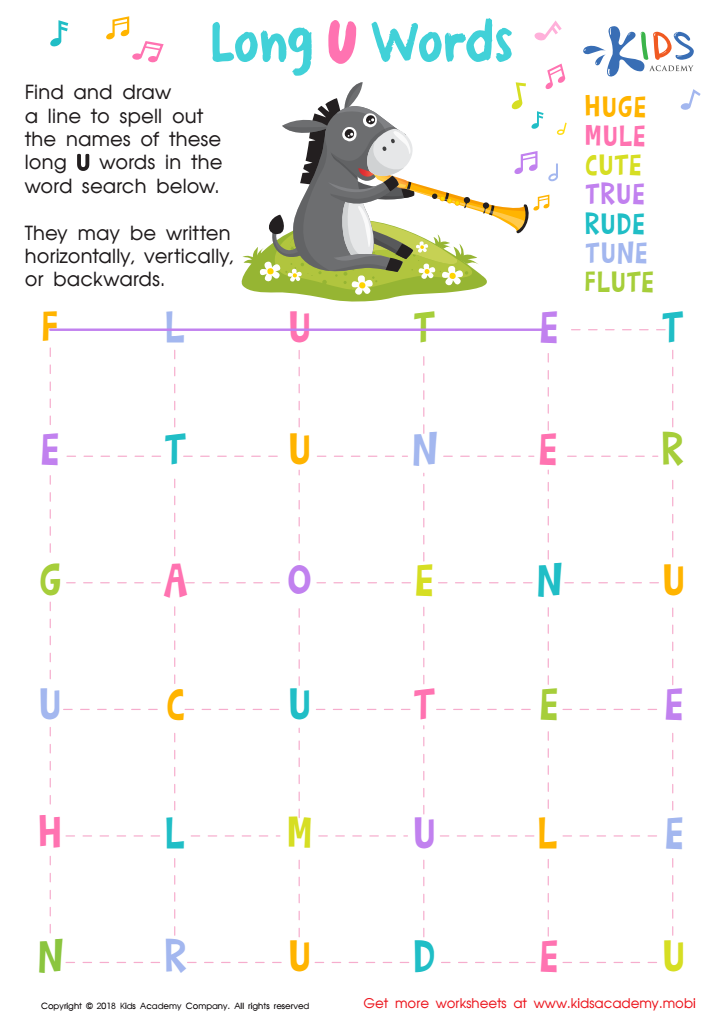
Long /u/ Words Worksheet
Your child needs to learn phonetics to enunciate and differentiate words. This fun worksheet encourages them to find and draw lines connecting the long 'U' words in the word search. Help them read the words on the right side of the picture, then look for them in the word search (horizontally, backwards or vertically).
Long /u/ Words Worksheet
Worksheet
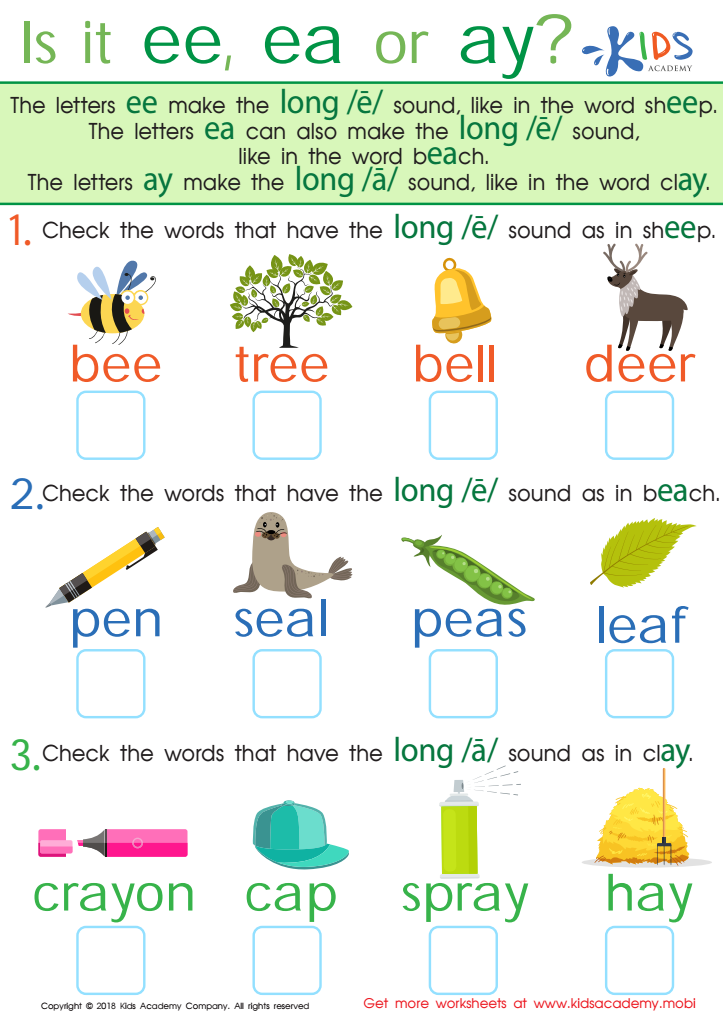
Is It EE, EA, or AY? Worksheet
When 'ee', 'ea' and 'ay' are in words, they usually make the long /e/ and /a/ sounds. Examples of words with 'ee' are "sheep", 'beach' and 'seat' with 'ea', and 'clay' and 'play' with 'ay'. Check this colourful worksheet with your kids; help them find the words that make the long /e/ sound like 'sheep'.
Is It EE, EA, or AY? Worksheet
Worksheet
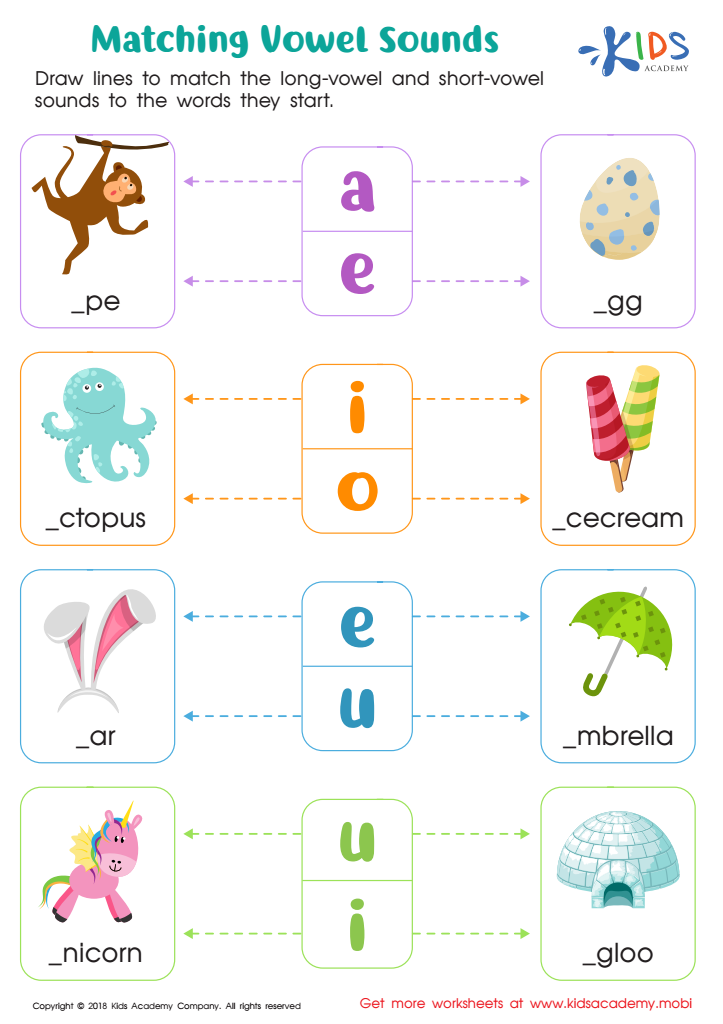
Matching Vowel Sounds Worksheet
Teach your child phonics with a fun worksheet! Ask your child to name a vowel sound and listen if it's long or short. Differentiating between long and short vowel sounds can be tricky, but this matching worksheet makes it easy for kids to understand. Have fun and master phonics - the worksheet will help them understand the difference between long and short vowel sounds!
Matching Vowel Sounds Worksheet
Worksheet

Long and Short U Worksheet
Revised: Spice up your lesson on long and short vowels with this fun printout! Kids read the words "tube" and "tub," then reinforce the sound by coloring in the words and pictures. It's a great way to make phonics class enjoyable!
Download (PDF)
 Assign to My Students
Assign to My Students
Long and Short U Worksheet
Worksheet
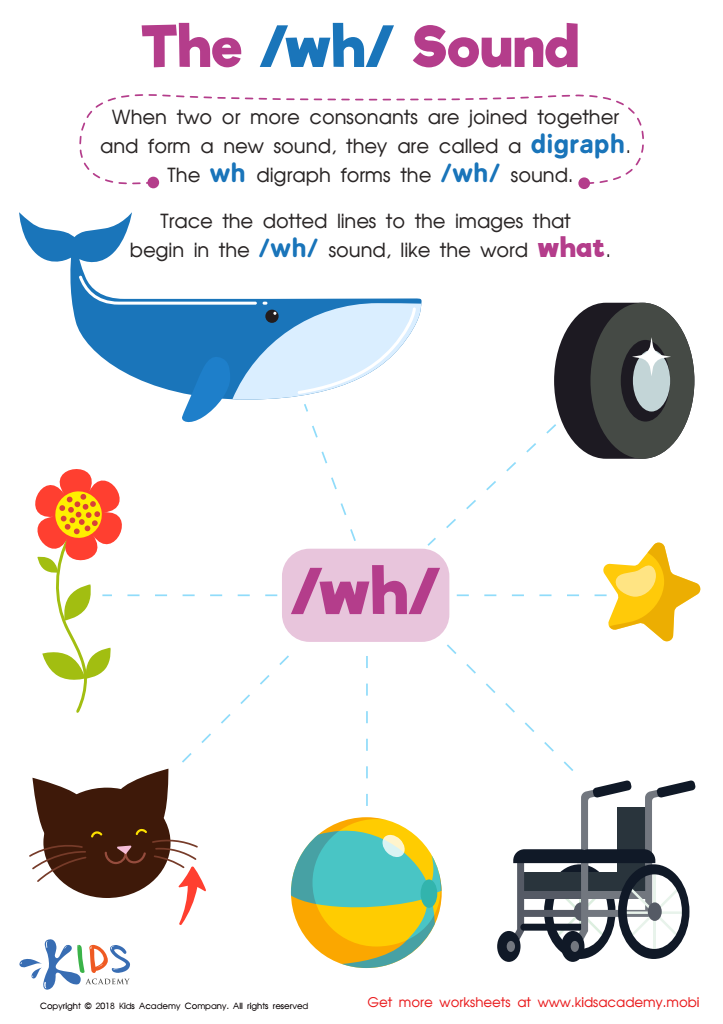
The /wh/ Sound Worksheet
Digraphs join two consonants to make a new sound, like /wh/. Give examples, like "whale", "when" and "why". Ask kids to name pictures in a worksheet and trace dotted lines to images beginning with the /wh/ sound; "what" is one example.
The /wh/ Sound Worksheet
Worksheet
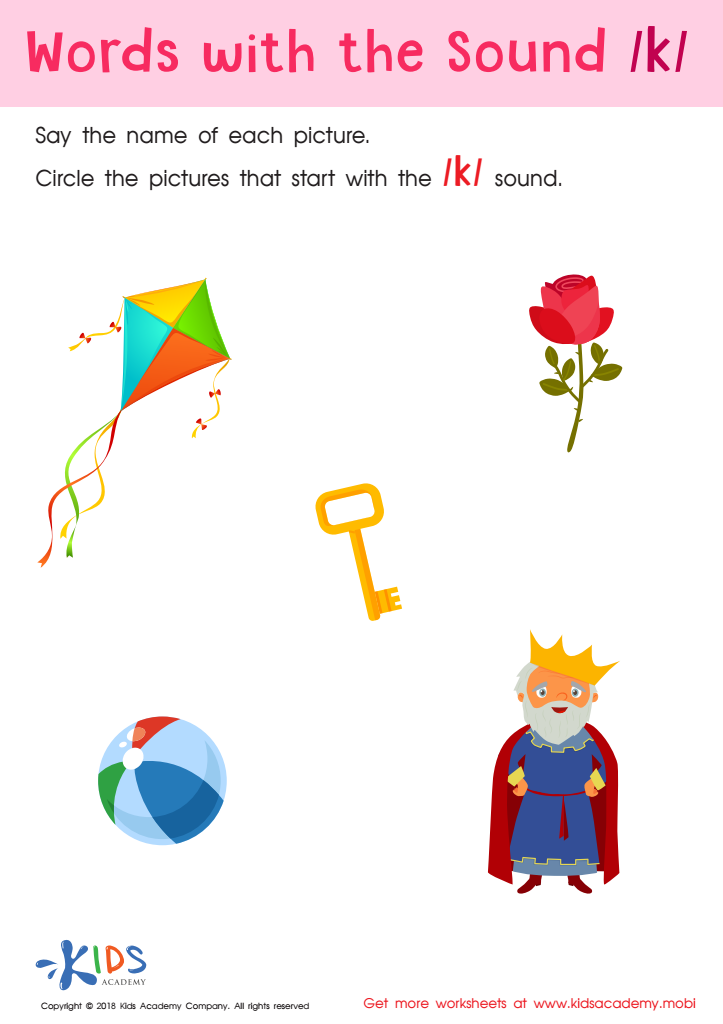
Words with sound k Reading Worksheet
Help your preschooler master the hard "k" sound with this fun worksheet from Kids Academy! Ask your child to say each picture aloud and circle only the pictures that start with "k". This early reading exercise will boost phonics skills and is sure to be loved by your little learner!
Words with sound k Reading Worksheet
Worksheet
Join Kids Academy for Free
Who is primarily going to use this learning content?






Reading proficiency at an early age, especially for 6-year-olds, is crucial for several reasons. First, it lays the foundation for a child's overall academic success. Children who can read well are more likely to perform better in other subjects, as reading is a fundamental skill necessary for understanding instructions and content across disciplines.
Moreover, proficient readers develop critical thinking skills. Engaging with varied texts fosters comprehension, allowing children to analyze information, connect ideas, and express themselves articulately. This not only benefits their academic journey but equips them with skills they will use throughout their lives.
Additionally, strong reading skills can enhance a child's self-esteem and confidence. When children become proficient readers, they may feel more motivated to participate in discussions, share their thoughts, and tackle new challenges.
Finally, fostering a love for reading is significant. Reading proficiency opens up a world of imagination, creativity, and lifelong learning. Teachers and parents should focus on encouraging engaging reading experiences, as this habit creates a pathway for future success, helping children become informed, thoughtful, and inspired individuals. Prioritizing literacy in the early years can ultimately transform a child's educational trajectory.







