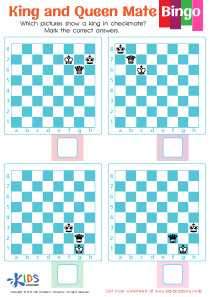
Understanding chess rules Normal Chess Worksheets for 6-Year-Olds
5 filtered results
-
From - To
Discover our engaging "Understanding Chess Rules" worksheets designed specifically for 6-year-olds! These printable resources make learning chess fun and interactive, introducing young learners to the essential rules of the game. Our worksheets simplify concepts like piece movements, basic game etiquette, and strategies, allowing children to grasp the fundamentals effortlessly. With colorful illustrations and age-appropriate activities, kids will develop critical thinking skills and strategic awareness while enjoying the challenge of chess. Whether at home or in the classroom, these worksheets provide an excellent foundation for young players, promoting cognitive development and concentration. Start your child's chess journey today!
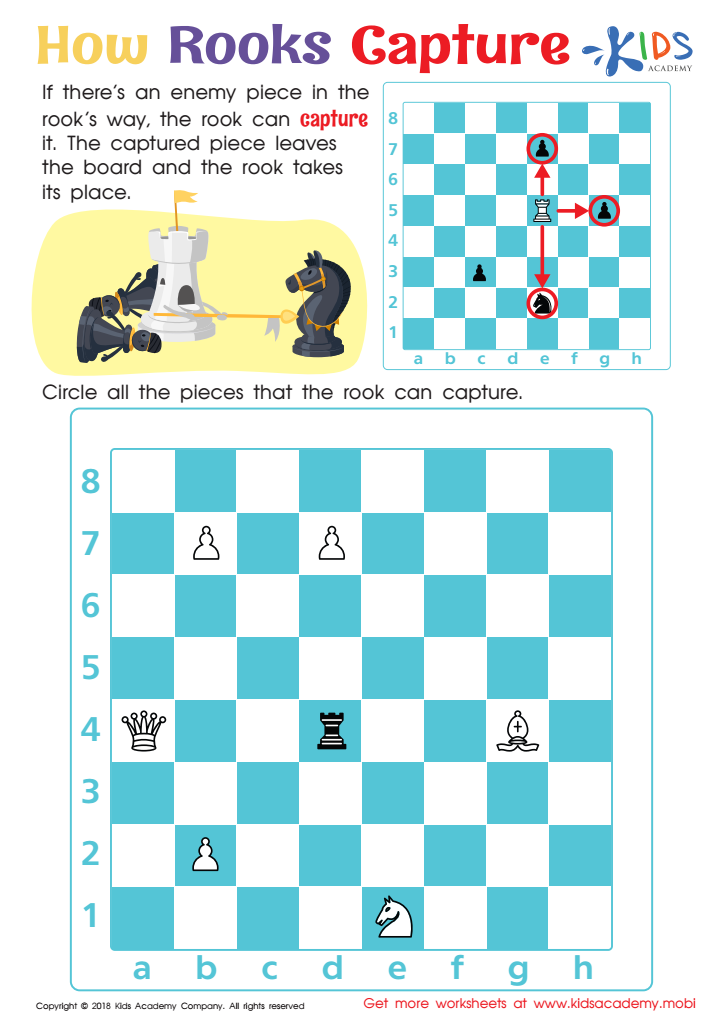
How Rooks Capture Worksheet
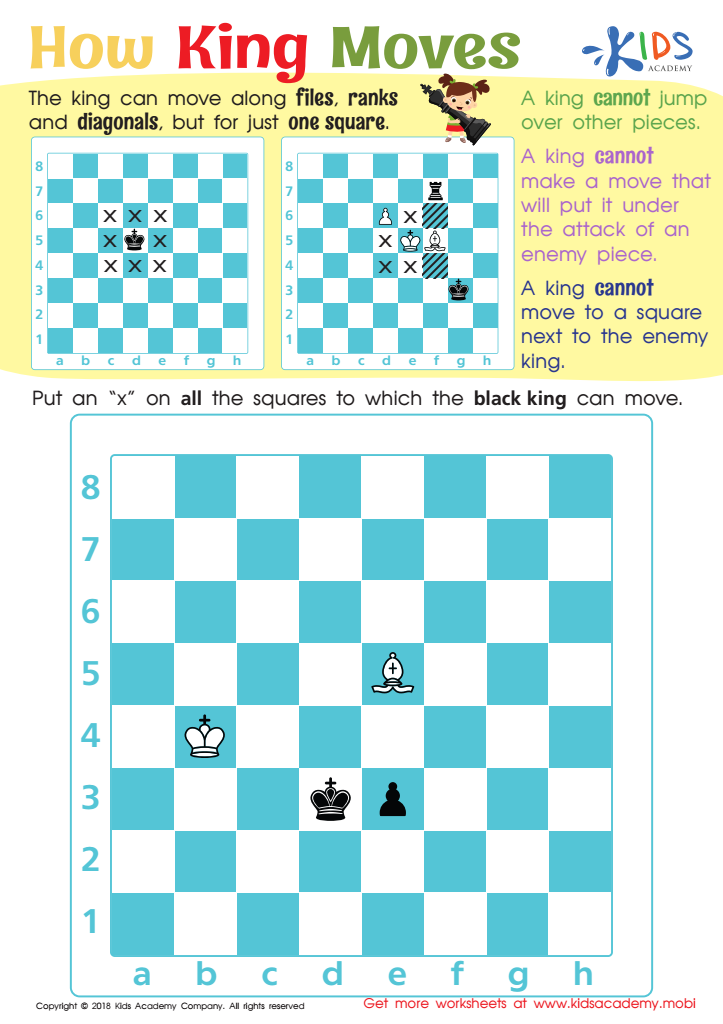
How King Moves Worksheet
 Assign to My Students
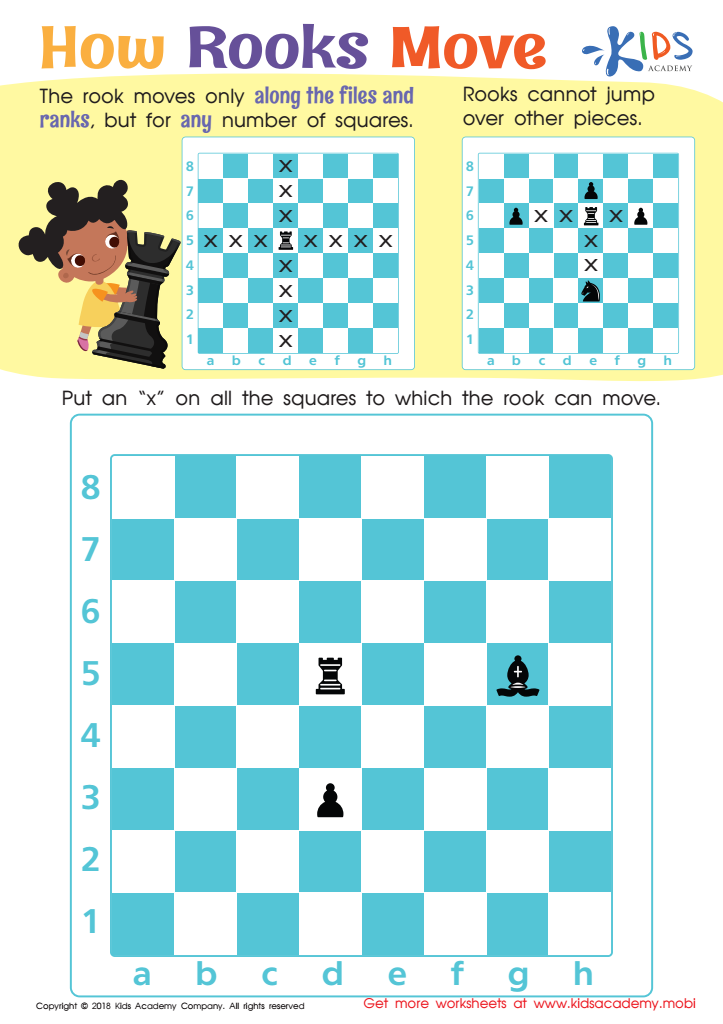
How Rooks Move Worksheet
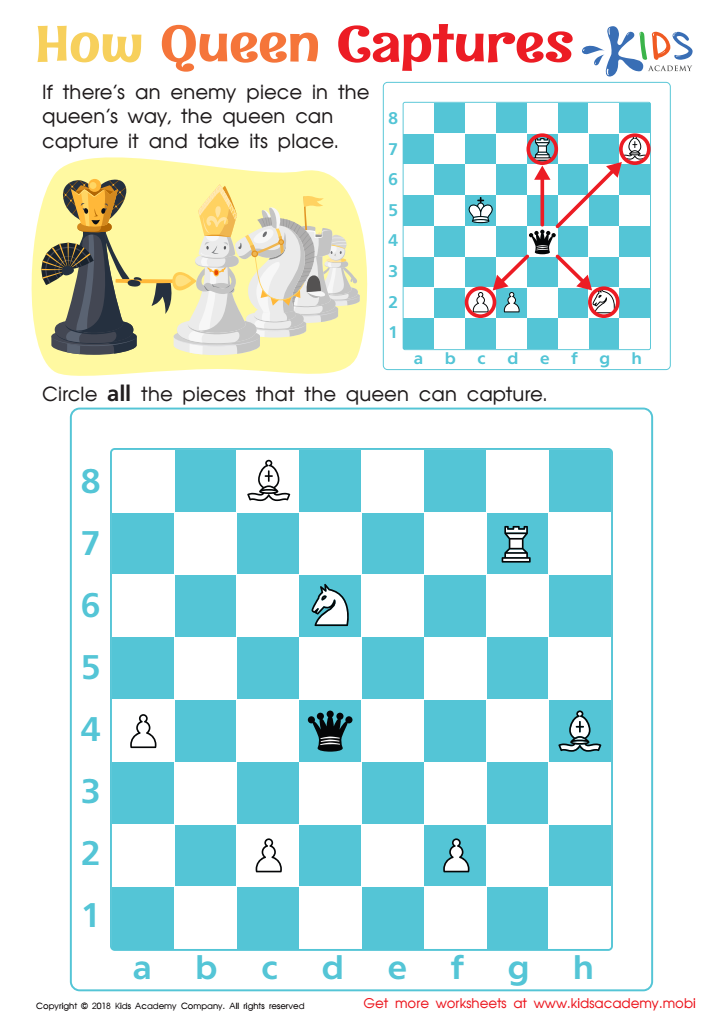
How Queen Captures Worksheet
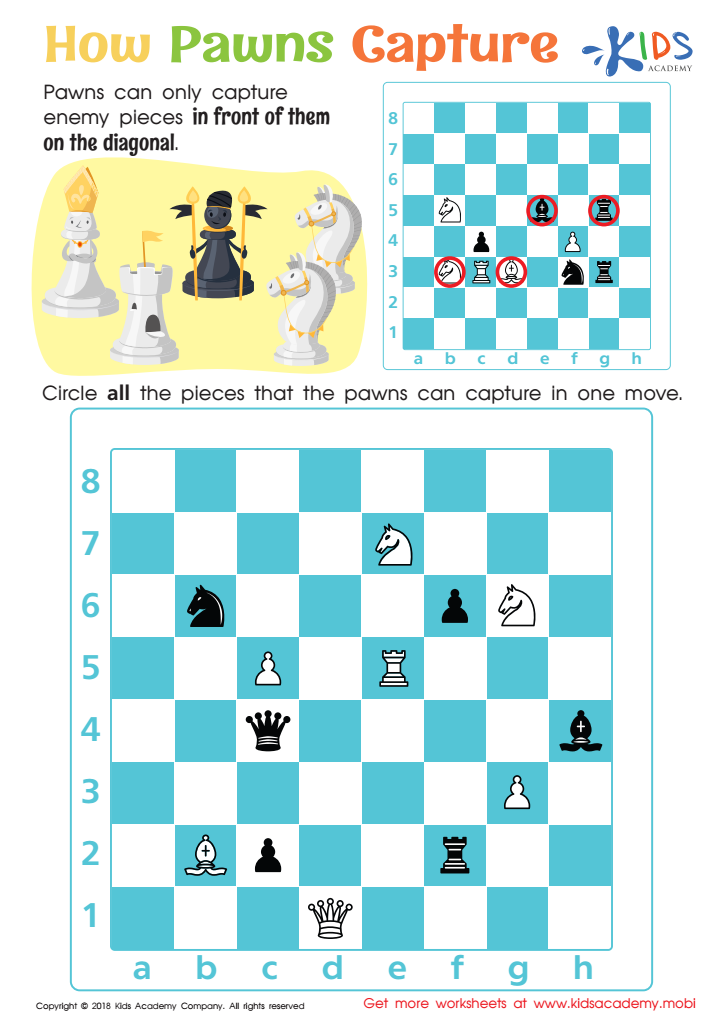
How Pawns Capture Worksheet






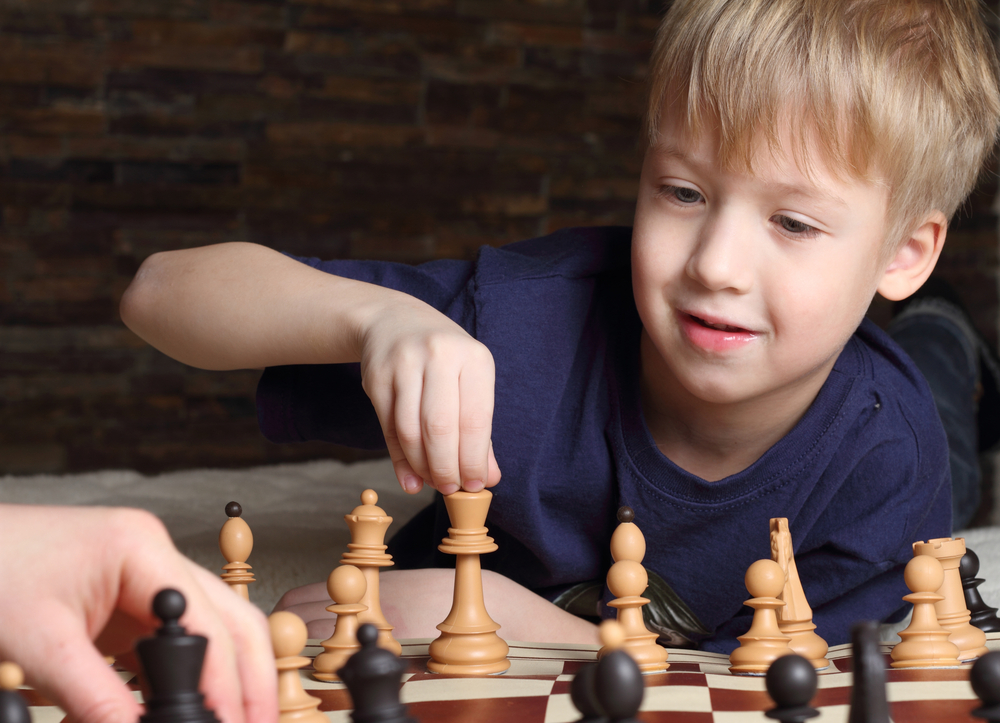

Understanding chess rules is essential for parents and teachers, especially when introducing the game to 6-year-olds. Chess is not just a game; it fosters critical thinking, problem-solving skills, and enhances cognitive abilities. By understanding the rules, parents and teachers can guide children in developing these important skills in a supportive environment. It helps establish a structured social setting where children learn patience and sportsmanship, learning to respect opponents whether they win or lose.
Furthermore, mastering the basic rules of chess provides children with a sense of achievement and boosts their confidence. It encourages strategic thinking as they consider multiple moves ahead, enhancing their ability to plan and predict outcomes in everyday situations. Engaging children with chess also encourages innovation and creativity; they can express individuality through unique strategies while learning the game.
Additionally, providing consistent support and fostering an engaging atmosphere for learning chess can forge strong bonds between parents and children, or teachers and students. In a world increasingly dominated by screen time, chess offers a wonderful screen-free activity. This makes it not just an educational tool but a way to create deeper connections through shared experiences. Hence, learning and understanding chess is invaluable for personal and social development in young learners.