Astronomy basics Normal Worksheets for 6-Year-Olds
3 filtered results
-
From - To
Introduce your 6-year-old to the wonders of the universe with our "Astronomy Basics" worksheets. Designed specifically for young learners, these engaging activities cover fundamental concepts like the solar system, planets, stars, and moon phases. Each worksheet combines fun graphics with simple, educational tasks that promote curiosity and enhance understanding of our celestial surroundings. Perfect for classroom use or homeschooling, these printable sheets offer a foundation in space science that aligns with early learning standards. Explore outer space from the comfort of your home and ignite a passion for astronomy in your child today with Kids Academy!
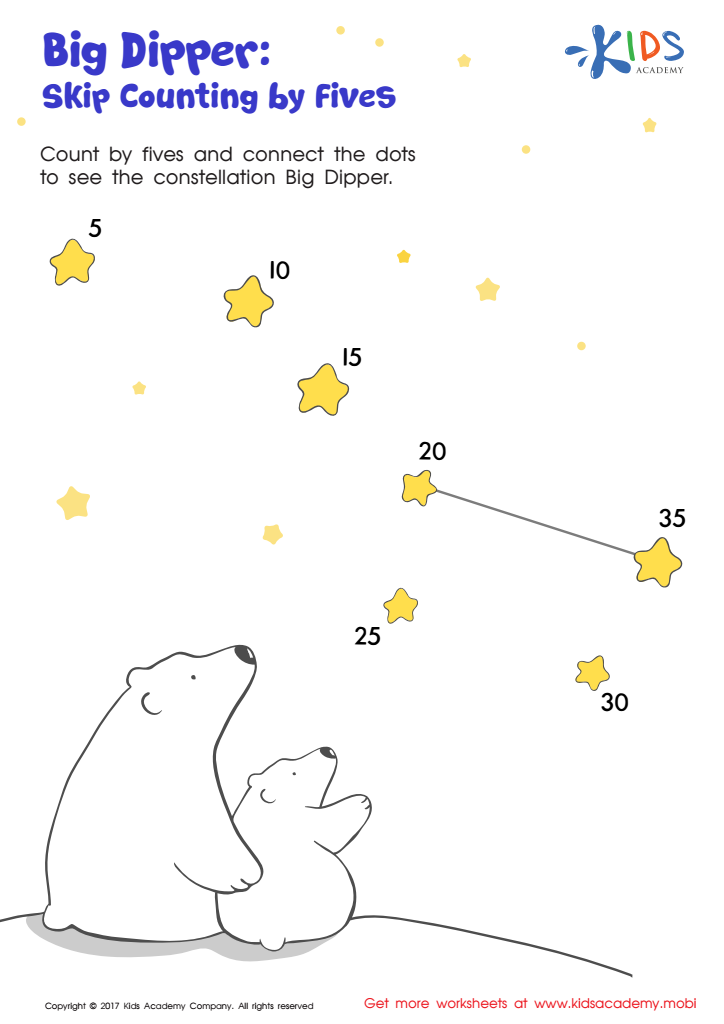
 Assign to My Students
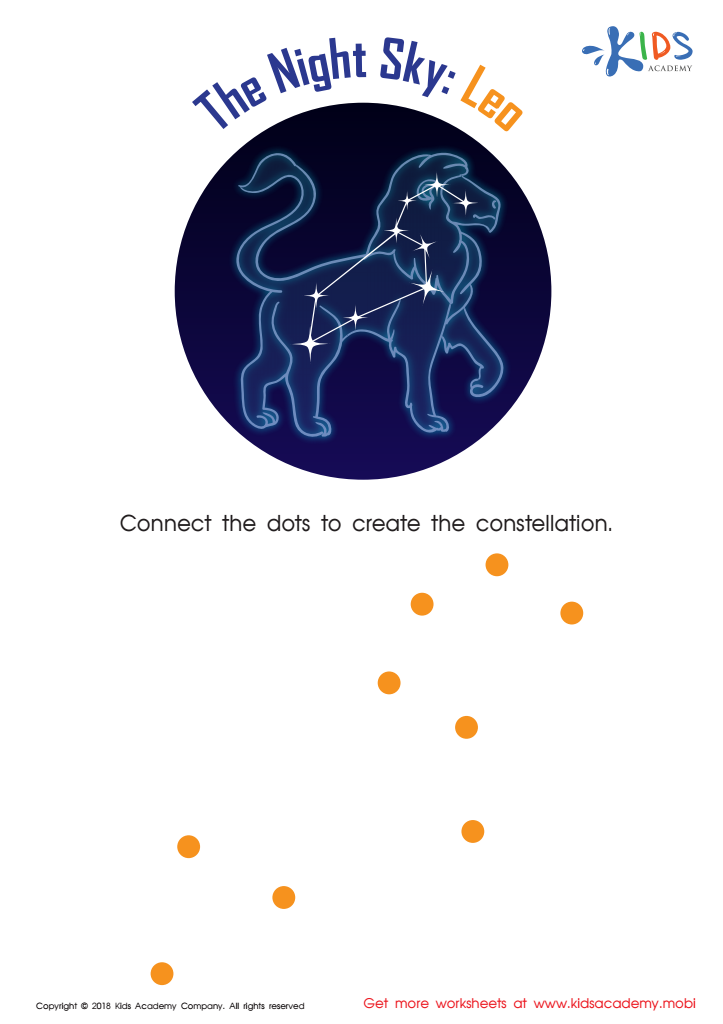
The Night Sky: Leo Worksheet
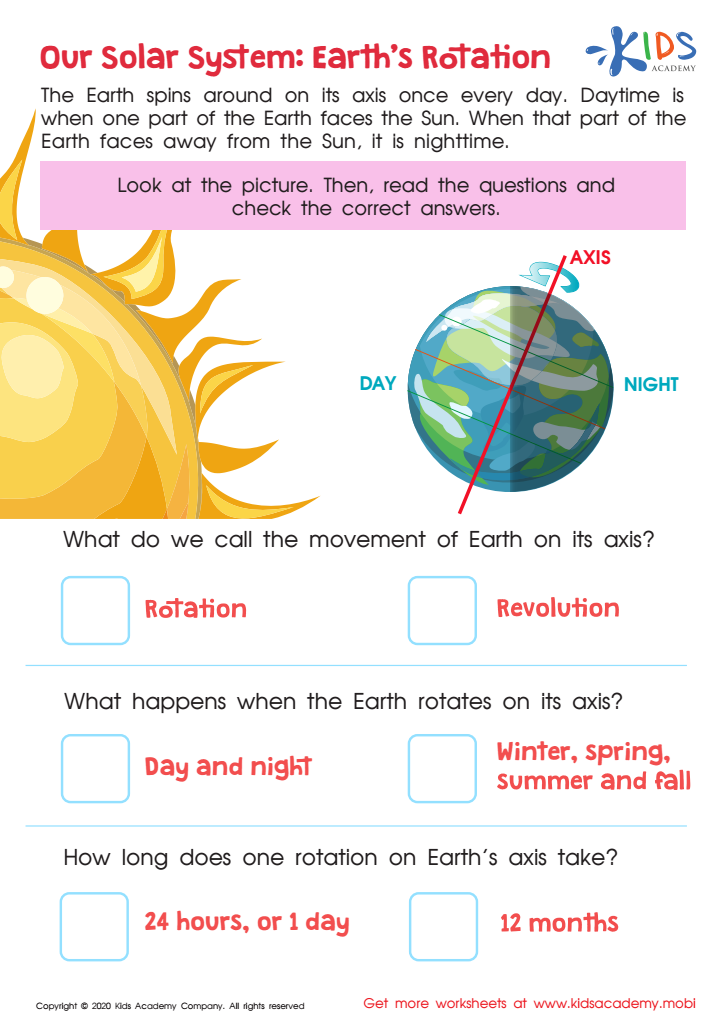
Our Solar System: Earth's Rotation Printable








Introducing 6-year-olds to the basics of astronomy is essential for several reasons. First, it nurtures curiosity and fosters a lifelong love for learning. Children are naturally curious, and the wonders of the universe can ignite their imagination, driving them to ask questions and explore further.
Second, learning about astronomy enhances a child's understanding of basic scientific concepts. Through simple activities like observing the phases of the moon, children grasp foundational ideas like observation, pattern recognition, and the scientific method, effectively laying the groundwork for future scientific education.
Third, engaging with astronomy promotes critical thinking and problem-solving skills. When children ponder why the moon changes shape or why stars twinkle, they practice thinking critically and analytically. Such exercises help develop cognitive skills that are valuable in all areas of education and daily life.
Additionally, astronomy offers a perspective on our place in the universe, teaching humility and respect for the planet. By understanding Earth's position in the vast cosmos, children learn to appreciate the fragility and uniqueness of our planet, fostering a sense of environmental stewardship from a young age.
Lastly, parents and teachers who share an interest in astronomy with children strengthen their bond through shared learning experiences, creating an enriching and engaging educational environment. Thus, incorporating astronomy into a child’s early education is a stepping stone to developing well-rounded, intellectually curious, and environmentally conscious individuals.








