Categorizing objects Normal Worksheets for 6-Year-Olds
4 filtered results
-
From - To
Discover our engaging “Categorizing Objects Normal Worksheets” designed specifically for 6-year-olds! These worksheets provide a fun and effective way for young learners to develop critical thinking and sorting skills. Tailored to enhance cognitive development, each activity encourages children to classify items based on common attributes, fostering their understanding of categorization. With vibrant illustrations and user-friendly formats, these worksheets make learning enjoyable and accessible. Perfect for classrooms and home use, our resource aims to cultivate essential learning skills while sparking creativity and curiosity. Explore our collection today and watch your child thrive in categorization and object recognition!
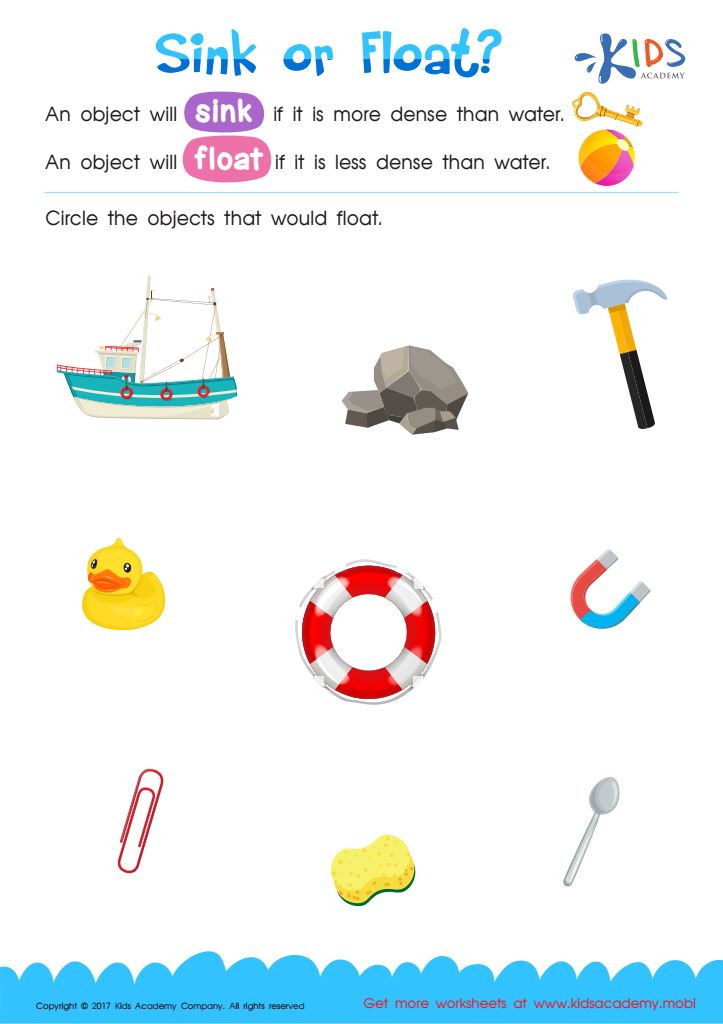
Sink or Float Printable
 Assign to My Students
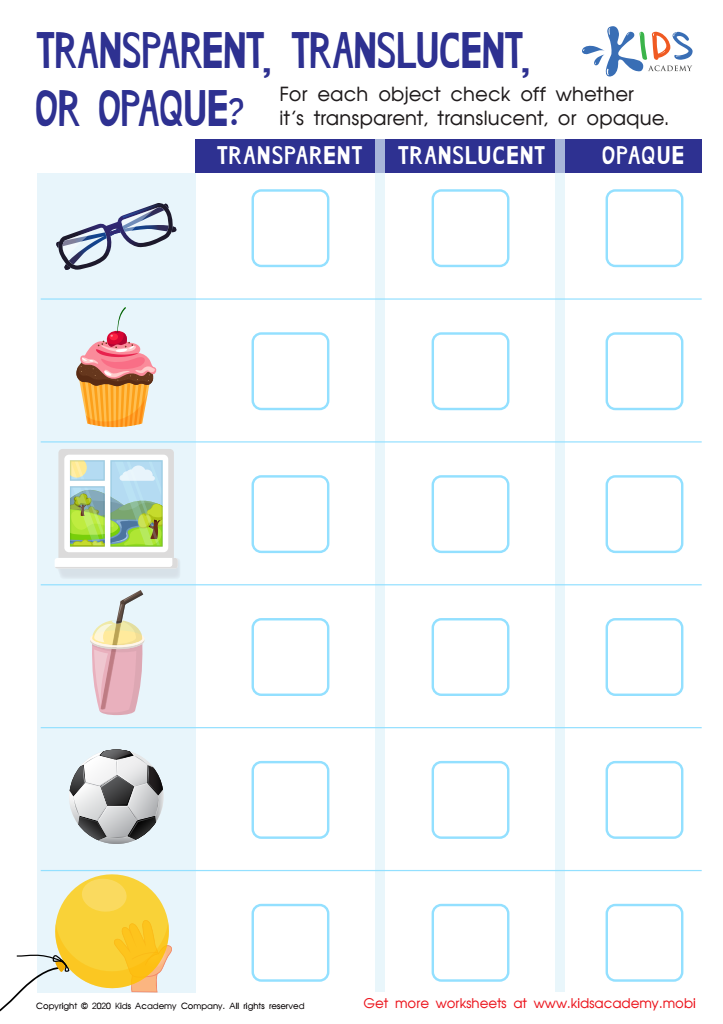
Transparent, Translucent, or Opaque Worksheet
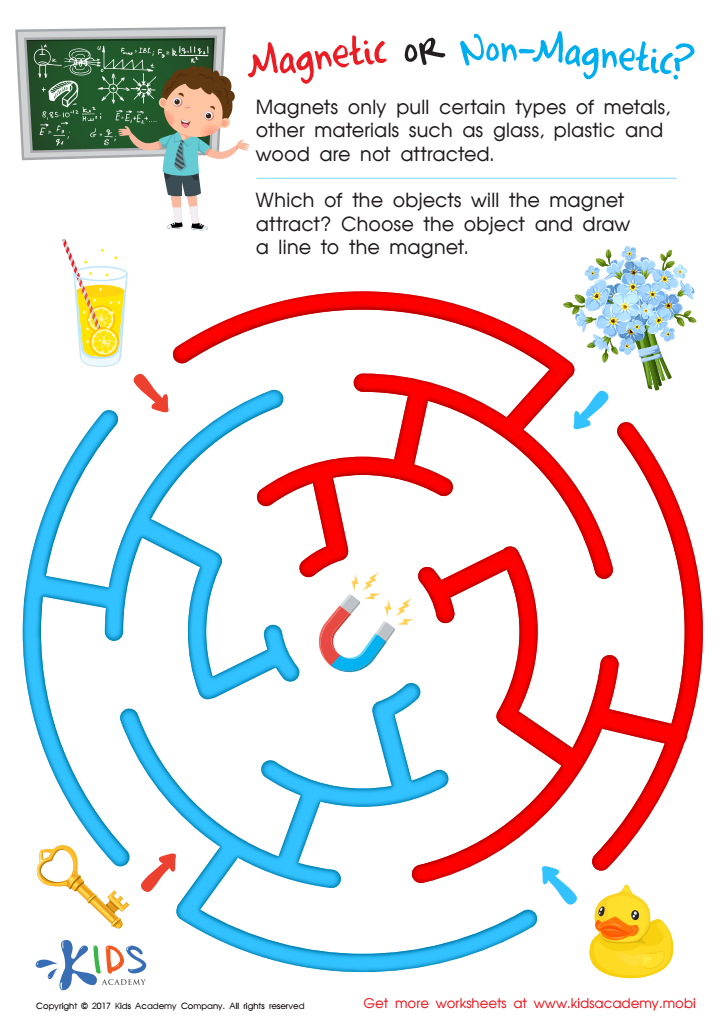
Magnetic or Non–Magnetic Worksheet
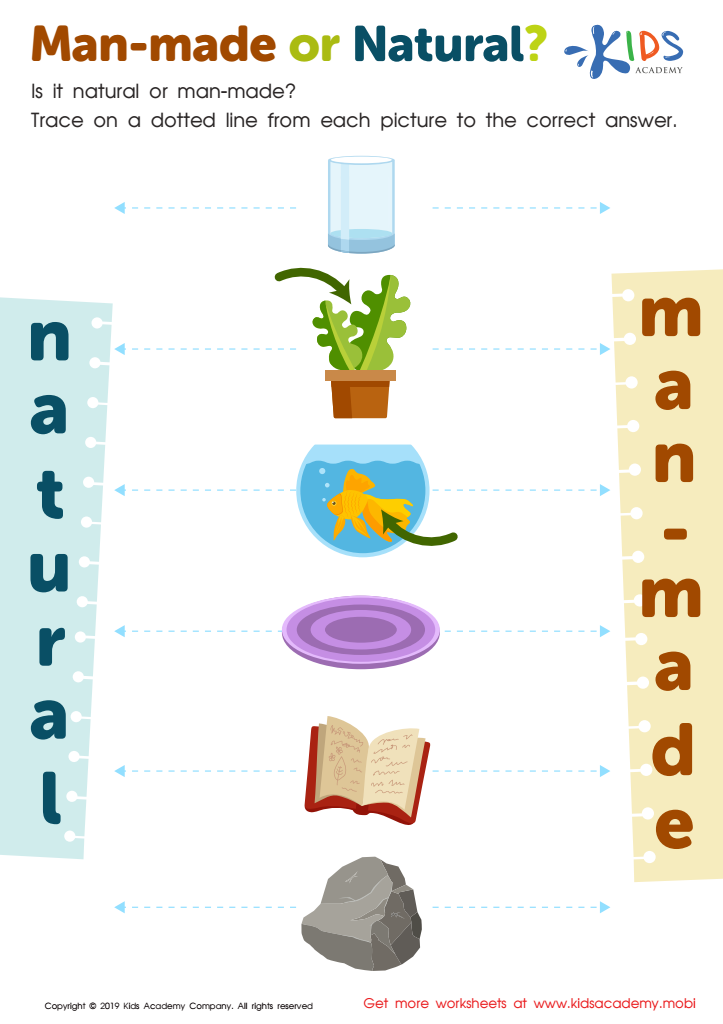
Man-Made or Natural? Worksheet





Categorizing objects is a fundamental cognitive skill that plays a crucial role in a child's development, particularly for six-year-olds. At this age, children are naturally curious and eager to make sense of the world around them. When parents or teachers encourage this process, they help children enhance their critical thinking and problem-solving abilities.
Categorizing helps children identify similarities and differences among objects, fostering observation skills and logical reasoning. For instance, sorting toys into groups like animals, vehicles, or colors requires children to analyze features and think creatively. This process lays the foundation for skills they will use later in math, reading, and science.
Furthermore, categorizing aids in language development. As children discuss their sorting choices, they expand their vocabulary and learn to articulate their thoughts. This active engagement fosters communication skills, building confidence in expressing ideas.
In everyday life, categorization promotes organization, enabling children to manage their environment effectively. When they learn to group items, they become better at tidying up and understanding broader concepts, leading to stronger organizational skills in school and beyond.
By actively involving children in categorizing objects, parents and teachers support holistic development, ensuring they are well-equipped for future learning challenges.








