
Identifying patterns Normal Worksheets for 6-Year-Olds
3 filtered results
Difficulty Level
Grade
Age
-
From - To
Subject
Activity
Standards
Discover our engaging and fun "Identifying Patterns Normal Worksheets for 6-Year-Olds," designed to ignite young minds and foster essential early learning skills. These vibrant activities help first graders recognize and create patterns, boosting their critical thinking and problem-solving abilities. Each worksheet is crafted to keep kids entertained while they explore sequences, shapes, and colors, promoting a solid foundation in mathematics. Perfect for both classroom and home settings, these printable worksheets ensure that learning becomes an enjoyable adventure for your child. Encourage curiosity and confidence in your little learner with our thoughtfully designed pattern recognition exercises.
Favorites
With answer key
Interactive
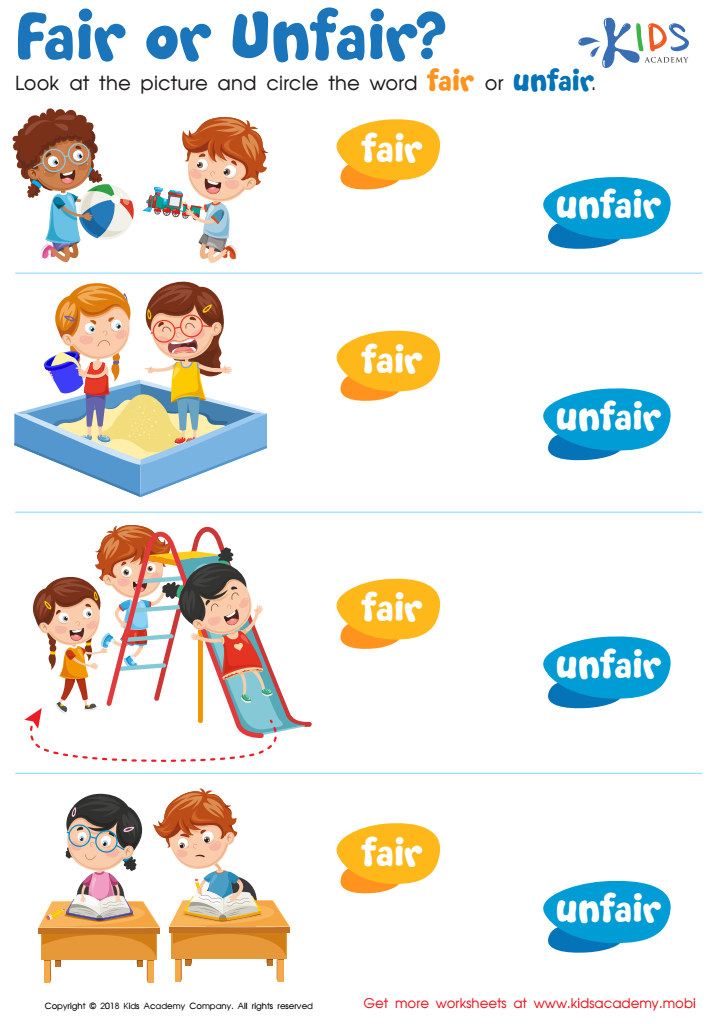
Fair or Unfair Worksheet
Look at the pictures in this worksheet with kids. Can they tell if the actions are fair or unfair? Help them decide and circle the appropriate option. When something causes harm to one person, it is unfair; when all parties benefit, it is fair.
 Assign to My Students
Fair or Unfair Worksheet
Worksheet
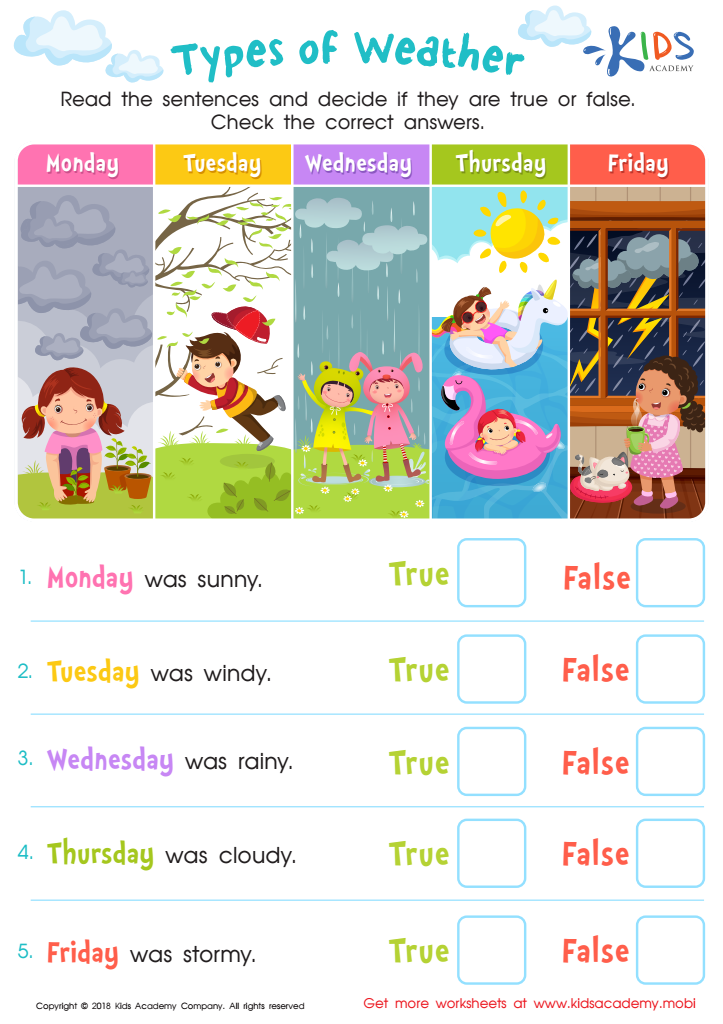
Types of Weather Worksheet
This worksheet will test your child's knowledge of the weather. Show them the pictures of five days of the week, each with a different weather and ask them to describe it. Then read the sentences and ask if they're true/false. Help them find the right answers.
Types of Weather Worksheet
Worksheet
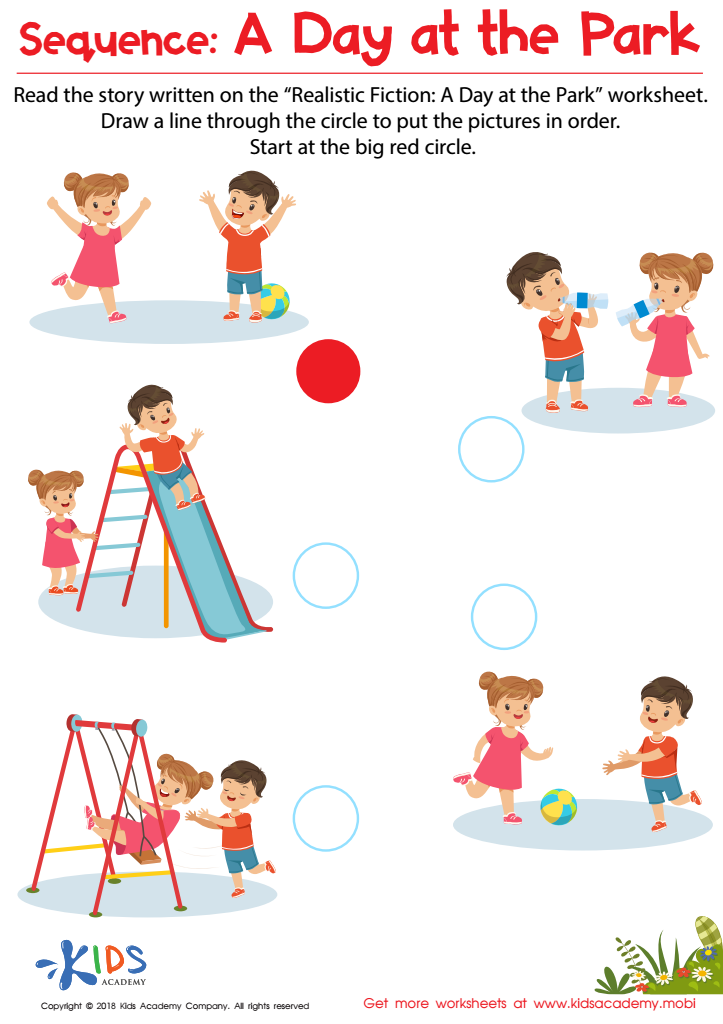
Sequence: A Day at the Park Worksheet
Help your child sequence the events of the story they just read with this activity! Start with the big red circle and draw lines to the other circles next to the images in the correct order. It's a great way to practice their reading skills! Try this downloadable worksheet today!
Sequence: A Day at the Park Worksheet
Worksheet
Join Kids Academy for Free
Who is primarily going to use this learning content?






Identifying patterns in the behavior and development of 6-year-olds is crucial for parents and teachers for several reasons. Early identification of these patterns helps recognize and support a child’s individual strengths and address any potential developmental issues. At this age, children are rapidly growing cognitively, physically, socially, and emotionally. Noticing patterns in their learning style, play behavior, and social interactions can give insights into their unique way of understanding the world, which in turn aids in tailoring effective educational and developmental strategies.
For parents, observing normal patterns of sleep, eating, speech, and motor skills provides a benchmark against which they can compare their child’s progress. Because early intervention is key for developmental delays or disorders, noticing deviations early allows for timely professional assessment and support, thereby improving the chances of mitigating potential issues.
Teachers, armed with knowledge of these patterns, can design classroom activities that cater to typical developmental milestones. This fosters an inclusive learning environment, encouraging all children to thrive. Additionally, recognizing patterns in learning and behavior helps in early identification of giftedness or learning disabilities, enabling targeted support to maximize each child's potential.
By paying close attention to patterns in 6-year-olds, parents and teachers position themselves to provide informed, caring, and effective guidance that promotes healthy development across all areas of a child’s life.








