Lowercase identification Normal Worksheets for 6-Year-Olds
4 filtered results
-
From - To
Help your six-year-old master the alphabet with our Lowercase Identification Normal Worksheets. Specifically curated for young learners, these engaging activities make learning fun and effective. Each worksheet focuses on recognizing and correctly identifying lowercase letters, facilitating effortless retention. Ideal for solidifying foundational literacy skills, these printable resources are designed to enhance letter recognition, improve handwriting, and build confidence. Whether used at home or in the classroom, these worksheets provide enjoyable practice for early readers. Perfectly aligned with educational standards, our worksheets ensure your child is on the path to reading success one lowercase letter at a time!
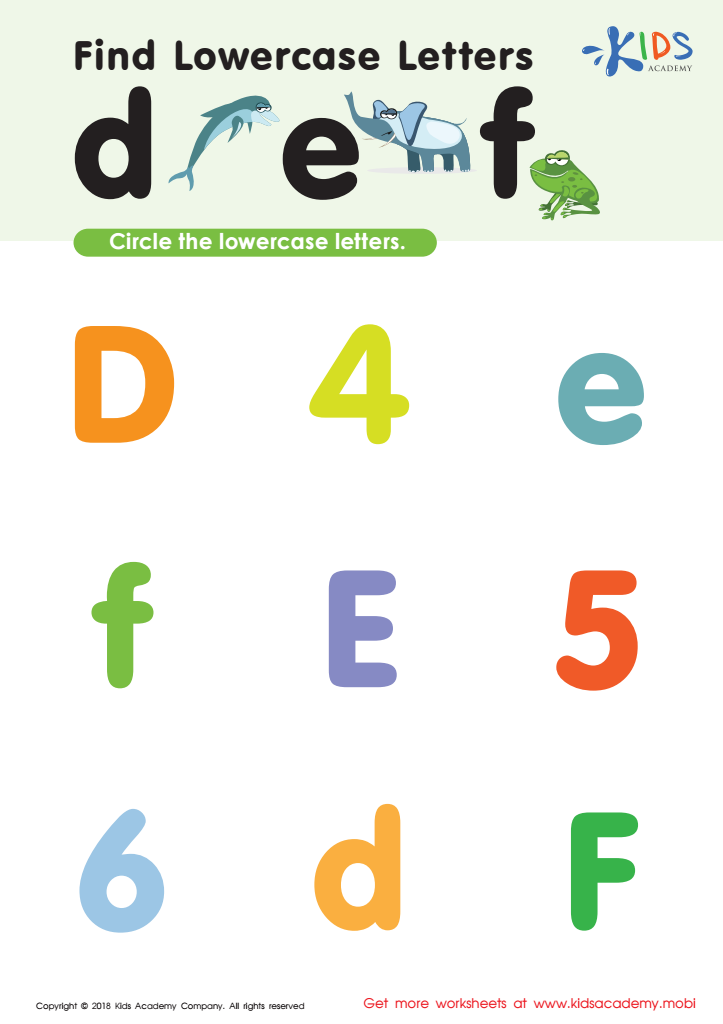
Find Lowercase Letters d e f Worksheet
 Assign to My Students
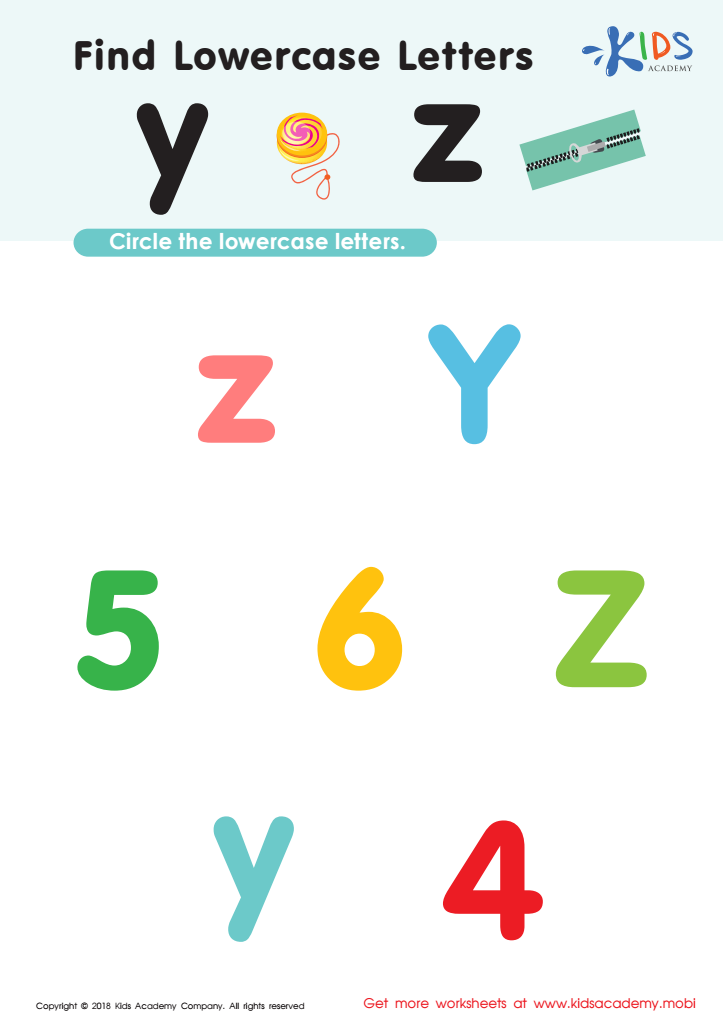
Find Lowercase Letters y z Worksheet
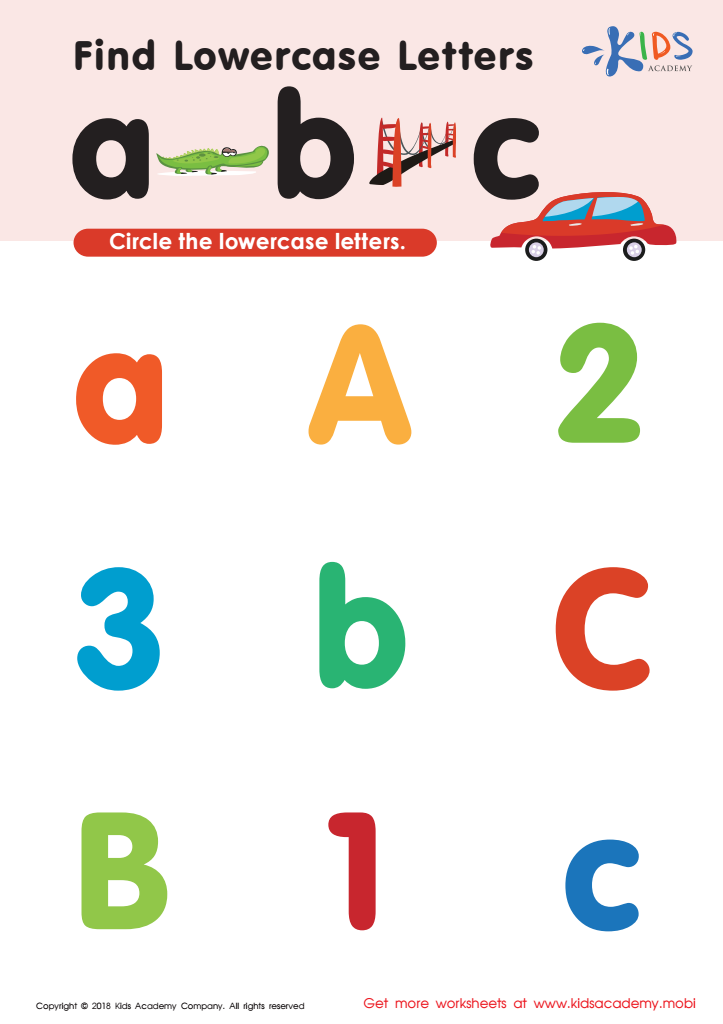
Find lowercase letters a b c Worksheet
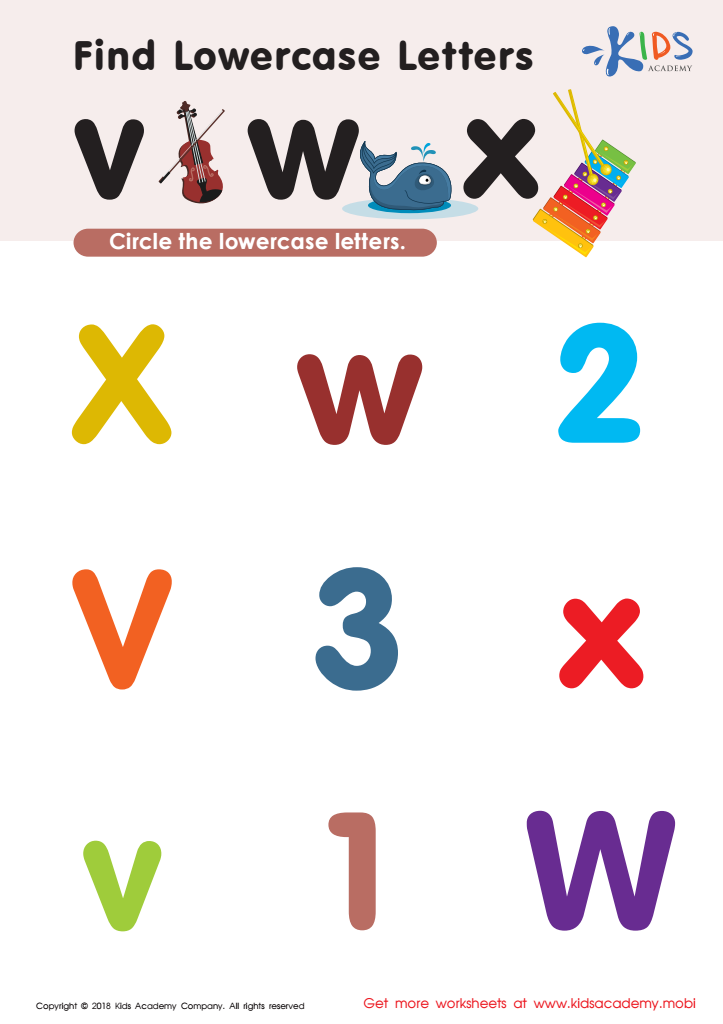
Find Lowercase Letters v w x Worksheet








Ensuring that 6-year-olds can identify lowercase letters is fundamental to their literacy development and has long-lasting educational benefits. At this stage, children are transitioning from recognizing individual letters to reading words and simple sentences. Lowercase text is prevalent in books, instructions, and daily communication, making it crucial for children to identify without hesitation.
By recognizing lowercase letters, children can improve their reading fluency and comprehension, as they can more confidently decode words and understand texts. This skill also supports their writing abilities, enabling them to write more fluidly and correctly as they start forming complete sentences and engage in written communication.
Parents and teachers play pivotal roles in fostering these skills. By incorporating activities focused on lowercase letter recognition—such as reading storybooks, playing letter-based games, and practicing writing—they can create a supportive learning environment that stimulates children's curiosity and enjoyment in reading and writing.
Moreover, early identification of lowercase letters helps children to align with educational standards and expectations, reducing the risk of future academic struggles. It sets a foundation for more complex literacy skills like spelling, grammar, and punctuation. Thus, caring about lowercase identification at an early age greatly contributes to a child's confidence and academic success.








