
Reading readiness Normal Worksheets for 6-Year-Olds
4 filtered results
Difficulty Level
Grade
Age
-
From - To
Subject
Activity
Standards
Enhance your 6-year-old's reading readiness with our engaging, printable worksheets! Designed specifically for early learners, these fun activities promote essential literacy skills. Your child will enjoy tasks that focus on letter recognition, phonics, vocabulary building, and comprehension in an interactive way. Each worksheet is crafted to guide young minds through the foundational elements of reading, fostering a love for books and stories. Our collection is perfect for parents and educators looking to support learning at home or in the classroom. Start their reading journey today with stimulating worksheets that make learning an enjoyable adventure! Explore our resources now.
Favorites
With answer key
Interactive
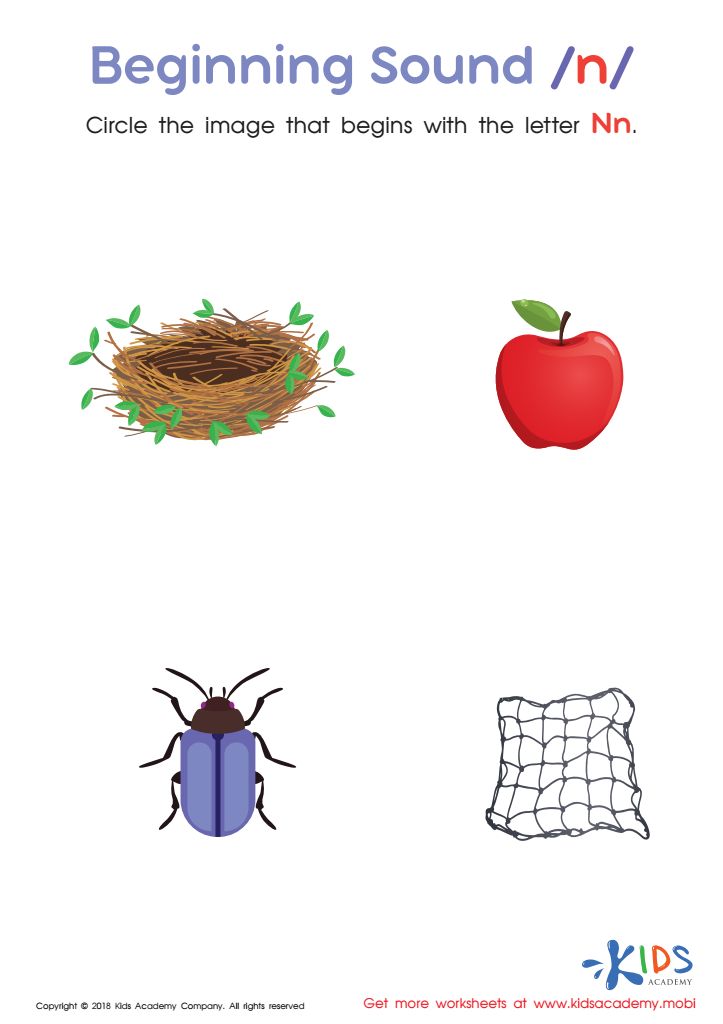
Beginning Sound «n» Worksheet
Help your emerging reader learn the initial «n» sound with this free PDF worksheet! Strengthen fine motor skills by tracing circles around words beginning with «n». Pictures are clear and engaging, giving beginning Phonics learners the right amount of practice and the confidence to succeed.
 Assign to My Students
Beginning Sound «n» Worksheet
Worksheet
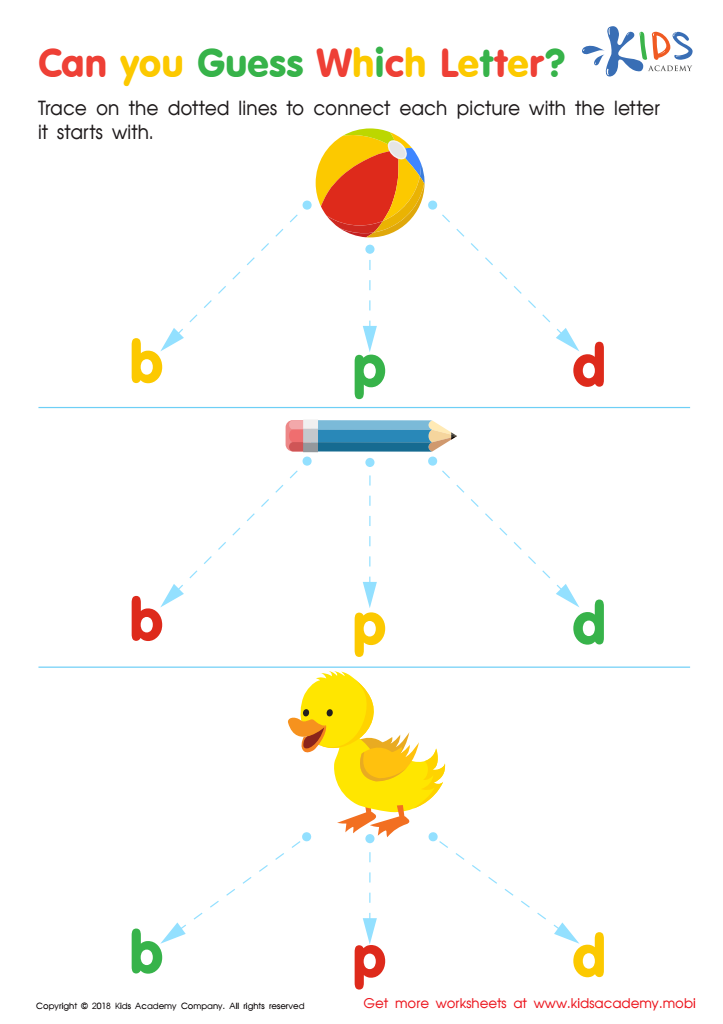
Can you Guess Which Letter? Worksheet
Connect the pictures with their corresponding letters with this fun worksheet! Ask your child what each picture is, then what letter it begins with. Download the PDF for colorful images and engaging texts to hold their attention, making learning an enjoyable activity.
Can you Guess Which Letter? Worksheet
Worksheet
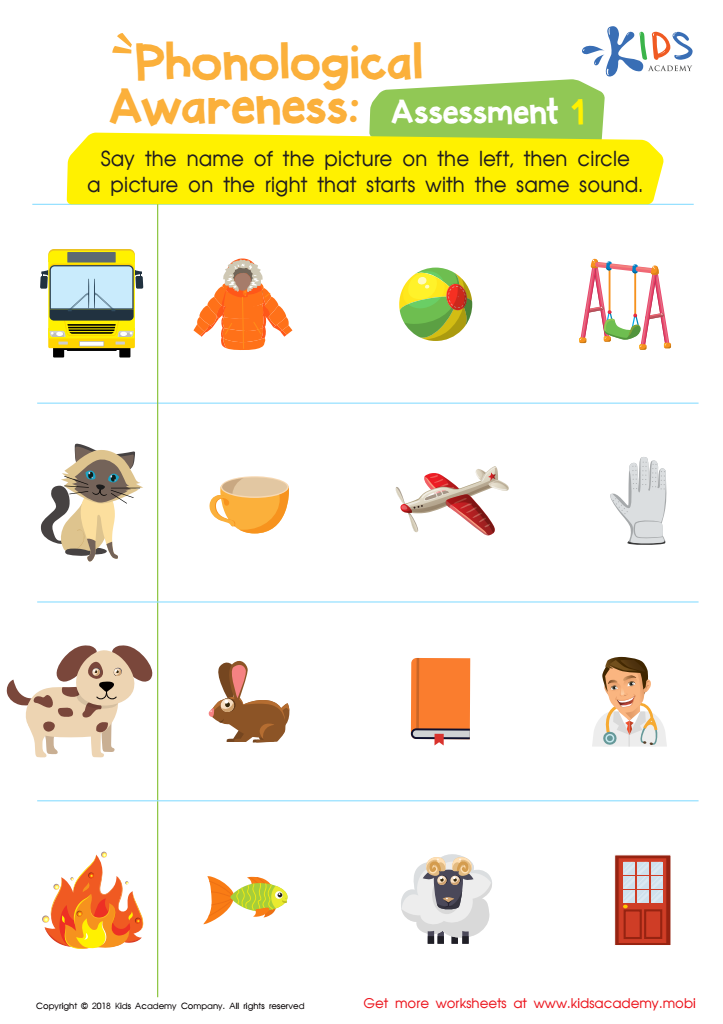
Phonological Awareness: Assessment 1 Worksheet
This worksheet helps kids build key phonics skills for pre-reading. They say each picture name aloud, focusing on the starting sound. Then, they match the sound with an image in the same row. Use as a checkpoint for kindergarten or grade 1 phonics readiness.
Phonological Awareness: Assessment 1 Worksheet
Worksheet
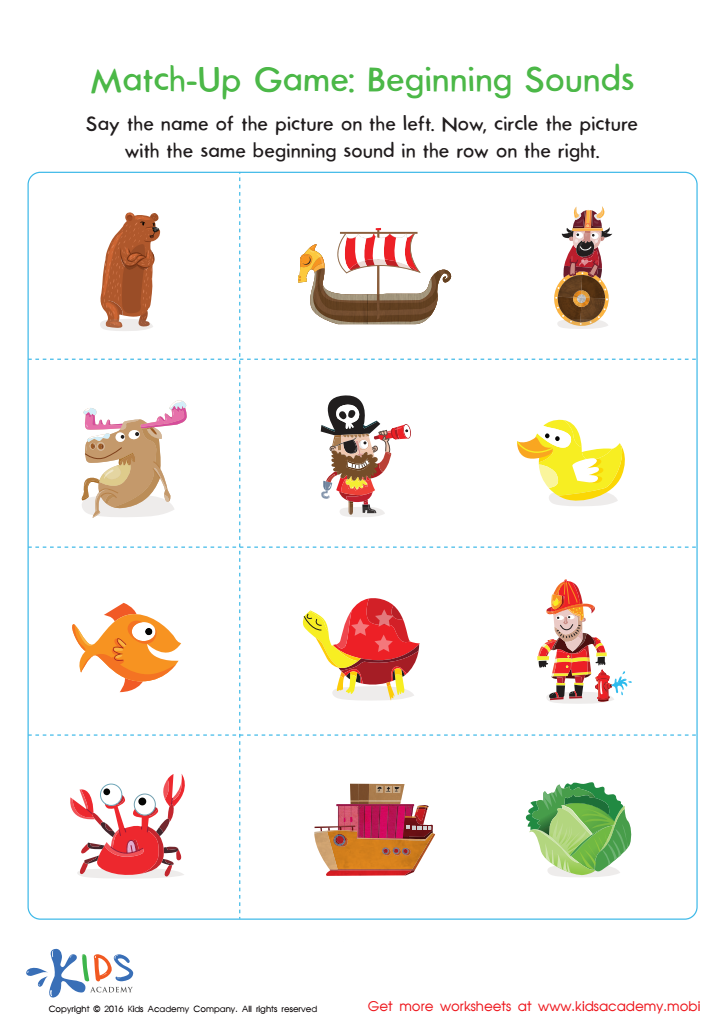
Match–Up Game: Beginning Sounds Worksheet
Start today with this beginning sounds match-up printable!
Teach your child to solve problems mentally with this beginning sounds match-up printable. They'll learn to categorize pictures based on phonics rules, developing mental stamina and focus. It's an important step for recognizing sounds and letters in print, building a foundation for reading and spelling. Start today and take your child's skills to the next level!
Match–Up Game: Beginning Sounds Worksheet
Worksheet
Join Kids Academy for Free
Who is primarily going to use this learning content?




Reading readiness is a crucial milestone in a child's development, particularly by the age of 6. Parents and teachers should care about this stage because it sets the foundation for future academic success. At this age, children begin to develop essential literacy skills, including phonemic awareness, vocabulary, and comprehension, which are vital for reading proficiency.
A child's reading readiness closely correlates with their overall confidence and motivation in learning. When children feel prepared to read, they are more likely to engage with texts and participate in classroom discussions, ultimately fostering a love for reading that can last a lifetime. Additionally, early intervention can address any difficulties a child may face, preventing potential literacy challenges as they progress through school.
Moreover, consistent involvement from parents and teachers can create a supportive environment where children's reading skills can flourish. Shared reading experiences and literacy activities can enhance brain development, boost vocabulary, and improve cognitive skills. By prioritizing reading readiness, adults can equip children with tools not only for academic accomplishments but also for lifelong learning and communication. Emphasizing this period is essential for laying a solid educational foundation, ensuring that children are well-prepared for their future.








