Enhance your child's reading abilities with our tailored worksheets designed specifically for 6-year-olds. These engaging activities focus on essential reading skills, such as phonics, vocabulary development, and comprehension. Our printable worksheets foster a love for reading through colorful illustrations and interactive exercises that make learning fun and effective. Perfect for classrooms or home learning, these resources encourage independent practice, allowing children to build confidence in their reading skills. With regular use, your little learner will show significant improvement, paving the way for academic success. Explore our diverse collection and support your child's educational journey today!

Check out this FREE "Reading skills improvement" Trial Lesson for age 6!

Review

Favorites
With answer key
Interactive
  • 6
  • Reading skills improvement
  • Normal
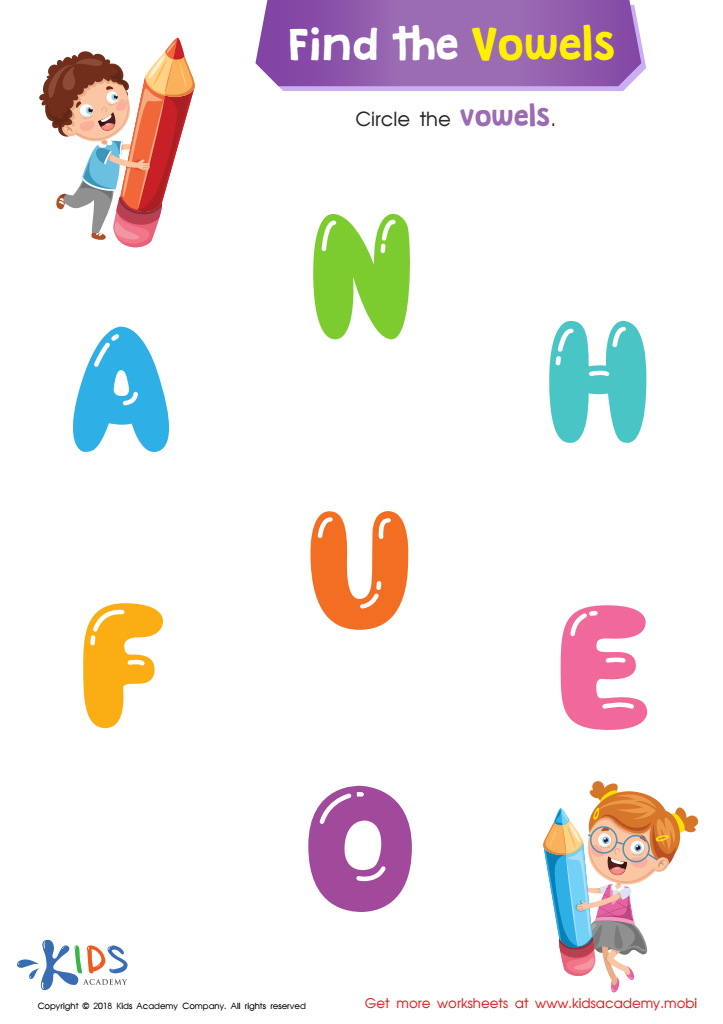
Find the Vowels Reading Worksheet

Find the Vowels Reading Worksheet

This worksheet helps kids identify vowels with bright colors and engaging activities to strengthen their visual discrimination and fine motor skills. Young learners will find it easy to succeed and be excited to keep reading!
Find the Vowels Reading Worksheet
Worksheet
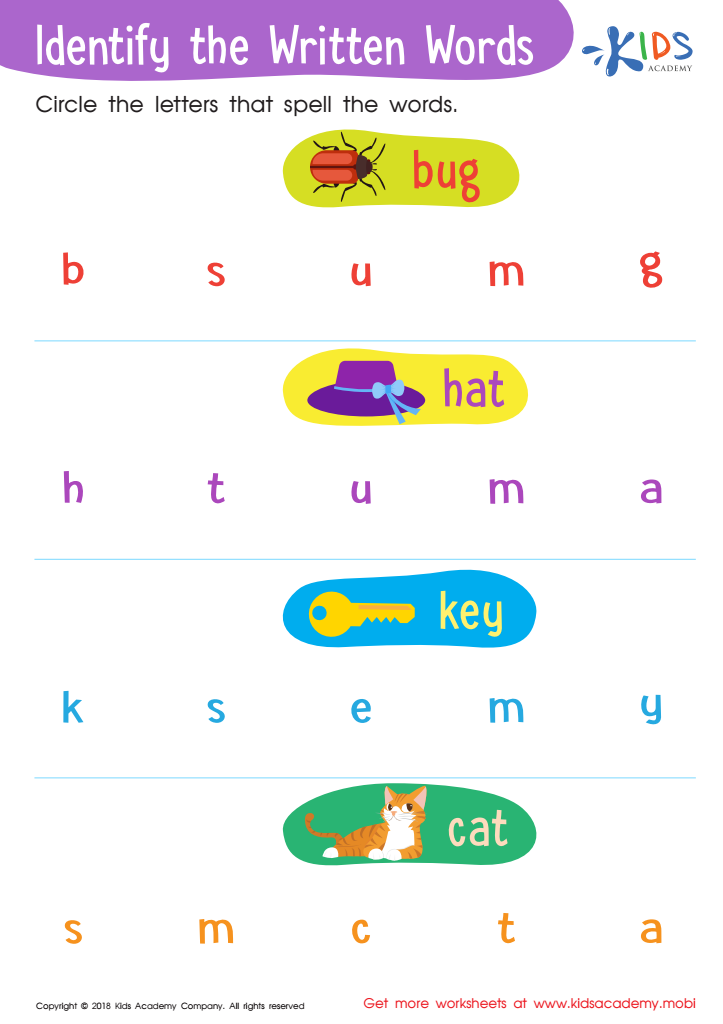
Identify the Written Words Worksheet

Identify the Written Words Worksheet

Have your students identify the objects on the printout, then spell the words. If they already know how to spell, this exercise should be easy. Help them circle the correct letters from the set to spell out the words. This is a great way to reinforce reading and spelling skills. Max 80 words.
Identify the Written Words Worksheet
Worksheet
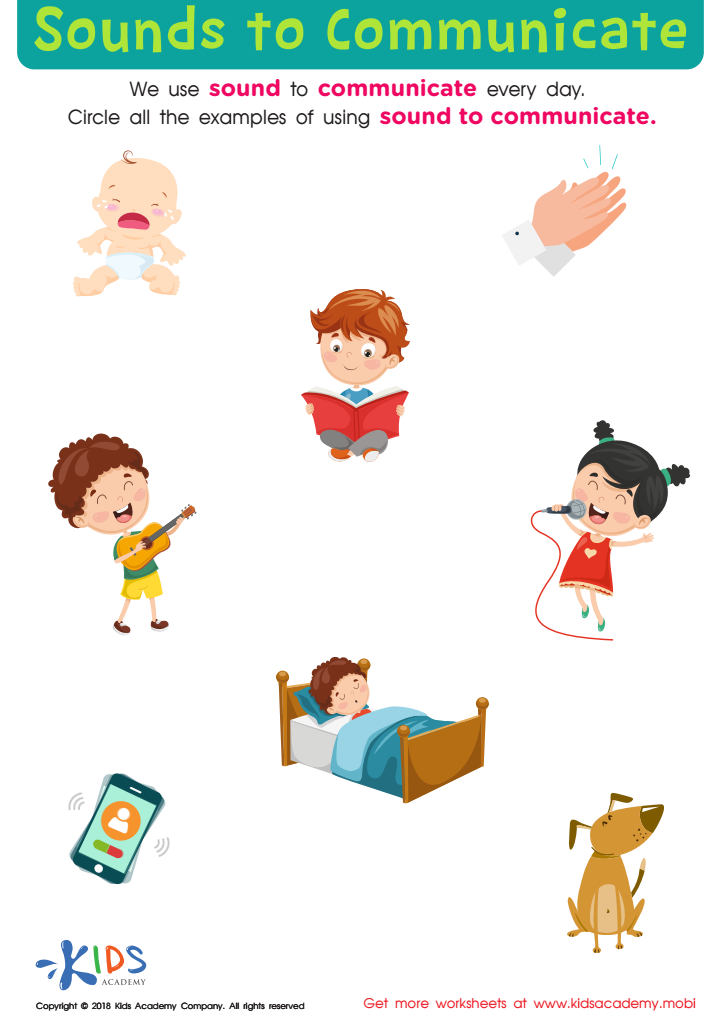
Sounds to Communicate Worksheet

Sounds to Communicate Worksheet

Sounds are important for communication. Ask your students to name sounds people, animals and things make. Then, review this worksheet with them and see if they can identify the activities. Ask them to circle examples of sounds used to communicate.
Sounds to Communicate Worksheet
Worksheet
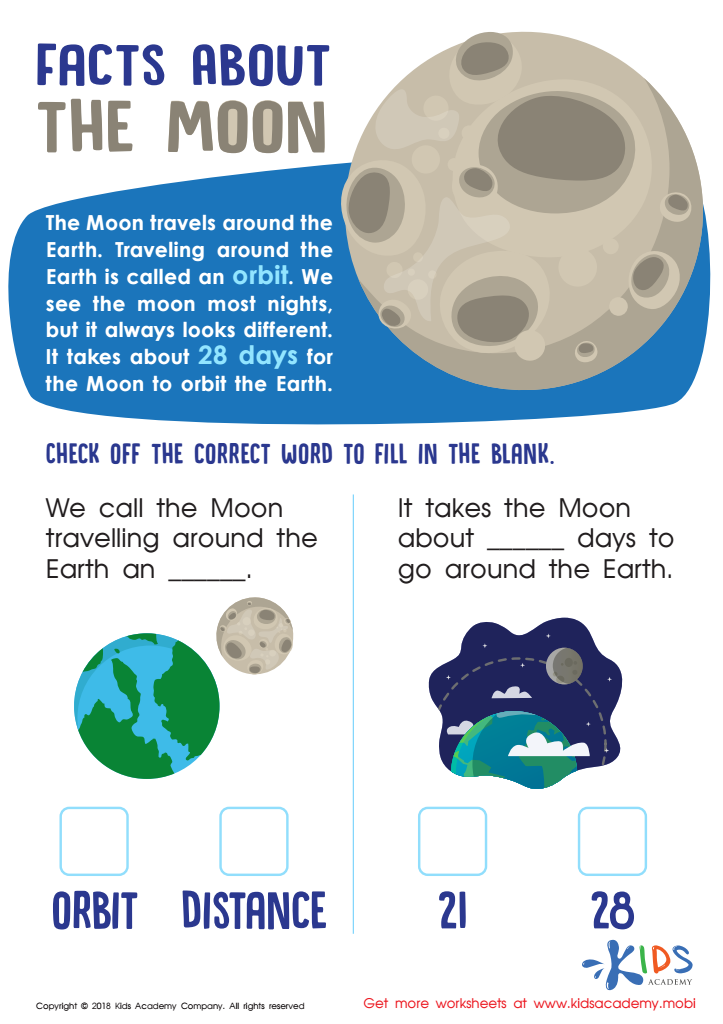
Facts About the Moon Worksheet

Facts About the Moon Worksheet

Have your child learn about our moon's orbit with this engaging worksheet! They can read the introductory paragraph for the required vocabulary, then read the sentences under the images and check off the correct boxes. Explore the wonders of the cosmos and our planet with this fun exercise!
Facts About the Moon Worksheet
Worksheet
Words with sound p Reading Worksheet

Words with sound p Reading Worksheet

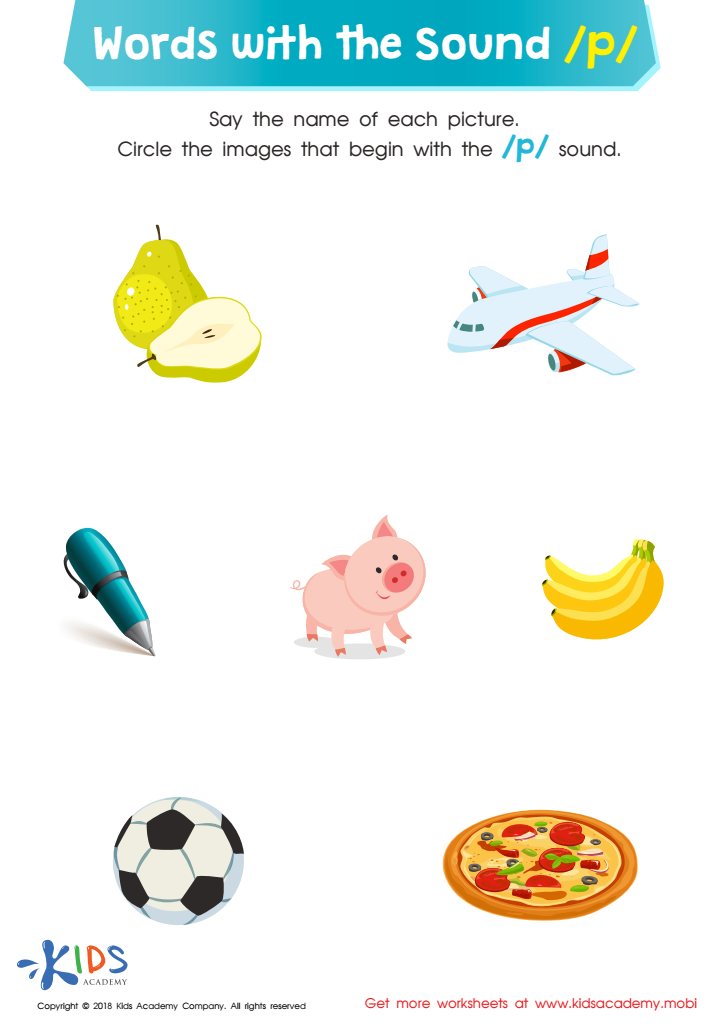
Working on this fun worksheet? Name each picture aloud and listen carefully before circling those that start with the letter «p»! Pizza, pig, plane, or banana - practice phonics to help your child recognize the letter «p» sound for successful early reading and decoding!
Words with sound p Reading Worksheet
Worksheet
Let's Check for «i» Sounds Worksheet

Let's Check for «i» Sounds Worksheet

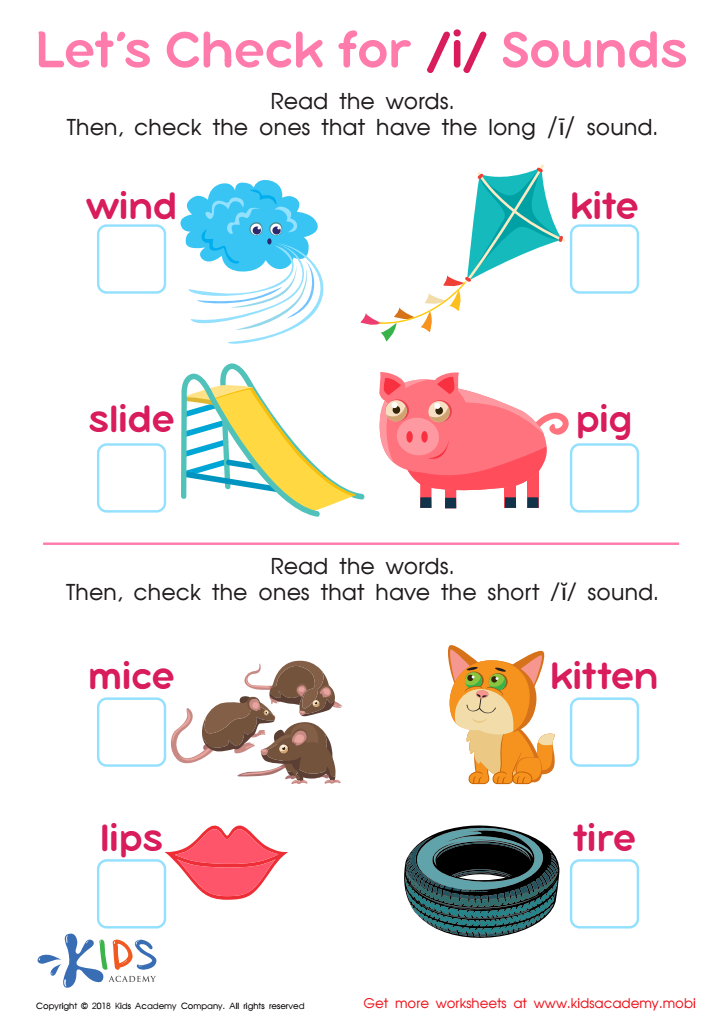
This fun worksheet with pictures boosts phonics skills - differentiating between long «ī» and short «i» sounds in 1- and 2-syllable words. Kids use picture clues to read words, then check off the correct ones. It's a great way for new readers to practice early reading skills and find success on their own.
Let's Check for «i» Sounds Worksheet
Worksheet
Notation of Captures Writing it Down Worksheet


Notation of Captures Writing it Down Worksheet
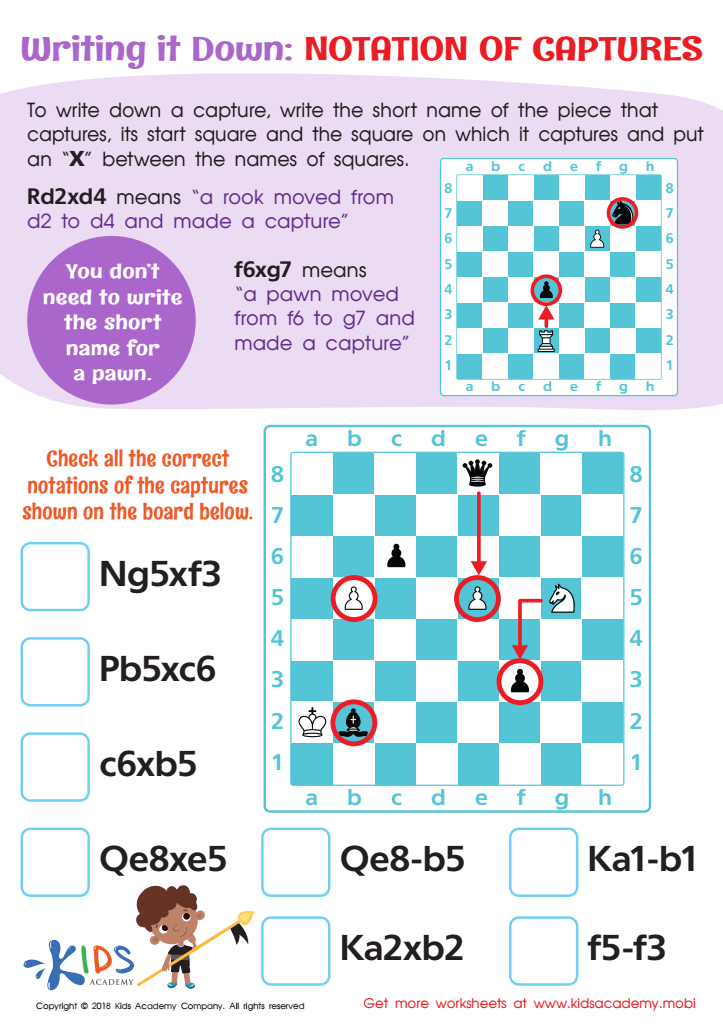
To teach students how to record captures in chess, use this worksheet. Write down the piece's short name, start sq., and the sq. where it captures, separating them with an X. For example, Rd2Xd4 means a rook moved d2 to d4 and took a piece. Pawn captures don't need a name.
Notation of Captures Writing it Down Worksheet
Worksheet


Reading skills are fundamental for a child’s overall development, especially for six-year-olds who are at a critical stage of learning. At this age, children are transitioning from learning to read to reading to learn. Enhancing their reading skills not only sets a strong academic foundation but also fosters a love for learning. Parents and teachers play a crucial role in this process.

Firstly, improved reading skills enhance comprehension abilities, allowing children to grasp concepts in various subjects. This leads to greater academic success and confidence in school. Additionally, strong reading skills contribute to effective communication, helping children articulate their thoughts and ideas.

Moreover, reading opens doors to creativity and imagination, exposing children to new worlds, cultures, and experiences. It also aids in developing empathy, as they better understand diverse perspectives through stories.

Furthermore, early interventions in reading can prevent struggles later in school. When parents and teachers actively engage in improving reading skills, they can identify challenges early on and provide necessary support. This collaborative effort can lead not only to improved reading abilities but also to a lifelong appreciation of literature, enhancing the child's emotional and intellectual growth. Thus, prioritizing reading skill development is essential for a well-rounded upbringing.