
Real-life application Normal Worksheets for 6-Year-Olds
3 filtered results
Difficulty Level
Grade
Age
-
From - To
Subject
Activity
Standards
Discover our "Real-life Application Normal Worksheets for 6-Year-Olds," designed to integrate essential learning with everyday experiences! These engaging worksheets help young learners connect academic skills to real-world scenarios, promoting critical thinking and problem-solving. Children will explore various topics such as basic math through shopping, reading comprehension with story-based questions, and more, all tailored to their developmental stage. Each printable activity encourages exploration and creativity, making learning both fun and relevant. Perfect for parents and educators, these worksheets foster independence and reinforce vital skills necessary for future success. Support your child's growth by blending education with real-life applications today!
Favorites
With answer key
Interactive
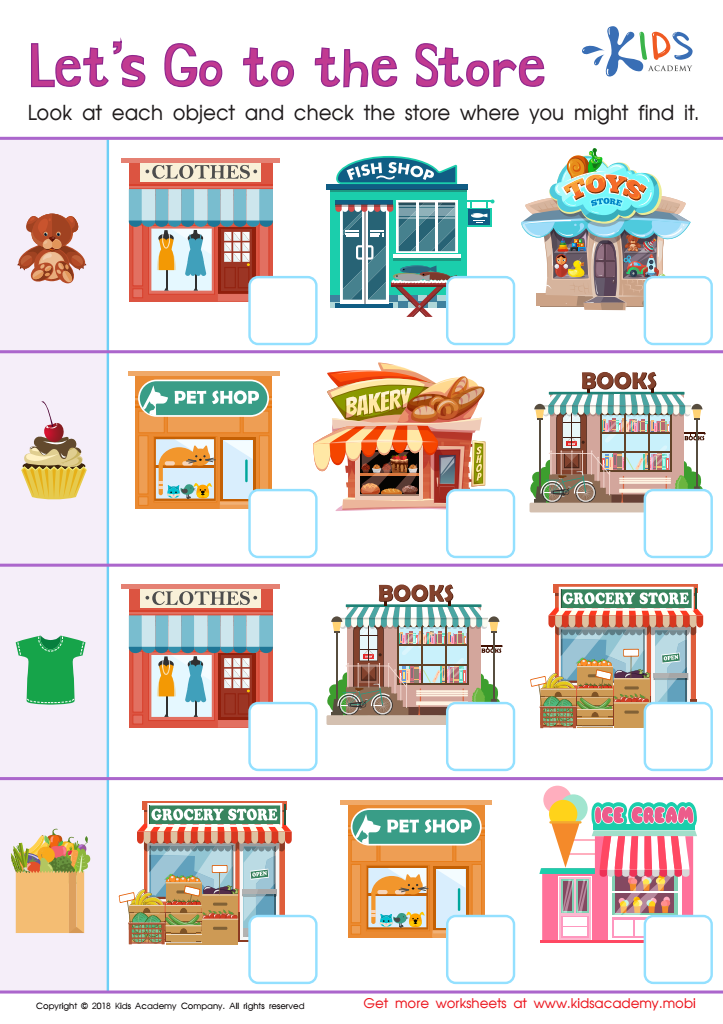
Let's Go to the Store! Worksheet
Take your kids along for errands and shopping. Ask them to identify items on this worksheet and the store where you'd buy them. See how much attention they were paying! Have fun and find out with this fun worksheet.
 Assign to My Students
Let's Go to the Store! Worksheet
Worksheet
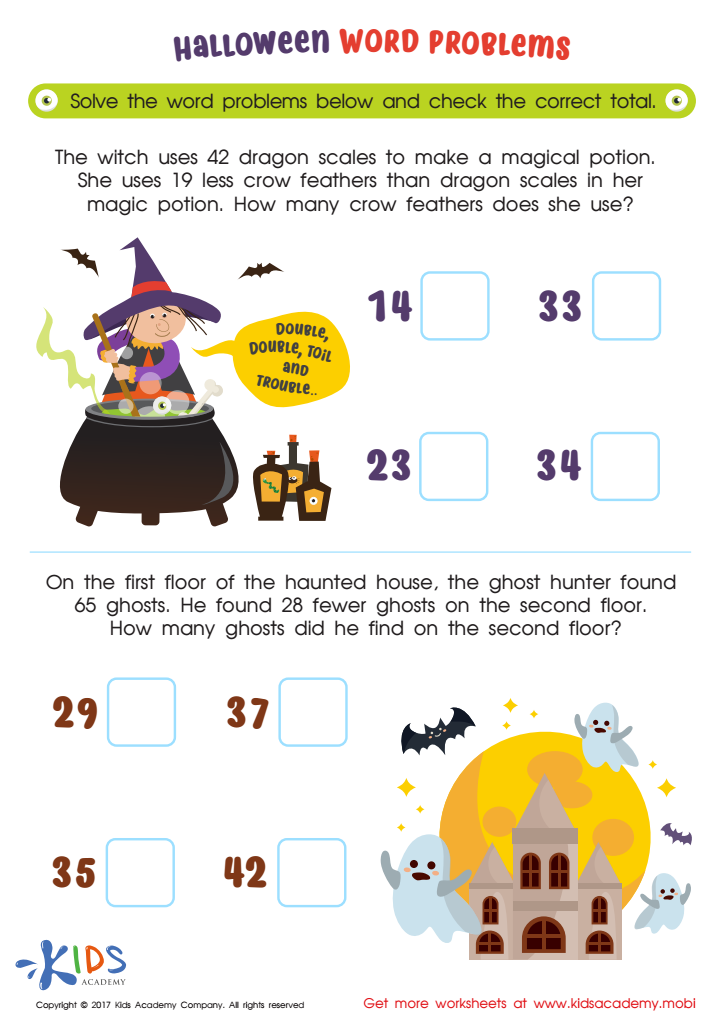
Halloween Word Problems Printable
Ghosts, witches, and other spooky characters make these problems exciting and interactive. Get ready to have some math fun!
Halloween Word Problems Printable
Worksheet
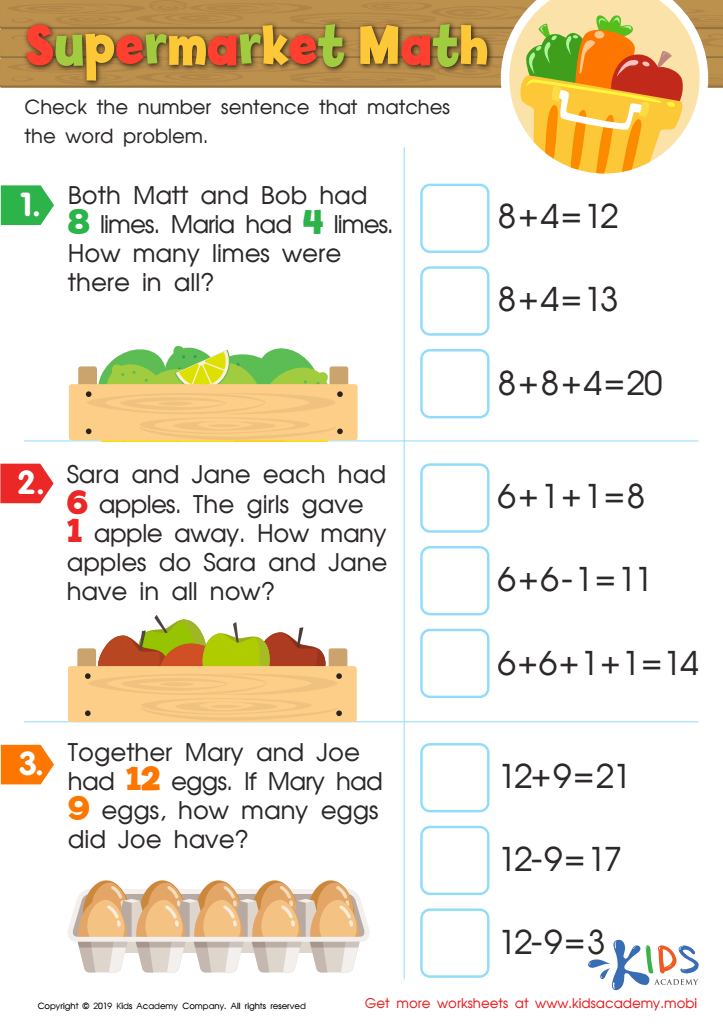
Supermarket Math Worksheet
Take your kids to the supermarket and ask what they're looking forward to buying. Help them solve the three questions in the worksheet by interpreting each one into an equation, then choose the right answer.
Supermarket Math Worksheet
Worksheet
Join Kids Academy for Free
Who is primarily going to use this learning content?





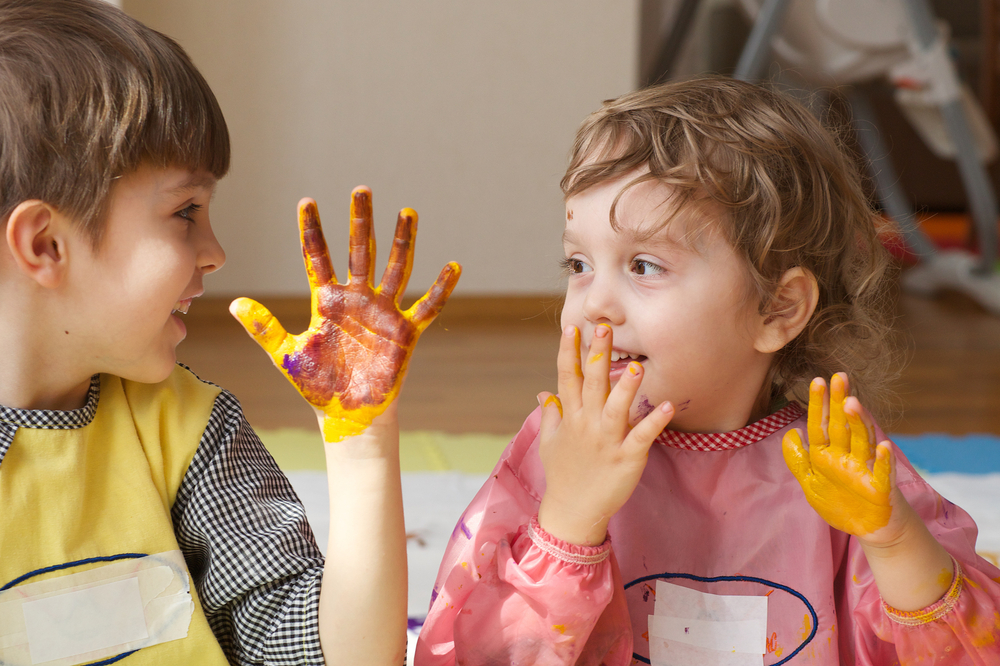
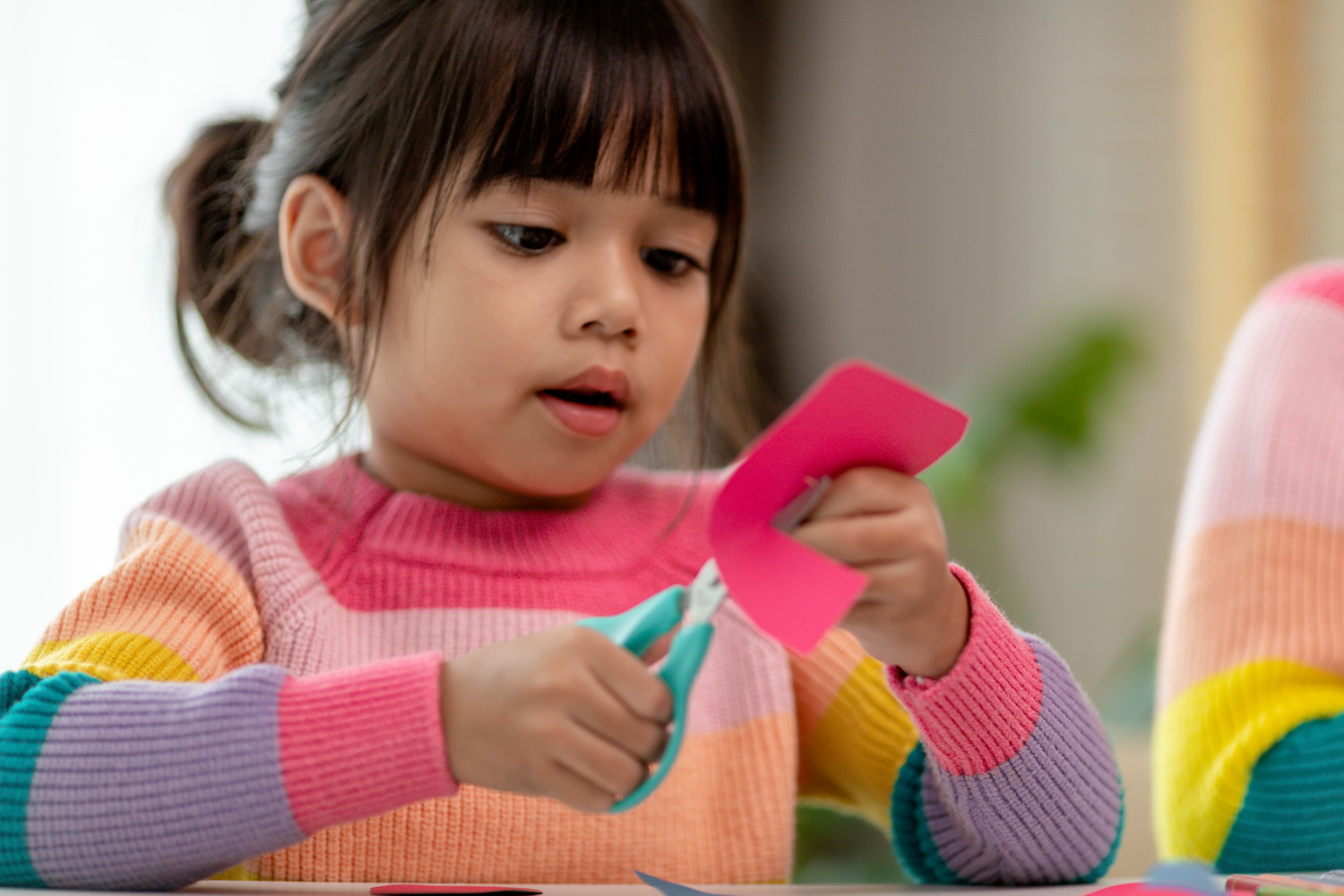
Parents and teachers should prioritize real-life applications for 6-year-olds because these experiences significantly enhance children's learning and development. At this age, children are naturally curious, eager to explore their environment, and learn through observation and hands-on experiences. Real-life applications help them relate academic concepts to the world around them, making learning more meaningful and relevant.
Engaging children in real-life scenarios—like cooking, shopping, or gardening—encourages practical skills such as problem-solving, critical thinking, and teamwork. These experiences also bolster their communication skills, as they express ideas and ask questions in authentic contexts.
Moreover, real-life applications foster a love for learning. When children see the tangible outcomes of their education, they're more likely to remain curious and motivated, laying a strong foundation for future learning. Additionally, involving parents in these activities enhances family bonding and encourages a supportive learning environment.
Incorporating real-life applications into education empowers children to become independent thinkers and prepares them for various situations they may encounter beyond the classroom. Ultimately, teachers and parents who focus on real-life learning help nurture well-rounded, confident individuals equipped with essential life skills.








