Spatial reasoning Normal Worksheets for 6-Year-Olds
5 filtered results
-
From - To
Discover our engaging Spatial Reasoning Normal Worksheets designed specifically for 6-year-olds! These colorful and interactive worksheets help young learners develop crucial skills such as shape recognition, spatial awareness, and problem-solving. Through a variety of fun activities and exercises, children will explore concepts like patterns, comparisons, and object placement, enhancing their cognitive abilities while enjoying the learning process. Ideal for home use or classroom settings, our worksheets ensure that kids build a strong foundation in spatial reasoning. Download and print them easily from our website, and watch your child’s confidence and skills flourish! Perfect for turning learning into an adventure!
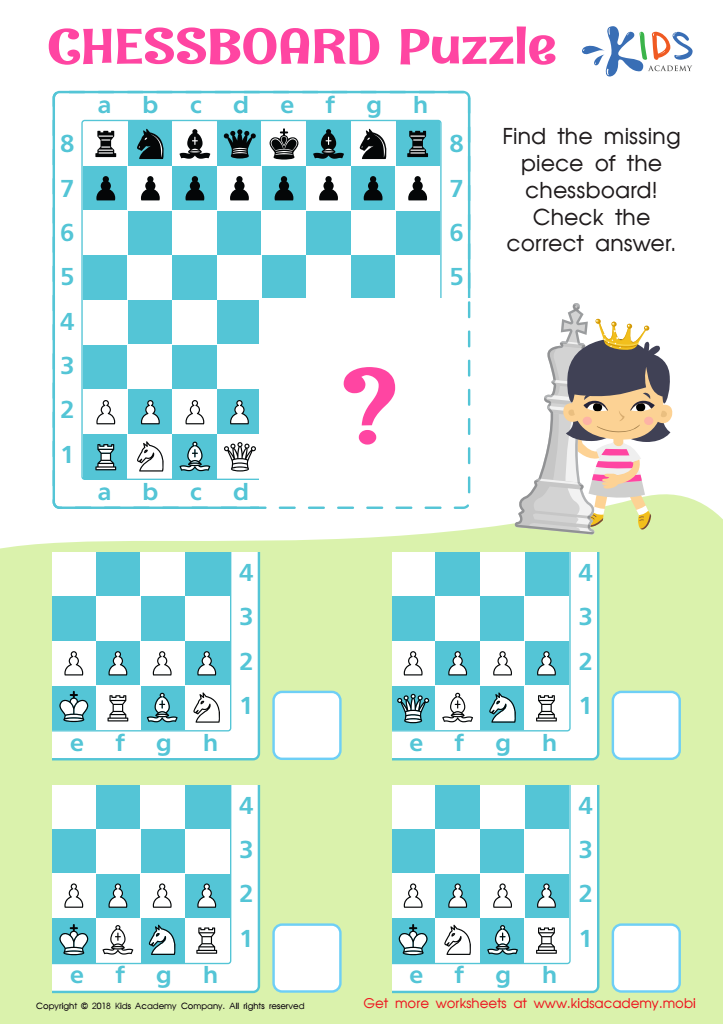
Chessboard Puzzle Worksheet
 Assign to My Students
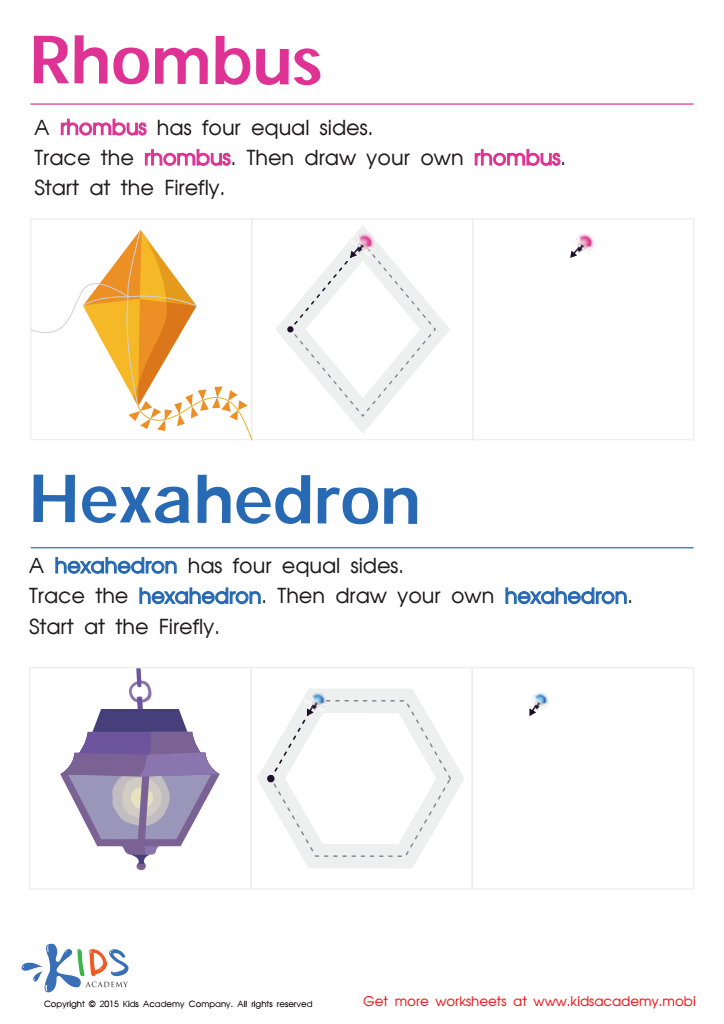
Draw a Rhombus And a Hexahedron Printable
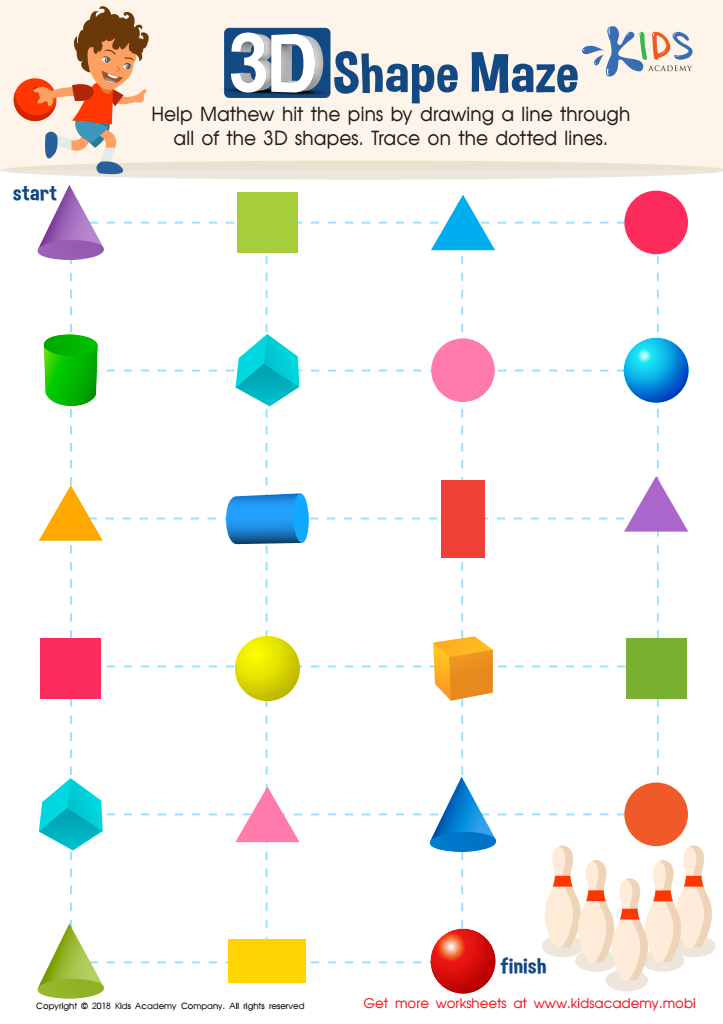
Shapes Maze Geometry Worksheet
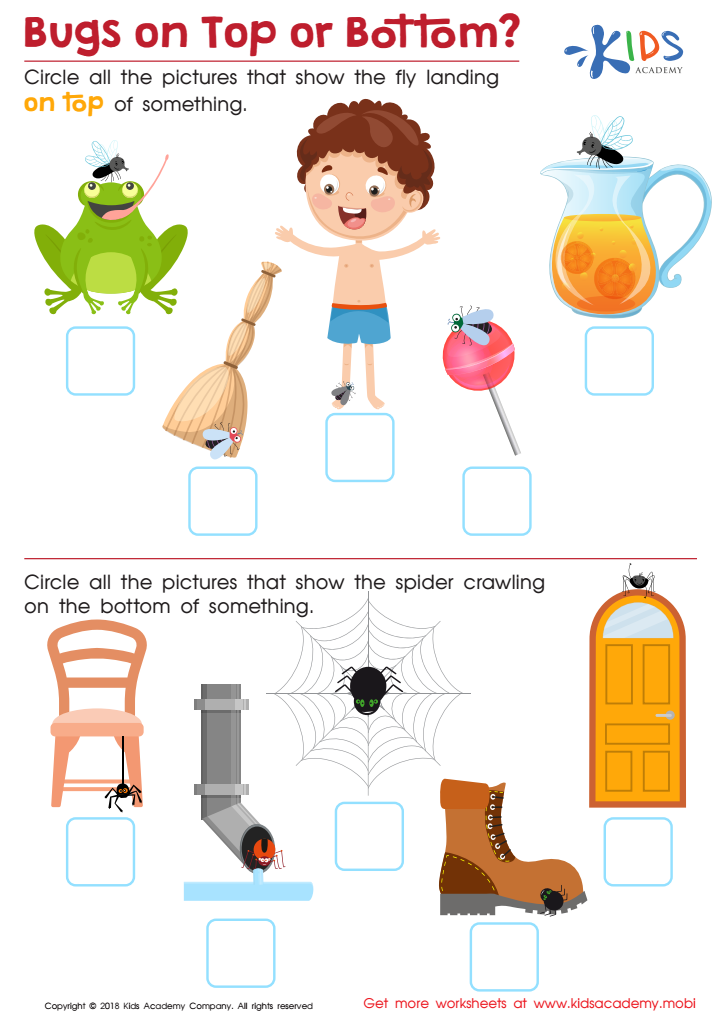
Bugs on Top or Bottom? Worksheet
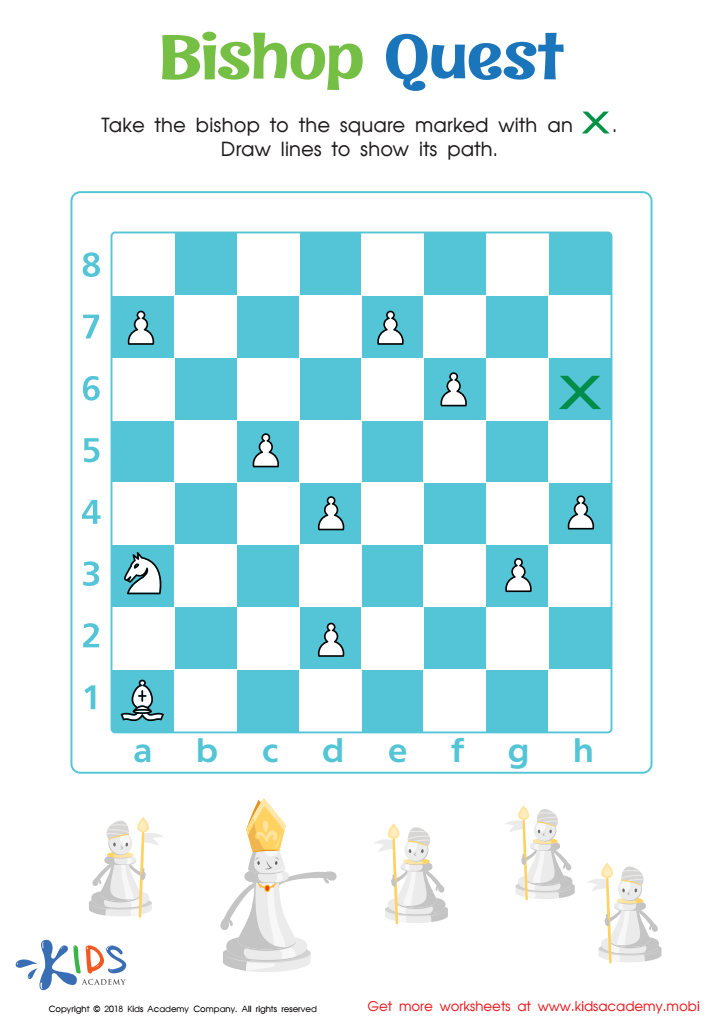
Bishop Quest Worksheet






Spatial reasoning is a critical cognitive skill that significantly influences a child's development and academic success. For 6-year-olds, this skill involves the ability to understand and manipulate shapes and spaces, which is foundational for subjects like mathematics, science, and even reading. When parents and teachers prioritize spatial reasoning, they help children develop essential problem-solving skills, fostering a love for learning and exploration.
Strong spatial reasoning abilities empower children to visualize relationships and understand concepts such as symmetry, area, and volume. This cognitive development is linked to success in STEM (science, technology, engineering, and math) fields, where spatial skills play a crucial role in understanding complex ideas and conducting experiments.
Furthermore, stimulating spatial reasoning can enhance children's creativity and artistic expression, allowing them to think innovatively. Engaging in activities like puzzles, building blocks, and drawing can further cultivate these skills. By promoting spatial reasoning, parents and teachers can ensure that children are better prepared for future academic challenges and equipped with the critical thinking skills needed in an increasingly complex world. Therefore, fostering spatial awareness in early grades is an investment in a child's lifelong learning journey.








