Cognitive Development Normal 2D Shapes Worksheets for 6-Year-Olds
4 filtered results
-
From - To
Explore our "Cognitive Development 2D Shapes Worksheets for 6-Year-Olds" to nurture young minds with exciting geometric tasks! Perfectly designed for early learners, these worksheets offer fun and educational activities that help children identify, comprehend, and classify various 2D shapes. As they engage with vibrant images and smart exercises, kids enhance their spatial awareness, reasoning, and problem-solving skills. Tailored to align with early grade math standards, our worksheets ensure a solid foundation in geometry while promoting cognitive development and critical thinking. Spark your child's curiosity and boost their math confidence with our expertly crafted resources!
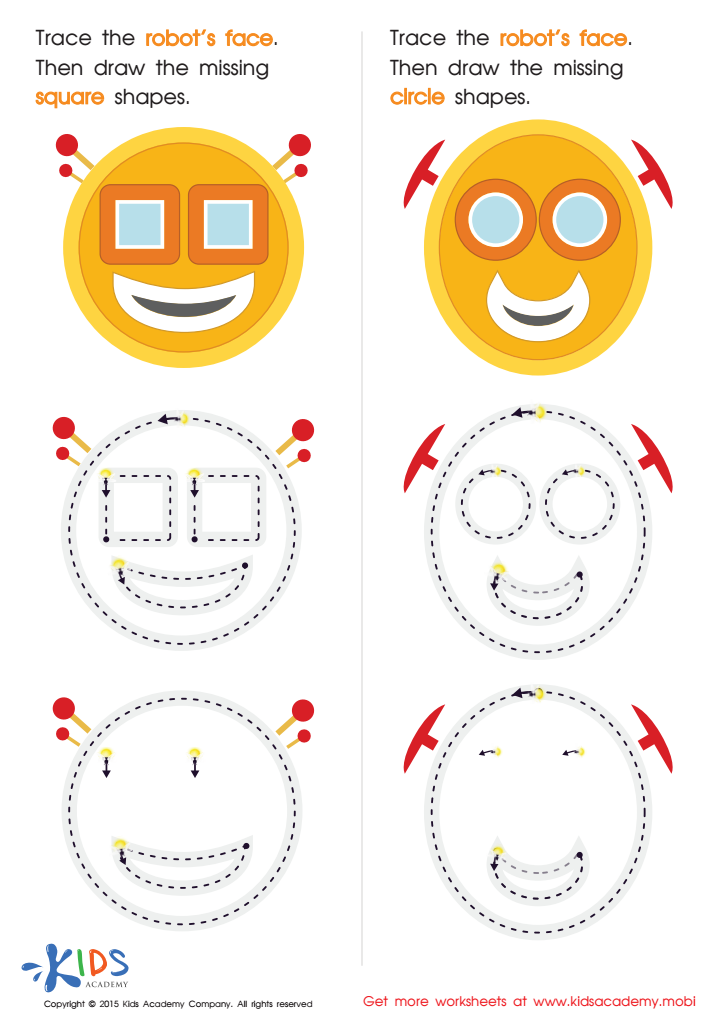
Practicing to Draw Circles And Squares Printable
 Assign to My Students







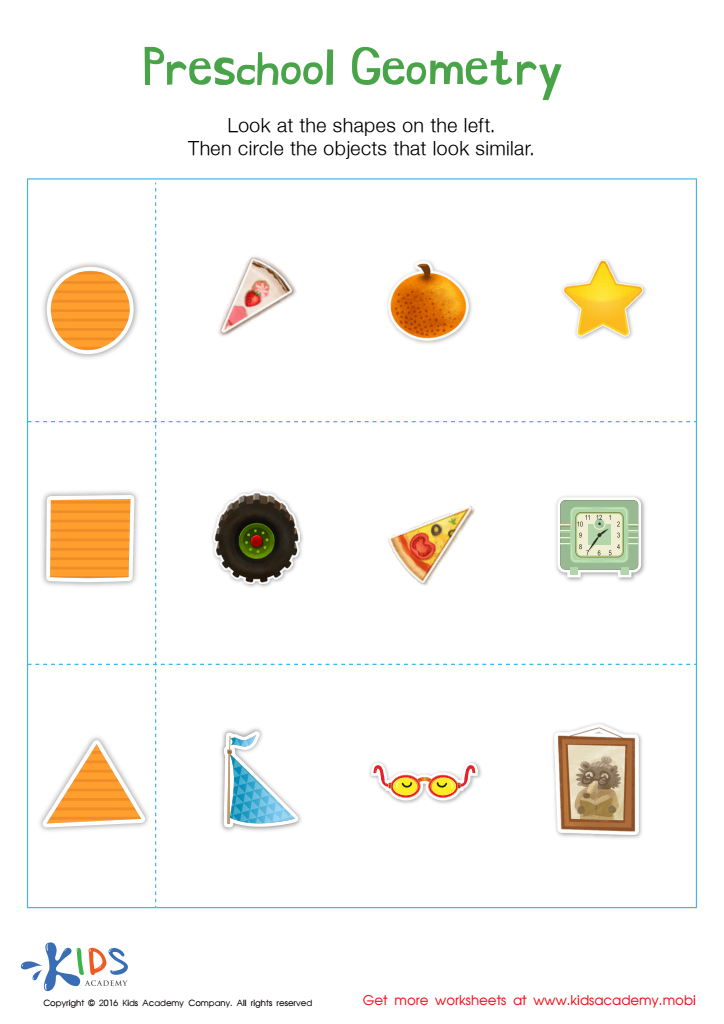
Preschool Geometry Match Up Worksheet
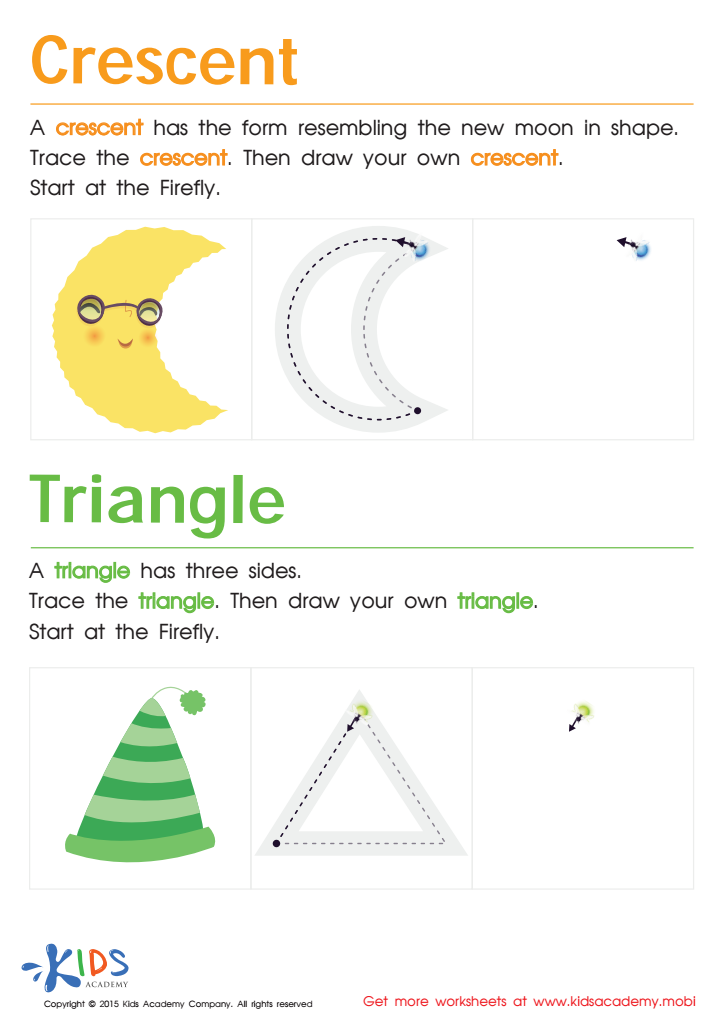
Learning to Draw Crescents And Triangles Worksheet
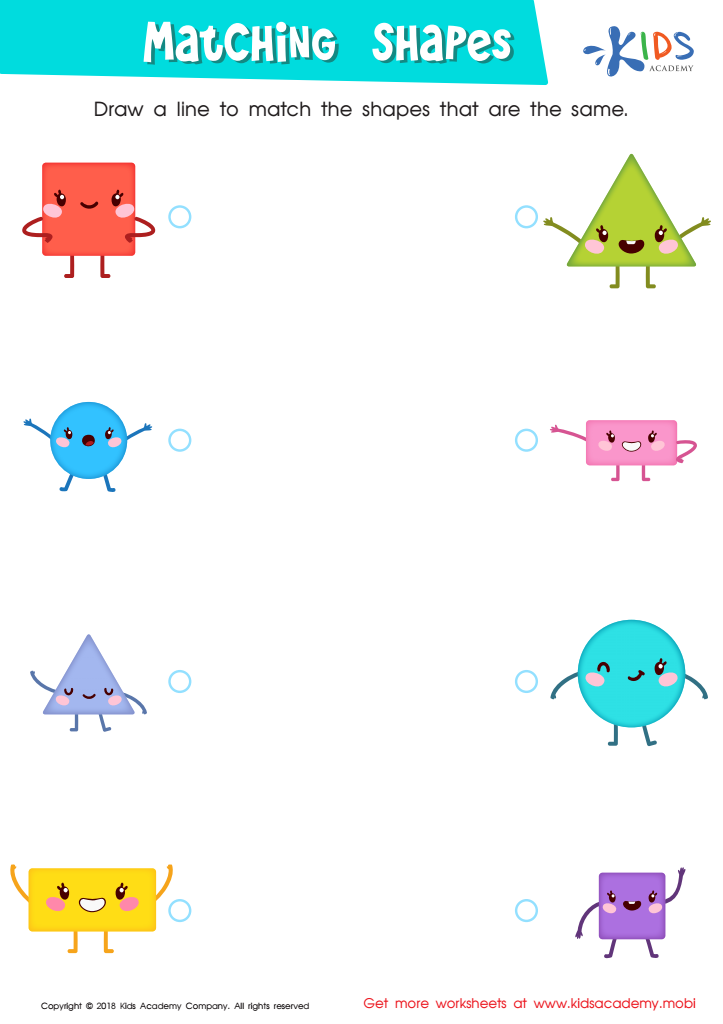
Matching Shapes Worksheet








Parents and teachers should care about cognitive development related to understanding normal 2D shapes in 6-year-olds because it forms a vital foundation for their overall learning growth and academic success. At this age, children are in the "pre-operational" stage of cognitive development, as proposed by Jean Piaget. During this period, kids begin to enhance their memory, improve their ability to use symbols, and initiate problem-solving skills. Learning to identify and categorize 2D shapes such as circles, squares, triangles, and rectangles aids in the development of spatial awareness and visual perception.
Further, shape recognition enhances children's abilities in key areas such as reasoning and analytical thinking. Shapes are not just part of math but are prevalent in daily environments; learning about them helps kids better interpret the world around them. Comprehension in this area also connects with their burgeoning reading and writing skills. Recognizing shapes enables children to draw letters and numbers more accurately, contributing to literacy.
Moreover, drawing, sorting, and discussing shapes are collaborative and interactive activities. They help improve fine motor skills and language development through communication and guided instruction. Investing time in this developmental area fosters a well-rounded and inquisitive mind, crucial for future academic endeavors and everyday problem-solving.