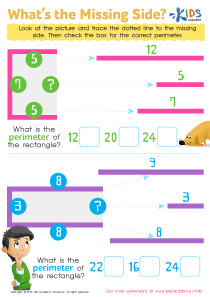
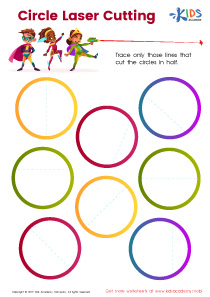
Problem-Solving Skills Normal 2D Shapes Worksheets for 6-Year-Olds
3 filtered results
-
From - To
Our "Problem-Solving Skills Normal 2D Shapes Worksheets for 6-Year-Olds" are designed to engage young learners in fun, educational activities. These worksheets help children identify and understand various 2D shapes while enhancing their problem-solving abilities. Perfect for at-home learning or classroom use, each worksheet is thoughtfully crafted to encourage critical thinking and build essential math skills. Kids will enjoy recognizing and drawing shapes like circles, squares, and triangles through interactive exercises. Support your child’s educational journey with worksheets that make learning 2D shapes both enjoyable and effective!
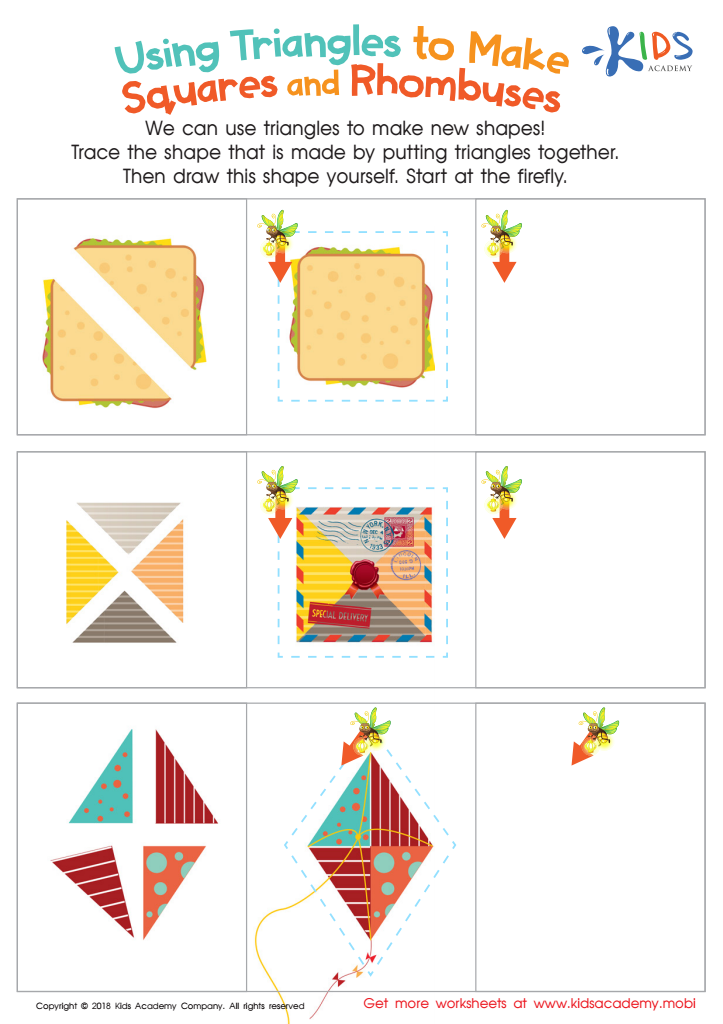
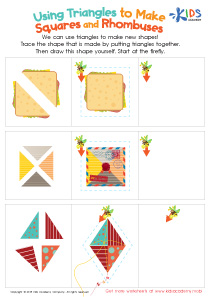
Using Triangles to Make Squares and Rhombuses Worksheet
 Assign to My Students

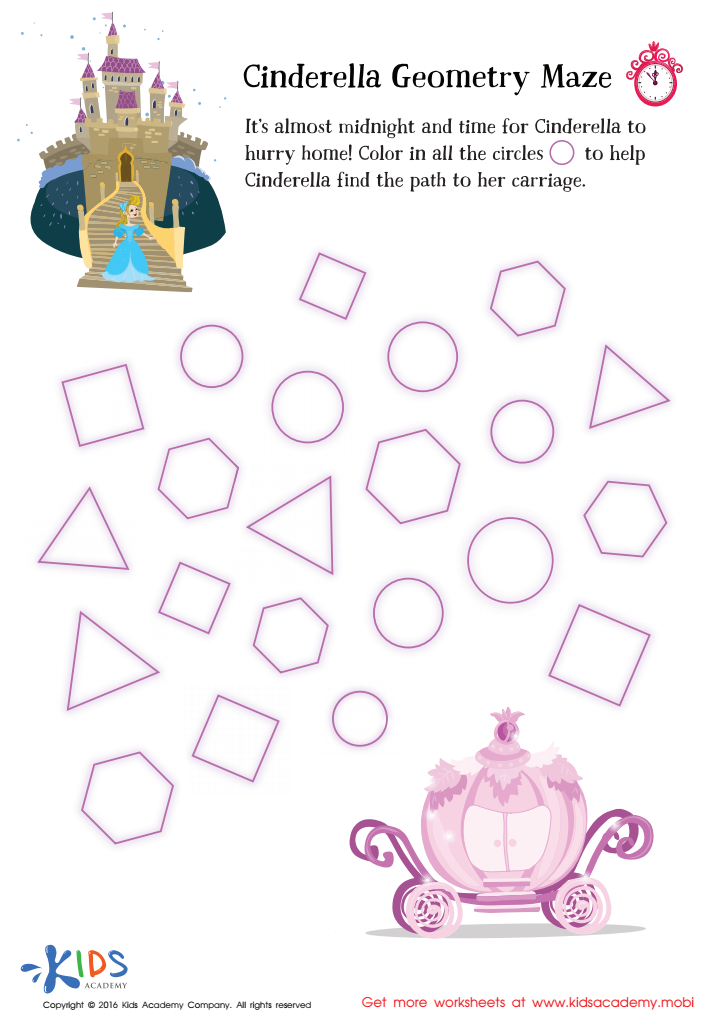
Cinderella Geometry Maze Worksheet
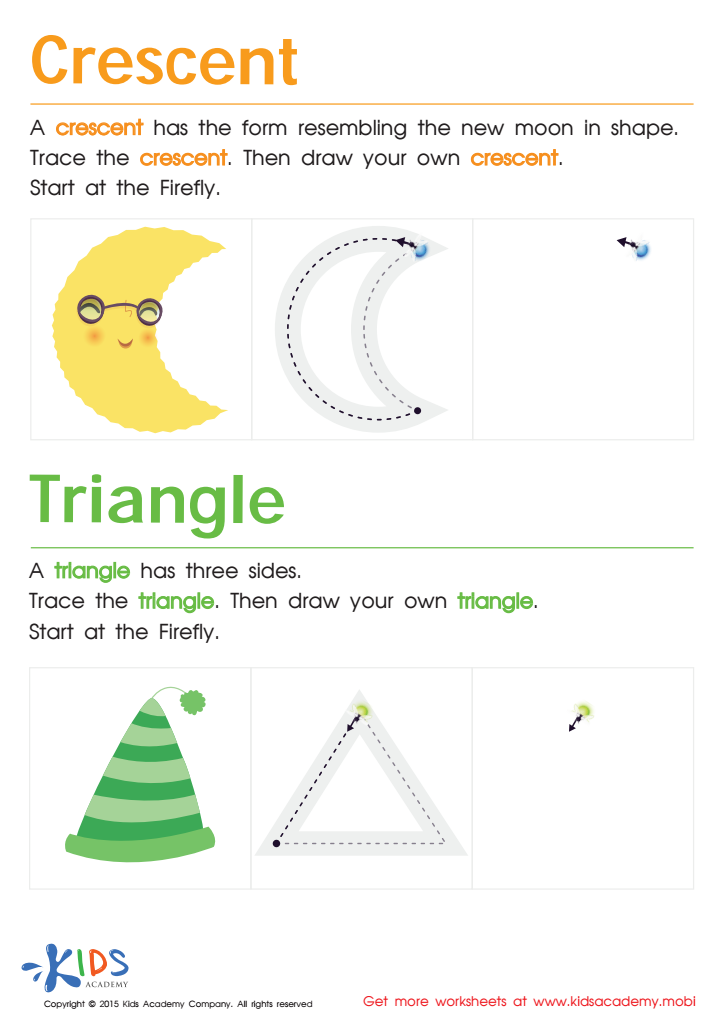
Learning to Draw Crescents And Triangles Worksheet








Cultivating problem-solving skills utilizing normal 2D shapes, such as circles, squares, and triangles, holds immense benefits for 6-year-olds and is significant for both parents and teachers to focus on. Firstly, engaging with 2D shapes aids in enhancing children's spatial awareness and geometric reasoning. These foundational skills are crucial for success in more advanced areas of mathematics and science later in life.
Additionally, problem-solving with 2D shapes encourages critical thinking and creativity. As children figure out how to fit shapes together to form a picture or solve puzzles, they learn to think flexibly and approach problems from different angles. This ability to analyze, strategize, and execute a plan is essential not just academically, but in everyday life.
Furthermore, working with shapes is a hands-on practice that significantly improves fine motor skills, such as cutting, tracing, or piecing shapes together. Engaging multiple senses during learning increases retention and understanding.
Socially, activities involving 2D shapes often involve collaboration. Children learn to communicate their ideas and share solutions, fostering essential social skills like teamwork and empathy.
In summary, focusing on problem-solving skills with 2D shapes builds a strong mathematical foundation, enhances critical thinking, fosters creativity, improves fine motor skills, and cultivates essential social interactions, making it a comprehensive developmental tool for young learners.