Counting practice Normal Addition & Subtraction Worksheets for 6-Year-Olds
5 filtered results
-
From - To
Our Counting Practice Normal Addition & Subtraction Worksheets for 6-Year-Olds are expertly designed to help young learners sharpen their math skills. These engaging worksheets provide a variety of exercises to build proficiency in basic arithmetic through fun and interactive activities. Each sheet encourages children to practice addition and subtraction within comfortable number ranges, enhancing their numeracy and critical thinking abilities. With vibrant visuals and easy-to-understand instructions, these worksheets are perfect for both classroom and home use. Unlock your child's potential and make learning math an enjoyable experience with our top-rated educational resources tailored for six-year-olds.
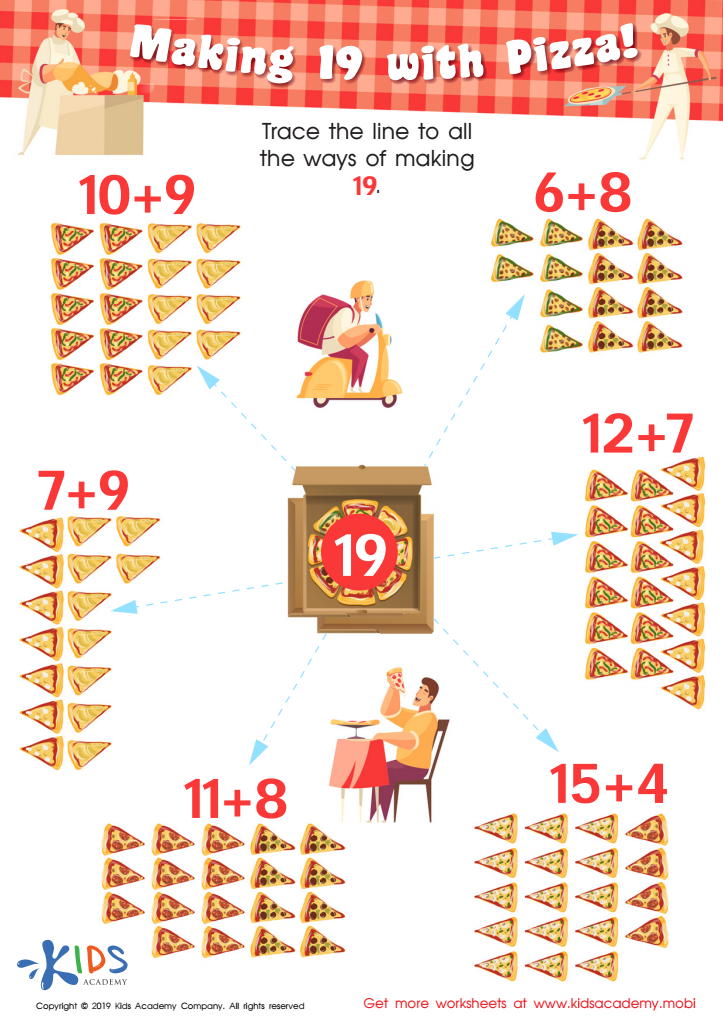
Making 19 with Pizza! Worksheet
 Assign to My Students
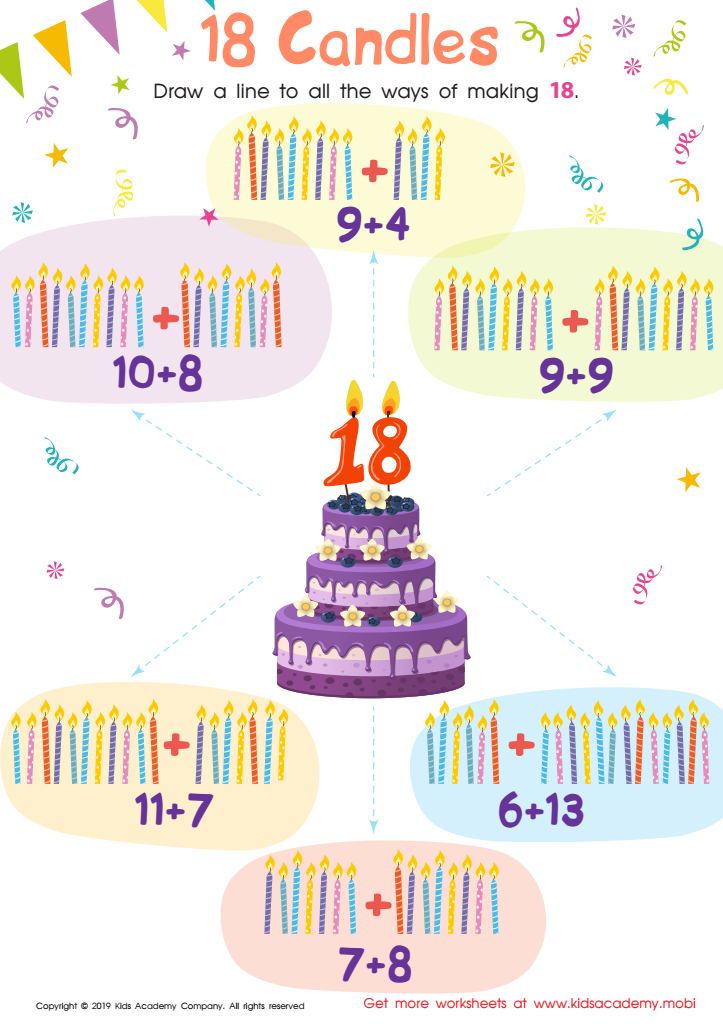
18 Candles Worksheet
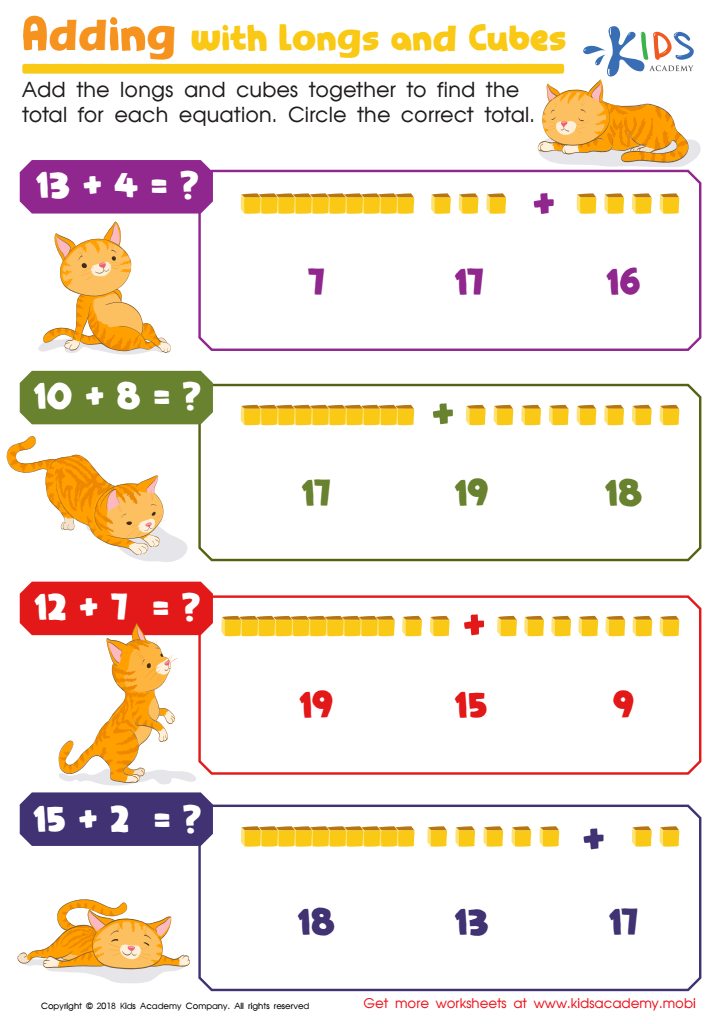
Adding With Longs and Cubes Worksheet
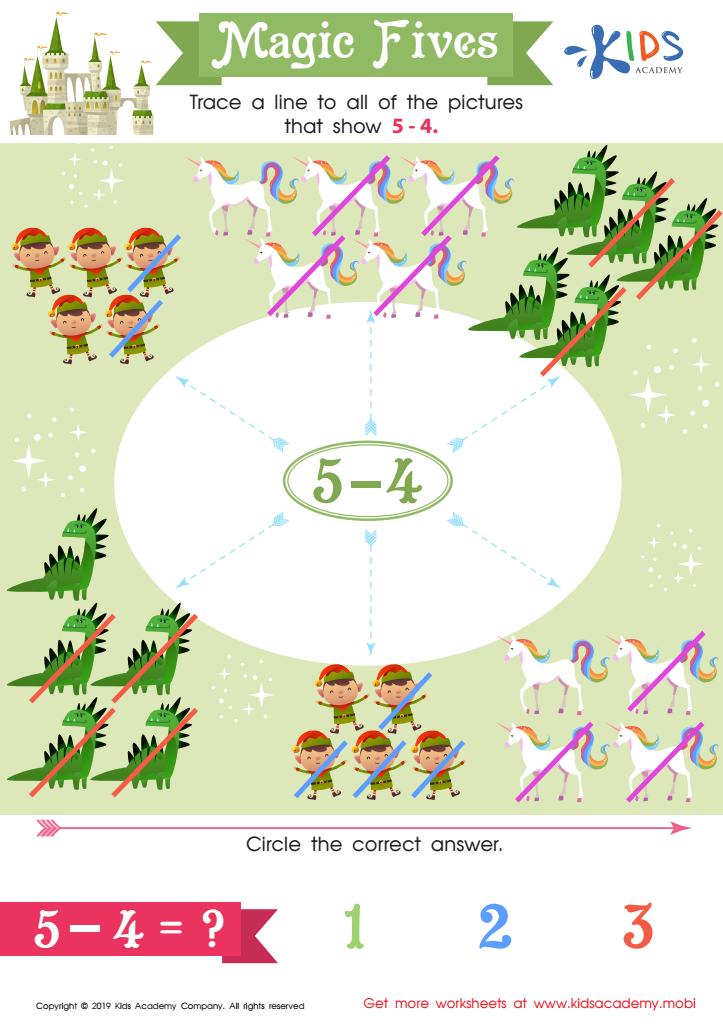
Magic Fives Worksheet
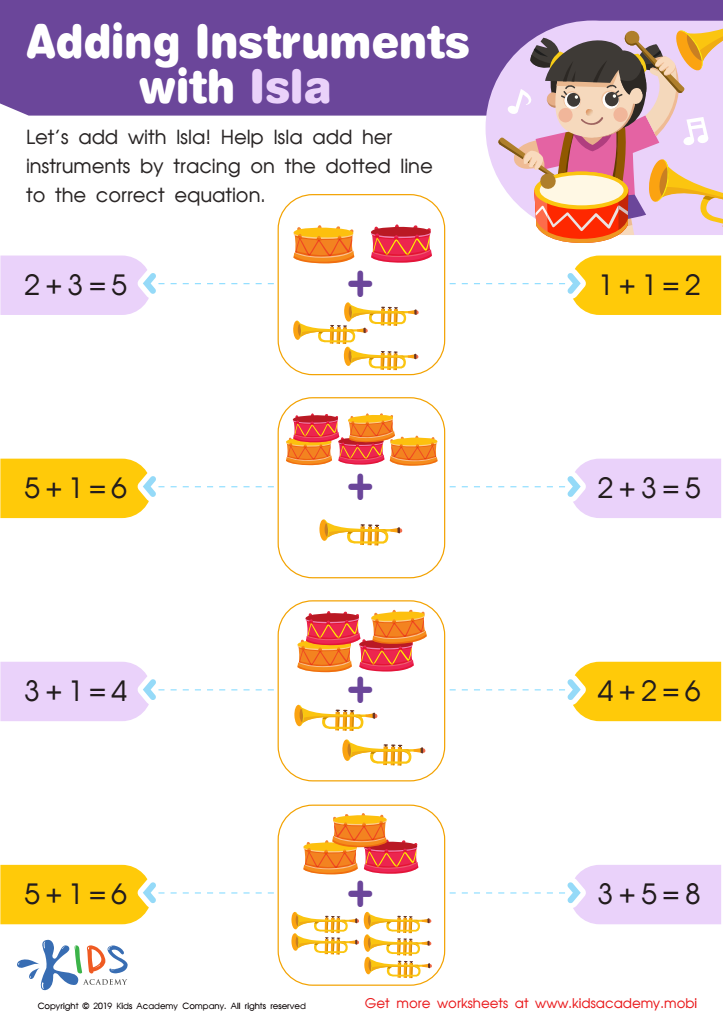
Adding Instruments with Isla Worksheet








Understanding the foundational concepts of addition and subtraction is crucial for 6-year-olds, and both parents and teachers play a pivotal role in this educational journey. At this age, children are developing their basic number sense, which is the cornerstone of all future mathematical learning. Encouraging counting practice and normal addition and subtraction helps to solidify these fundamental skills.
Firstly, these activities enhance cognitive development. Children begin to grasp the concept of numbers and the relationships between them, fostering logical thinking and problem-solving abilities. These concepts are not only mathematical but also applicable across various contexts in daily life.
Secondly, early proficiency in these skills builds confidence. As children successfully tackle basic math problems, their confidence grows, making them more willing to engage with increasingly complex tasks and preventing math anxiety.
Furthermore, mastering these basics is critical for academic progression. Schools build on this knowledge year after year. Struggling with these early concepts can lead to difficulties in understanding more advanced topics such as multiplication and division.
Parents and teachers provide the necessary support and resources, making learning engaging through games, practical examples, and positive reinforcement. Investing time and effort into teaching and practicing these skills ensures a strong mathematical foundation for lifelong learning.








