Discover engaging Number Sequencing Normal Numbers Worksheets designed for 6-year-olds. These worksheets foster essential math skills by helping young learners understand and organize numbers in sequential order. Perfect for supporting early numeracy, our worksheets feature colorful visuals and age-appropriate activities that make learning enjoyable. Students will enhance their counting abilities, develop critical thinking skills, and build a strong foundation in mathematics. Ideal for classroom use or at-home practice, these worksheets are an excellent resource for parents and teachers aiming to reinforce number sequences in a fun, interactive way. Start your child's math journey today with our tailored worksheets!

Check out this FREE Trial Lesson on Numbers for age 6!

Use Mental Strategies -Counting

Favorites
With answer key
Interactive
  • 6
  • Number Sequencing
  • Numbers
  • Normal
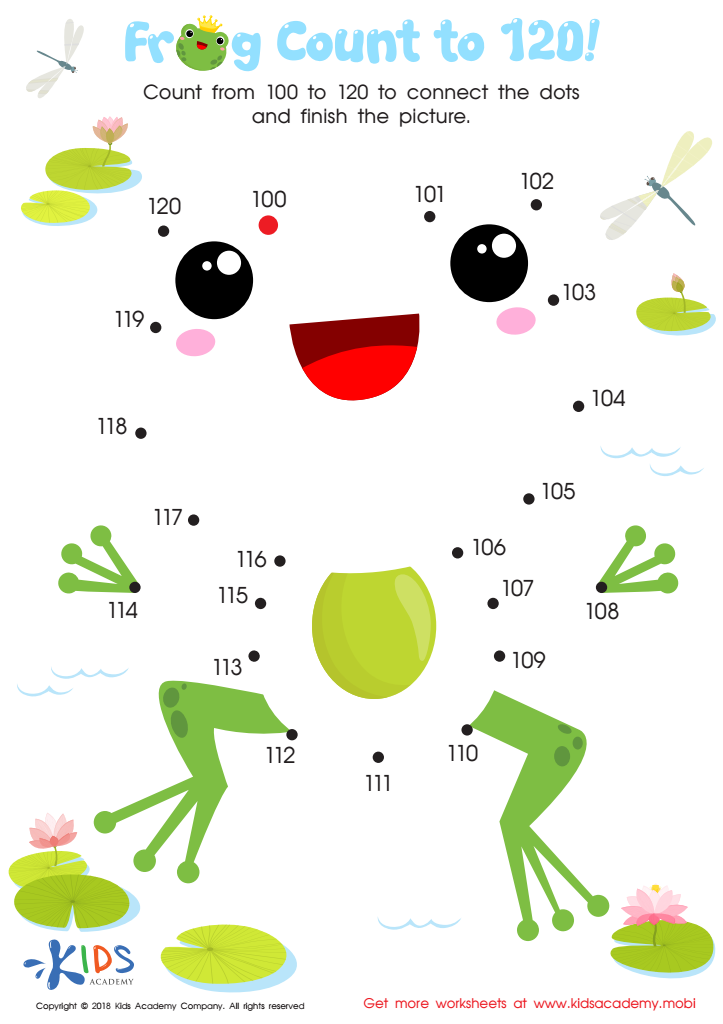
Frog Count to 120 Worksheet

Frog Count to 120 Worksheet

Count from 100 to 120 with your child to help them finish the worksheet! Pet owners will be especially excited to help the cute frog complete its picture. With proper counting, your child will be able to easily connect the dots and finish the picture of the green frog.
Frog Count to 120 Worksheet
Worksheet
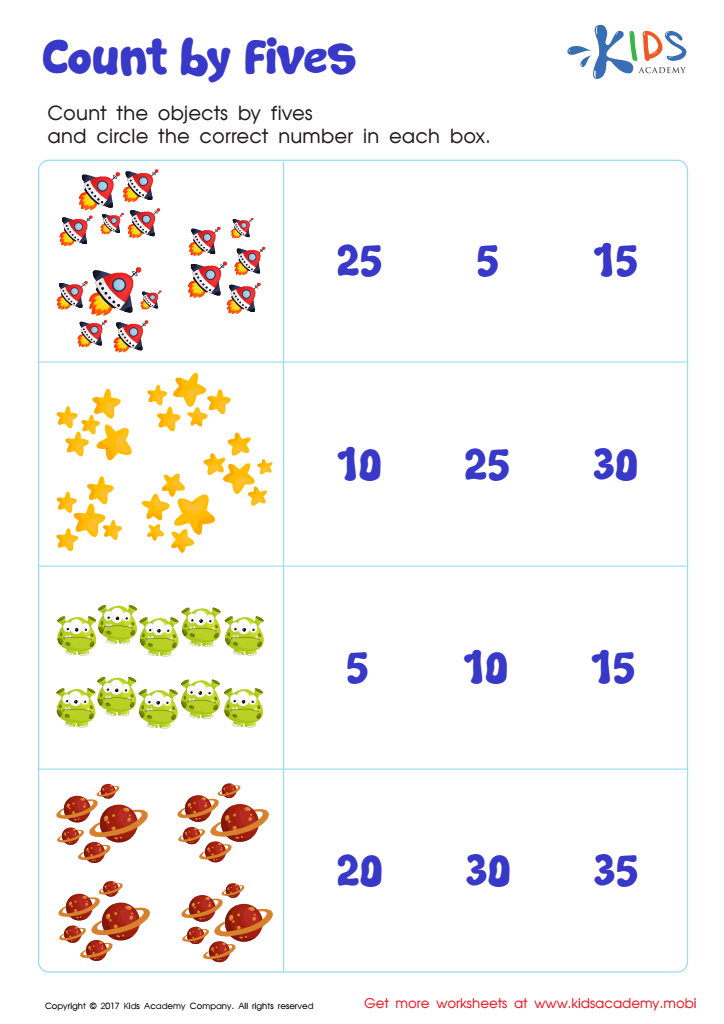
Count by 5’s Printable Worksheet

Skip Counting by 5s: Space Math Printable
This worksheet will provide your child with fun and practice counting by 5's. It'll help them visually count numbers, use problem solving skills and make connections between individual and groups of numbers. Counting money and various math concepts will become easier with this invaluable skill. Blast off with this fun and educational worksheet featuring space graphics.
Skip Counting by 5s: Space Math Printable
Worksheet
Counting and Numbers: Assessment Worksheet

Counting and Numbers: Assessment Worksheet

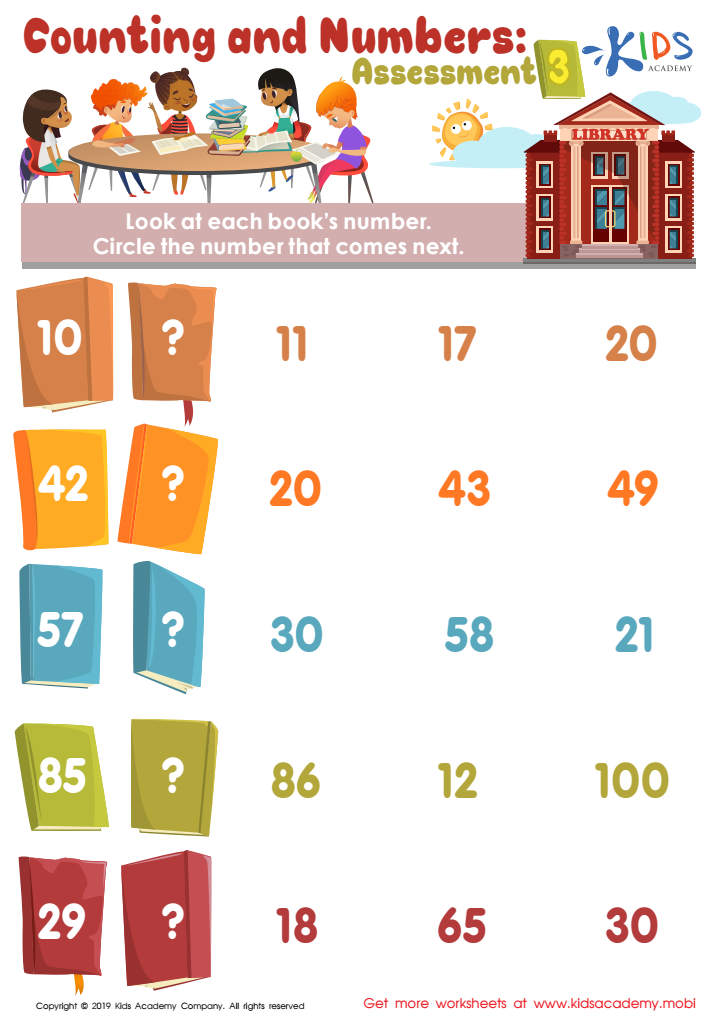
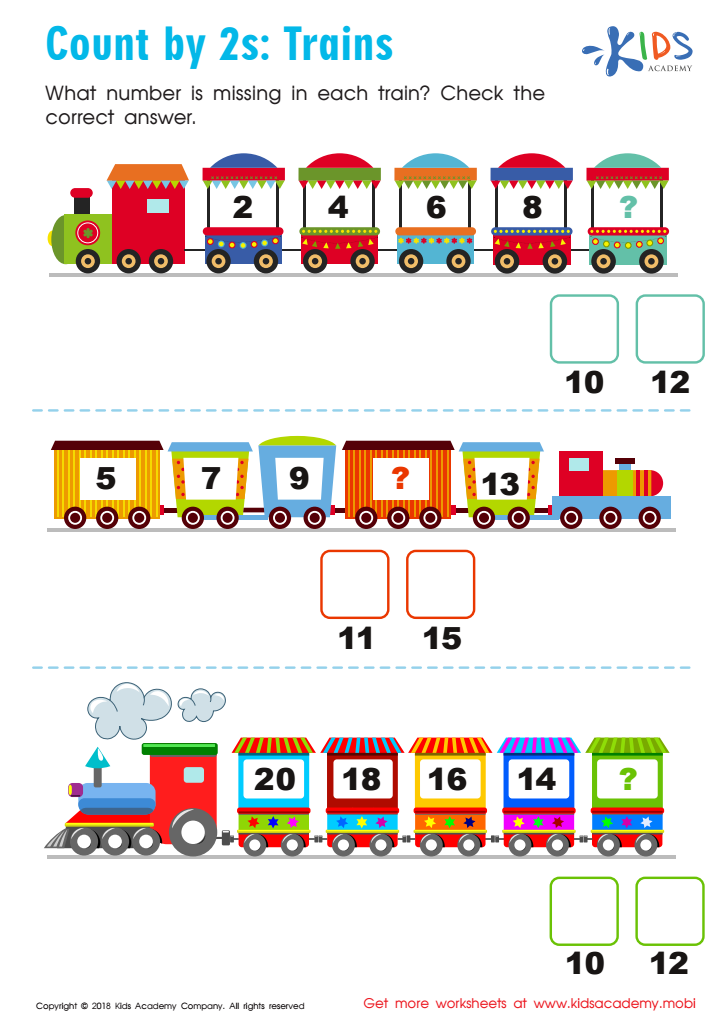
Number line thinking is an essential math skill. Kids using this skill can compute math problems accurately and quickly. Our free assessment tests number line recognition; have your child pick the right number from the given options to follow the current number on the line. This assessment will give you an idea of their counting skills.
Counting and Numbers: Assessment Worksheet
Worksheet
Count by 2's: Trains Worksheet

Count by 2's: Trains Worksheet

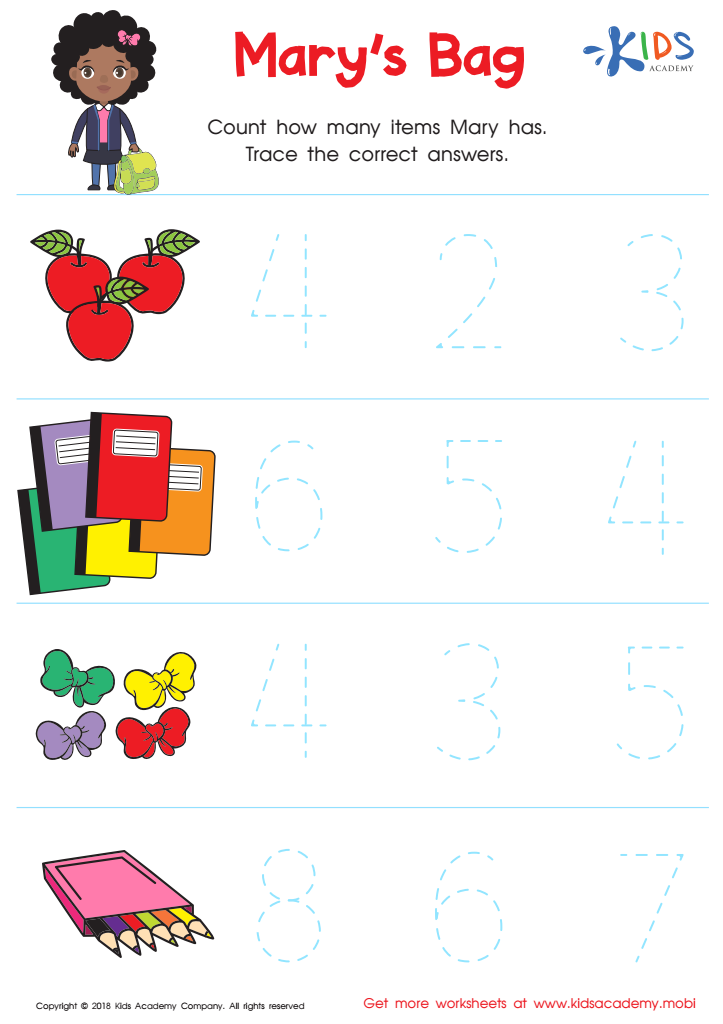
Teaching your kids quick computations? Get them skip-counting by 2s! They'll love filling in the colors of the train while counting, and it will help with 'counting up' or backward on paper or in their heads - essential for quick computations later.
Count by 2's: Trains Worksheet
Worksheet
Kindergarten number tracing worksheet

Kindergarten Number Tracing: Mary's Bag Worksheet
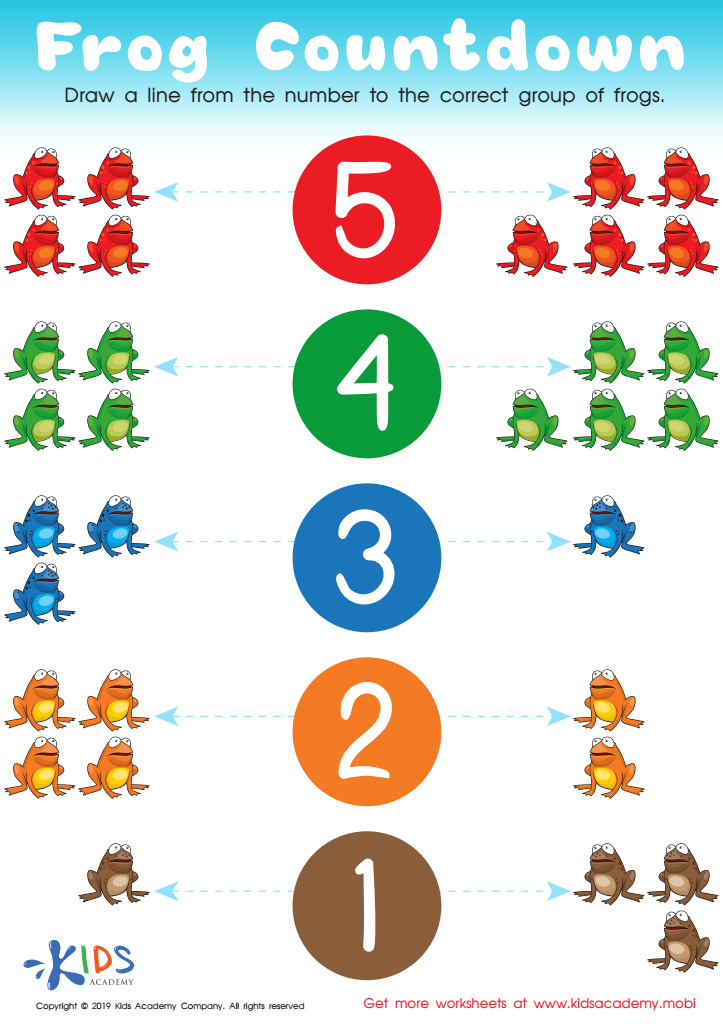
Counting and writing skills are honed with this kindergarten tracing worksheet. Guide Mary in counting the items in her bag then trace the correct number for each. Your child will get a great head start on essential kindergarten skills!
Kindergarten Number Tracing: Mary's Bag Worksheet
Worksheet
Frog Countdown Worksheet

Frog Countdown Worksheet

Make learning fun for kids with traceable printouts! This exercise has kids counting frogs and drawing a line to match the number. Expand their knowledge with activities like this, beyond the basics they learn in school. Help them explore new ways of learning and make it enjoyable.
Frog Countdown Worksheet
Worksheet
Kindergarten number tracing worksheet pdf

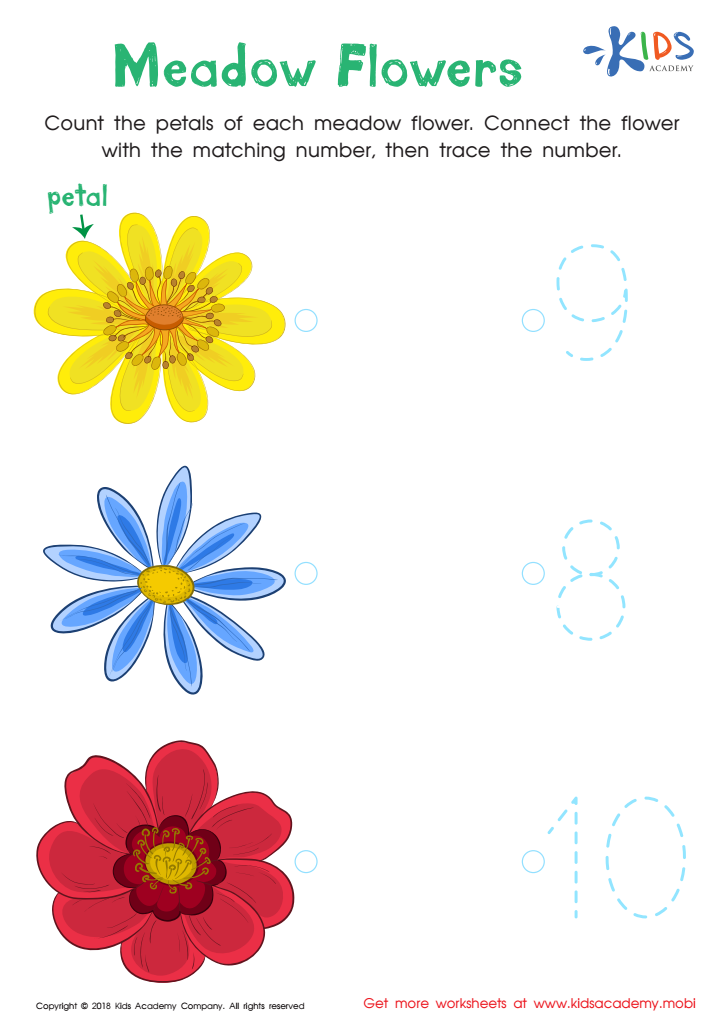
Kindergarten Number Tracing: Medow Flowers Worksheet

Take your child to the garden to count flower petals and trace numbers with this fun kindergarten PDF worksheet. They'll learn to count and write, all while enjoying the sweet scent of the flowers.
Kindergarten Number Tracing: Medow Flowers Worksheet

Worksheet


Number sequencing is a fundamental mathematical skill that involves understanding the order of numbers. For 6-year-olds, mastering number sequencing lays the groundwork for essential cognitive abilities like counting, addition, and even more complex arithmetic as they grow. Parents and teachers should care about this because it not only fosters numerical fluency but also cultivates logical thinking and problem-solving skills.

When children learn to sequence numbers, they grasp abstract concepts that can significantly enhance their overall comprehension of math. This skill contributes to their confidence, building a solid foundation for future learning. It also plays a crucial role in daily life—whether it's counting objects, telling time, or managing money.

Moreover, number sequencing is linked to various developmental milestones. It encourages pattern recognition, enhances memory, and develops the ability to categorize, which are important critical thinking skills. Engaging with children in sequencing activities can also create a positive learning environment, strengthening parent-child or teacher-student bonds.

Ultimately, by emphasizing number sequencing, parents and teachers empower children not only to achieve academic success but also to cultivate a lifelong appreciation for mathematics. Investing in this foundational skill is a step towards nurturing competent and confident learners.