Understanding place value Normal Numbers Worksheets for 6-Year-Olds
5 filtered results
-
From - To
Our "Understanding Place Value – Normal Numbers Worksheets for 6-Year-Olds" are expertly designed to make learning math engaging and fun. These printable worksheets help children grasp the concept of place value, a fundamental math skill crucial for their academic development. Each worksheet features vibrant illustrations and interactive exercises that simplify complex ideas, making it easier for your child to understand ones, tens, and hundreds. Perfect for classroom activities or at-home practice, these worksheets are tailored to support and challenge young learners, ensuring they gain confidence and proficiency in handling numbers. Let your child take the first step towards math mastery today!
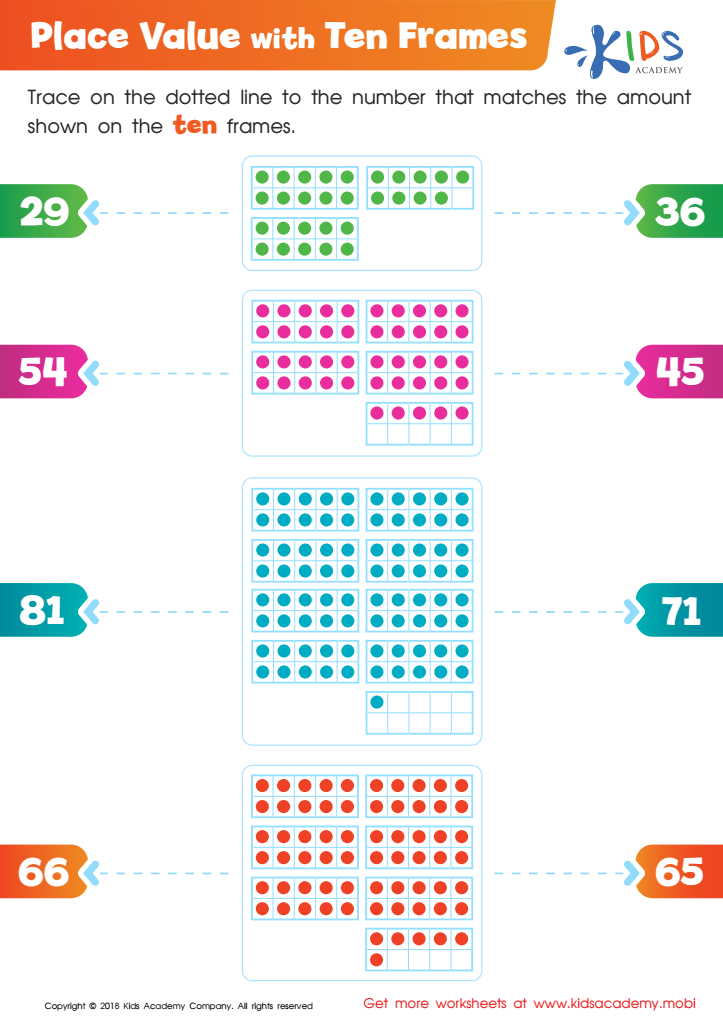
Place Values with Ten Frames Worksheet
 Assign to My Students
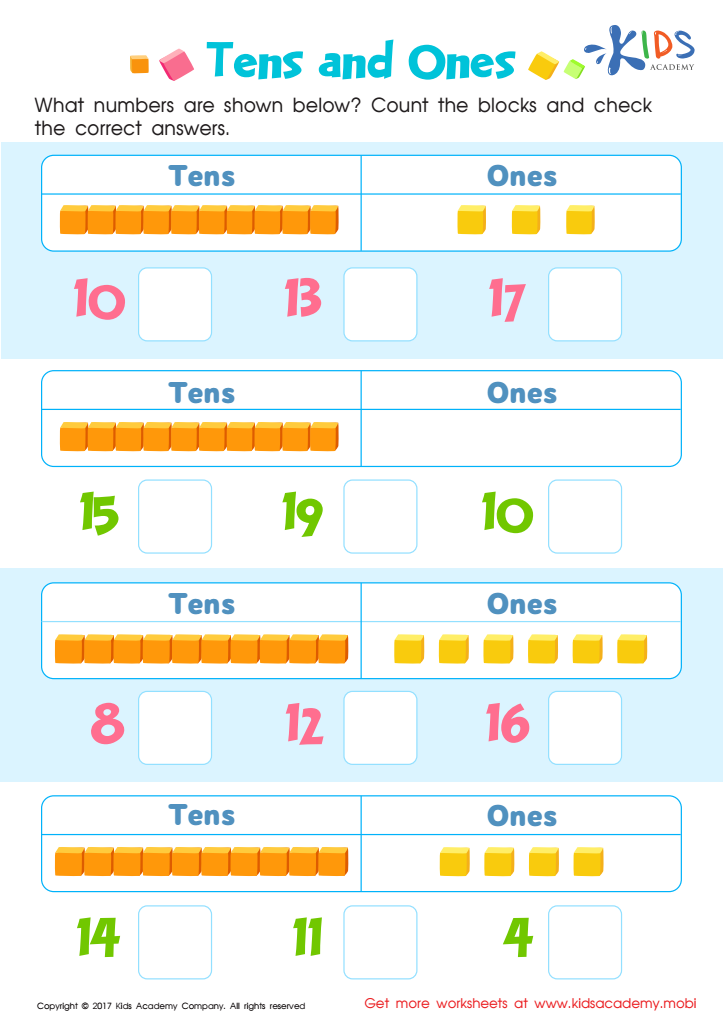
Tens and Ones Worksheet
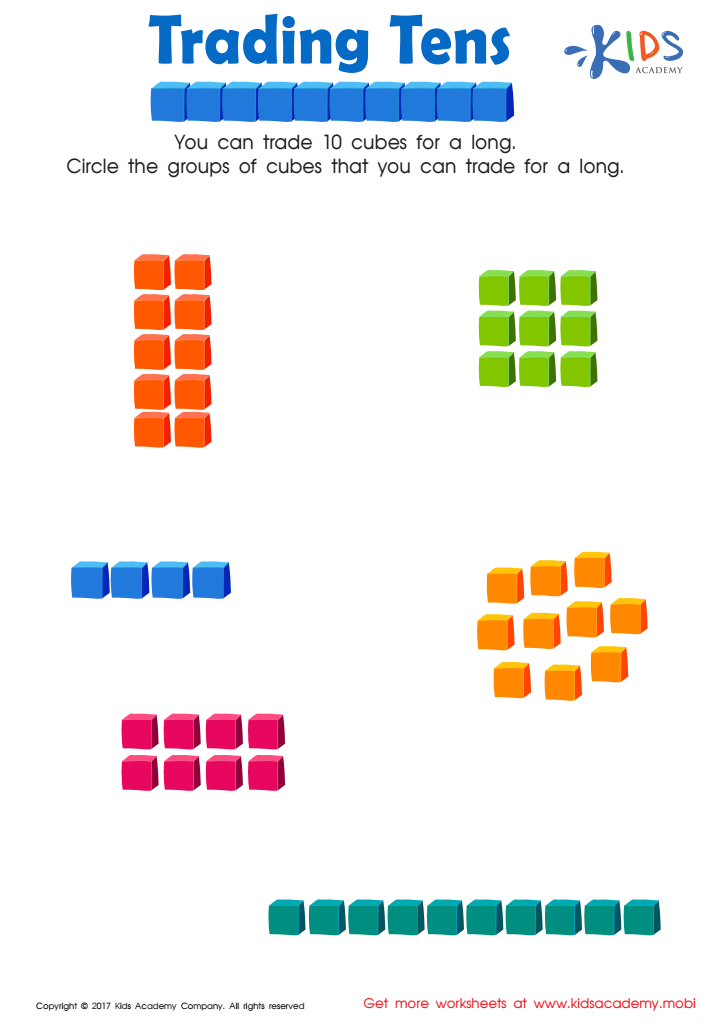
Trading Tens Worksheet
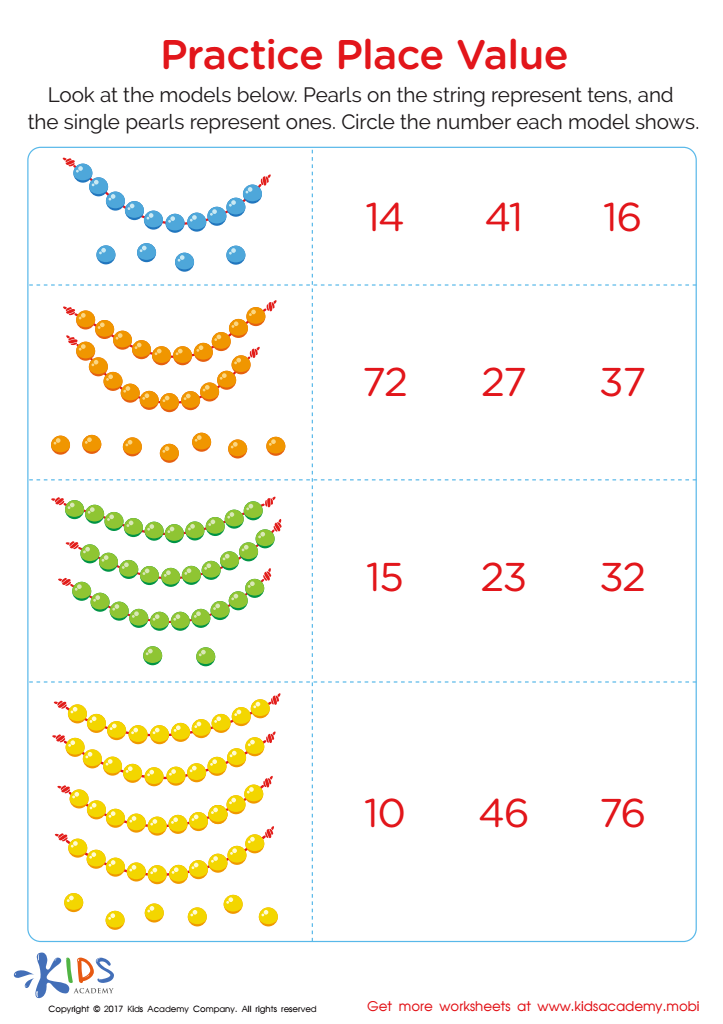
Practice Place Value Printable
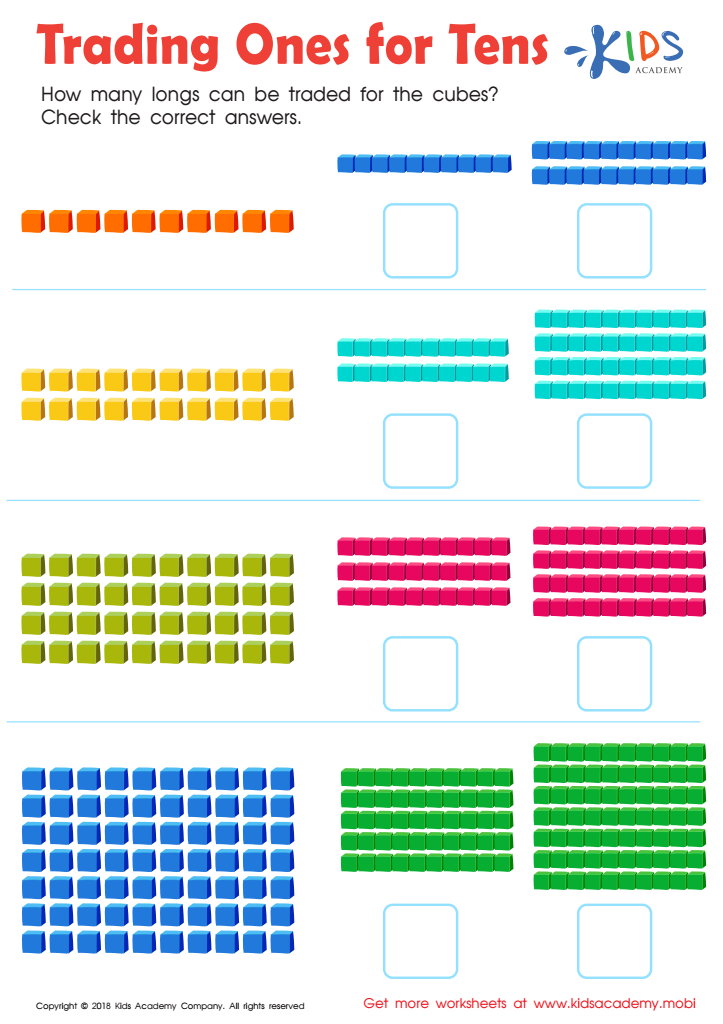
Trading Ones for Tens Worksheet: Part 2








Understanding place value is fundamental for 6-year-olds as it forms the backbone of their future mathematical learning. For parents and teachers, instilling a solid grasp of this concept early on can pave the way for more advanced arithmetic skills, such as addition, subtraction, multiplication, and division. Place value helps children comprehend that the position of a digit in a number determines its value—making clear why the number 21 is different from 12, even though the digits are the same.
A strong grasp of place value enhances a child's number sense, enabling them to break down complex problems into more manageable parts. For instance, knowing that 30 + 4 equals 34 because the '3' stands for three tens builds logical thinking and problem-solving skills. This understanding also aids in making learning more concrete rather than abstract, helping young kids make sense of why they "carry the one" during addition or "borrow" during subtraction.
Fostering this foundational math skill early on reduces anxiety and boosts confidence in handling numbers, promoting a positive attitude towards math. Additionally, this skill is applicable beyond the classroom in real-life situations such as counting money or measuring ingredients, making it essential for functional numeracy. Hence, both parents and teachers should prioritize place value education to set children on a path toward lifelong mathematical understanding and competence.








