Understanding Sequences Normal Math Worksheets for 6-Year-Olds
3 filtered results
-
From - To
Help your 6-year-old master the foundational math skill of sequences with our engaging and age-appropriate worksheets. These thoughtfully designed activities guide young learners through the basic concepts of order and pattern recognition, essential for their mathematical development. Perfect for both classroom and home use, our worksheets provide a fun and interactive way for children to practice sequencing with colorful images and relatable themes. Ideal for first graders, these printable resources will support your child's math journey, ensuring they build confidence and proficiency. Download today and watch their understanding of sequences grow.
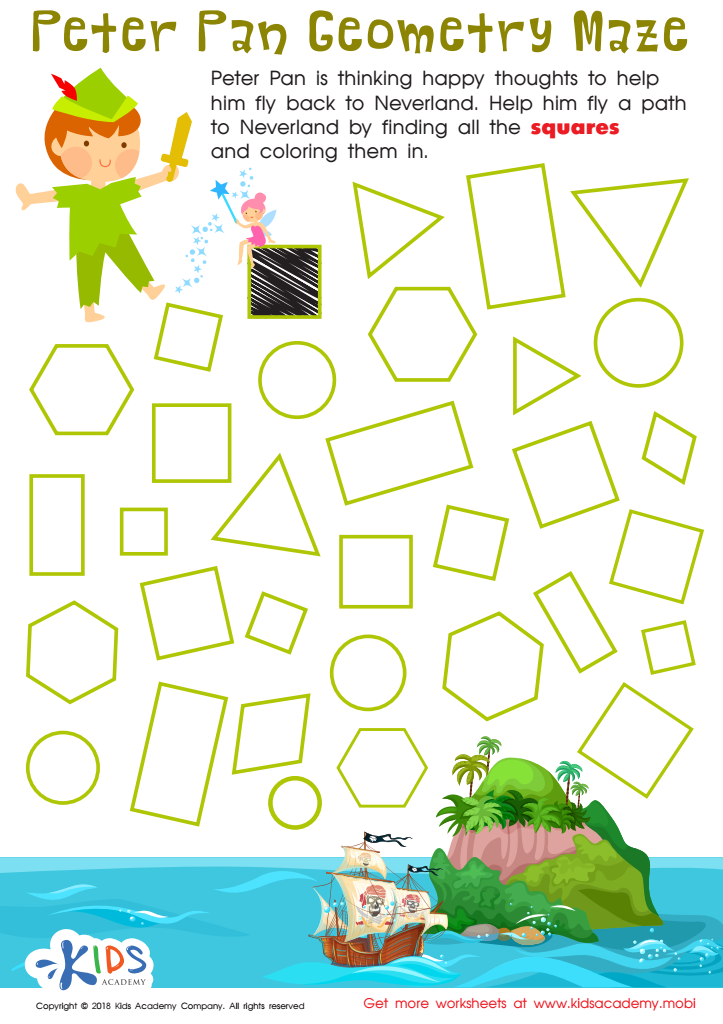
Peter Pan Worksheet
 Assign to My Students
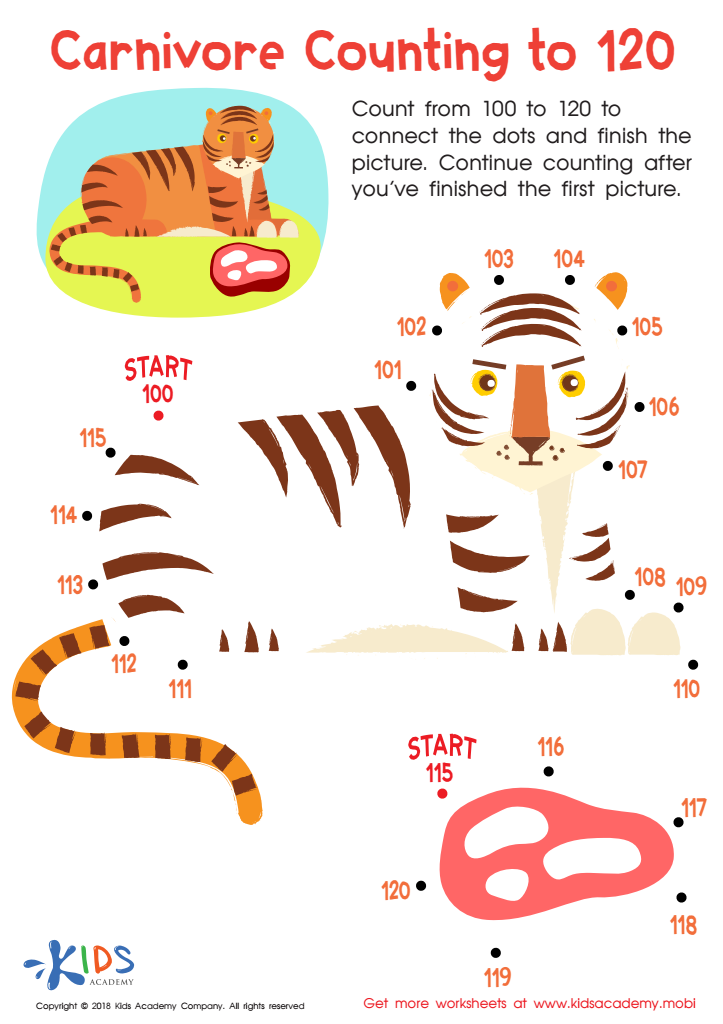
Carnivore Counting to 120 Worksheet
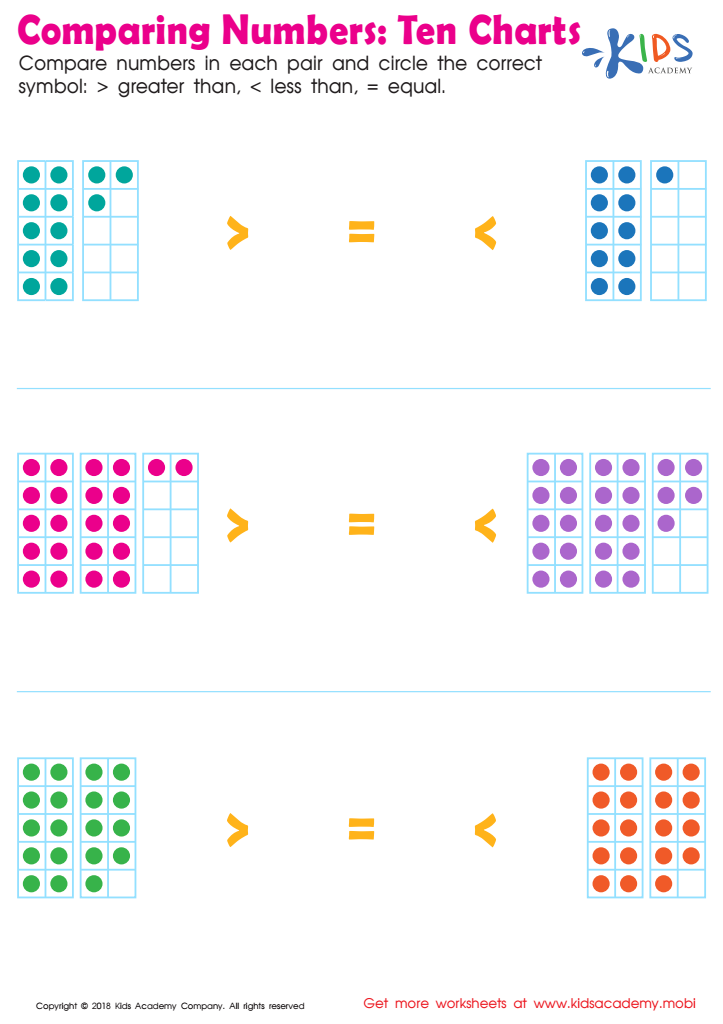
Ten Charts Worksheet







Understanding sequences is a fundamental mathematical skill that serves as a building block for many higher concepts, making it essential for young learners, especially 6-year-olds. For parents and teachers, fostering an understanding of sequences in children is crucial as it enhances their number sense and logical thinking abilities. When children grasp the idea of sequences—such as the order of numbers, patterns in objects, or daily routines—they develop a structured way of thinking that is critical for problem-solving.
Empowering 6-year-olds with this skill lays a strong foundation for understanding more complex mathematical concepts, such as addition, subtraction, and even algebra, in their later years. Patterns and sequences are not just limited to math; they help in learning sequences of events, understanding stories, following instructions, and developing language skills. For instance, recognizing the sequence of events in a story aids in comprehension and retention.
Furthermore, sequence recognition nurtures cognitive development. It enhances memory skills, encourages kids to make predictions about what comes next, and bolsters creativity through pattern generation. Teachers and parents should incorporate playful educational activities that involve sequences to make learning engaging and effective. By investing time in teaching sequences, adults support a child's academic growth and critical thinking abilities in a holistic manner.








