Filters

7 filtered results

Clear all filters
Favorites
With answer key
Interactive

7 filtered results

Difficulty Level

Grade


Enhance your 6-year-old's language skills with our engaging Vocabulary Building Normal Reading Fiction Worksheets! Specifically designed for young learners, these worksheets provide fun exercises that promote word recognition and comprehension through captivating stories. Children will explore new vocabulary in context, making connections that enrich their understanding and inspire their love for reading. Each worksheet combines creativity and educational value, featuring illustrations that spark curiosity and engagement. Foster a lasting literacy foundation while boosting confidence in reading with our thoughtfully crafted resources. Perfect for at-home or classroom use, these worksheets make vocabulary learning an exciting adventure! Download and watch your child thrive!

Check out this FREE Trial Lesson on Reading Fiction for age 6!

Mystery and Fantasy Stories

Favorites
With answer key
Interactive
  • 6
  • Vocabulary Building
  • Reading Fiction
  • Normal
Poem: My New Kite Worksheet

Poem: My New Kite Worksheet

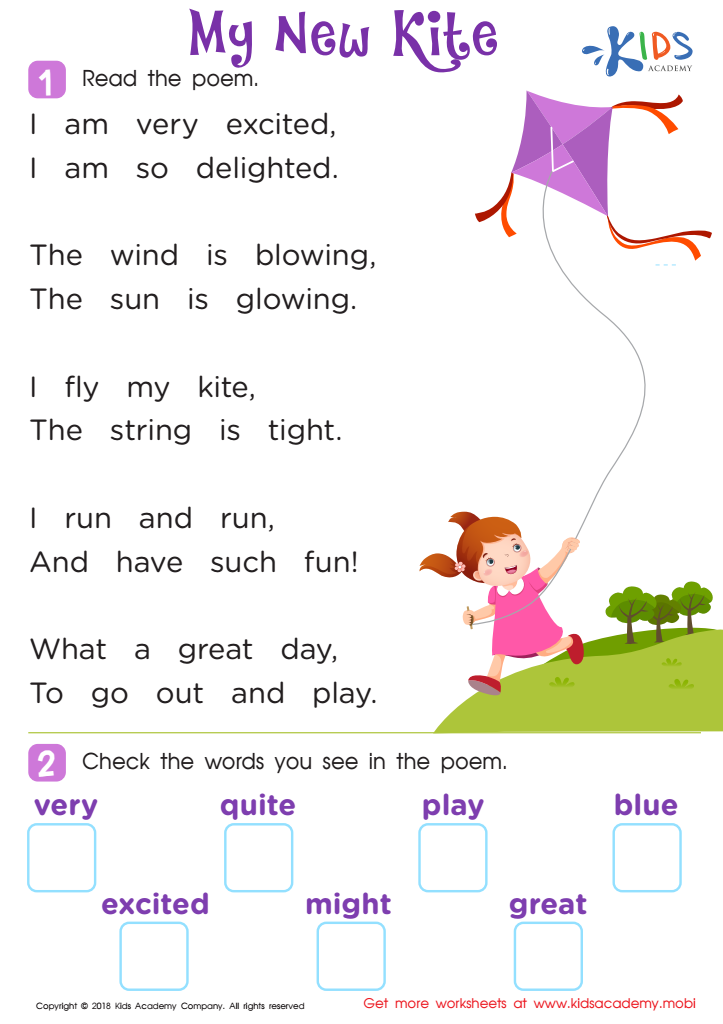
Read a cheerful poem with your child and have them check the boxes next to the words that appear. Then, ask them to identify rhyming words, noting that these won't appear at the bottom of the page. This is a delightful reading activity to help your child remember what they read.
Poem: My New Kite Worksheet
Worksheet
What Am I? Worksheet

What Am I? Worksheet

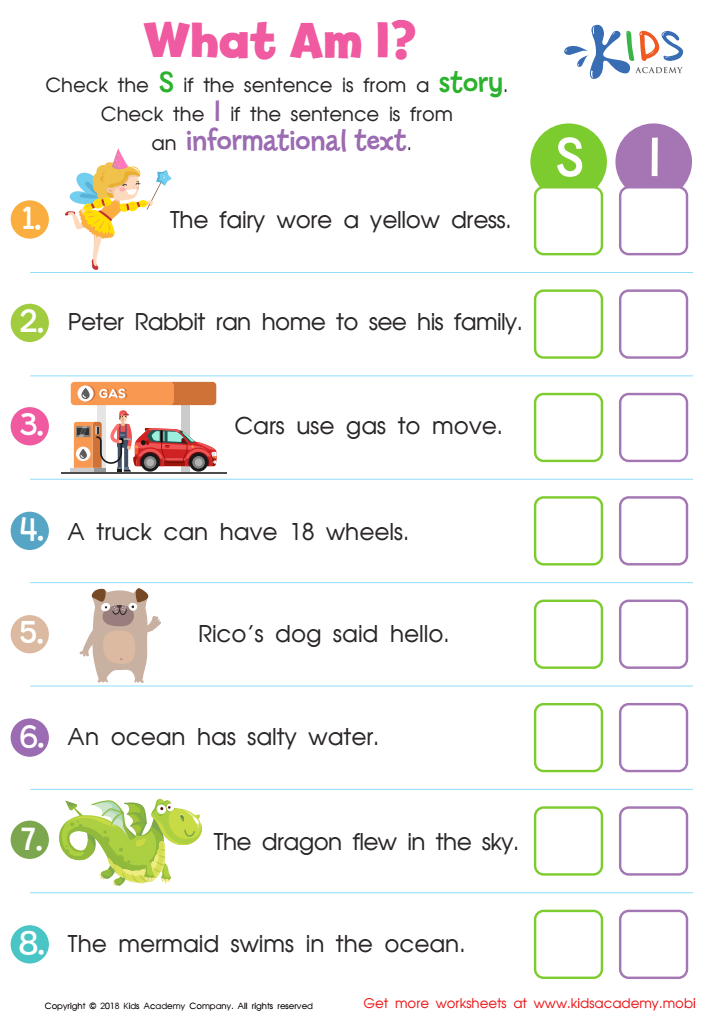
This worksheet assesses students' ability to differentiate between stories and texts they read for facts. Students learn to distinguish between reading for pleasure and reading for information. It includes statements from both a story and an informational text, and students must decide what type of text it is.
What Am I? Worksheet
Worksheet
Three Little Pigs Vocabulary Worksheet

Three Little Pigs Vocabulary Worksheet

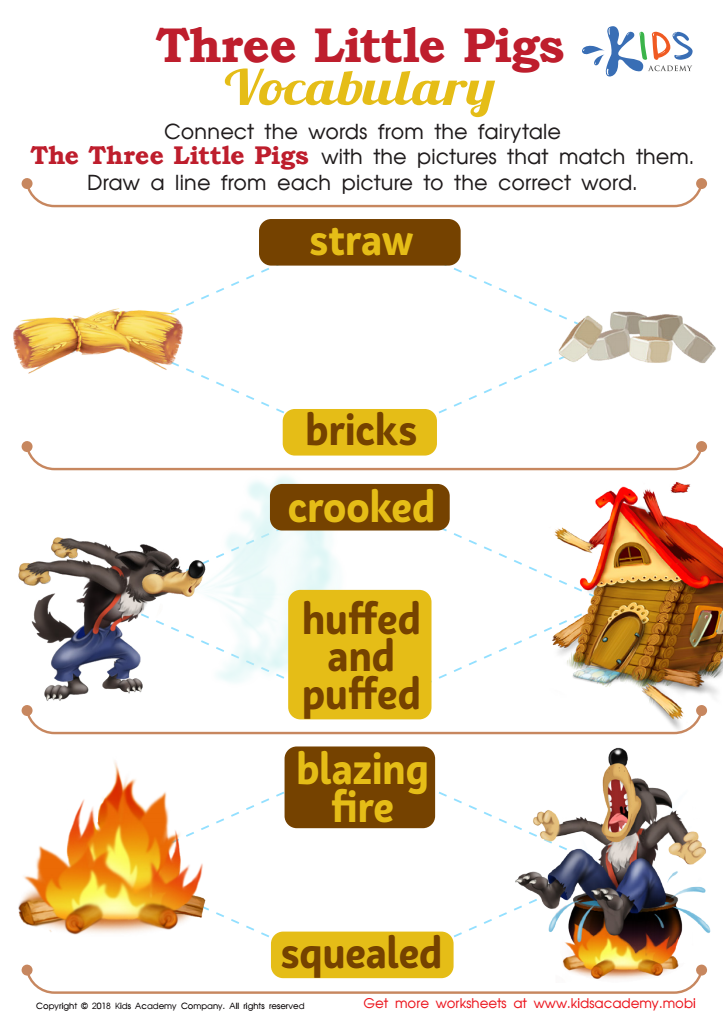
Read the Three Little Pigs to your children. Have them use the tracing sheet to connect the story words with the pictures. This is a fun and educational way to help them build their vocabulary.
Three Little Pigs Vocabulary Worksheet
Worksheet
Little Elephant's Birthday Worksheet

Little Elephant's Birthday Worksheet

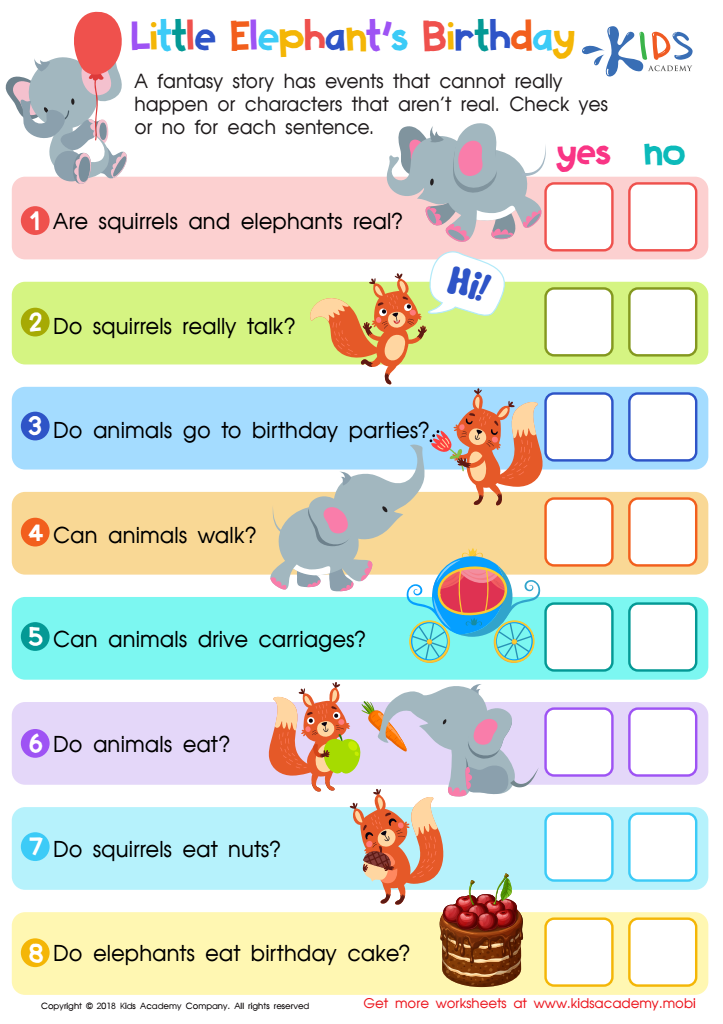
It's Little Elephant's birthday! Help your students celebrate with this fun worksheet full of colors and pictures. Deciding which questions are facts and which are fiction will help them differentiate between fantasy stories and reality. Let them have fun learning why certain elements of fantasy can't be true!
Little Elephant's Birthday Worksheet
Worksheet
The Boy Who Cried Fox Worksheet

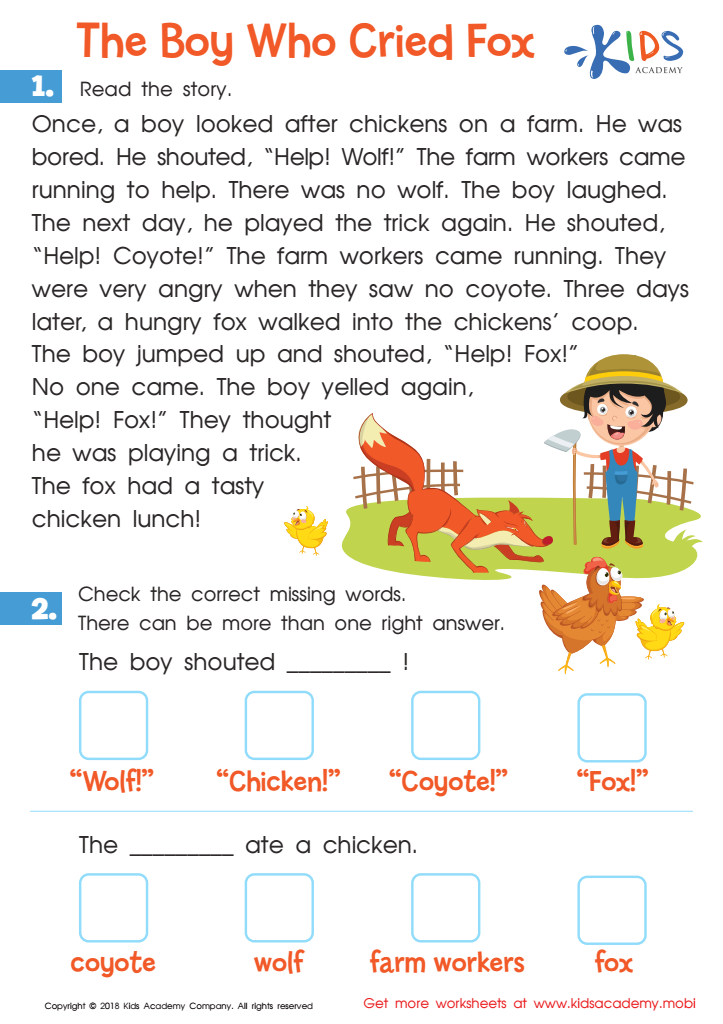
The Boy Who Cried Fox Worksheet

This worksheet encourages students to recall details from a story and answer questions to test their comprehension. Perfect for reading lessons, enrichment, or extra help.
The Boy Who Cried Fox Worksheet
Worksheet
Sight Words: A Day at the Park Worksheet

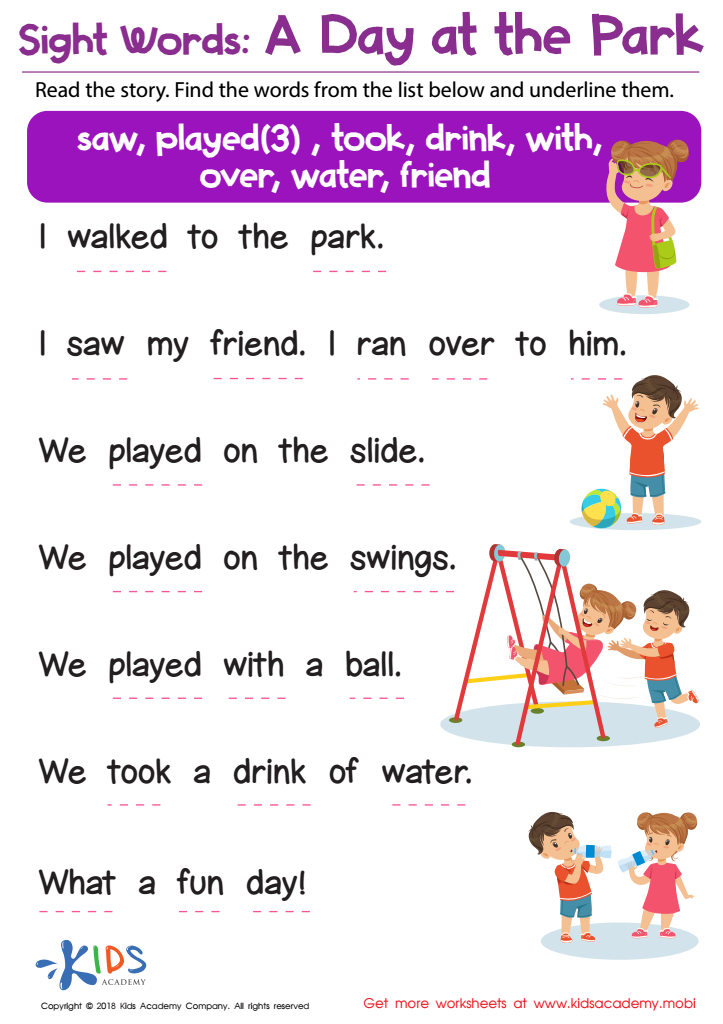
Sight Words: A Day at the Park Worksheet

This worksheet offers kids practice reading sight words in a story. With picture clues and repetitive wording, they'll work with words that can't be sounded out to reinforce their learning. This is an important step in the reading process that helps kids become more confident readers.
Sight Words: A Day at the Park Worksheet
Worksheet
Worksheet: The Boy Who Cried Wolf

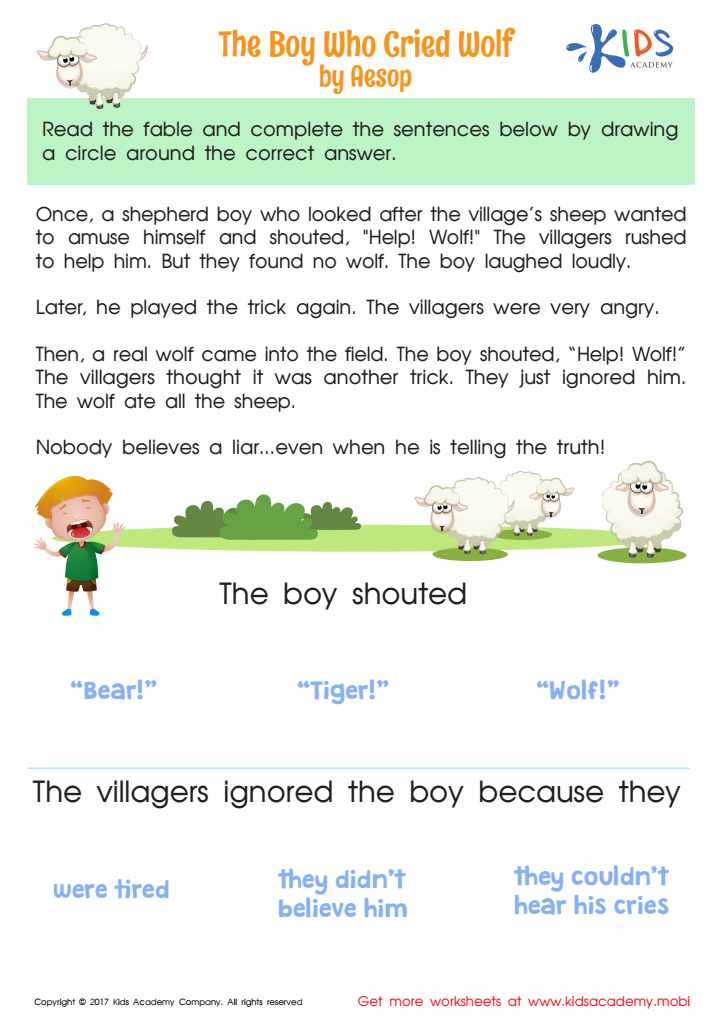
The Boy Who Cried Wolf Worksheet

Test your child's reading comprehension with The Boy Who Cried Wolf worksheet. Read the fable, then answer the questions. Use the text to help your child check their answers are correct. Boost reading skills in a fun, interactive way!
The Boy Who Cried Wolf Worksheet

Worksheet


Vocabulary building through normal reading of fiction is essential for 6-year-olds, as it lays the foundation for their language and literacy skills. At this age, children's brains are like sponges, absorbing new words and concepts. Engaging with fictional stories introduces them to varied vocabulary and vibrant descriptions, helping them understand language in context. This enriches their ability to express thoughts and feelings, fostering communication skills that are crucial for social interactions and academic success.

Additionally, fiction stimulates imagination and encourages critical thinking as children explore characters, settings, and plots. These cognitive connections empower them to make inferences, predict outcomes, and develop stories of their own. Moreover, vocabulary acquisition at this stage supports overall reading comprehension, which becomes vital as they progress to more complex texts.

Parents and teachers play a transformative role by selecting age-appropriate fiction that captivates and inspires. Encouraging discussions about the stories, asking open-ended questions, and exploring new words together enhances learning and makes it enjoyable. When adults prioritize vocabulary building through reading, they cultivate a culture of literacy that can impact a child's future educational journey, affection for reading, and lifelong learning skills. Hence, nurturing vocabulary in early readers is a critical investment in their communication and cognitive development.