Critical Thinking Normal Community Worksheets for 6-Year-Olds
4 filtered results
Difficulty Level
Grade
Age
-
From - To
Subject
Activity
Standards
Explore our engaging "Critical Thinking Normal Community Worksheets for 6-Year-Olds" designed to foster young minds' analytical skills! Perfect for enhancing social studies learning, these interactive worksheets encourage children to think critically about their community and surroundings. Through fun, age-appropriate activities, kids will engage in problem-solving and decision-making exercises, helping them connect real-life situations to their knowledge. These worksheets are ideal for reinforcing classroom lessons or supporting home learning. Equip your child with essential thinking skills while making learning enjoyable! Discover our collection now and watch your child's critical thinking abilities flourish. Perfect for teachers and parents alike!
Favorites
With answer key
Interactive
What is a Law? Worksheet
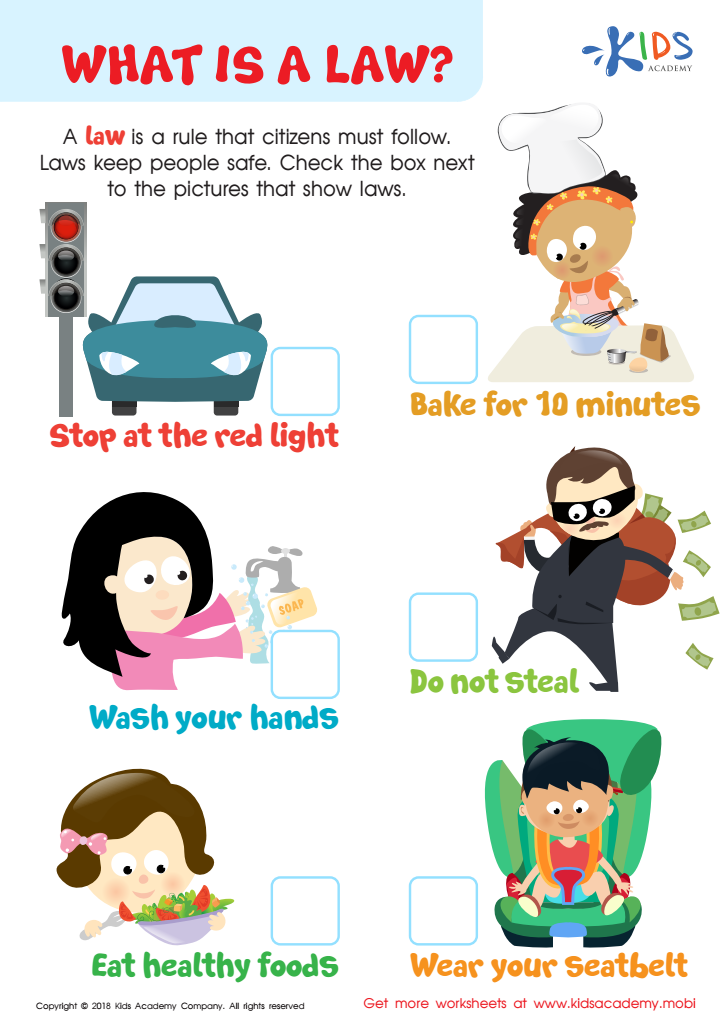
Encourage your students to think about the laws they abide by - at home, school, and the playground. Explain the importance of laws in keeping us safe, then ask them to check the box next to the pictures depicting different laws in a worksheet.
 Assign to My Students
What is a Law? Worksheet
Worksheet
Fair or Unfair Worksheet
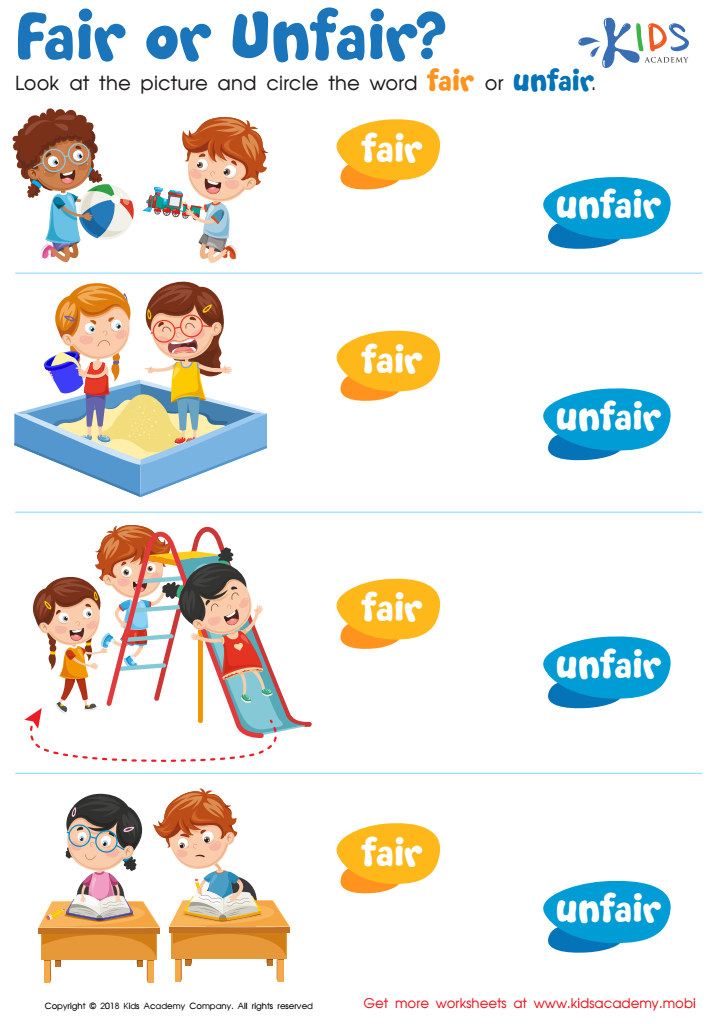
Look at the pictures in this worksheet with kids. Can they tell if the actions are fair or unfair? Help them decide and circle the appropriate option. When something causes harm to one person, it is unfair; when all parties benefit, it is fair.
Fair or Unfair Worksheet
Worksheet
What Do Teachers Need Worksheet
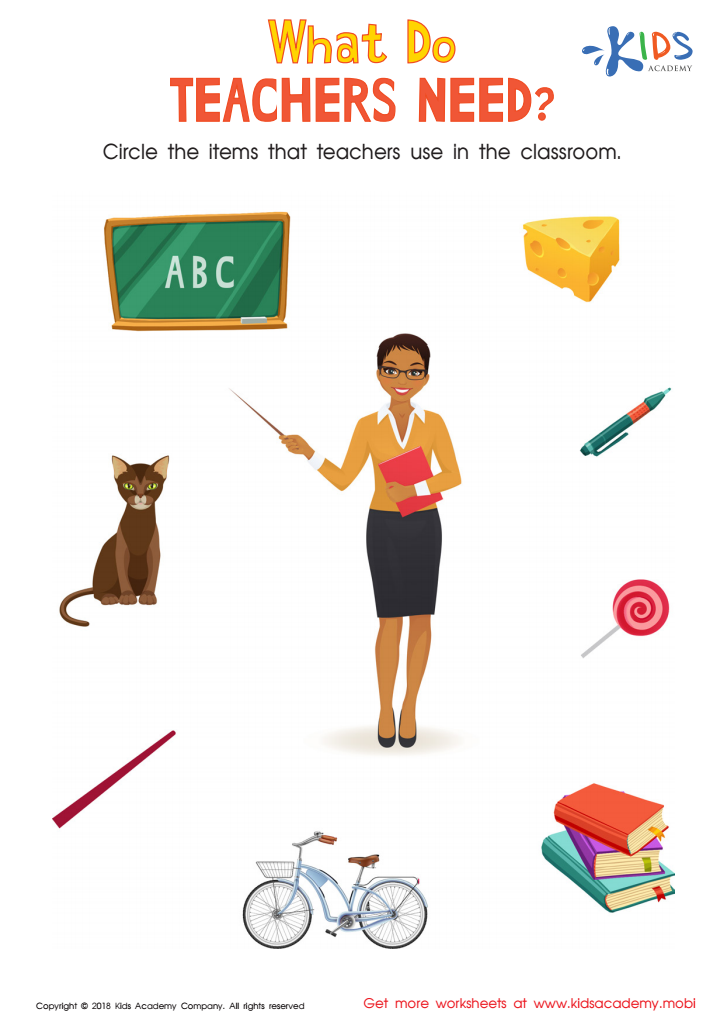
This interactive worksheet tasks kindergarten students with identifying essential items a teacher needs in a classroom. They will be asked to circle items, helping them learn what teachers need to have in their classrooms.
What Do Teachers Need Worksheet
Worksheet
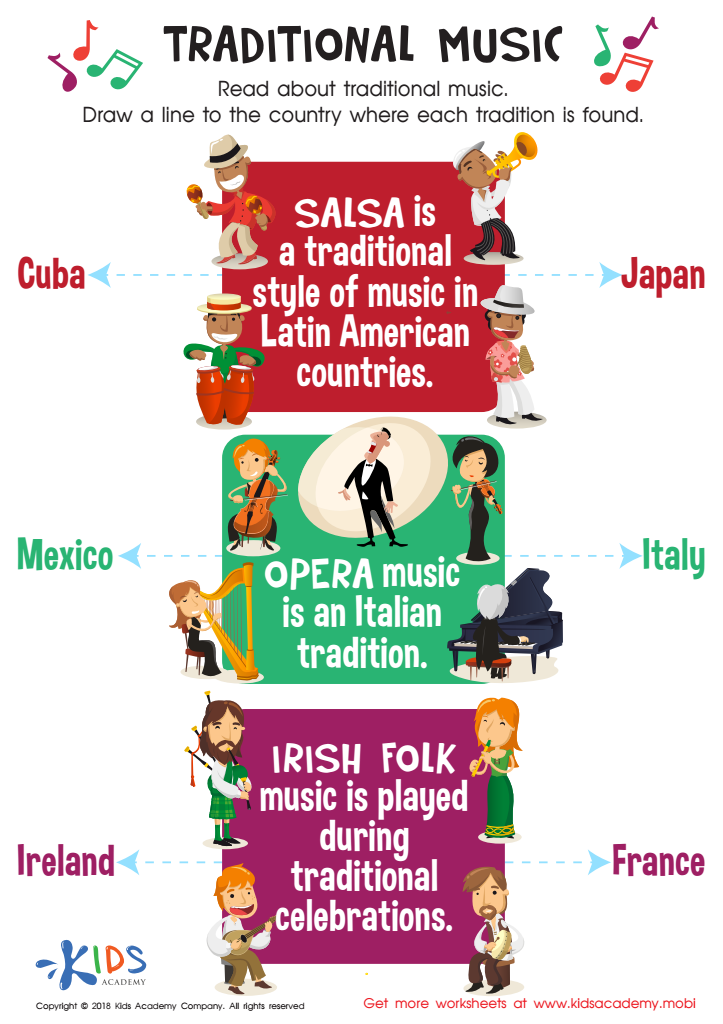
Traditional Music Worksheet
Exploring different countries' music is a great way for global learners to appreciate their place in the world. This worksheet helps them match music - like Salsa and Irish Folk - to various geographic regions with colorful visuals. It boosts reading comprehension while supporting their cultural understanding.
Traditional Music Worksheet
Worksheet
Join Kids Academy for Free
Who is primarily going to use this learning content?








Critical thinking skills are essential for children, especially at the age of six when they are developing the foundational cognitive abilities that will influence their learning and problem-solving throughout life. Parents and teachers should care about fostering a Critical Thinking Normal Community for this age group because it promotes inquiry, creativity, and independence.
Firstly, engaging children in critical thinking exercises encourages them to ask questions, analyze situations, and make informed decisions. This intellectual curiosity lays the groundwork for effective learning and helps to develop self-esteem as children gain confidence in their reasoning abilities. Secondly, it helps children learn how to evaluate information and distinguish between fact and opinion, crucial skills in today’s information-driven world.
Moreover, a supportive community focused on critical thinking allows for collaborative learning. Children can share ideas, challenge each other's perspectives, and learn the value of constructive dialogue. This social interaction nurtures emotional intelligence, teaching them about empathy and respect for diverse viewpoints.
Ultimately, creating an environment that values critical thinking prepares kids not just for school, but for life. It empowers them to become thoughtful, active participants in their own education and society, equipping them with skills that will enhance their future opportunities.