Identification skills Normal Social Studies Worksheets for 6-Year-Olds
3 filtered results
Difficulty Level
Grade
Age
-
From - To
Subject
Activity
Standards
Explore our engaging Identification Skills Normal Social Studies Worksheets for 6-year-olds! Designed to promote critical thinking and observational abilities, these worksheets challenge young learners to recognize and categorize various social concepts. From identifying community helpers to understanding family roles, each activity enhances early learning by connecting practical knowledge to everyday experiences. With colorful illustrations and clear instructions, children will enjoy interactive learning while developing essential skills. Perfect for home or classroom use, our printable resources make teaching social studies fun and effective. Help your child build a strong foundation in social understanding today! Visit us for a variety of enriching worksheets!
Favorites
With answer key
Interactive
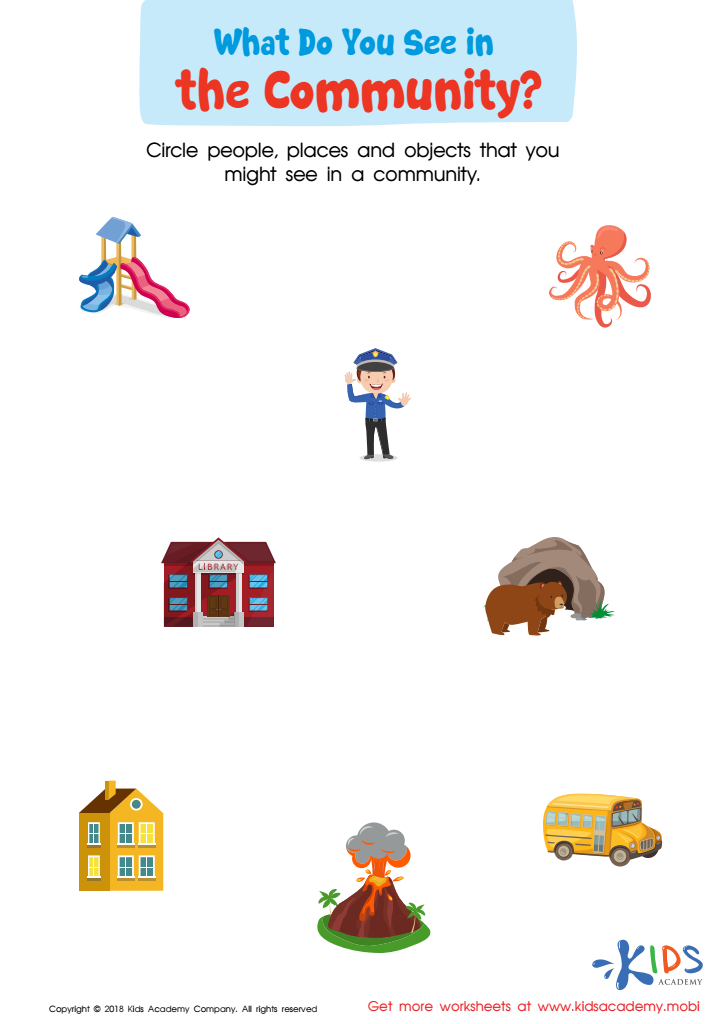
What Do You See in the Community Worksheet
This free social studies PDF can help your children learn about their local community. They'll identify its members, places and objects using engaging and recognizable pictures. As they trace circles around them, they'll also practice fine motor skills. It's a great way to introduce social science concepts and help them understand the importance of community.
 Assign to My Students
What Do You See in the Community Worksheet
Worksheet
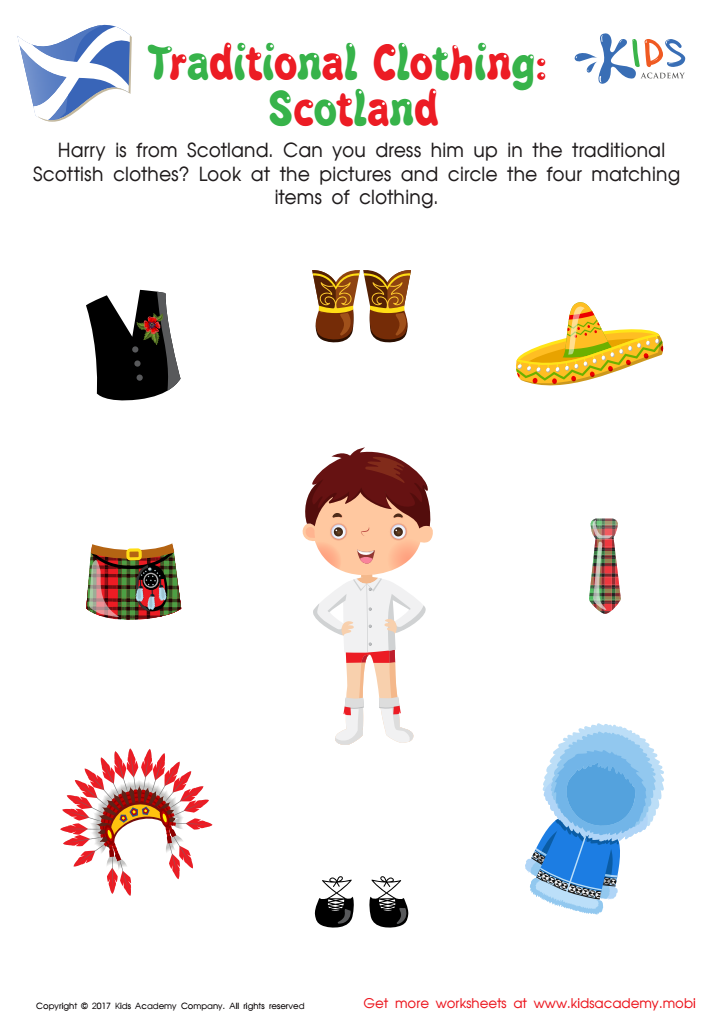
Traditional Clothing in Scotland Worksheet
Explore Scotland's traditional clothing without leaving home! This engaging worksheet will help your kid gain a new appreciation for different cultures. They'll have a blast learning about Scotland's clothing!
Traditional Clothing in Scotland Worksheet
Worksheet
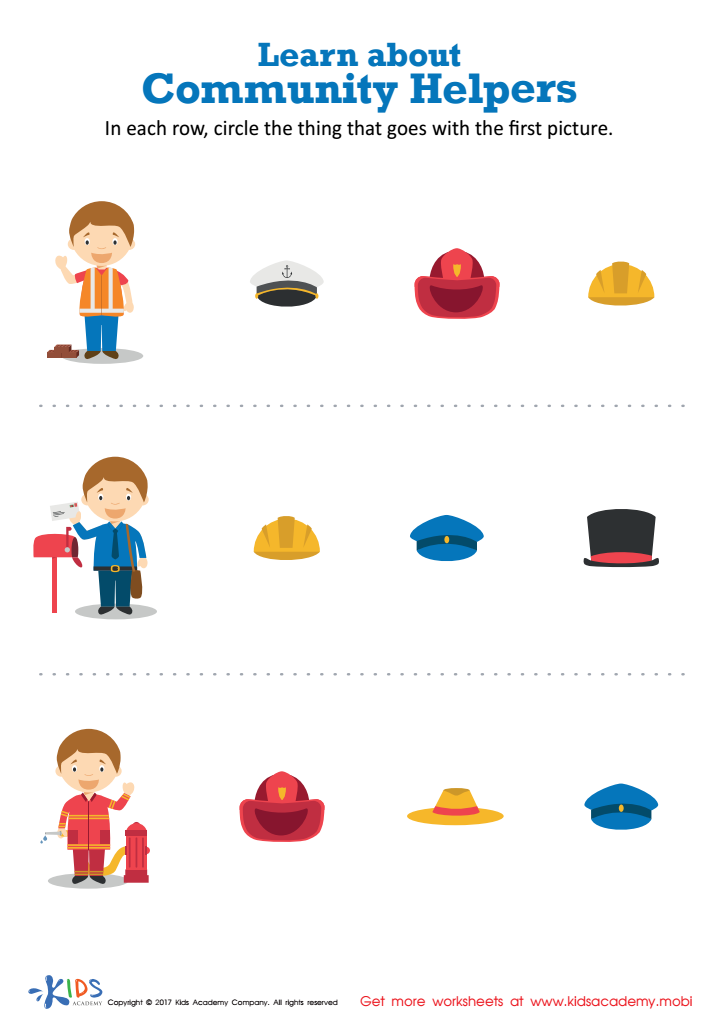
Learn about Community Helpers Printable
Introduce your little one to the amazing and hard-working people in the community with this free worksheet. It will help them use matching and observational skills to match the correct hat to its worker and recognize community helpers. Perfect for early learners, this worksheet uses familiar images to help them gain a deeper appreciation for their community helpers!
Learn about Community Helpers Printable
Worksheet
Join Kids Academy for Free
Who is primarily going to use this learning content?








Identification skills in a normal social studies curriculum for 6-year-olds are crucial for several reasons. At this developmental stage, children begin to explore the world around them and develop a sense of identity within their communities. When parents and teachers prioritize these skills, they empower young learners to recognize and understand social norms, roles, and responsibilities.
By engaging in identification skills, children learn to categorize people, places, and cultural contexts, fostering a sense of belonging. They become more aware of their own traits while understanding and appreciating diversity among their peers. This can lead to enhanced emotional intelligence, as children learn empathy and the significance of cooperation in a community.
Moreover, these skills lay the foundational groundwork for future academic pursuits, fostering critical thinking and inquiry. Understanding concepts such as location, community members, and cultural practices helps cultivate a learner's observational competencies and boosts their communication skills.
Ultimately, teaching identification skills in social studies isn’t just about academic development; it supports social and emotional growth, preparing children to navigate an increasingly interconnected world. For parents and educators, these teachings are integral to nurturing well-rounded, culturally aware citizens.