Reading comprehension Normal Consonant Digraphs Worksheets for Ages 7-8
6 filtered results
-
From - To
Introducing our engaging Reading Comprehension Worksheets focused on Normal Consonant Digraphs for children aged 7-8! These worksheets are designed to enhance literary skills by introducing students to the concept of consonant digraphs—pairings of letters that create distinct sounds, such as "sh" and "ch." With a variety of fun and interactive exercises, students will improve their reading comprehension through context-based activities, such as identifying digraphs in sentences and answering related questions. Perfect for teachers and parents seeking to support literacy development, these worksheets combine education and enjoyment, fostering a love for reading while building essential skills in young learners. Let's make learning fun!
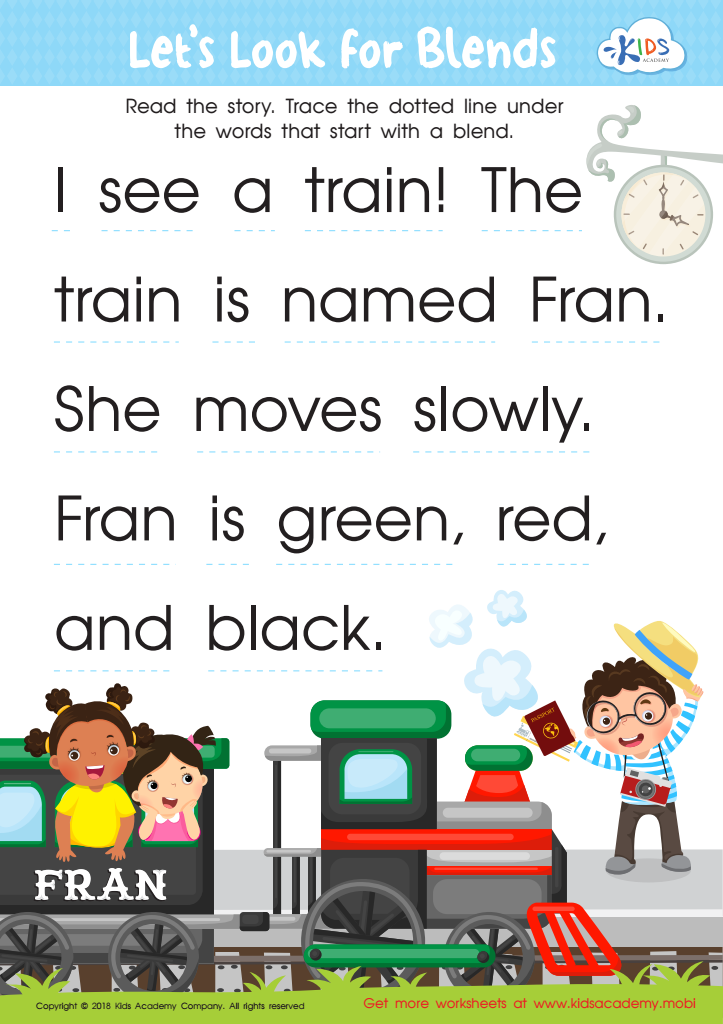
Let's Look for Blends Worksheet
 Assign to My Students
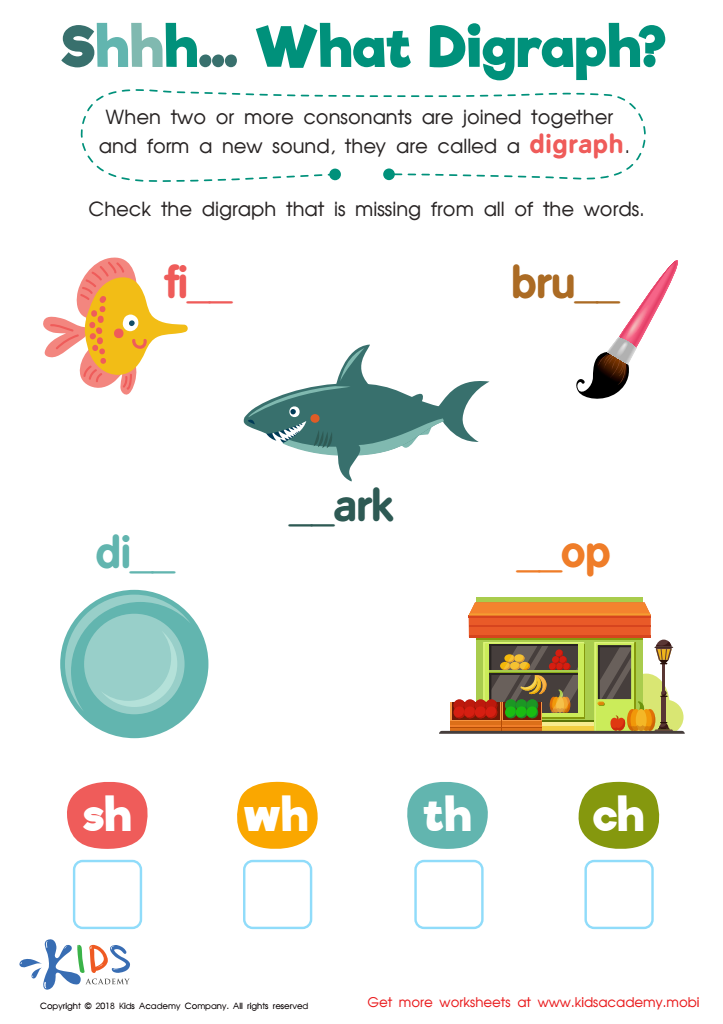
Shhh... What Digraph? Worksheet
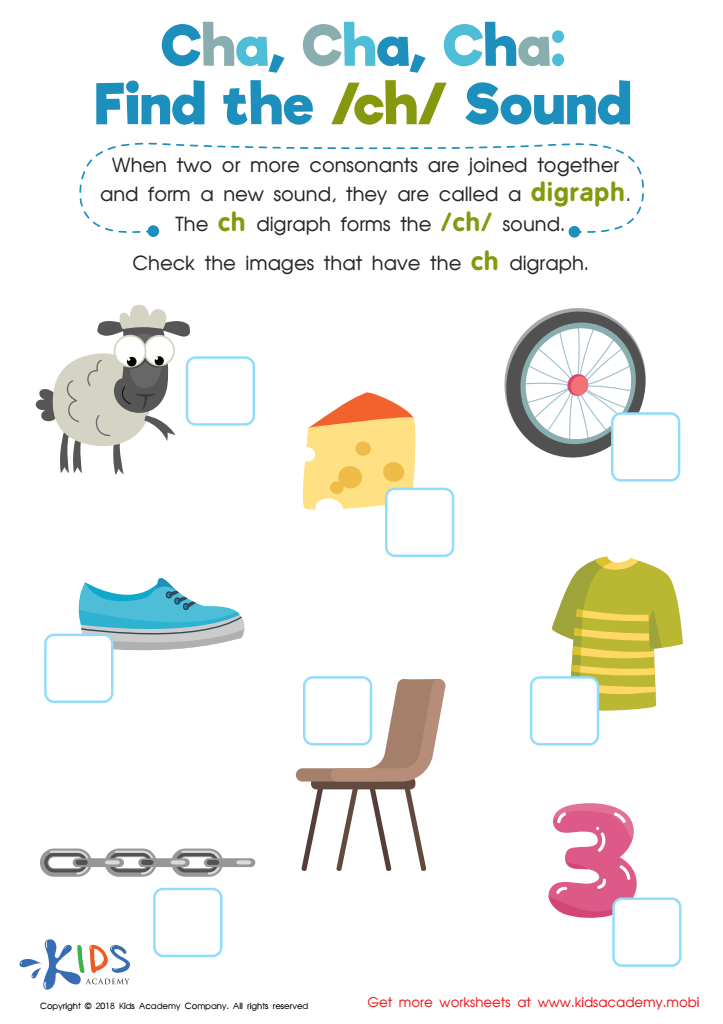
Cha, Cha, Cha: Find the /Ch/ Sound Worksheet
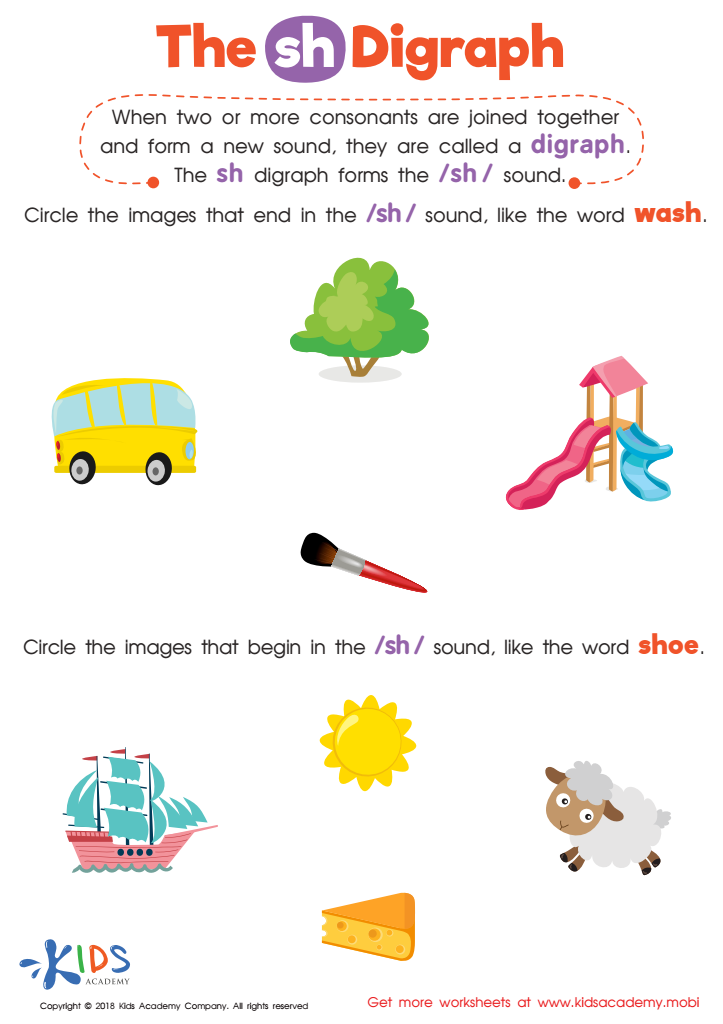
The SH Digraph Worksheet
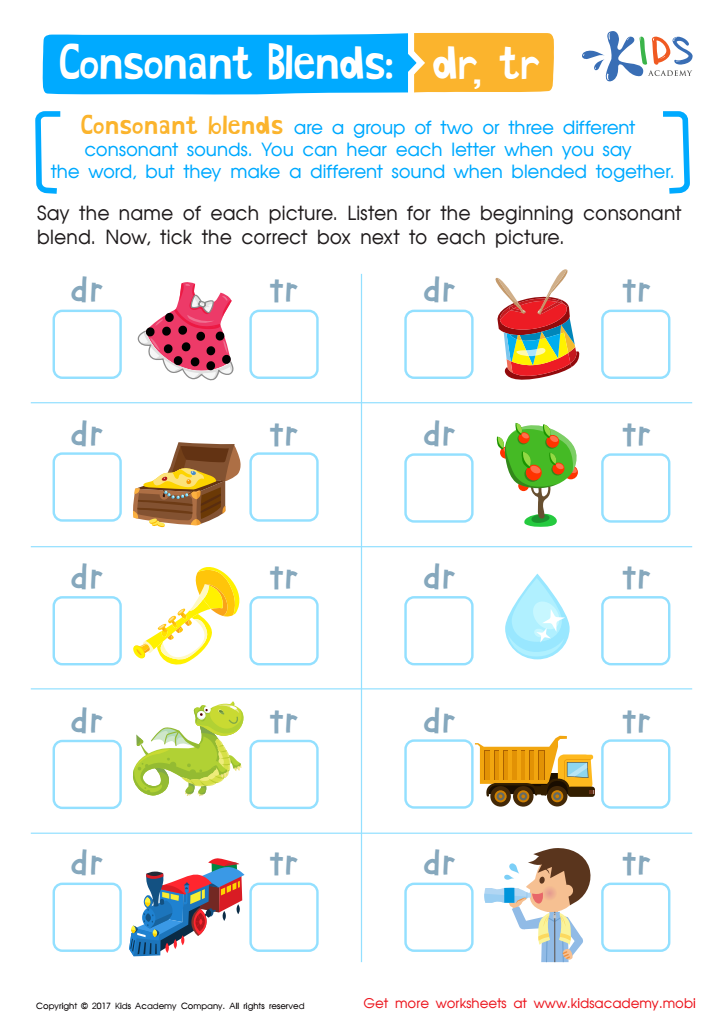
Consonant Blends: "Dr" and "Tr" Printable
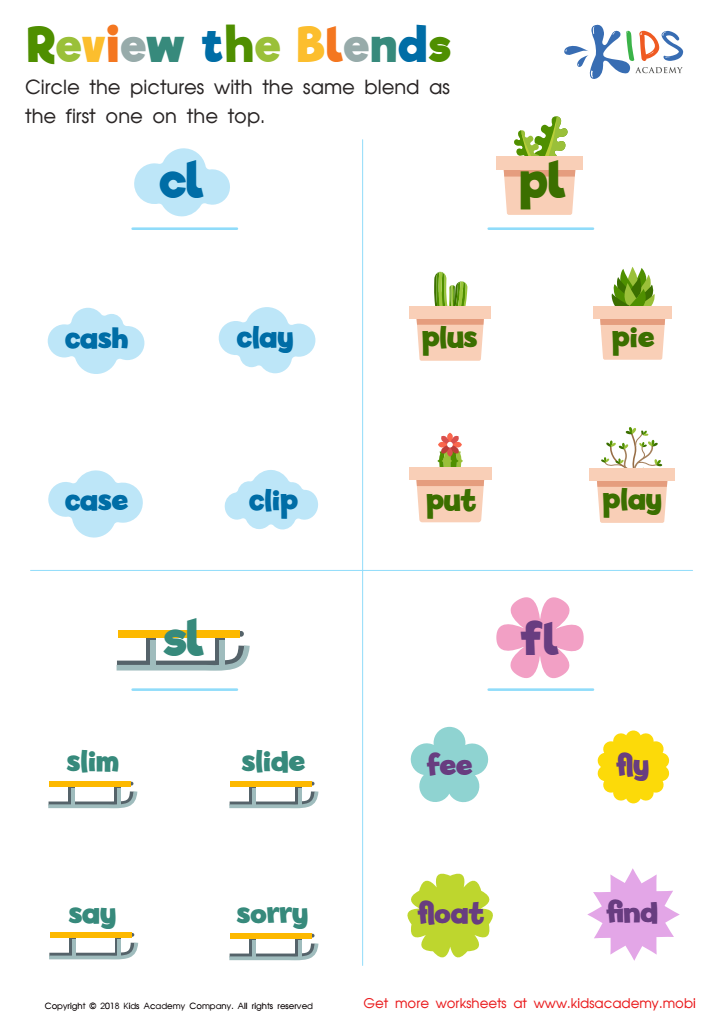
Review the Blends Worksheet


Parents and teachers should emphasize reading comprehension and the understanding of normal consonant digraphs for children ages 7-8, as it lays the foundation for their literacy development. At this age, students encounter increasingly complex texts that require strong decoding and comprehension skills. Consonant digraphs, which are pairs of consonants that create a single sound (like "ch" in "chair" or "sh" in "ship"), are crucial in helping kids read words accurately and fluently.
Teaching digraphs enhances phonemic awareness, leading to improved spelling and larger vocabulary. When children recognize these letter combinations, they can decode new words with greater confidence, which enhances their reading fluency. Additionally, strong comprehension skills enable children to grasp the meaning of the texts they read, fostering a love for reading and critical thinking. Comprehension skills help students make connections to their own experiences and understand the messages within the stories, cultures, and contexts.
By prioritizing understanding digraphs and reading comprehension, parents and teachers equip children with essential tools for academic success in English and beyond, nurturing lifelong learners capable of effectively navigating the world around them. Overall, these skills are vital for a well-rounded, effective education.