Letter recognition Normal Tracing Letters Worksheets for Ages 7-8
9 filtered results
-
From - To
Boost your child's literacy skills with our Letter Recognition Normal Tracing Letters Worksheets designed for ages 7-8. These engaging worksheets from Kids Academy help young learners master the alphabet through fun tracing activities. By practicing with these printable sheets, children enhance their ability to recognize and write letters accurately, paving the way for improved reading and writing abilities. Ideal for both classroom and home use, our worksheets provide a hands-on approach that complements any learning style. Encourage your child's educational journey and build a strong foundation in literacy with our expertly crafted tracing worksheets.
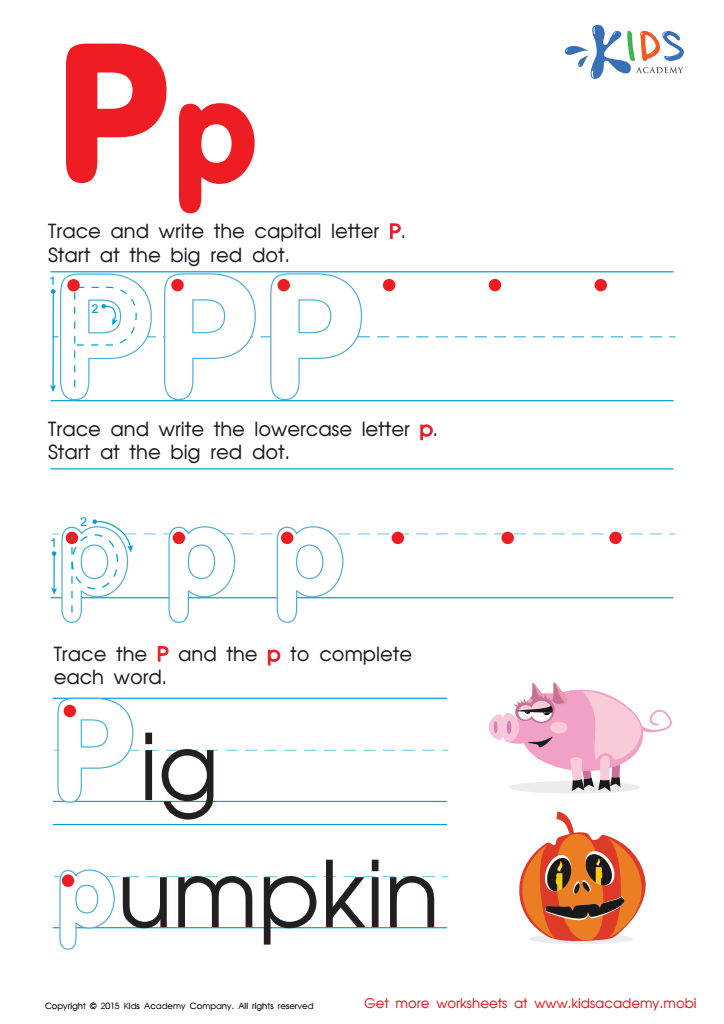
Letter P Tracing Page
 Assign to My Students
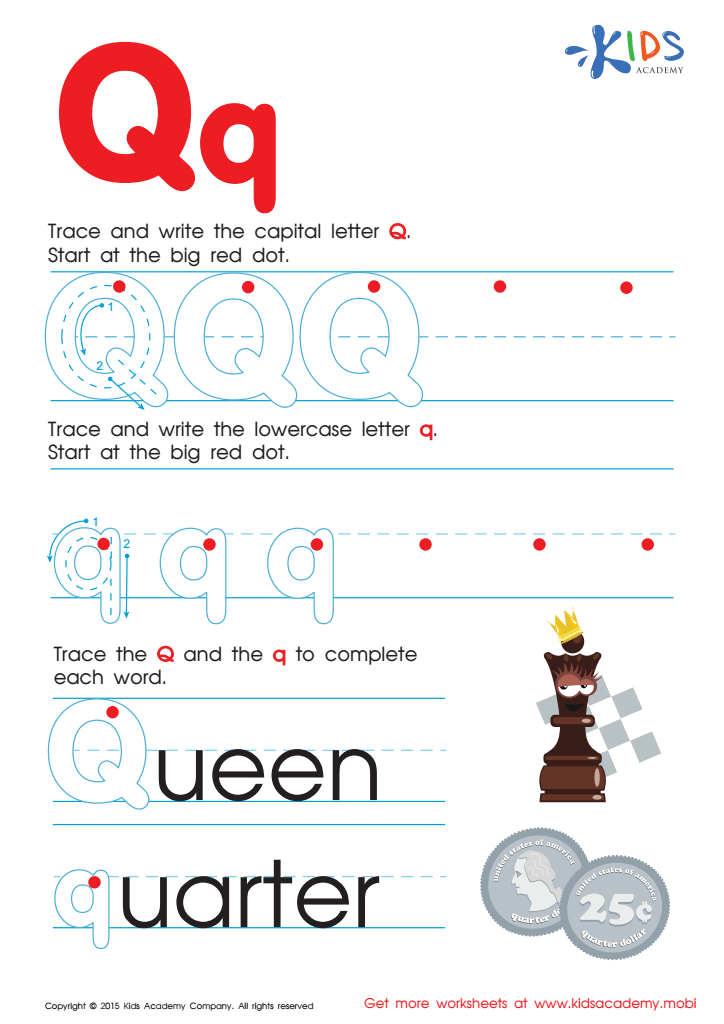
Letter Q Tracing Page
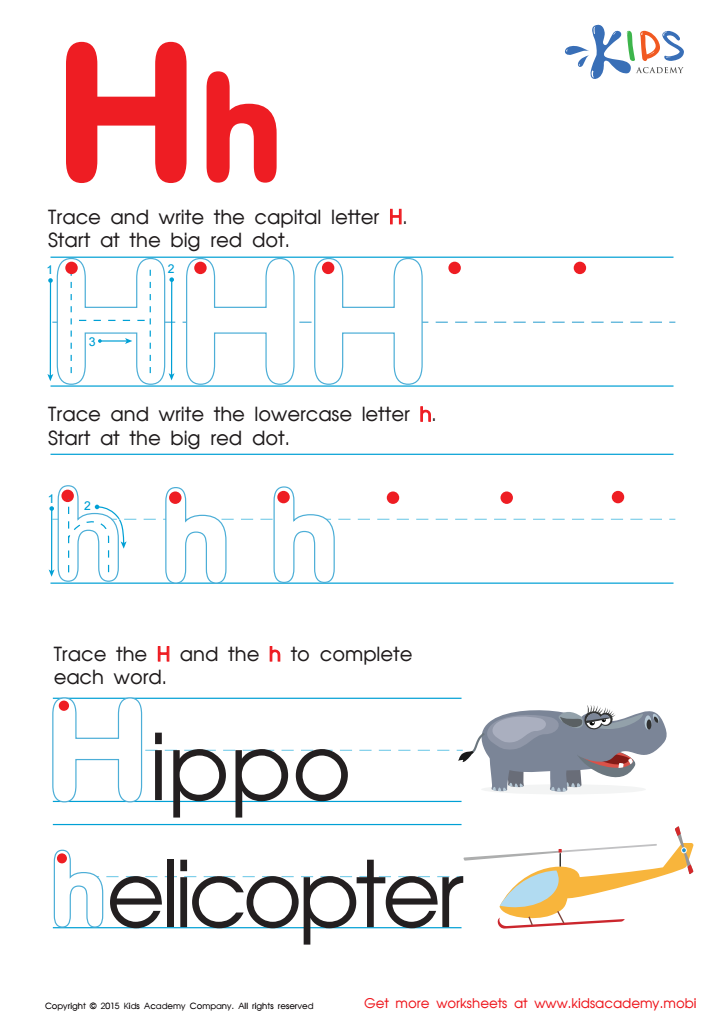
Letter H Tracing Page

Letter G Tracing Page
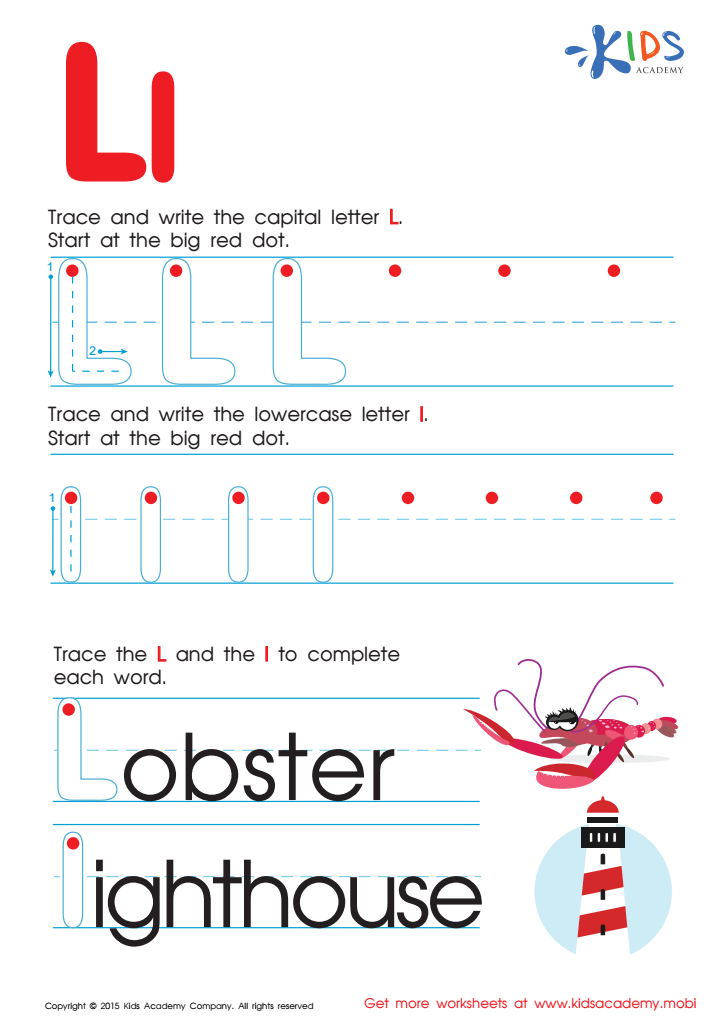
Letter L Tracing Page
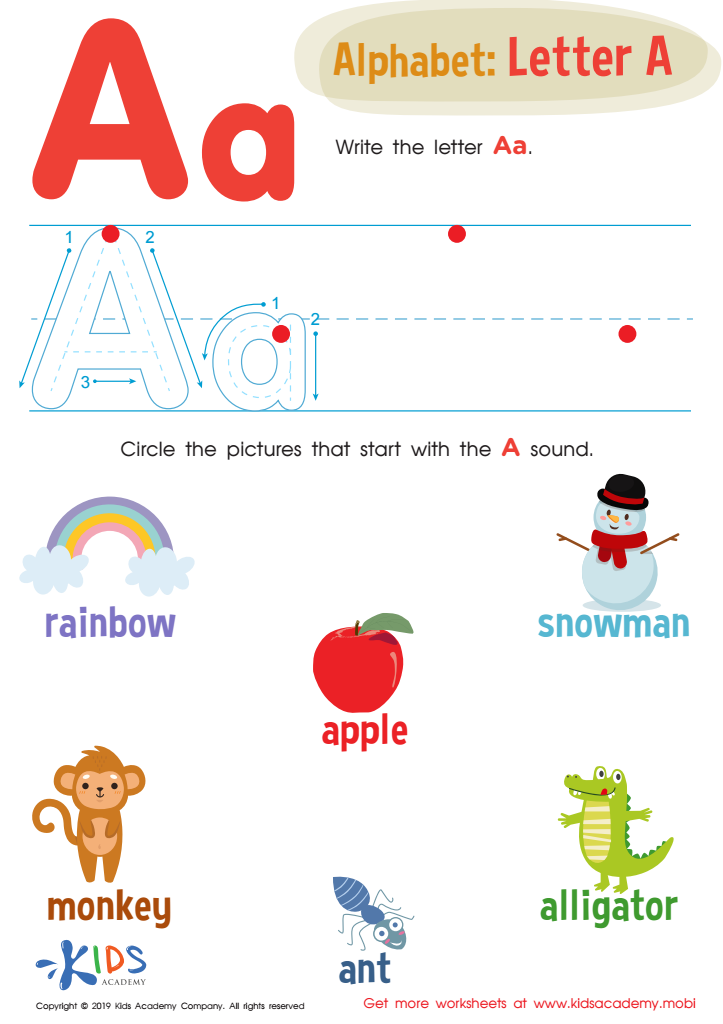
Letter A Tracing Worksheet
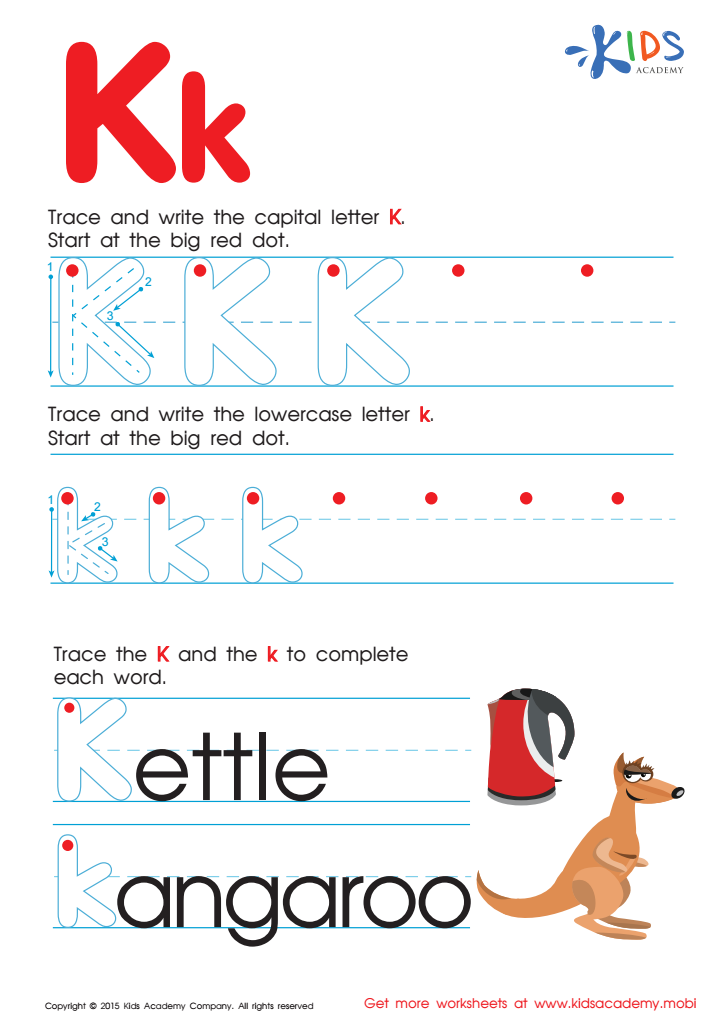
Letter K Tracing Page
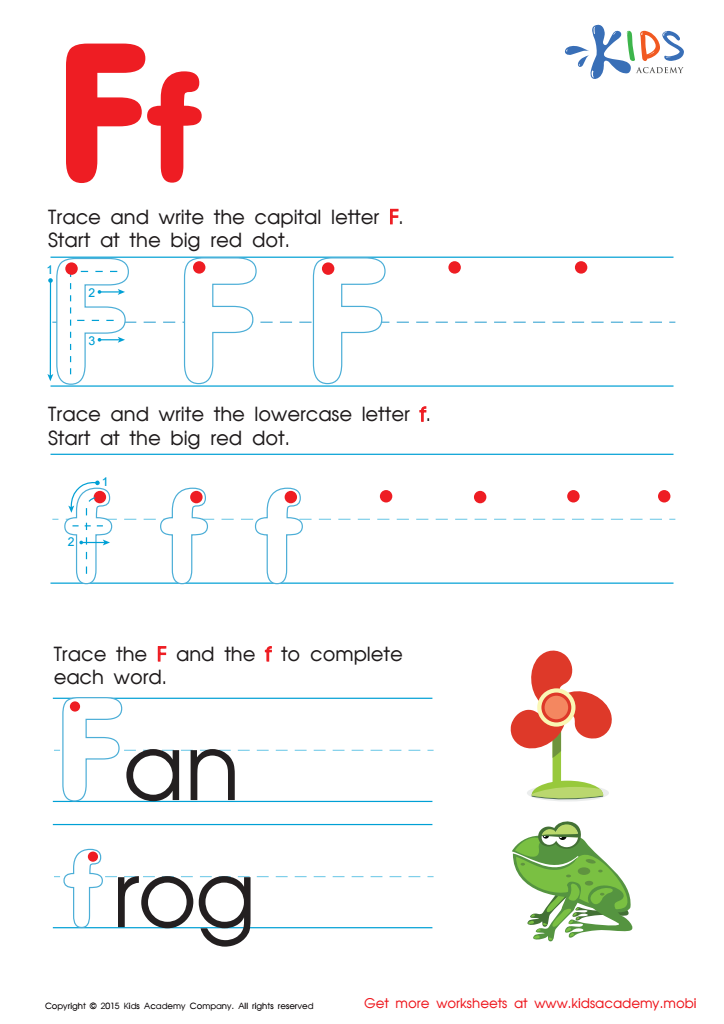
Letter F Tracing Page

Letter D Tracing Page







Letter recognition and normal tracing for children aged 7-8 are crucial developmental skills that underpin language and literacy acquisition. At this age, children are transitioning from learning basic reading skills to more complex ones, including fluency and comprehension. Letter recognition helps children connect letters with their sounds, which is foundational for decoding words. This skill is essential not only for reading but also for spelling, writing, and overall communication.
Tracing letters further reinforces fine motor skills necessary for writing. As children trace letters, they develop hand-eye coordination and muscle memory, which are critical for fluid, legible writing. Engaging in tracing activities also gives children the opportunity to practice correct letter formation, spacing, and alignment, promoting neatness and readability in their work.
Moreover, letter recognition and tracing activities offer a multisensory learning experience that can cater to various learning styles—from visual and auditory to tactile and kinesthetic. For example, saying the letter aloud while tracing it helps reinforce the connection between the symbol and its sound.
For both parents and teachers, fostering these skills ensures that children are equipped with the foundational tools needed for academic success. It promotes confidence in their reading and writing abilities, which can have lasting positive effects on their overall educational journey. Supporting children in mastering these skills sets the stage for more advanced literacy and academic achievements.








