Cognitive Development Normal Chess Worksheets for Ages 7-8
4 filtered results
-
From - To
Enhance your child's cognitive development with our specialized Chess Worksheets for ages 7-8. These fun and engaging activities are designed to boost critical thinking, problem-solving skills, and strategic planning. By following age-appropriate chess challenges, your child will improve memory, concentration, and logical reasoning. Our worksheets offer a perfect blend of learning and play, tailored to captivate young minds while laying the groundwork for future intellectual growth. Dive into the world of chess and watch your child's cognitive abilities soar! Explore our printable resources today to give your child a head start on a path to academic excellence.
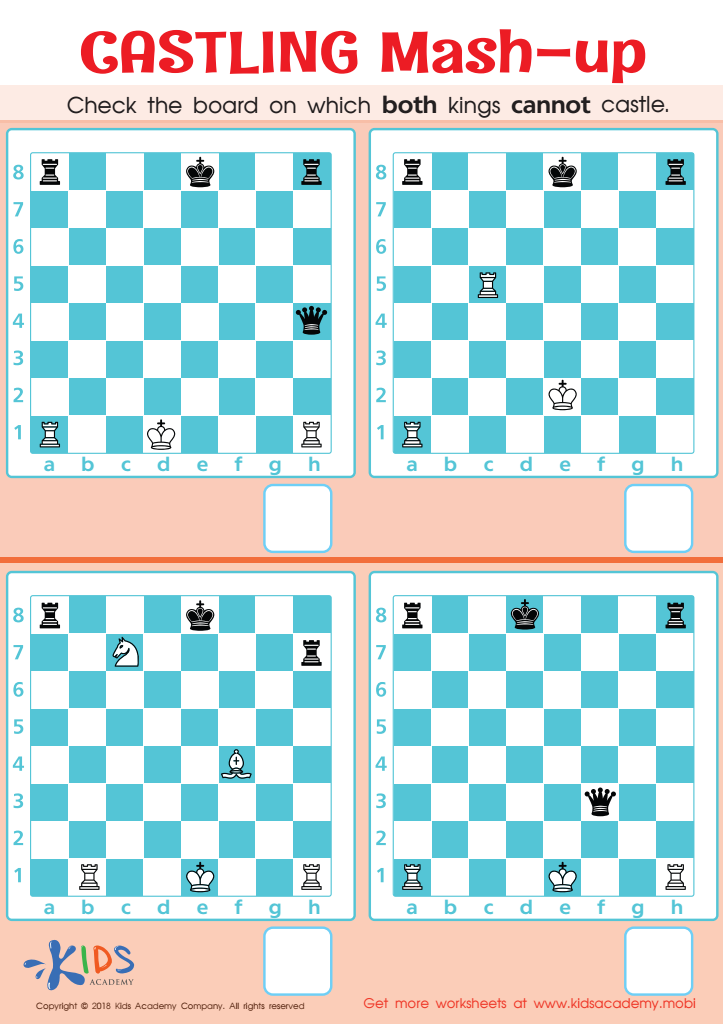
Castling Mash–up Worksheet
 Assign to My Students
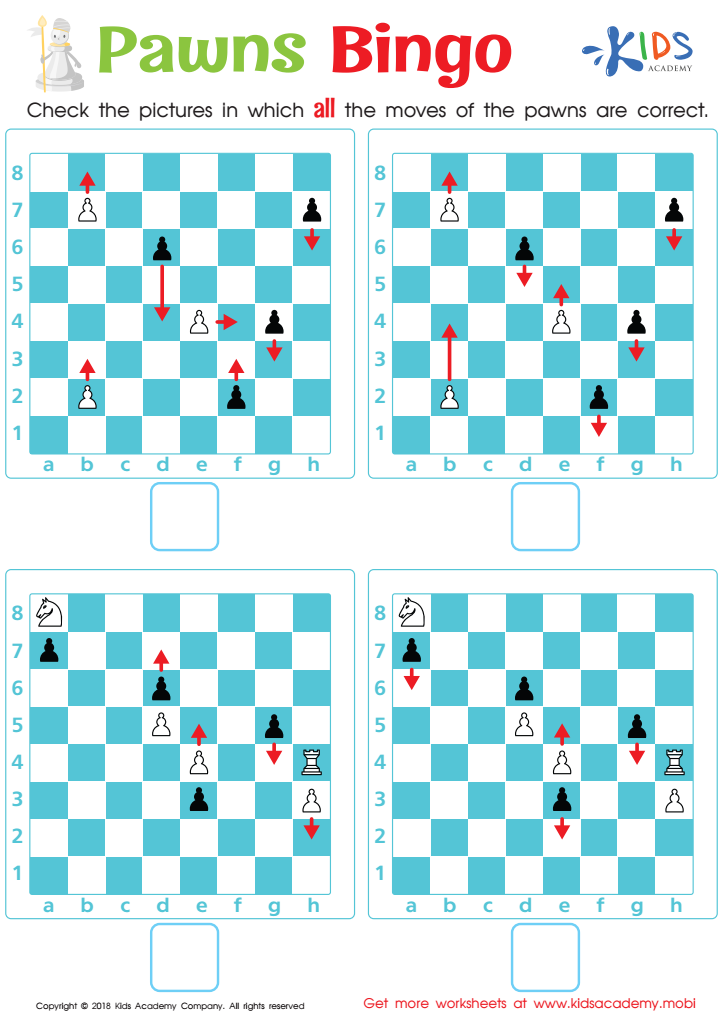
Pawns Bingo Worksheet
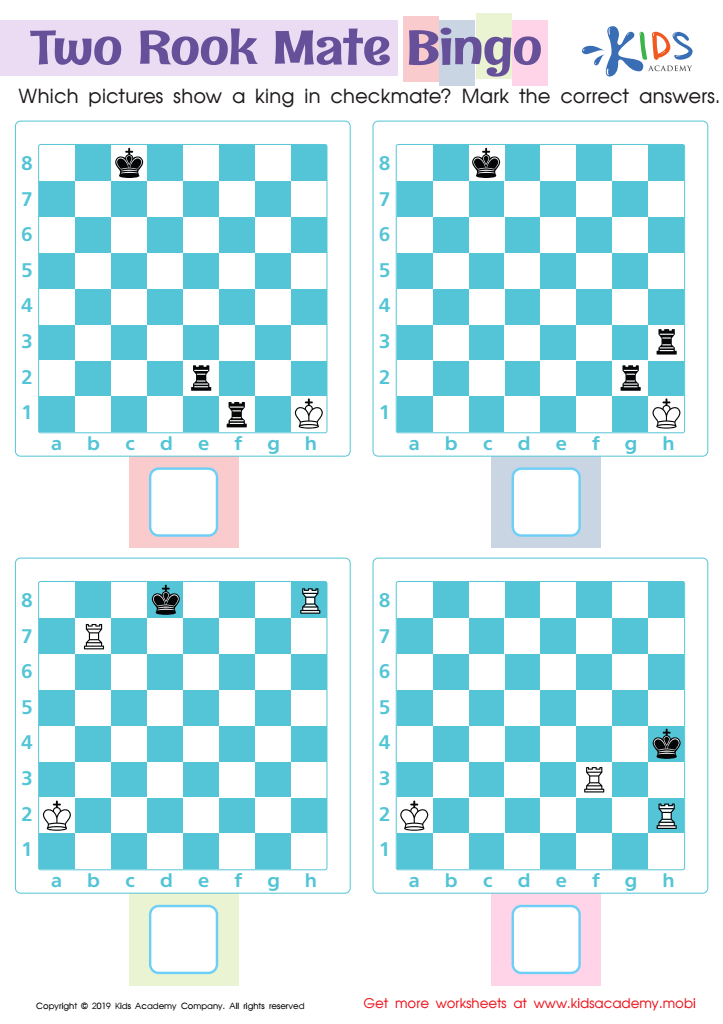
Two Rook Bingo Worksheet
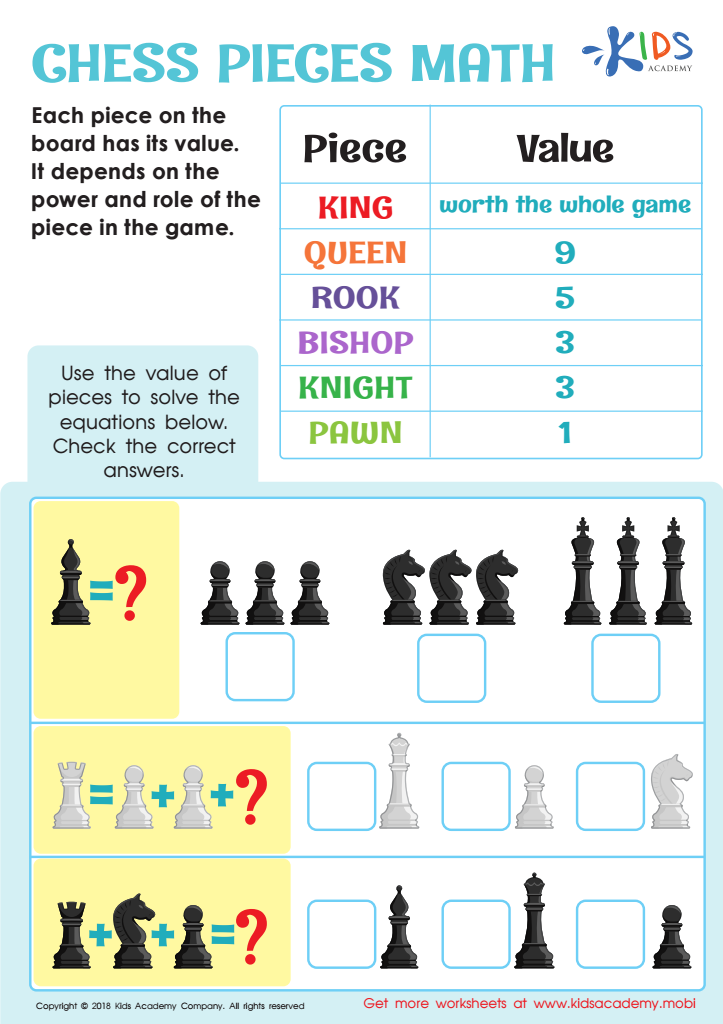
Chess Pieces Math Worksheet







Parents and teachers should care about cognitive development through normal chess for children aged 7-8 because the game significantly enhances key intellectual and life skills during this critical stage of development. Chess requires children to think ahead, plan their moves, and develop strategies, which sharpens their problem-solving abilities and fosters critical thinking skills. This strategic planning extends to real-life situations, teaching kids to predict consequences and make informed decisions.
Additionally, chess improves memory and concentration as players must remember complex rules and positions, and stay focused for extended periods. This mental exercise strengthens working memory and attention span, essential for academic success.
Chess also enhances pattern recognition and creativity, as children must anticipate opponents' moves and devise innovative strategies to secure a win. This nurtures lateral thinking and the ability to approach problems from multiple perspectives.
Furthermore, the game promotes patience and discipline, as players learn that achieving a goal often requires sustained effort and perseverance. The social interactions foster sportsmanship, respect, and the ability to handle wins and losses gracefully.
In essence, incorporating chess into the development of children aged 7-8 lays a strong foundation for cognitive skills, character building, and emotional maturity, all of which contribute substantially to their overall growth and future success.