Check out this FREE "Basic Math Skills" Trial Lesson for age 7-8!

Extend Patterns

Favorites
With answer key
Interactive
  • 7-8
  • Basic Math Skills
  • Normal
Siblings Quiz Worksheet

Siblings Quiz Worksheet

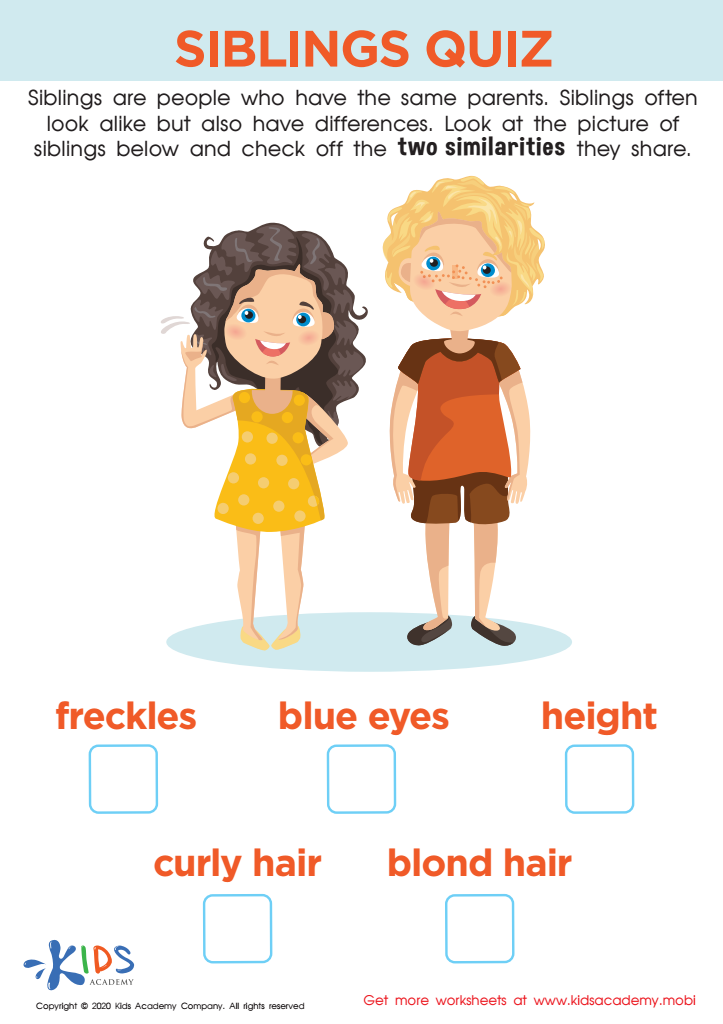
Your children may know a sibling is a sister or brother, but not realize what it means to be one. Siblings share the same parents, which means they share many genes. They are alike in many ways, but also have their own unique traits. Help your future scientist understand this early biology concept with this fun worksheet. They'll be tasked with finding similarities between two siblings on the page.
Siblings Quiz Worksheet
Worksheet
What Is the Denominator? Worksheet

What Is the Denominator? Worksheet

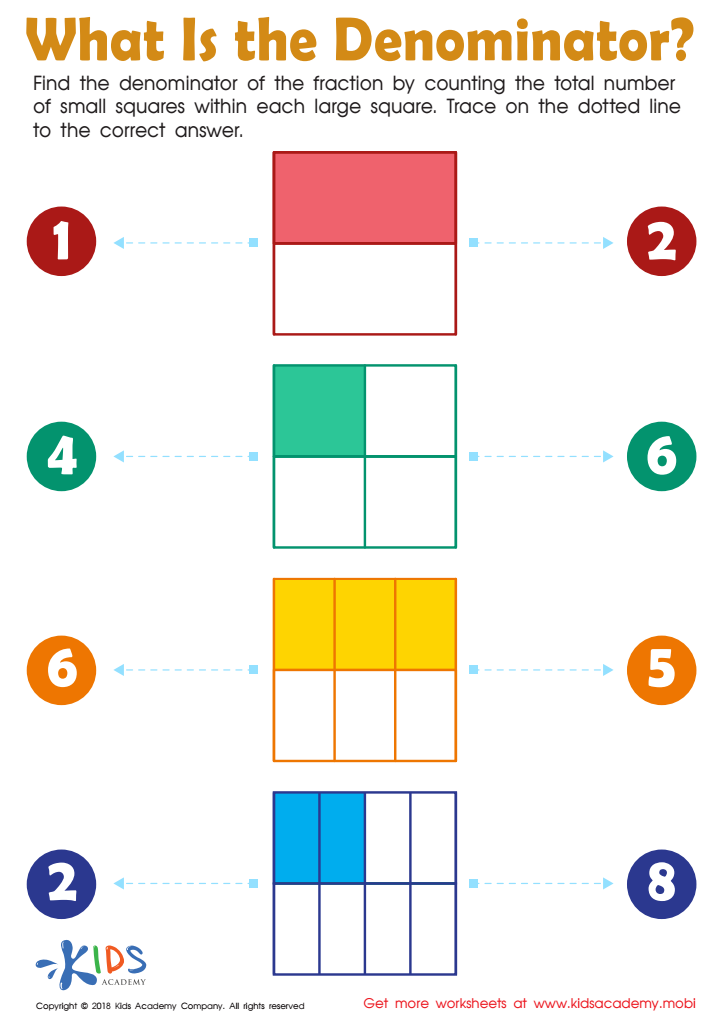
If your kindergartener is struggling with fractions, don't worry. Use this worksheet to help them understand better. Ask them to count the total small squares in each large square to find the denominator, then trace on the dotted line to answer. This printable tracing sheet will help them learn fractions easier.
What Is the Denominator? Worksheet
Worksheet
Pattern Recognition Worksheet

Practice Patterns Worksheet

Practice Patterns Worksheet
Worksheet
Recycling - More or Less Worksheet

Recycling - More or Less Worksheet

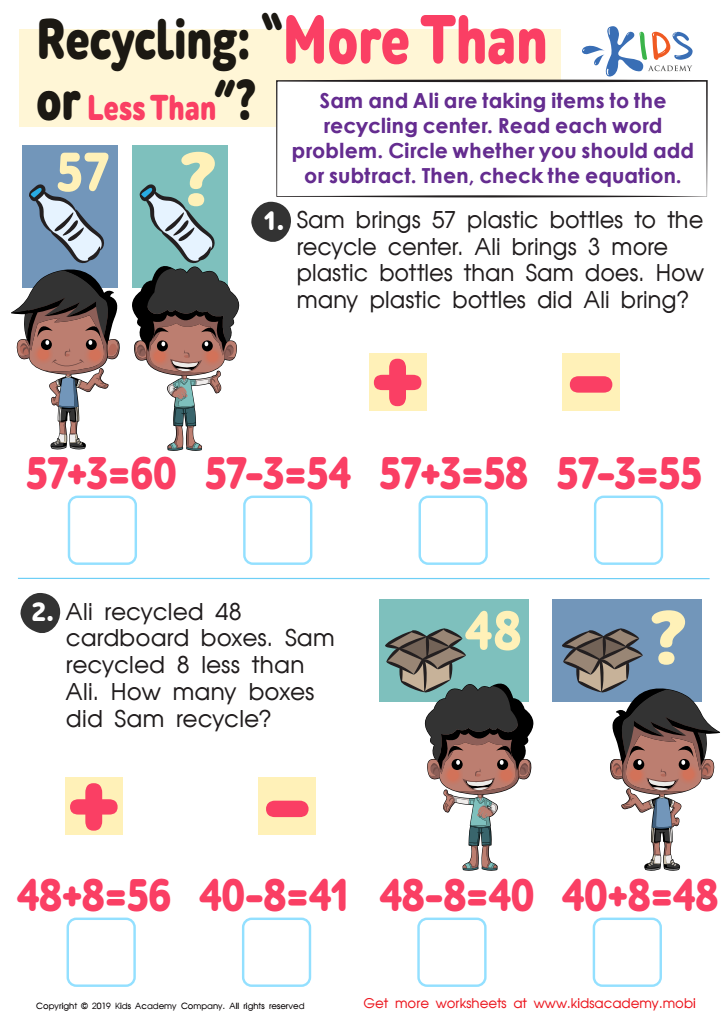
Your child can compare numbers and solve word problems with this free worksheet. Help them understand what's being asked as Sam and Ali take items to the recycling center. They can choose the correct equation to match the word problem and apply their skills in reading and pulling out the appropriate information.
Recycling - More or Less Worksheet
Worksheet
Kindergarten Counting by Tens

Learn Dozens: Counting by Tens Printable
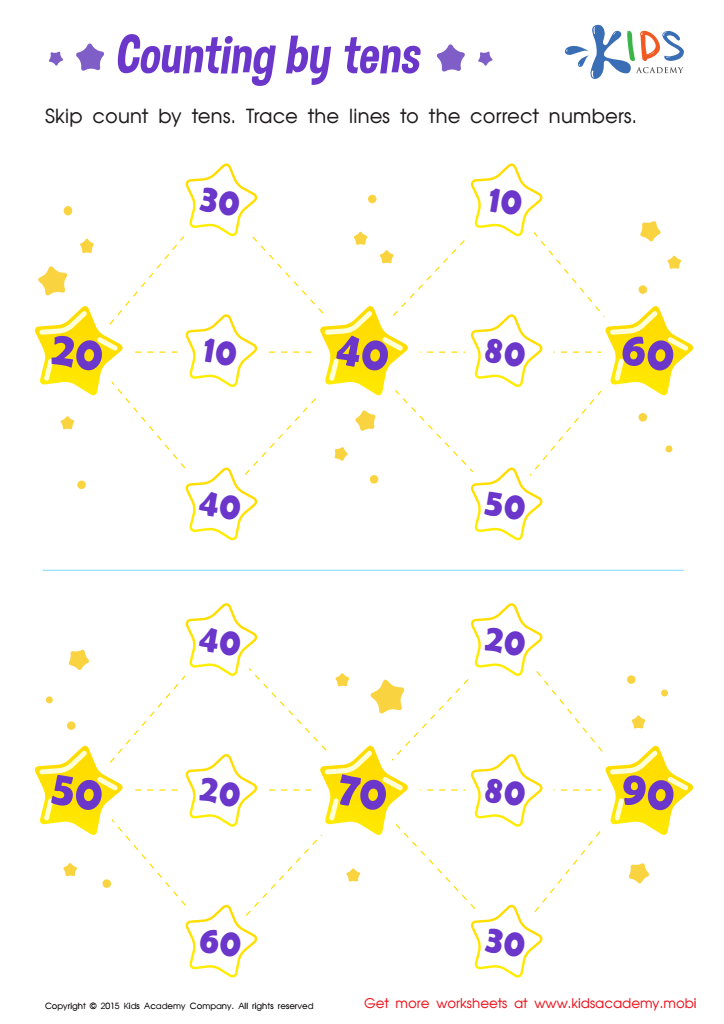
Kindergartners need to learn skip counting - counting in number groups - to increase number sense and be ready for more advanced math. Our kindergarten worksheet featuring a starry trip to outer space will help your child practice this valuable skill. Your child will choose correct answers to trace the lines to the stars, building fluency in skip counting. They'll also strengthen problem solving and see the pattern it creates. Get your little learner to the next level with this skip counting worksheet!
Learn Dozens: Counting by Tens Printable
Worksheet
Think About It: Assessment Worksheet

Think About It: Assessment Worksheet

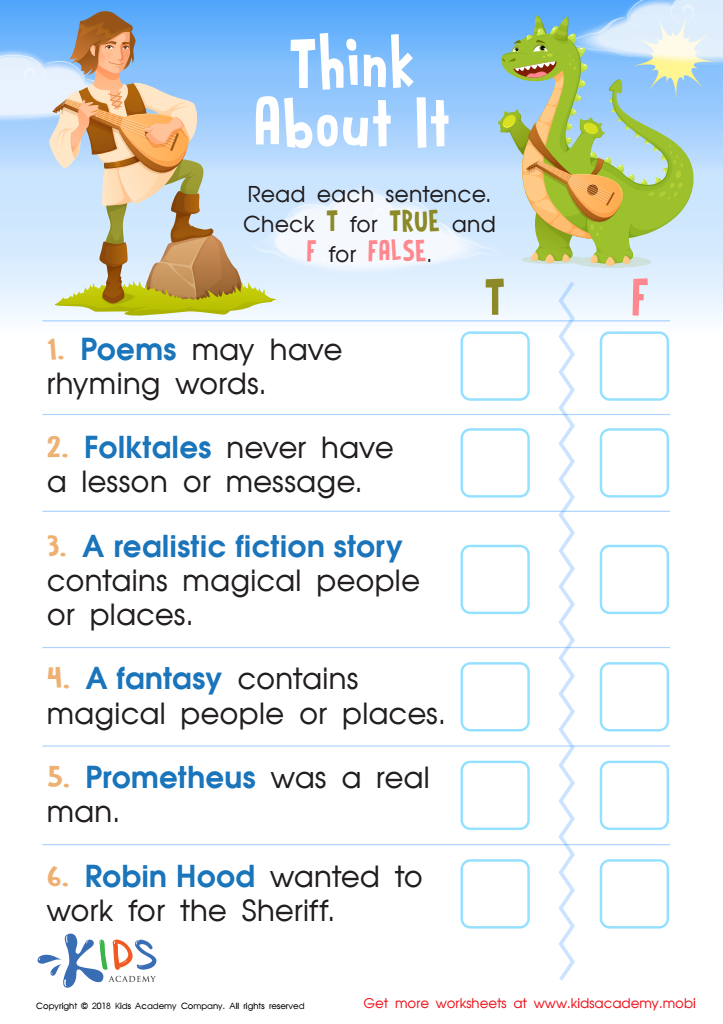
Reading is a fun and important way to learn. Help your students become better readers with this simple yet colorful worksheet. Read each sentence aloud, then have them read it by themselves. Ask them to check T for True and F for False. It's a great way to practice their reading skills!
Think About It: Assessment Worksheet
Worksheet
1, 2 or 3? Worksheet

1, 2 or 3? Worksheet

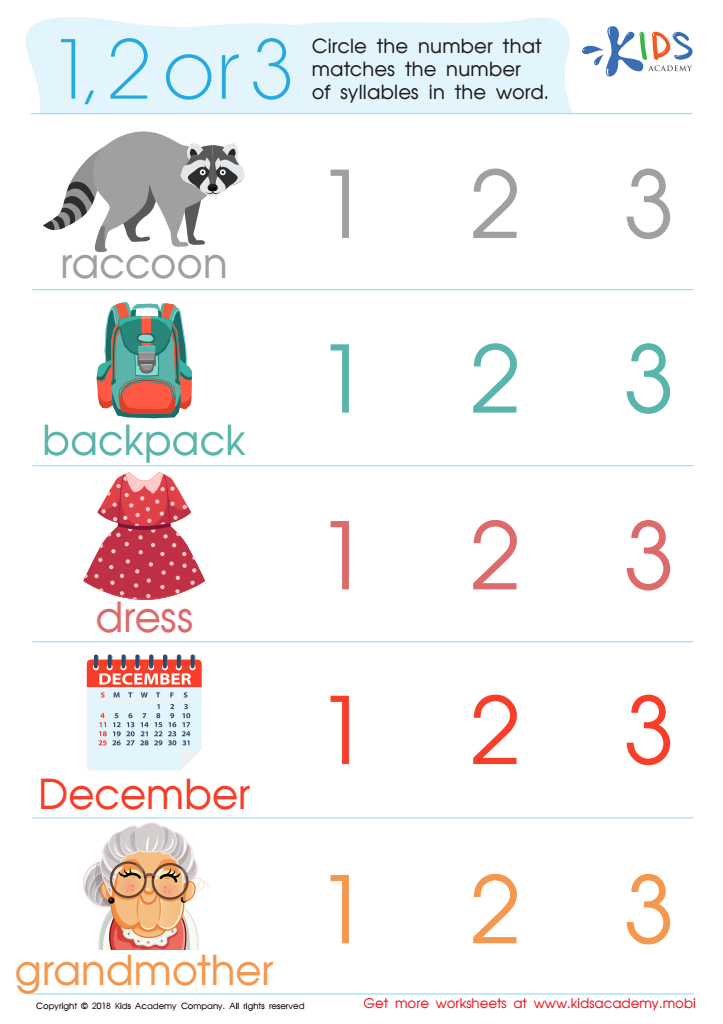
Do your kids know about syllables? Test their understanding with this worksheet. Read the words aloud and ask them to say them with you. Help them circle the number that matches the number of syllables in each word. Perfect for expanding knowledge or testing how much they've already learned.
1, 2 or 3? Worksheet
Worksheet
Promotion Practice Worksheet


Promotion Practice Worksheet

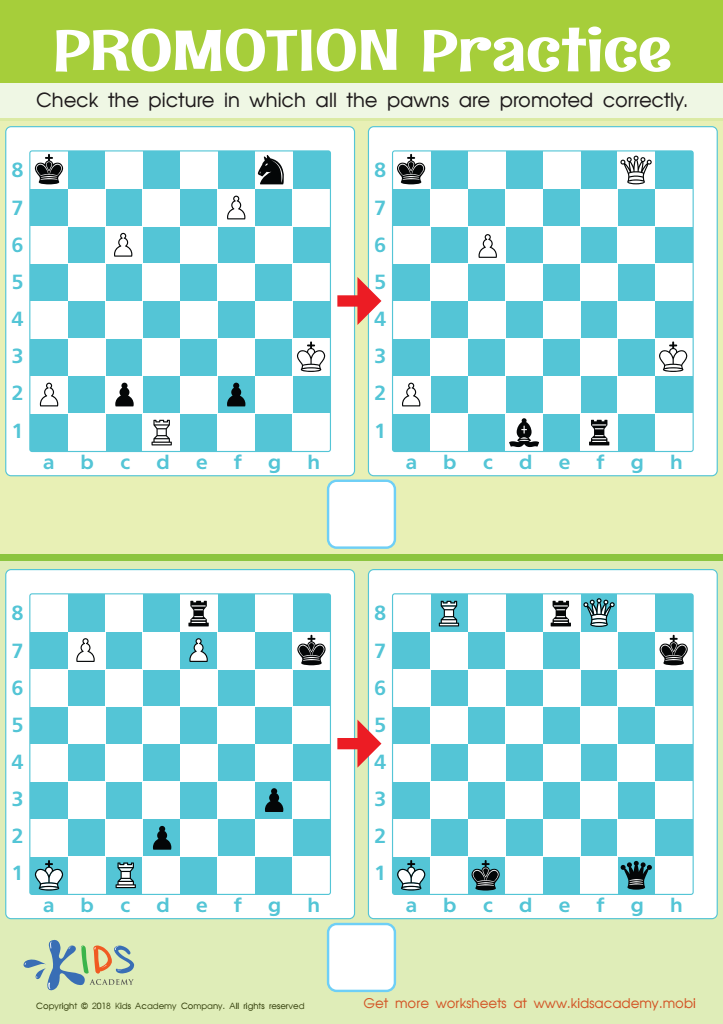
Test your kids' promotions skills with this worksheet! Ask them to find the pictures in which the pawns are correctly promoted. Remember, when a pawn reaches the last rank it may be promoted to a queen, bishop, knight or rook. In addition, a pawn can be promoted when it captures a chess piece on the last rank.
Promotion Practice Worksheet
Worksheet


Basic math skills are foundational for children's academic and everyday success, especially for those aged 7-8. At this critical developmental stage, children move from simple counting to understanding more complex concepts, such as addition, subtraction, and the beginning of multiplication and division. Mastering these skills is essential as they not only serve as building blocks for future mathematical learning but also help students develop problem-solving abilities and logical thinking.

When parents and teachers prioritize basic math skills, they equip children with the tools needed to navigate daily life, such as budgeting, measuring ingredients for cooking, or assessing time. Furthermore, a solid grounding in math enhances confidence and reduces math anxiety, fostering a positive attitude towards learning.

In this digital age, where many jobs rely on quantitative skills, ensuring that children are proficient in math prepares them for future academic demands and career opportunities. As essential partners in education, parents and teachers must work together to reinforce these skills, providing supportive learning environments and engaging resources, to help children not only succeed in school but also develop critical life skills. By paying attention to math skills now, they are investing in their future.