Categorizing objects Normal Worksheets for Ages 7-8
3 filtered results
-
From - To
Discover engaging "Categorizing Objects" worksheets designed for children aged 7-8. These interactive resources help young learners enhance their critical thinking and organizational skills by sorting and classifying various objects, animals, and concepts. As children complete these worksheets, they will embark on a fun educational journey that not only reinforces their understanding of categories but also promotes vocabulary development and boosts creativity. Perfect for both classroom settings and home learning, these materials can be easily printed and integrated into everyday learning routines. Transform learning into an enjoyable experience and watch your child's confidence blossom with our thoughtfully crafted categorizing worksheets!
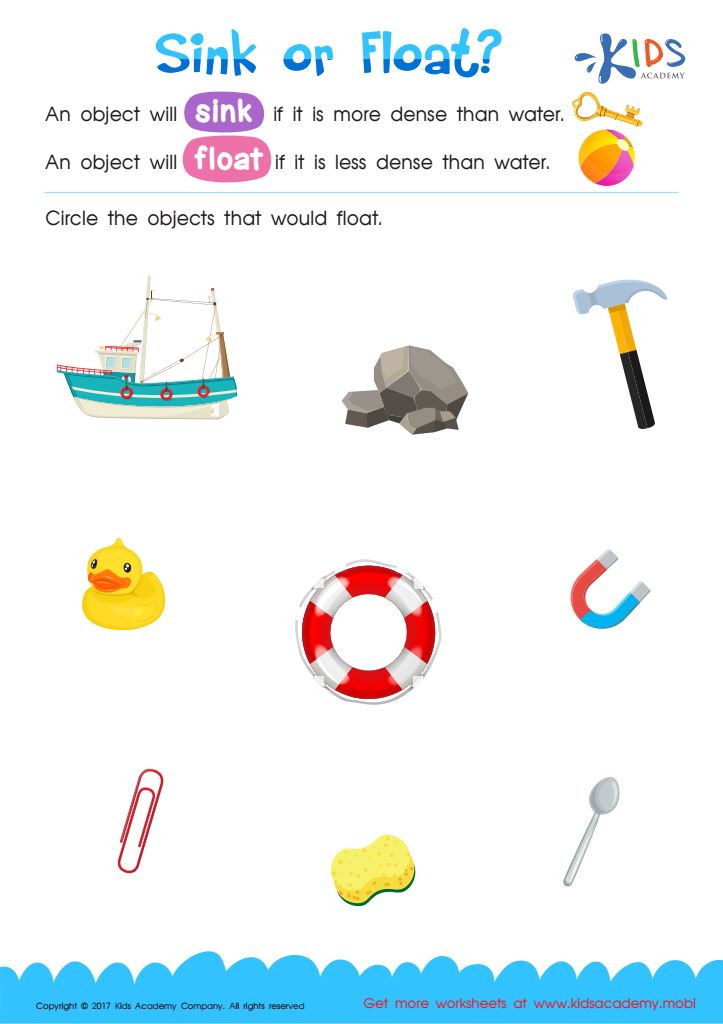
Sink or Float Printable
 Assign to My Students
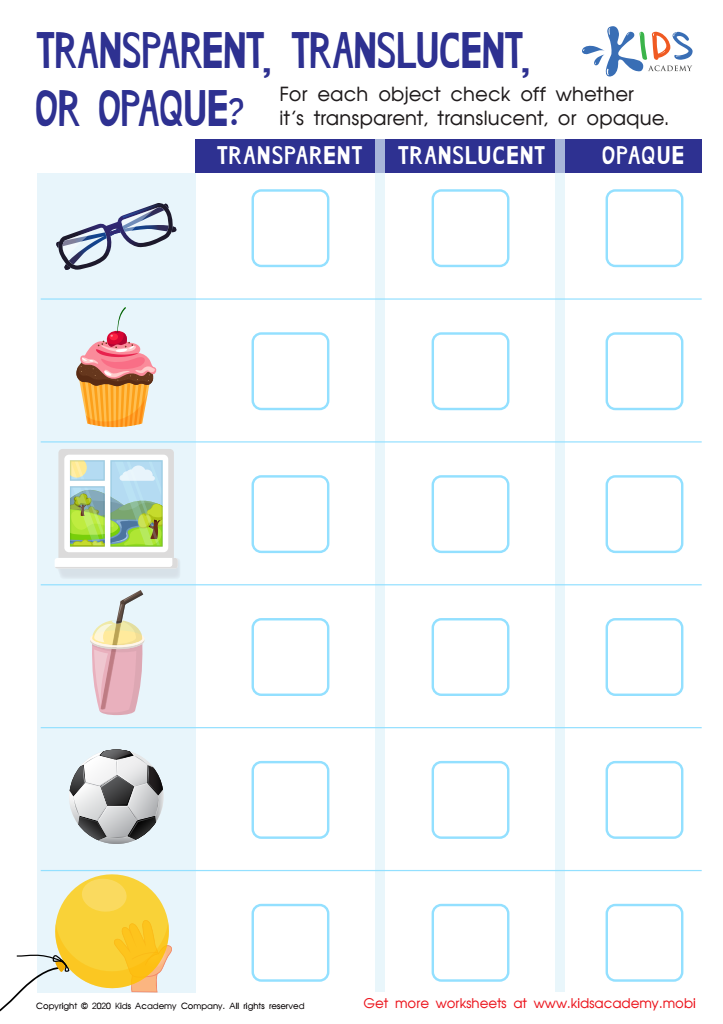
Transparent, Translucent, or Opaque Worksheet
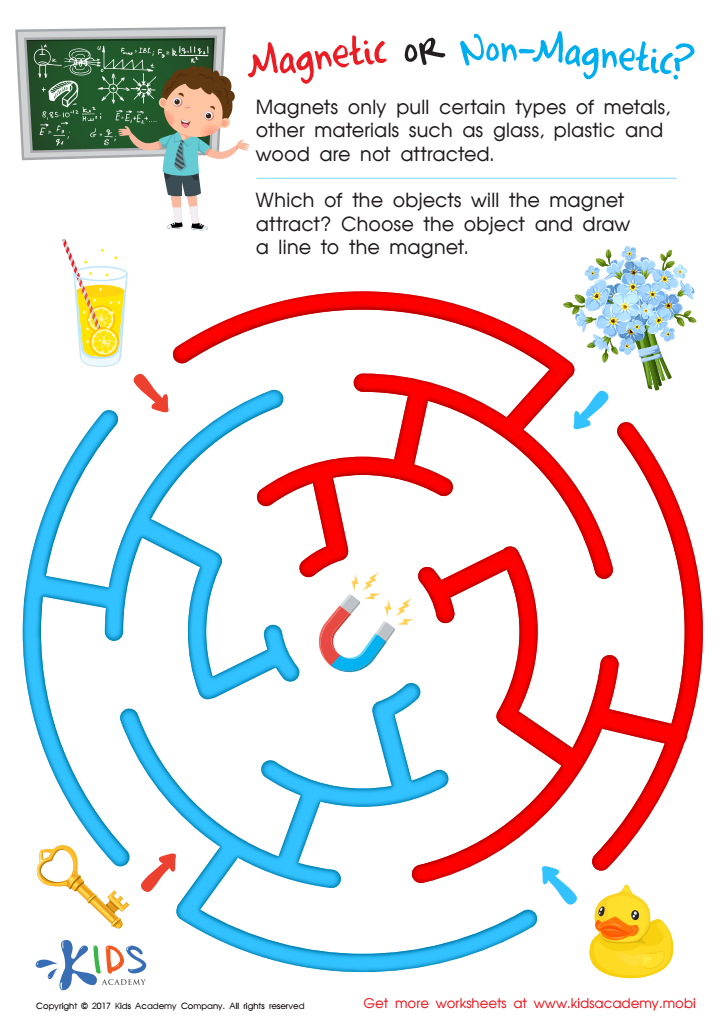
Magnetic or Non–Magnetic Worksheet


.jpg)





Categorizing objects is a vital skill for children aged 7-8, and both parents and teachers should prioritize its development. At this age, children are honing their critical thinking abilities and understanding the world around them. Categorization fosters cognitive growth by encouraging kids to observe similarities and differences, which aids in their ability to classify information. Through this process, children also improve their reasoning skills and can better organize their thoughts.
Moreover, categorizing objects enhances language development. When children learn to label and group items, they expand their vocabulary and communication skills, which are essential for academic success. It also supports their social skills; as they engage in cooperative play and group activities, they learn to share their categorization ideas and collaborate with peers.
Additionally, understanding categories lays the groundwork for more complex concepts found in mathematics and science. By recognizing patterns and relationships, children become equipped to tackle age-appropriate problem-solving tasks.
Ultimately, parents and teachers should care about this skill because it not only supports academic learning but also nurtures critical cognitive processes, social interactions, and effective communication—all foundational elements for lifelong learning and success.








