Identifying story elements Normal Worksheets for Ages 7-8
3 filtered results
-
From - To
Discover our engaging "Identifying Story Elements Normal Worksheets" tailored for children aged 7-8! These interactive worksheets are designed to help young learners explore the fundamental components of storytelling, including character, setting, plot, and theme. By providing a fun and educational approach, these activities foster critical thinking and comprehension skills. Perfect for classroom use or at-home practice, these worksheets encourage children to analyze stories and develop their narrative understanding. Spark creativity and build literacy skills with our captivating resources, making reading an enjoyable experience for your child. Explore the world of stories and watch their imaginations flourish!
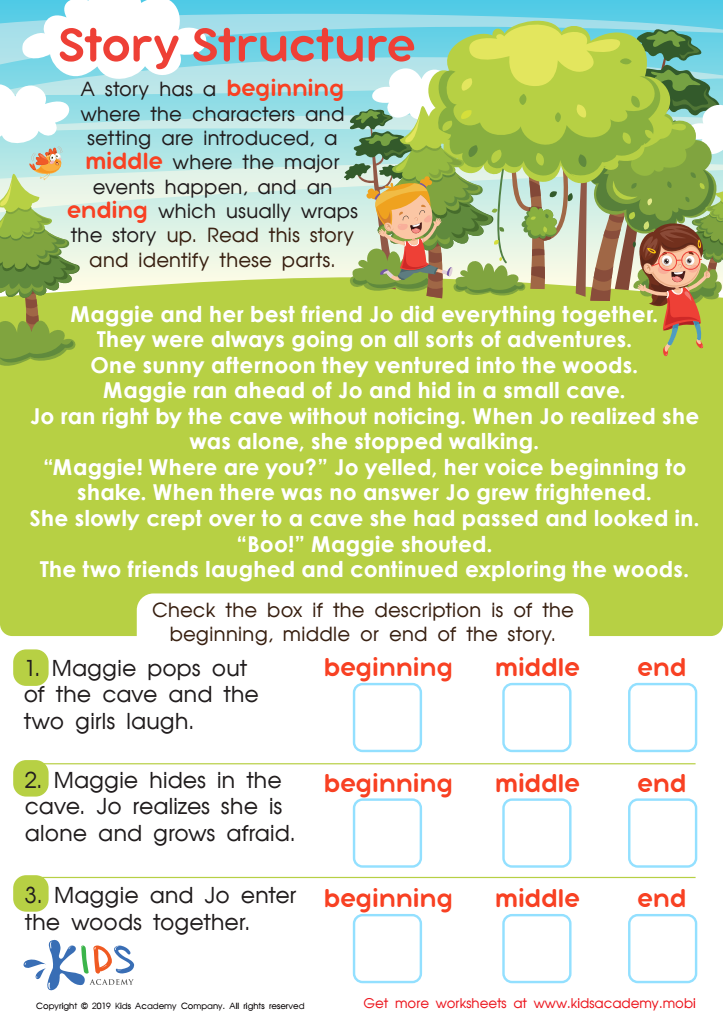
Story Structure Worksheet
 Assign to My Students
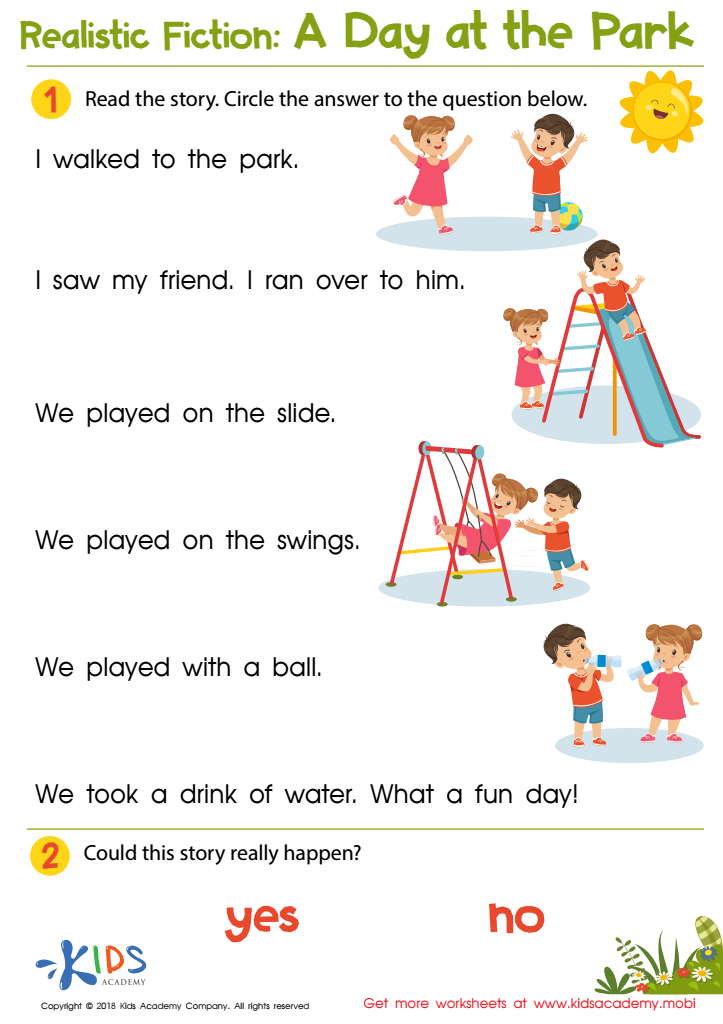
A Day at the Park Worksheet
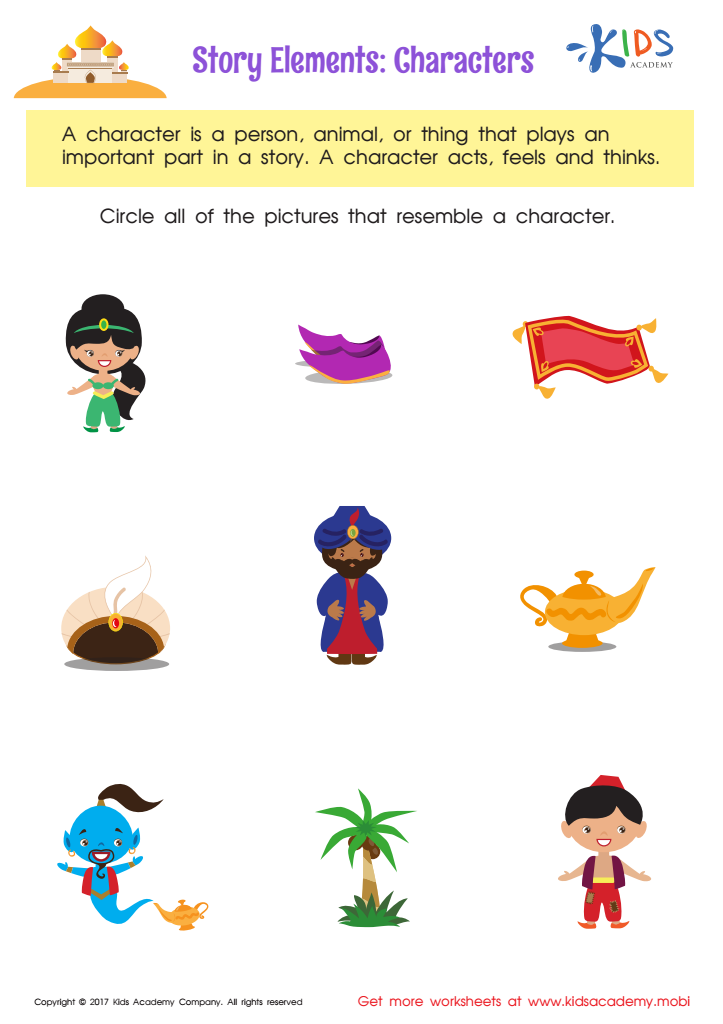
Story Elements Printable





Identifying story elements is crucial for children aged 7-8, as it fosters essential reading and comprehension skills at a formative stage in their development. Parents and teachers should care about this process because understanding story elements—such as characters, setting, plot, conflict, and resolution—creates a foundation for critical thinking and deeper engagement with texts.
When children can distinguish these elements, they enhance their ability to summarize and retell stories, enabling them to grasp main ideas and make connections to their own experiences. This skill not only boosts literacy but also cultivates creativity and empathy, allowing young readers to envision different perspectives and scenarios.
Additionally, recognizing story elements can improve vocabulary and language skills as children encounter varied narratives. Incorporating discussions about story elements into educational activities encourages active participation and collaboration among peers, making learning interactive and enjoyable.
Ultimately, a strong understanding of story elements equips children with the tools to navigate literature effectively, setting the stage for successful reading experiences in the future. By prioritizing this foundational skill, parents and teachers play a pivotal role in nurturing confident and competent readers.








