Learning about ecosystems Normal Worksheets for Ages 7-8
3 filtered results
-
From - To
Explore the fascinating world of ecosystems with our "Learning about Ecosystems" worksheets, designed for children aged 7-8. These engaging worksheets help young learners understand different ecosystems, the interactions among living organisms, and their environments. Through fun and informative activities, kids will discover the importance of each component in these biological communities. Our worksheets are crafted to enhance critical thinking, reading comprehension, and science skills. Perfect for homeschooling or classroom use, these resources provide a solid foundation for young minds curious about the natural world and its intricate balance. Let your child embark on this educational journey today!
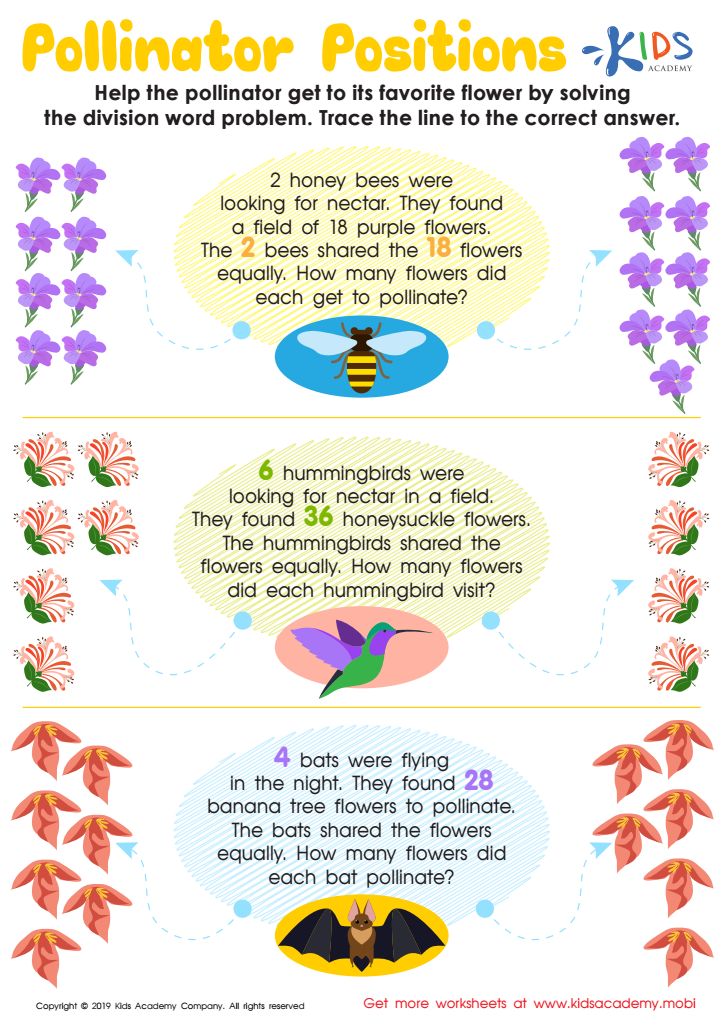
Pollinator Positions Worksheet
 Assign to My Students
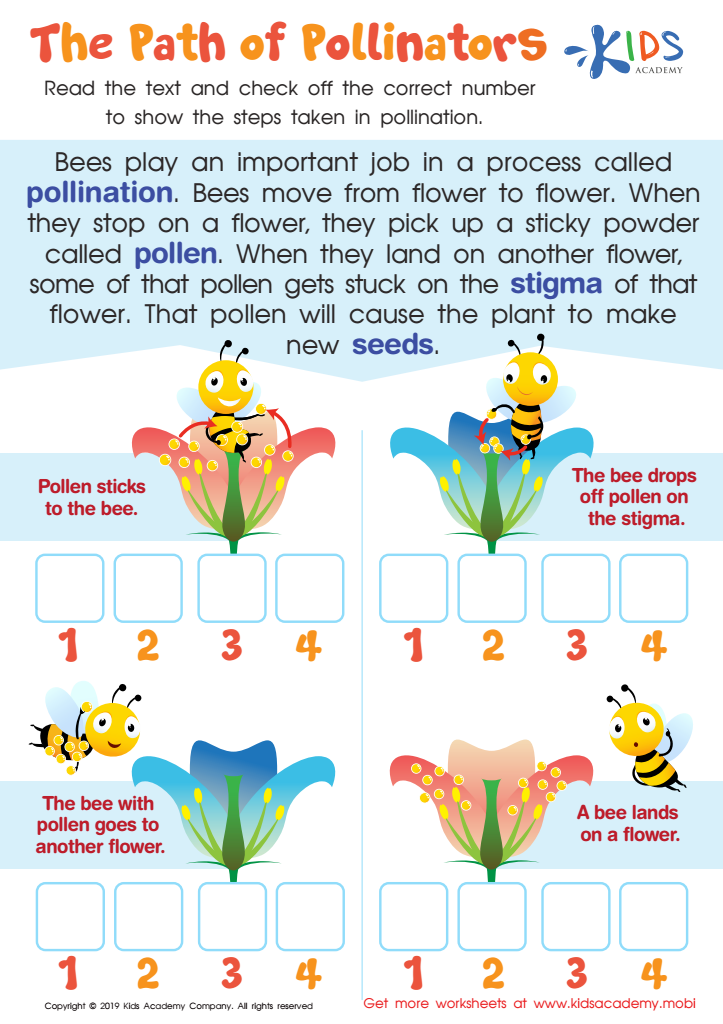
The Path of Pollinators Worksheet
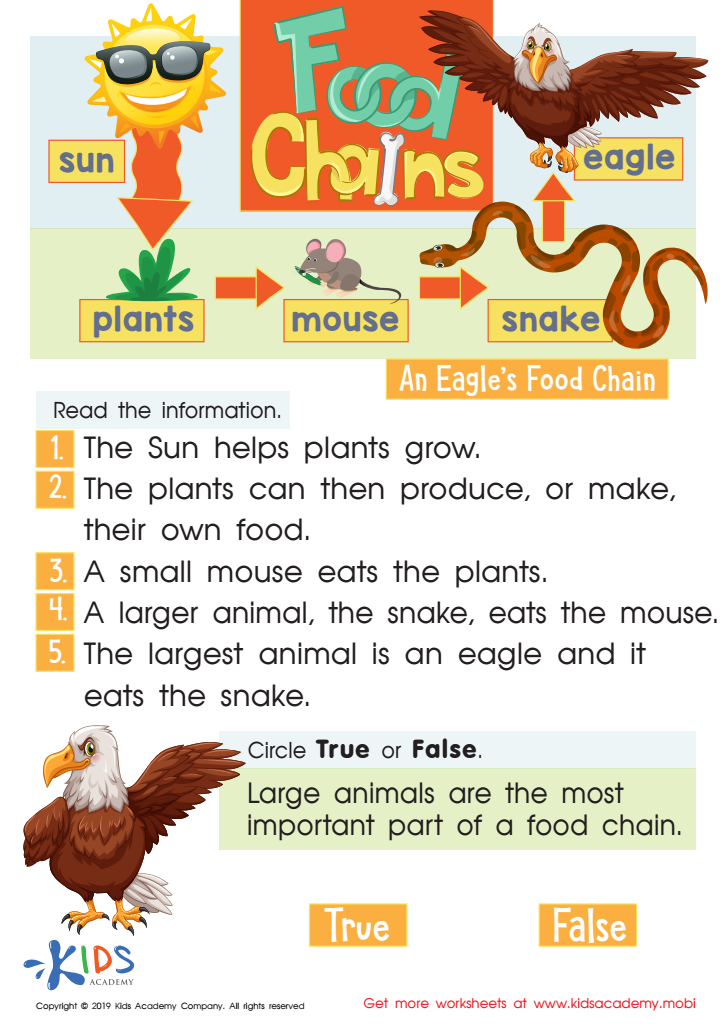
Food Chains Worksheet






Learning about ecosystems is incredibly important for children ages 7-8 because it fosters a deep connection with the natural world, promoting curiosity, respect, and responsibility for the environment. At this age, children are naturally curious and eager to understand how the world around them works. Introducing them to ecosystems helps them grasp the interdependence of living organisms and their environments.
When parents and teachers engage children in learning about ecosystems, they help build a foundation of ecological literacy. This understanding is crucial for developing future guardians of the planet who will make informed decisions about conservation and sustainable living. Learning about ecosystems also enhances critical thinking and inquiry skills, as children observe, ask questions, and seek answers about nature's complex interactions.
Furthermore, understanding ecosystems can inspire a lifelong love of science and nature, potentially guiding children towards careers in environmental science, biology, or ecology. Early education about ecosystems also cultivates empathy as children learn to appreciate all living beings and the delicate balance of natural habitats.
By prioritizing ecosystem education, parents and teachers do more than teach scientific concepts; they instill values and skills that are essential for preserving the health of our planet, ensuring children grow up to be conscientious and caring stewards of the Earth.








